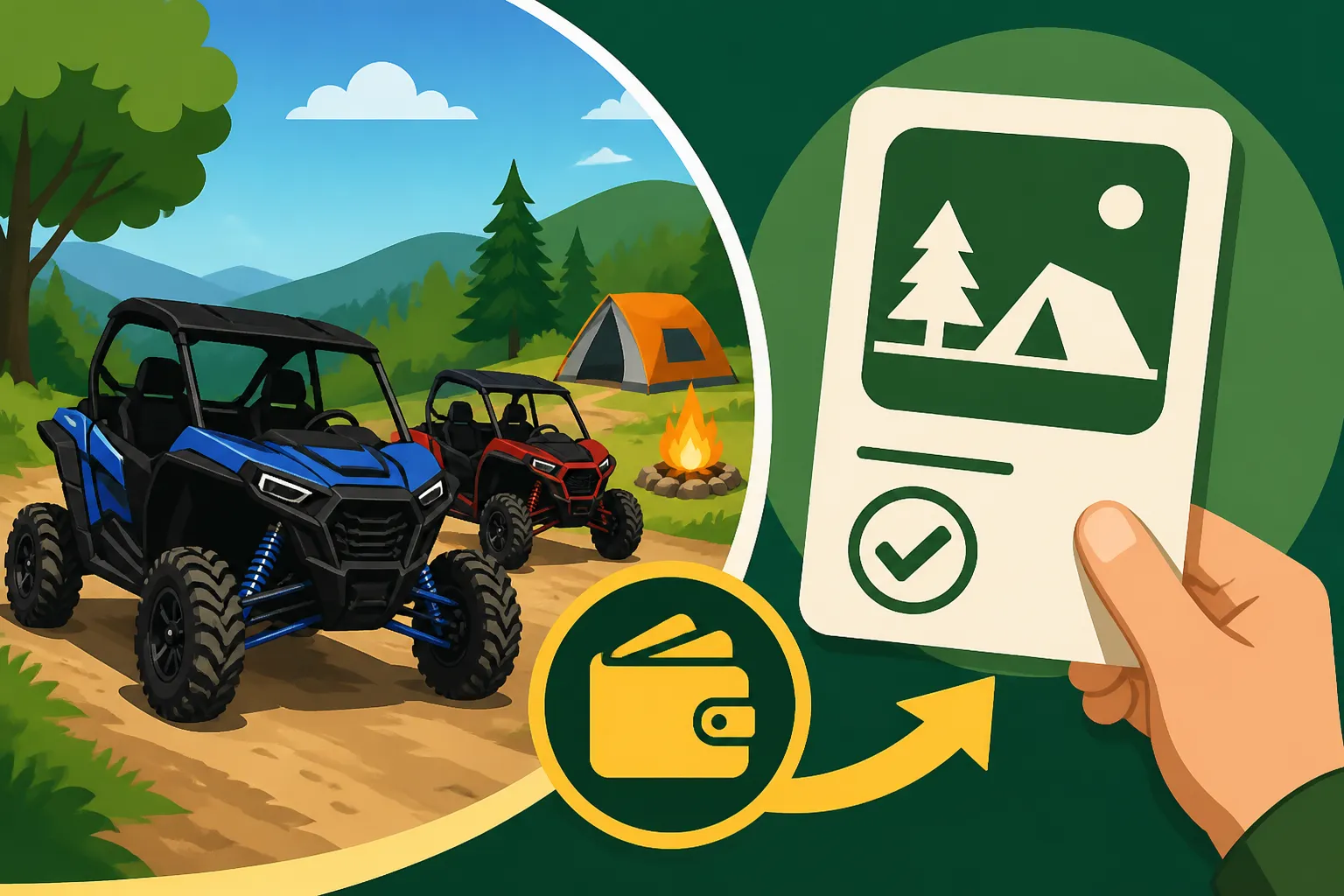
Paying $252.50 for a Camping Permit in Season
Paying $252.50 for a Kansas camping permit in season can make sense if you plan to camp at state parks repeatedly, but the permit is easy to confuse with a campsite reservation or an off-road vehicle permit. The key is knowing what the charge covers, what it does not, and which details to confirm before you travel.
What the $252.50 in-season camping permit means
The $252.50 figure is the in-season price listed for a Kansas state park camping permit. The off-season price listed for the same type of permit is $202.50, a difference of $50. Before buying, confirm the current rate and the dates the park considers in season with the Kansas state park office or the official permit seller. Fees and seasonal rules can change.
Treat the permit as one part of your camping costs, not automatically as a reservation for a specific campsite. A permit and a reservation serve different purposes: a permit may establish eligibility to camp under the applicable program, while a reservation holds a particular site for particular dates. Confirm whether your intended site requires a separate reservation, nightly charge, or other payment.
That distinction matters most when you are planning a busy-season trip. Paying for a permit does not, by itself, tell you that a site will be available when you arrive. Check the park’s booking process and the permit terms before relying on it. For a broader breakdown of the permit types, see Kansas Camping Permit Cost and Kansas Park Entrance Permits and What They Cover.
Do not confuse a camping permit with a permit for operating an off-road machine on state park roads. A camping purchase should not be treated as permission to ride trails, use a vehicle access road, or take an ATV or UTV into an area where it is not allowed. Kansas’s unconventional vehicle permit has its own purpose and limits; it is not a general trail pass. The distinction is covered in Kansas Unconventional Vehicle Permit and Kansas Park Permit vs Trail Permit.
In practical terms, the in-season amount can be worth considering if you expect to camp often enough for the permit to fit your plans. If you are making one short trip, compare the permit’s actual coverage with the cost of paying for the camping you will use. Don’t decide based on the headline price alone: first establish what the permit covers, how long it is valid, and what the park charges separately.
Compare the permit with your likely trip costs
The right comparison is not simply $252.50 versus $202.50. It is the permit cost plus any separate site or reservation charges, weighed against the number of nights and the places you expect to visit. Because the permit terms and park charges may change, use this table as a planning framework and verify the current details before purchase.
| Cost or option | What to check | Why it matters |
|---|---|---|
| In-season camping permit | Confirm the current listed price; $252.50 is the in-season amount referenced here | This is the main permit cost, but may not represent the full cost of a stay |
| Off-season camping permit | Confirm the current listed price; $202.50 is the off-season amount referenced here | The listed difference is $50, but the dates and coverage may affect whether it applies |
| Campsite reservation | Check whether the site must be booked separately and whether a separate charge applies | A permit may not hold a site for your travel dates |
| Nightly or site-specific charges | Ask whether the park charges by night, site type, or another basis | The permit may not include every charge connected with camping |
| Vehicle or park access permit | Check whether your vehicle needs a separate permit for the activity you plan | Camping permission does not automatically authorize ATV or UTV use |
| Private riding-area fees | Check the park’s own day-use, camping, and riding terms | A private recreation park sets its own charges and rules |
Make a simple trip estimate before you pay. Write down the number of nights you expect to camp, the state parks you might visit, and any separate reservation or site charges. Then compare that total with the applicable permit terms. If you are unsure how to count the charges, ask the park office to walk through a sample booking for your dates.
Also check the permit’s validity period and any limits on how long you can stay in one place. A permit that covers a longer period does not necessarily mean you can occupy one campsite continuously for that entire period. The rules for consecutive nights, site changes, and reservations may be separate. [Kansas Fourteen-Night Camping Permits] explains why a stay limit should be checked independently from the permit price.
If your plans are flexible, ask whether the off-season rate applies to your intended dates and whether the site you want is open. A lower permit price is not useful if it does not cover your travel window or if the facilities you need are unavailable. If your dates are fixed, confirm the in-season terms and campsite availability first, then compare your likely total cost.
If you are bringing an ATV or UTV
Camping at a state park and riding an ATV or UTV are separate activities with separate rules. A camping permit does not turn a park road into an OHV trail, and it does not override signs or restrictions at a park. Before loading your machine, establish where riding is allowed and whether the machine needs any separate permit for the roads or areas you plan to use.
Kansas does not sell a general state OHV trail permit. That does not mean every vehicle can be ridden anywhere without conditions. The rules depend on the land manager, the specific area, and the permitted activity. Some state park vehicle permits concern access to designated roads and parking areas, not unrestricted trail riding. Review Kansas Has No State OHV Permit before treating a camping permit as a riding permit.
The same caution applies to reciprocity. A sticker or permit from another state should not be assumed to authorize riding in Kansas, and a Kansas park permit should not be assumed to work at a private riding park or on another agency’s land. Each location can set its own access conditions. Check the rules for the exact place you intend to visit rather than relying on what was accepted at a park in another state.
A useful way to separate the questions is:
- Where can you camp? Check the camping permit terms, campsite availability, reservation process, and any site charges.
- Where can you take the machine? Check the land manager’s vehicle rules, posted restrictions, and any required access permit.
- Can you ride trails there? Confirm that the area actually offers riding access for your type of machine. A road-use permit is not proof that trails are open.
- Does another state’s permit count? Ask the specific park or land manager. Do not assume reciprocity.
If your goal is to camp near a riding area, confirm that both parts of the trip work before paying: the campground needs to accept your camping arrangement, and the riding area needs to allow your machine. A nearby campground and an off-road area are not necessarily connected by a route you may ride. You may need to haul the machine between them.
For a state park trip where you are unsure whether a vehicle permit is relevant, ask the park office what roads or areas it applies to and whether your machine is allowed there. Calling a State Park Office Before You Load Up can help you make that check before towing equipment to the entrance.
What to confirm before paying
A short call or careful review of the official permit terms can prevent an avoidable surprise at check-in. Have your dates and park in mind, and ask specific questions rather than simply asking whether a camping permit is required.
- Is the $252.50 in-season amount current for my dates? Confirm the price and which dates count as in season. If you are traveling near a seasonal change, ask which rate applies to the start and end of your stay.
- What does the permit cover? Ask whether it applies to the type of camping you plan to use and whether any site or nightly charge is separate.
- Do I need a reservation? Find out whether your site must be reserved in advance, how availability is checked, and whether a reservation has a separate cost.
- How long can I stay at one site? Check any consecutive-night limit and whether moving to another site changes the rule.
- Does the permit apply at every park I plan to visit? Confirm which locations accept it and whether a different fee or process applies elsewhere.
- Can I bring my ATV or UTV? Ask what vehicle access is allowed at that location. Be clear that you are asking about riding or driving a machine, not just parking a tow vehicle.
- Are there additional rules for my dates? Ask about closures, restricted areas, check-in requirements, and any posted conditions that could affect your stay.
Keep your confirmation and permit information available during the trip. If a ranger or park employee asks about your camping arrangement, having the relevant details on hand can make it easier to resolve a question. For a machine, keep its ownership and permit documents separate from your camping reservation; one does not substitute for the other.
The main decision is straightforward: pay the in-season amount only after confirming that the permit fits your dates and intended use. Then budget for any separate reservation or campsite costs, and check vehicle access independently if you are bringing an ATV or UTV. That approach avoids treating $252.50 as an all-in price for camping, riding, and access.
Disclaimer
This article is for general informational purposes only and does not constitute professional advice. Laws, prices and regulations vary by location and change over time. Consult a qualified professional for guidance on your specific situation.