Why This Permit Is Sold Only at Park Offices
A Kansas park permit that is available only at park offices can seem inconvenient, especially when you are trying to plan a ride before loading your machine. The key is understanding what the permit covers: limited use of certain state park roads, not general off-road access. Knowing that distinction helps you decide whether you need the permit and what to ask before you travel.
What the park-office permit is for
Kansas’s unconventional vehicle permit is tied to a narrow kind of use: operating an eligible off-road machine on authorized roads and in designated areas at state parks. It is not a statewide pass for riding trails, public land, or any route that looks open. A permit does not override signs, closures, park rules, or restrictions on a particular road.
That limited purpose is the most useful context for understanding why the permit is handled at park offices. A buyer is not simply purchasing broad access to a trail network. The permitted use depends on where the machine is being operated and what the park allows. Staff can help clarify those limits when you purchase the permit, though it is still wise to check the rules for your destination before setting out.
The permit is also easy to confuse with registration or a road-use authorization. Those are separate questions. A Kansas title identifies ownership, while a permit for park-road use does not make an ATV or UTV street legal or authorize travel on ordinary public roads. Kansas does not offer a general state OHV trail pass; the park permit serves a different, more limited purpose. For the distinction, see Kansas Park Permit vs Trail Permit and Why Kansas Sells No Trail Pass at All.
In practical terms, think of the permit as a park-specific access requirement, not a promise that every park has routes open to your machine. It may be relevant when you intend to use a state park road where that use is allowed. It does not create riding opportunities where there are no authorized routes.
| Question | What the permit generally means |
|---|---|
| Where is it sold? | At park offices; check with the destination before traveling |
| What does it cover? | Limited, authorized use of certain state park roads and areas |
| Does it grant trail access? | No general access to trails or off-road terrain |
| Does it replace a title or city authorization? | No; those address separate requirements |
| Do all parks allow the same use? | No; confirm local rules, routes, and closures |
For a fuller overview of the permit’s scope, see The $52.50 Unconventional Vehicle Permit. The amount and purchase details can change, so confirm current information with the park before making plans.
Why the permit is sold at park offices
The simplest explanation is that park staff are in the best position to connect a permit purchase with the place where it will be used. State parks do not all offer identical access, and a general purchase channel could make it easier to assume that the permit grants broader use than it does. An office visit gives you a chance to ask which roads are open to your machine and whether any local restrictions apply.
That does not mean every park employee can resolve every title, classification, or road-law question. The permit is only one part of the picture. Your machine still needs to fit the relevant category, and park rules still determine where it can travel. If you are unsure whether your vehicle qualifies, ask the park office and check the applicable state requirements before paying.
The office-only setup also makes the permit less like a typical trail pass. At a riding area with marked trails, a pass may be associated with access to that managed trail system. Kansas’s state park permit is not a substitute for that kind of access. It is connected to limited use of park roads, which is why Where a Park Road Permit Actually Lets You Drive is an important distinction to understand before you go.
An in-person sale can also help prevent a common planning mistake: buying a permit first and assuming the destination has routes suitable for the machine. If the park has no authorized route for your intended use, the permit will not create one. Calling before you load the trailer is more useful than discovering the limitation at the entrance. See Calling a State Park Office Before You Load Up for the questions worth asking.
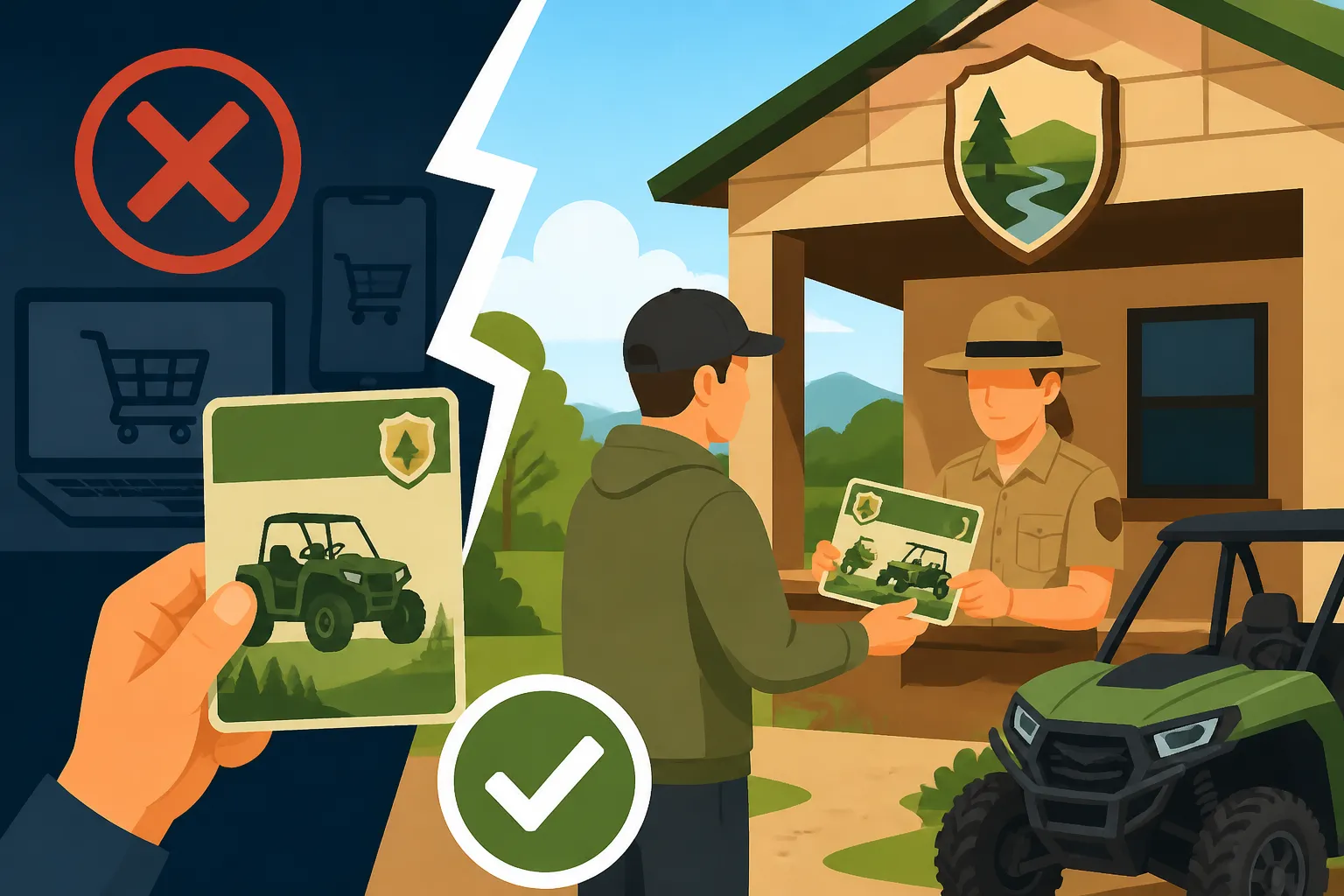
The office-only requirement may feel inconvenient if the park is far from home. But the alternative—treating the permit as a universal online pass—could leave riders with the wrong idea about access. The best approach is to verify where and when the permit can be purchased, whether the office is open, and what documentation or vehicle information staff may need. Do not assume that a park entrance booth, visitor center, or nearby retailer can issue it.
What the permit does not let you do
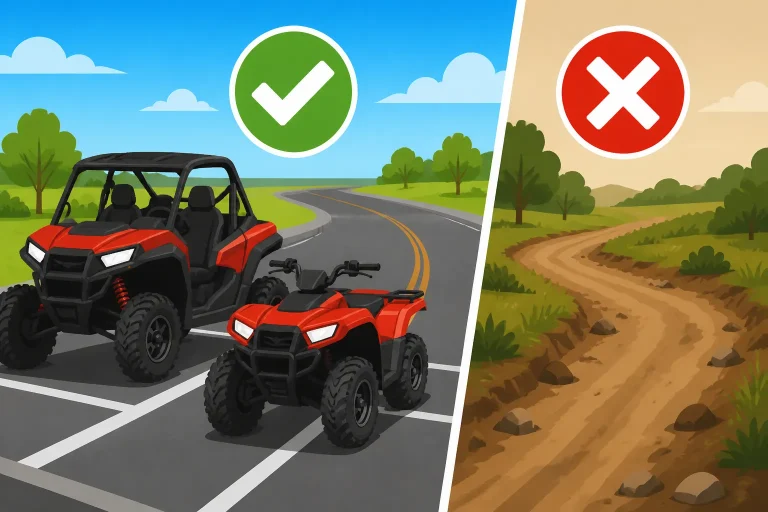
A permit does not authorize riding across a field, on a beach, through a wooded area, or along an unmarked track simply because it is inside a state park. In general, park-road access is different from trail access. Keep the machine on routes where its use is allowed, obey posted restrictions, and do not pass a barrier or closure based on the assumption that your permit grants an exception.
It also does not authorize travel on public streets or highways outside the park. A park permit is not a city tag, vehicle registration, or road-legal conversion. Local rules may apply if you plan to ride on a city street, and state road laws apply outside the park. For related requirements, read Kansas Department Road Riding Rules and Machines Must Stay on Wildlife Department Roads.
A permit should not be treated as proof that every kind of off-road machine is allowed on every park road. Vehicle classification matters. An ATV, a side-by-side, a golf cart, and other unconventional vehicles may be treated differently under applicable rules. If the machine’s classification is unclear, do not rely on its appearance or the name used in a sale listing. Confirm its category and ask whether that category is eligible for the intended park use.
Nor does a state park permit replace a private riding park’s entry rules. Private facilities set their own access requirements, fees, safety rules, and operating limits. A state park permit should not be assumed to work at a private park, a Corps riding area, or a trail system outside the state park system.
A quick comparison can help keep the permit’s limits clear:
| Permit or permission | What it addresses | What it does not automatically provide |
|---|---|---|
| Kansas unconventional vehicle park permit | Certain authorized use within state parks | General trail access or public-road privileges |
| Machine title | Ownership record | Permission to ride in a park or on a street |
| City authorization | Local street use where an ordinance allows it | Access to state park roads or trails |
| Private park pass | Access under that park’s rules | Access to Kansas state parks or public roads |
If your plan involves more than one type of property, treat each location as a separate access question. A machine permitted on an authorized park road may still be prohibited on a nearby trail, county road, or private parcel.
How to confirm the right permit before you travel
A short call to the destination park can save a wasted trip. Ask specifically about the unconventional vehicle permit, not just whether ATVs or UTVs are “allowed.” That broad question can produce an answer that is too general to plan around.
Before calling, have the basics ready: the park you intend to visit, the type of machine, how you plan to use it, and the dates you expect to arrive. If you do not know the machine’s official category, describe its design and check its ownership paperwork. Staff may be able to tell you what information they need, but classification questions may require confirmation through the appropriate state source.
Use this checklist:
- Ask whether the park permits your machine’s category on any roads or areas you intend to use.
- Confirm that the permit is required for that use and ask where it can be purchased.
- Check the office’s hours and whether the permit is available on the day you expect to arrive.
- Ask about current closures, seasonal restrictions, posted routes, and any local conditions.
- Confirm what documents or vehicle details you should bring.
- Ask whether any separate park entrance, camping, or other permit applies to your plans.
- Save the park’s contact information and review posted signs when you arrive.
If you will be riding only at a private facility or on private land with the owner’s permission, do not assume this state park permit is needed. Conversely, do not assume that a private park pass or another state’s sticker satisfies Kansas park requirements. Kansas does not generally honor an out-of-state sticker as a substitute for a Kansas permit; confirm the rules for your exact destination and use. Kansas Honors No Other State Sticker and Kansas Requires No Sticker of Visitors address the separate question of visiting riders and stickers.
Once you have the permit, keep any proof of purchase or permit information accessible and follow the park’s directions about displaying it, if applicable. Then ride only where permitted. A permit is most useful when it is paired with a clear route plan; without that, it is easy to mistake permission to use a limited road for permission to ride broadly around the park.
The office-only sales process is therefore less a sign of statewide trail access than a reminder to check the local details. Confirm the route, the machine category, the permit’s availability, and any current restrictions with the park itself. If the park cannot confirm a legal route for your intended ride, choose a different riding area rather than treating the permit as a general pass.
Disclaimer
This article is for general informational purposes only and does not constitute professional advice. Laws, prices and regulations vary by location and change over time. Consult a qualified professional for guidance on your specific situation.