Title an ATV at the County Treasurer, Not the State
Navigating the world of ATV ownership in Kansas can sometimes feel like you're trying to solve a riddle without all the pieces. One of the biggest head-scratchers for new and even seasoned off-road enthusiasts often revolves around exactly where you need to go to get that all-important title for your machine. Many folks instinctively think "state government" for anything official, but when it comes to titling your ATV in the Sunflower State, that's not quite right. This guide will cut through the confusion and explain precisely why your local county treasurer's office is the only place you'll need to visit, detailing the process, the paperwork, and what to expect when you get there.
Understanding Kansas's Nonhighway Vehicle System
It's easy to get tangled up in the terminology and assume that because an ATV is a vehicle, it must follow the same rules as a car or truck when it comes to official paperwork. But Kansas law carves out a very specific path for off-road machines, creating a system that acknowledges their unique purpose and how they're used. This distinction is crucial to understanding why the titling process is handled the way it is.
Why ATVs Aren't Registered Like Cars
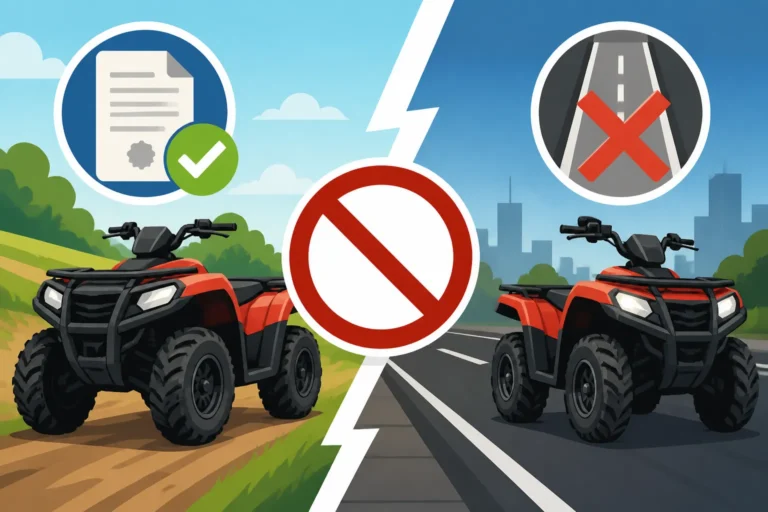
One of the first things that surprises many ATV owners in Kansas is that their machine doesn't get a traditional license plate or annual registration tag. Unlike cars, which are designed and intended for public road use and thus require registration with the state's Department of Revenue, ATVs, UTVs, dirt bikes, and other similar vehicles fall under the umbrella of "nonhighway vehicles." This classification immediately sets them apart, indicating they are generally not permitted on public roads and highways, except for very specific exceptions like agricultural use or crossing designated routes. The state recognizes these machines primarily as recreational or utility vehicles meant for private land, designated riding areas, or specific work-related tasks. This fundamental difference in classification is why the titling process deviates from what you might expect for an on-road vehicle. If you're wondering about the specifics, check out [Kansas Titles ATVs as Nonhighway Vehicles] for a deeper dive into this important classification.
This approach often causes a moment of confusion. You've just bought your shiny new quad, and you're ready to get all your ducks in a row, only to find out there's no yearly sticker to put on it. It can feel like you're missing a step, or that something isn't quite legitimate. Rest assured, this is perfectly normal in Kansas. The absence of a traditional vehicle registration for ATVs is a direct reflection of their nonhighway status. The state's focus for these machines isn't on tracking them for road use, but rather on establishing clear ownership through the titling process. This title serves as your official proof of ownership, much like a car title, but without the accompanying registration for road operation.
The Distinction Between Titling and Registering
Let's clarify a point that trips up many people: titling and registering are two distinct actions. Titling an ATV in Kansas is about proving who owns the machine. It's the legal document that establishes you as the rightful owner, much like the deed to a house. This title is essential for buying, selling, or even insuring your ATV. Without a title, proving ownership can be incredibly difficult, making future transactions or even retrieving a stolen machine a nightmare. When you go to sell your ATV down the road, the buyer will absolutely expect a clean title.
On the other hand, registering a vehicle typically involves obtaining a license plate and paying annual fees to operate that vehicle legally on public roads. Since ATVs are classified as nonhighway vehicles in Kansas, they are generally not subject to this registration requirement for road use. This means you won't be getting an annual sticker or a metal plate from the state for your off-road machine to simply ride it on private land or at a designated trail park. Many owners are surprised to learn that [Kansas Has No OHV Registration] at the state level. While some cities might have local ordinances for UTVs to operate on specific city streets, that's a municipal-level registration, not a statewide OHV registration for all off-road use. It's a critical distinction to remember: you must title your ATV to establish ownership, but you do not register it for general off-road use in Kansas.
The County Treasurer's Role in ATV Titling
When it comes to official government business in Kansas, especially anything involving vehicle records or property, the county government often plays a more central role than you might initially assume. This is certainly the case for ATV titling, where your local county treasurer's office acts as the frontline for processing these crucial documents.
Why Your Local Office is the Go-To Place
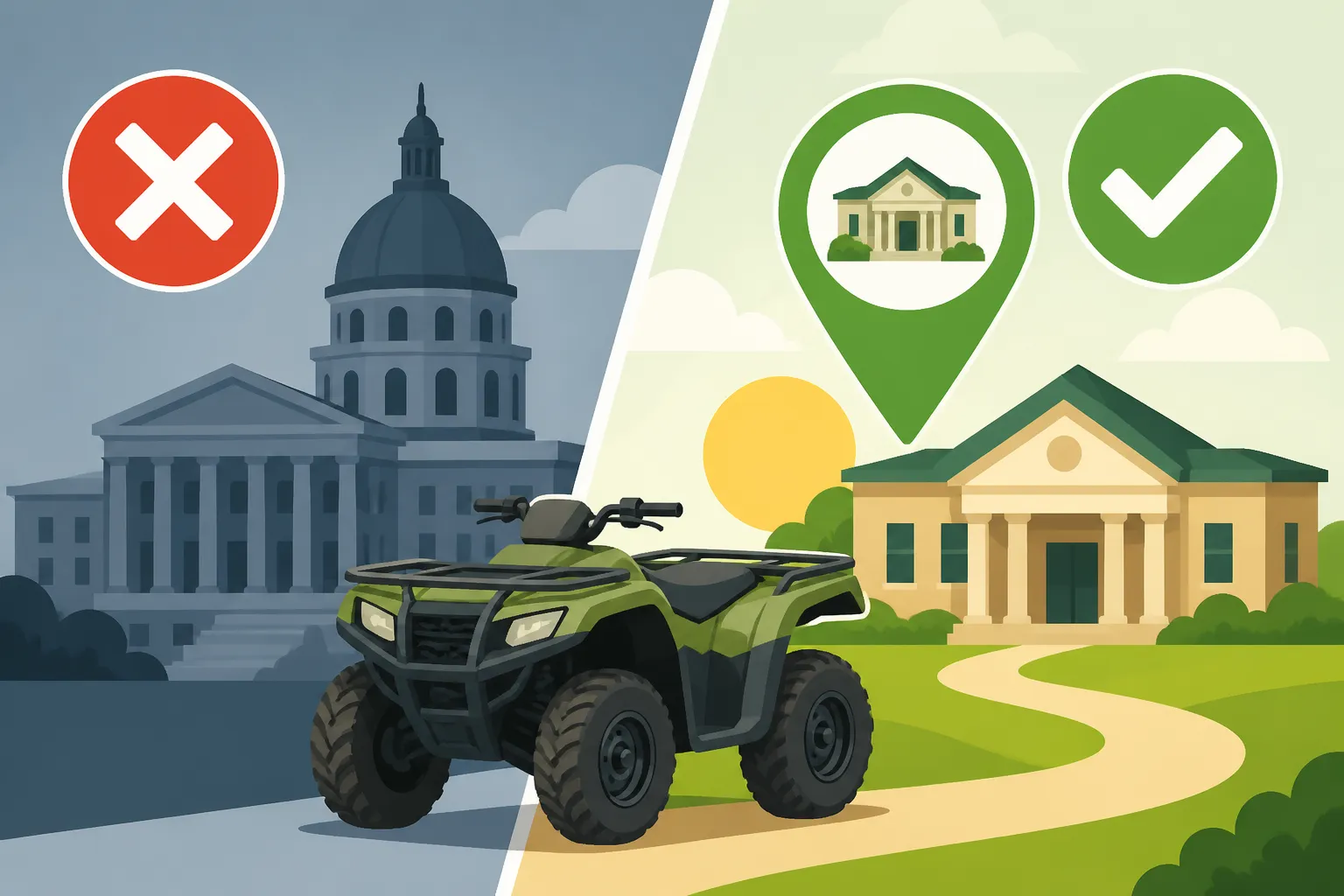
Forget about trying to find a state-level Department of Motor Vehicles (DMV) office for your ATV title; Kansas operates a bit differently. For all vehicle titling, including nonhighway vehicles like ATVs, the process is decentralized and handled at the county level. This means that instead of a single, monolithic state agency overseeing every title application, each of Kansas's 105 counties manages its own vehicle titling through the county treasurer's office. This system is designed to make government services more accessible at a local level, reducing the need for long drives to a distant state capital or regional hub. It's why you'll find a county treasurer's office in virtually every county seat, ready to assist residents with their titling needs. It's a system that truly puts the power in local hands, meaning [Kansas County Treasurers Handle Titles] directly.
This local approach can sometimes lead to slight variations in office hours, specific payment methods accepted, or even how strictly certain documents are interpreted, although the core legal requirements remain consistent statewide. It means that the experience of titling an ATV in Johnson County might feel slightly different from doing so in rural Wallace County, simply due to local office procedures and staffing. However, the fundamental legal framework and the required documentation are the same across the state. The critical takeaway here is to direct your efforts and questions to the county where you reside or where the machine will be principally garaged.
What the County Treasurer Actually Does
The county treasurer's office serves as the official record keeper for vehicle titles within their jurisdiction. When you bring your ATV titling paperwork to them, their staff will review your documents to ensure everything is in order, including proof of ownership, identification, and payment of all applicable fees and taxes. They verify the vehicle identification number (VIN) to ensure it matches the paperwork and hasn't been reported stolen, and they process the sales tax due on the purchase, if applicable. Once everything checks out, they will then issue your Kansas nonhighway vehicle title, typically by mail after a processing period, though some offices might offer temporary proof of application.
Their role is comprehensive, essentially acting as the gatekeepers for legal ATV ownership in the state. They're equipped to answer a wide range of questions, from specifics about required affidavits to clarifications on sales tax. They often hear many questions, and knowing that they are the primary point of contact is key. If you're curious about the kinds of inquiries they field, you might find insight in [Kansas Title Questions Treasurers Hear]. They are there to guide you through the process, but coming prepared with your documents and a basic understanding of the requirements will certainly make your visit smoother. Sometimes, when a situation is a bit out of the ordinary, they might even suggest specific affidavits or forms, some of which you can find templates for on sites like LawDepot, to help establish a clear chain of ownership.
Essential Documents for Titling Your ATV
Getting your ATV titled at the county treasurer's office isn't just a matter of showing up; it's about showing up prepared. The right documentation is the backbone of the entire process, and having everything in order before you walk through the door will save you immense time and potential frustration.
Proof of Ownership: New vs. Used Machines
The most critical piece of paper you'll need is undeniable proof that you are the rightful owner of the ATV. This document varies significantly depending on whether you're titling a brand-new machine or a pre-owned one.
For a brand-new ATV, purchased from a licensed dealer, your primary proof of ownership will be the Manufacturer's Certificate of Origin (MCO). This document, sometimes called a Manufacturer's Statement of Origin (MSO), is essentially the birth certificate of your ATV. It identifies the manufacturer, the vehicle's specifications (make, model, VIN), and certifies that it has never been titled before. The dealer will assign this MCO to you, the first retail purchaser, and it must accompany your title application. It's vital that the MCO is correctly assigned, signed by the dealer, and reflects your name accurately. Make sure you also have the bill of sale from the dealer, as this will confirm the purchase price for sales tax calculation.
When you're dealing with a used ATV purchased from a private seller, things are a little different. Your proof of ownership will typically be the previous owner's Kansas nonhighway title, properly assigned over to you. The seller must sign the title in the designated "Assignment of Title" section, print their name, and include the date of sale and the odometer reading (though for nonhighway vehicles, odometer readings are often recorded as "exempt" if they lack an actual odometer or aren't street-legal). If the previous title was from another state, you'll bring that, and the treasurer will issue a Kansas title based on it. Along with the assigned title, a bill of sale is highly recommended, even if not strictly required by law in all circumstances. A detailed bill of sale clarifies the terms of the transaction, the purchase price, and often includes the VIN, making it a valuable companion piece to the assigned title. You can create a professional-looking one using resources like LawDepot if you're a private seller or buyer. For a complete understanding of all the documents, reviewing [Kansas Title Paperwork Explained] is a good idea. Sometimes, a simple, handwritten bill of sale can be enough to get the job done, especially for older quads or private transactions, as detailed in [Using a Handwritten Bill of Sale to Title a Quad].
Affidavits and Other Supporting Paperwork
Life isn't always straightforward, and sometimes you'll encounter situations where the standard proof of ownership isn't available. This is where affidavits and other supporting documents come into play, helping you bridge the gap and provide the county treasurer with enough information to process your title.
One common scenario is when you buy a used ATV from a private seller, but they've either lost the original title or never had one themselves. In Kansas, you can often use a Nonhighway Affidavit (Form TR-13) in conjunction with a bill of sale to establish ownership. This form essentially allows you to swear under oath that you are the rightful owner and explain the circumstances surrounding the missing title. It's a powerful tool, but it requires honesty and accuracy, as providing false information on an affidavit can have legal consequences. Understanding when and how to use this affidavit is crucial for situations where a clean title transfer isn't possible. You can learn more about these specific forms in [Kansas Nonhighway Affidavits] and specifically about [Using a TR-13 Affidavit When There Is No Title].
Beyond the TR-13, you might need other supporting documents depending on your unique situation:
- Proof of Identification: You'll need a valid government-issued photo ID (like a driver's license or state ID card) to prove your identity.
- Proof of Address: If your ID doesn't show your current Kansas address, you might need a utility bill or other official mail to confirm your residency in the county where you're titling the machine.
- Lien Release (if applicable): If the ATV was previously financed and a lien was recorded on the title, you'll need a lien release document from the lender, proving the loan has been paid off.
- Odometer Disclosure Statement: While often exempt for nonhighway vehicles, some forms may still ask for it, particularly if the vehicle has an odometer.
- Sales Tax Exemption Certificate: If you're exempt from sales tax (e.g., a non-profit organization or a farm purchasing for direct agricultural use), you'll need to provide the appropriate exemption certificate.
- Inheritance Documents: If you've inherited an ATV, you'll need documents like a will, death certificate, or small estate affidavit to prove your legal right to the machine. You can find forms for these legal situations, sometimes even customized for specific state requirements, through online legal document services like LawDepot.
Always call your specific county treasurer's office ahead of time if your situation is complex or you're unsure about required documents. They are the ultimate authority on what's needed for your particular case.
The Titling Process: Step-by-Step
Once you've gathered all your documents and are clear on where to go, the actual process of titling your ATV in Kansas becomes much simpler. Think of it like preparing for a recipe – once you have all the ingredients, following the steps is easy.
Preparing for Your Visit to the Treasurer's Office
Preparation is key to a smooth and successful visit to your county treasurer's office. The last thing you want is to wait in line, only to find out you're missing a crucial piece of paper.
First and foremost, gather all your documents. This includes your proof of ownership (MCO or assigned title), a bill of sale, your valid photo ID, and any necessary affidavits or supporting paperwork. Make copies of everything for your records before you go; it's always good practice.
Next, be aware of the deadlines. Kansas law generally gives you 60 days from the date of purchase (or the date the title was assigned to you) to apply for a new title. Missing this deadline can result in late filing penalties, which are an extra cost nobody wants to incur. This 60-day window starts ticking from the moment the title is assigned or the MCO is dated. For more details on this, see [Kansas Gives You 60 Days to Apply] and [Sixty Days From the Assignment Date]. Mark your calendar!
It's also a good idea to check your specific county treasurer's office hours and accepted payment methods. While many offices accept debit/credit cards, some might still prefer cash or check for certain transactions. A quick call or a visit to their county website beforehand can save you a wasted trip. Some offices also allow you to fill out portions of the title application form (Form TR-212a, Application for Certificate of Title) online and print it before your visit, which can speed up the process once you're there.
Finally, know your ATV's Vehicle Identification Number (VIN). This 17-character alphanumeric code is unique to your machine and will be required on all paperwork. Double-check that the VIN on your physical ATV matches the VIN on all your documents before you head to the office.
What to Expect at the Counter
When you arrive at the county treasurer's office, you'll likely take a number and wait your turn, especially during peak hours. Once called, you'll present all your prepared documents to the clerk.
The clerk will carefully review your paperwork. They'll verify your identity, ensure the VINs match, check for proper signatures and assignments on the title or MCO, and calculate any sales tax and fees due. Be prepared to pay:
- The Title Fee: In Kansas, the fee for a nonhighway title is quite modest. It's often referred to simply as the [Kansas ATV Title Cost], which is typically a flat fee. You can find out [What the $10 Nonhighway Title Fee Covers] in detail elsewhere, but suffice it to say, it's a small part of your overall cost.
- Sales Tax: This is usually the largest portion of your payment. Kansas law requires sales tax to be collected by the county treasurer at the time of titling for most purchases. The sales tax is based on the purchase price you declared on your bill of sale or dealer invoice, and it includes both the state sales tax rate and any applicable local (county and city) sales tax rates for where you live. This is why [Kansas Sales Tax Collected at Titling] is such an important part of the process. If you bought from an out-of-state dealer who didn't collect Kansas sales tax, you'll pay it all at the treasurer's office.
Once all documents are verified and fees/taxes are paid, the clerk will process your application. They might issue you a temporary receipt or proof of application. The actual physical title certificate will then be mailed to you, typically within a few weeks, though processing times can vary. It's not an instant print-and-take document, so don't expect to walk out with the official title in hand immediately.
Common Pitfalls and Misconceptions
Despite the relatively straightforward process, many ATV owners still encounter snags or operate under incorrect assumptions when it comes to titling their machines in Kansas. Understanding these common pitfalls can help you avoid them and ensure a smooth experience.
Thinking the State Handles It
This is perhaps the most common misconception. It's natural to assume that any official vehicle document, especially something as important as a title, would be handled by a prominent state agency like a Department of Motor Vehicles or a Secretary of State's office. After all, that's how it works in many other states, and how many other vehicle-related functions are managed. However, as we've discussed, Kansas takes a decentralized approach, entrusting the task of vehicle titling, including for ATVs, to the county treasurer's offices.
Trying to navigate a state-level website or calling a state hotline for ATV titling information will likely lead you down a rabbit hole of frustration. You'll either find information pertinent only to road-legal vehicles or be redirected back to your county. The critical point to remember is that the state sets the laws and requirements, but the enforcement and processing of those laws for titling happen at the local county level. Wasting time contacting state offices or even driving to state facilities will only delay your ability to get your title. Always direct your titling inquiries and visits to the specific [Kansas County Treasurer Offices] where you reside. Their staff are specifically trained on these local processes and state statutes.
The 60-Day Deadline and Penalties
Another pitfall that catches many off-guard is the strict 60-day deadline for titling your newly acquired ATV. It's easy for time to slip away, especially after the excitement of a new purchase. Maybe you're busy, or you figure it's not a big deal if you get to it next month. However, Kansas law is quite clear: you have 60 calendar days from the date of purchase or the date the title was assigned to you by the seller to submit your application for a new title.
Failing to meet this deadline will result in late filing penalties. These penalties are an additional charge tacked onto your regular title fees and sales tax, and they can add an unnecessary expense to your ATV ownership. The exact amount of the penalty can vary, often increasing the longer you delay beyond the 60-day window. It's a penalty designed to encourage prompt processing and maintain accurate ownership records. We've explored this deadline in more detail in [Kansas's 60-Day Titling Deadline], and specifically what happens if you miss it in [Kansas Title Late Filing Penalties]. Avoid this unnecessary cost by being proactive. Set a reminder on your phone, put a note on your calendar, or even better, make an appointment with your county treasurer's office as soon as you have all your paperwork in hand, well within that two-month window.
| Feature | New ATV from Dealer | Used ATV from Private Seller |
|---|---|---|
| Primary Proof of Ownership | Manufacturer's Certificate of Origin (MCO) | Previous Owner's Assigned Title |
| Supporting Document | Dealer's Bill of Sale | Bill of Sale (recommended, esp. for price) |
| Required Forms | Application for Certificate of Title (TR-212a) | Application for Certificate of Title (TR-212a) |
| Special Forms (if no title) | N/A | Nonhighway Affidavit (TR-13) + Bill of Sale |
| Sales Tax | Collected at County Treasurer's Office | Collected at County Treasurer's Office |
| Identification | Valid Photo ID | Valid Photo ID |
| Lien Release | N/A (unless dealer holds lien) | Required if prior lien was recorded |
| Deadline | 60 days from purchase date | 60 days from assignment date |
| Late Penalties | Yes, if deadline missed | Yes, if deadline missed |
Remember, while the state of Kansas establishes the framework for titling nonhighway vehicles, the practical application and processing of those titles rest squarely with your local county treasurer's office. By understanding this decentralized system, gathering the correct paperwork, being mindful of deadlines, and heading to the right place from the start, you'll navigate the ATV titling process in Kansas with confidence and ease.
Disclaimer
This article is for general informational purposes only and does not constitute professional advice. Laws, prices and regulations vary by location and change over time. Consult a qualified professional for guidance on your specific situation.