Passengers the Factory Built the Machine to Carry
One of the trickiest parts of enjoying your off-road machine in Kansas isn't always about where you can ride, but who you can ride with. It's easy to get confused by the different rules for ATVs versus UTVs, and when you add in factors like age, safety gear, and what your machine was originally designed for, it can feel like navigating a legal maze. This guide aims to clear up the confusion about carrying passengers on your ATV or UTV in Kansas, focusing on the critical distinction of how the machine was designed right from the factory.
Understanding Kansas Law and Factory Design for Passengers
When it comes to carrying passengers on an off-road machine in Kansas, the very first thing you need to consider isn't just common sense, but what the manufacturer intended. Kansas law, while not always explicitly stating "thou shalt not carry two on a single-seat ATV," heavily implies that you should adhere to the vehicle's design and safety standards. This means understanding the fundamental differences between an ATV and a UTV, particularly concerning their seating and passenger capacity as they rolled off the assembly line.
ATVs, or All-Terrain Vehicles, are generally designed for a single operator. Their narrow stance, saddle-style seat, and handlebar steering are all engineered for the dynamic weight shifts and balance required by one rider. The entire machine's stability and handling characteristics are based on this single-rider assumption. Trying to add a second person fundamentally alters this design, often making the machine unstable and much harder to control, especially over uneven terrain or when making sharp turns. The law implicitly supports this design intention by focusing on safe operation, which is compromised by overloading.
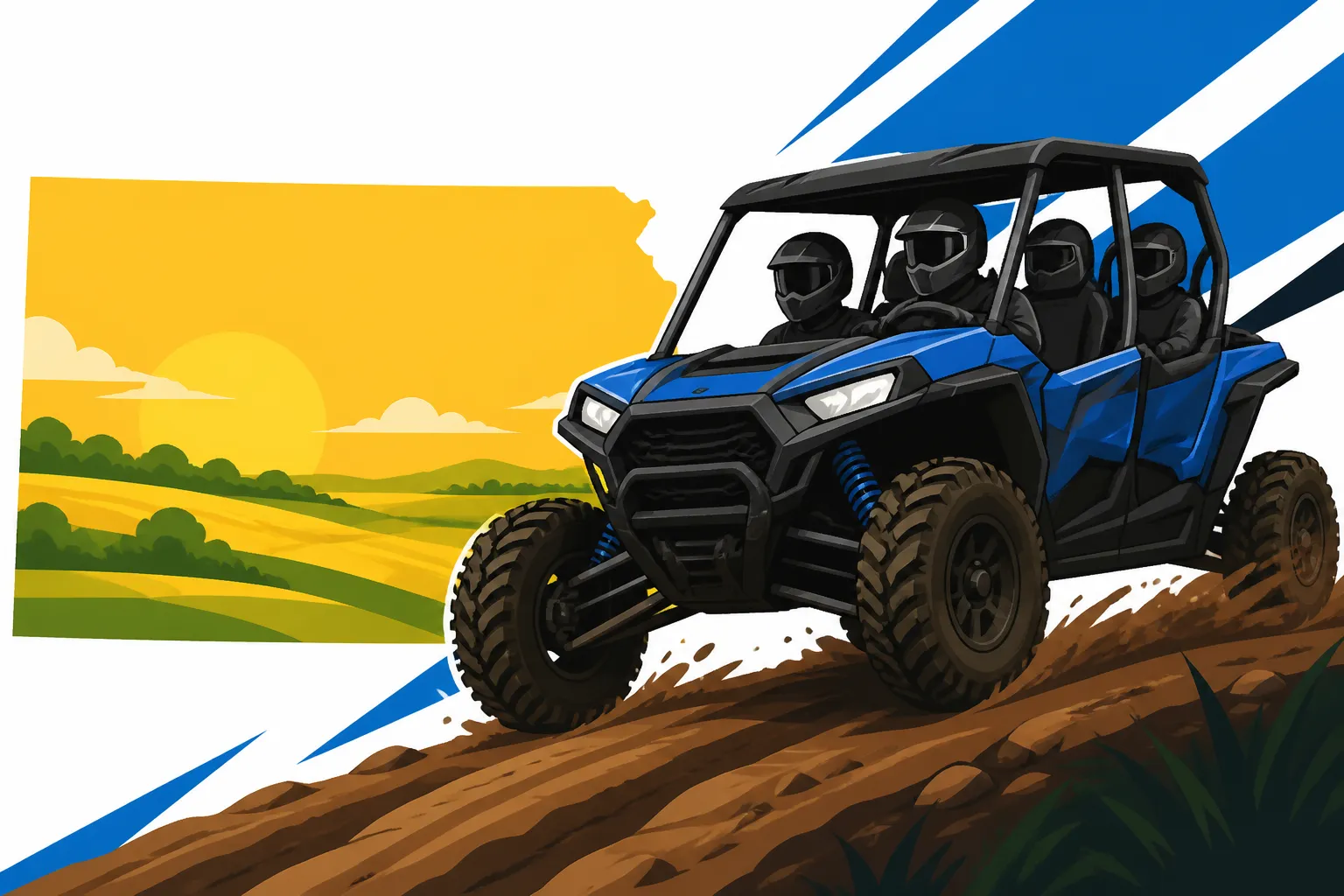
UTVs, or Utility Terrain Vehicles, on the other hand, are explicitly designed with multiple passengers in mind. They feature side-by-side seating, often bench or bucket style, a steering wheel, and a roll-over protection structure (ROPS). These machines are built with a wider wheelbase and a lower center of gravity to accommodate additional weight and offer a more stable platform for multiple occupants. When a manufacturer builds a UTV with two, four, or even six designated seating positions, they are providing a clear indication of its intended passenger capacity, and Kansas statutes align with this design by allowing passengers in these designated seats.
How Manufacturers Define Passenger Capacity
Every ATV and UTV comes with specifications from its manufacturer that detail its intended use, weight limits, and passenger capacity. These aren't just suggestions; they are crucial safety guidelines derived from extensive engineering and testing. For ATVs, you'll almost always find a sticker or a note in the owner's manual stating "Operator Only" or similar language, indicating it's a single-rider machine. Ignoring this is not just risky, it's operating the machine outside of its intended design parameters.
With UTVs, the manufacturer's intent is evident in the design itself. If your UTV has two bucket seats and two seatbelts, it's designed for two occupants. If it has a bench seat with three seatbelts, it's for three. Modern UTVs, from popular brands like Polaris, Can-Am, and Honda, offer a range of configurations, including four-seat and even six-seat models, all with corresponding seatbelts and passenger hand-holds. These integrated safety features are testament to their multi-passenger design and are what Kansas officials look to when determining if a machine is being operated safely and legally with passengers.
The distinction is critical because it forms the basis of what constitutes safe and legal operation. A Kansas sheriff or game warden isn't going to guess what your machine can handle; they'll look at its original design. If you're on a single-seat ATV with a passenger, you're not just risking a ticket; you're putting yourself and your passenger in a dangerous situation. Always check your owner's manual and the decals on your machine for definitive information on passenger capacity.
ATVs: Designed for One, Often Ridden by Two (The Reality vs. The Rule)
Let's be honest: almost every ATV owner in Kansas has probably, at some point, seen or even given a ride to a passenger on a single-seat ATV. It's a common sight out in rural areas, on hunting trips, or just around the farm. While it might seem convenient or harmless, the reality is that ATVs are overwhelmingly designed for a single operator, and riding with a passenger on a machine built for one introduces significant safety risks and potential legal headaches. This is where the practical application often clashes with the fundamental design principles and the spirit of safety laws.
The core issue is engineering. An ATV's handling, balance, and suspension system are calibrated for a single rider's weight distribution and control inputs. When you add a passenger, especially one not actively participating in balancing the machine, it drastically shifts the center of gravity, making turns more difficult and increasing the risk of rollovers. The passenger often has nothing secure to hold onto, limited foot placement, and their weight can overwhelm the ATV's brakes and suspension, particularly on rough terrain or during sudden stops. This isn't just about comfort; it's about the machine's ability to respond safely in an emergency.
While Kansas law doesn't explicitly have a "one rider per ATV" statute for all situations, the general safety provisions can certainly be applied. For example, if you're involved in an accident while carrying an extra passenger on a single-seat ATV, you could face charges for reckless operation or endangerment, especially if injuries occur. Furthermore, your insurance policy might deny a claim if you were operating the vehicle outside its manufacturer's intended use. It's a risk that extends beyond just getting a ticket, impacting your liability and financial well-being.
Some aftermarket companies, like SuperATV, offer products such as passenger seats designed to attach to single-rider ATVs. While these might seem like a solution for carrying an extra person, it's crucial to understand that these accessories do not magically transform a single-rider ATV into a multi-passenger vehicle in the eyes of the manufacturer or the law regarding its fundamental design. Adding an aftermarket seat doesn't change the ATV's original engineering or its stability characteristics. Even with a dedicated passenger seat, the ATV remains a machine designed for one, and the inherent risks of overloading and improper weight distribution persist. Always prioritize the machine's factory design and official guidelines over aftermarket modifications that might suggest otherwise, especially when it comes to passenger safety.
UTVs: Embracing the Multi-Passenger Design
Unlike their ATV counterparts, UTVs (Utility Terrain Vehicles) truly shine when it comes to carrying passengers, because that's exactly what they were designed to do. These machines, often referred to as side-by-sides, are a fantastic option for families, work crews, or anyone who wants to share the off-road experience with others. The very name "side-by-side" hints at their fundamental design: occupants sit next to each other, much like in a car, rather than straddling a saddle. This design choice forms the bedrock of their multi-passenger capability and is what makes them a legal and safer choice for group outings in Kansas.
From the factory, UTVs come equipped with features that explicitly support multiple riders. You'll find distinct seating positions, whether they're individual bucket seats or broader bench seats, each paired with its own seatbelt. This is a crucial distinction; every passenger should have a designated seat and a functioning seatbelt. The roll-over protection structure (ROPS) is another key factory-installed safety feature that provides a cage-like enclosure, offering protection in the event of an overturn, which is a significant upgrade in passenger safety compared to an open ATV. Many models also include passenger grab handles, ensuring that occupants have a secure place to hold on during bumps and turns.
Different UTV configurations cater to various needs and group sizes. You can easily find two-seat models perfect for a couple, four-seat models ideal for a small family, and even six-seat versions for larger groups or work teams. The great thing is that these seating arrangements are integrated into the machine's chassis and design, meaning the manufacturer has accounted for the weight and distribution of multiple passengers in the UTV's suspension, braking, and stability systems. This thoughtful engineering is why you can generally trust the factory-provided seating capacity when planning your rides. This aligns perfectly with [Kansas Rules for Passengers on a UTV], emphasizing designated seating and safety.
While many UTVs are primarily used for recreation, such as exploring trails or dune riding, a significant portion also serves as work-site utility vehicles on farms, ranches, and industrial sites across Kansas. Whether it's a Polaris Ranger, a John Deere Gator, or a Kawasaki Mule, these machines are built to haul gear and people, offering robust platforms for tasks that require multiple hands on deck. The principle remains the same: if the factory built it with multiple seats and seatbelts, it's intended for those passengers. Always make sure everyone buckles up and adheres to the manufacturer's weight limits, which are usually found in the owner's manual or on a decal on the vehicle itself. Understanding [Why a Steering Wheel Changes Your Title Class] can also shed light on why UTVs are treated differently from ATVs in terms of design and multi-passenger use.
| Feature | ATV (All-Terrain Vehicle) | UTV (Utility Terrain Vehicle) |
|---|---|---|
| Seating Type | Saddle-style | Bench or bucket seats |
| Passenger Design | Primarily single-operator | Designed for multiple passengers |
| Steering | Handlebars | Steering wheel |
| Seatbelts | Not typically found for operator | Factory-installed for all designated seats |
| ROPS (Roll-Over Protection Structure) | Not typically present | Standard feature for occupant safety |
| Stability | Dynamic rider balance required | Wider wheelbase, lower center of gravity for inherent stability |
| General Use | Recreational, sport riding, light utility | Recreational, utility, work-site, family transport |
| Kansas Law Implication | Generally discouraged/prohibited for passengers | Permitted for passengers in designated, belted seats |
Safety Considerations Beyond the Law: Protecting Your Passengers
While understanding the letter of the law and manufacturer's intent is crucial, true responsibility goes beyond simply avoiding a ticket. When you carry passengers on your UTV in Kansas, you're taking on the significant responsibility of their safety. This means making conscious choices and implementing practices that prioritize their well-being, even when the law might not explicitly demand it. After all, nobody wants a fun day out to end in an accident or injury.
First and foremost, let's talk about helmets. While Kansas doesn't have a universal helmet law for adult ATV or UTV riders, it's an absolute no-brainer for passenger safety. Children, especially, should always wear a properly fitted helmet, regardless of what the statute says. A helmet can be the single most effective piece of gear to prevent severe head injuries in a rollover or collision. Investing in good quality helmets for all your passengers is one of the best decisions you can make. This is especially important for young riders, and relates directly to [Who Has to Wear a Helmet on a Kansas ATV?] for younger riders.
Age restrictions for passengers are another critical point, particularly for youth. Many manufacturers specify minimum age requirements for passengers on their UTVs, often based on the child's ability to hold onto hand-holds, keep their feet on the floorboards, and fit securely in a seatbelt. [Kansas Rules for a Child Passenger] highlight the importance of proper supervision and ensuring a child is physically capable of riding safely. Never allow a child to ride unrestrained or in a position not designed for a passenger. Their smaller size and developing motor skills make them more vulnerable to injury. Always refer to your UTV's owner's manual for specific age and size recommendations for passengers.
Beyond helmets, encourage all your passengers to wear appropriate riding gear. This includes long pants, long-sleeved shirts, sturdy over-the-ankle boots, and gloves. While it might seem excessive on a hot Kansas day, this gear provides crucial protection against scrapes, cuts, and minor impacts, as well as shielding from sun and debris. Eye protection, whether through goggles or a helmet visor, is also vital to protect against dust, bugs, and branches, ensuring clear vision for everyone on board.
Finally, your driving habits must adapt when carrying passengers. This means reducing your speed, especially on unfamiliar or challenging terrain. Avoid abrupt turns, sudden acceleration, or aggressive maneuvers that could jostle or unseat your passengers. Communicate with your passengers throughout the ride; ask if they're comfortable, if they need a break, or if they're feeling secure. Before you even set off, do a quick pre-ride check: ensure all seatbelts are fastened correctly, passengers know where the hand-holds are, and everyone understands the basic rules of the ride. Remember, even if you are just riding on private property or a county road, having passengers means you have an increased responsibility to operate your machine cautiously and with utmost care. Knowing [Kansas Rules for Riding a County Road] is helpful, but common sense and caution are paramount.
Disclaimer
This article is for general informational purposes only and does not constitute professional advice. Laws, prices and regulations vary by location and change over time. Consult a qualified professional for guidance on your specific situation.