Minimum Ages a Kansas Riding Park Sets
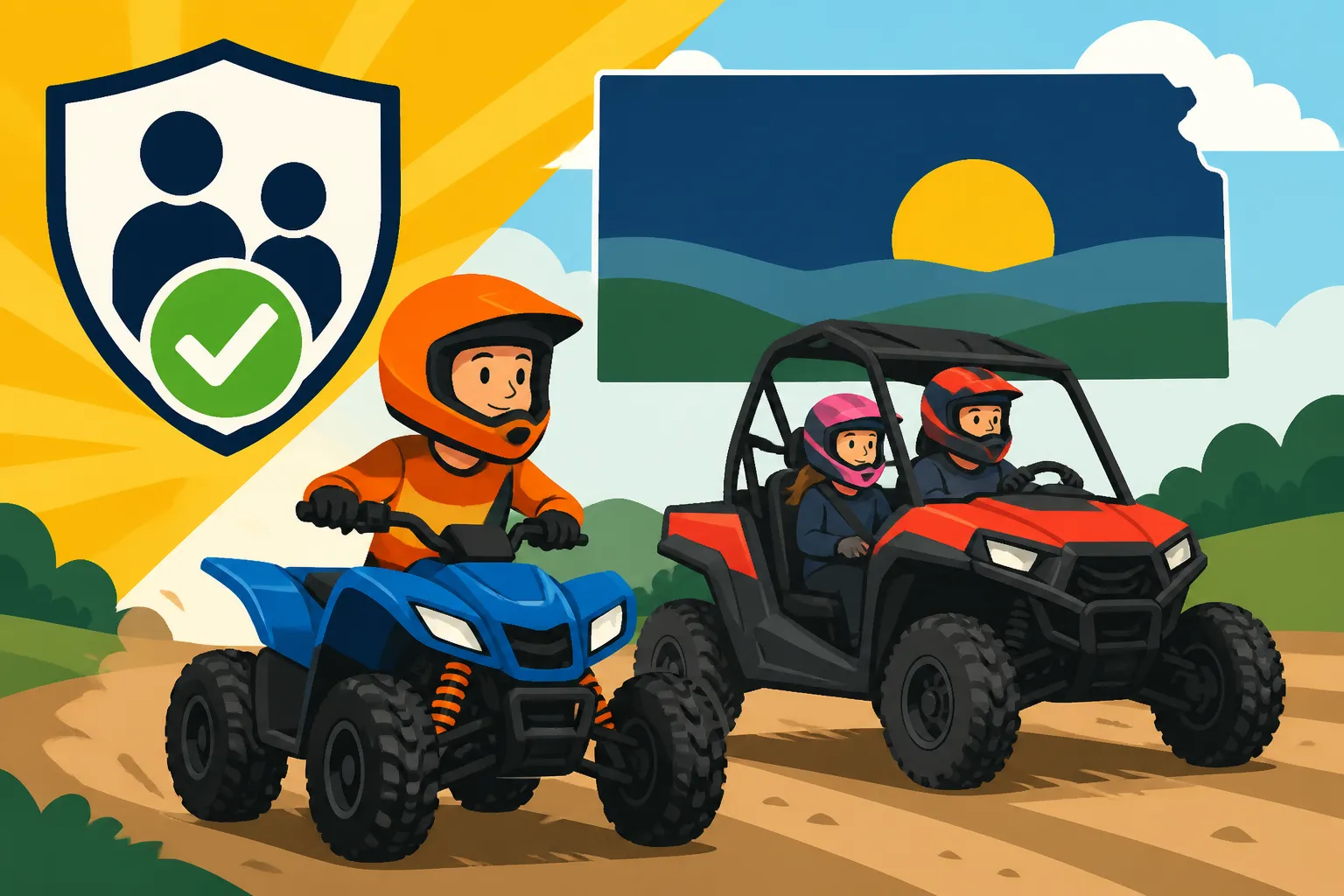
A child’s age alone does not tell you whether they can ride at a Kansas ATV or UTV park. Each private park can set its own minimum ages, supervision rules and machine restrictions, and those rules may differ for riders and passengers. Before you load up, confirm the park’s current policy and make sure the child, machine and planned trails are a safe match.
Why Kansas Riding Parks Set Their Own Age Limits
A riding park’s minimum age is usually a site rule, not a single age limit that applies to every private park in Kansas. Parks manage different terrain, machines, traffic and levels of risk, so one may allow younger riders on certain machines or trails while another sets a higher minimum or requires an adult to supervise.
That means a rule you heard about at one park may not apply at another. Even within one park, minimum ages can vary by activity: riding an ATV, driving a UTV, riding as a passenger, using a practice area or joining a group event. Check the park’s current rules rather than relying on an old post, a friend’s recollection or the age policy at a different facility.
Kansas does not have one statewide age rule that replaces a private park’s own admission and riding policies. State and local requirements may still matter for particular activities, especially if a machine will be used on a public road. Park access and public-road use are separate questions; see Kansas Rules for a Teen Rider if you are also considering road riding.
A park may set age limits for practical reasons, such as:
- Machine size and power: A youth-sized quad is different from a full-size sport ATV or a large side-by-side.
- Trail conditions: Narrow routes, steep slopes, rocks, sand and water crossings call for different skills.
- Traffic and visibility: A rider may share trails with larger or faster machines.
- Supervision: Staff may require a parent or other responsible adult to remain nearby.
- Passenger safety: A child who can ride alone may not meet the park’s requirements to ride as a passenger.
- Liability and emergency response: Parks may set age and waiver rules to manage risks and respond consistently if something goes wrong.
A minimum age is only an entry condition. It does not guarantee that a child is ready for a particular machine or trail. Use the park’s age policy as a starting point, then consider the child’s experience, size, confidence and ability to follow directions.
What to Confirm Before Bringing a Child
A quick call or message to the park can prevent a wasted trip and, more importantly, a mismatch between the child and the riding conditions. Ask about the exact activity your family plans to do. “Can my 12-year-old ride?” is less useful than explaining whether the child will operate a youth ATV, drive a UTV, ride as a passenger or join a beginner group.
| Question | Why it matters |
|---|---|
| What is the minimum age to operate this type of machine? | A park may distinguish between ATVs, UTVs and youth-sized machines. |
| Does the rule change by trail or activity? | A practice area and a difficult trail may have different requirements. |
| Must a parent or adult supervise? | The adult may need to stay on site, ride nearby or be present at check-in. |
| Can a child ride as a passenger? | Passenger rules may differ from the age requirement for operating a machine. |
| Does the machine need to be a particular size or type? | A rider’s age alone does not establish that a machine is appropriate. |
| What protective gear is required? | Helmet and other equipment rules can be park-specific. |
| Does a parent need to sign a waiver? | Parks may have their own forms and check-in procedures for minors. |
| What identification or proof is needed? | Staff may ask to confirm a child’s age or the machine’s ownership. |
Ask about riders and passengers separately
Do not assume that a child who meets the minimum age to operate a machine is automatically allowed to ride as a passenger, or vice versa. The park may have separate limits for each role. A UTV passenger also needs a proper seat and restraint, and the machine must be designed to carry that passenger. A child should never be carried in a spot that the manufacturer did not intend as a passenger seat.
For more on this distinction, review Kansas Rules for a Child Passenger. A private park may impose additional rules on top of general safety considerations, so confirm its policy directly.
Clarify supervision and paperwork
“Adult supervision required” can mean different things. The adult might need to accompany the child on the trail, remain in the riding area, or simply be present at the park. Ask who qualifies as the responsible adult and whether the adult must be the child’s parent or legal guardian.
Also ask whether a parent must sign a waiver for each minor, whether all riders need to check in together, and whether the park requires a particular form of identification. Private parks may use their own waivers and admission procedures; Kansas Private Park Waivers and Rules explains why it is worth checking those details before arrival.
Confirm equipment and experience expectations
Age is not the only requirement that can stop a young rider at the gate. A park may require helmets, set equipment standards, or prohibit certain machines. Check Kansas Private Park Helmet Rules for more on park-specific helmet policies. If you are buying a helmet, make sure it is the right size and meets the relevant safety standard; a listing on Amazon is not a substitute for checking fit, certification and the park’s requirements.
Ask whether the park has a beginner area, marked easier routes or a recommended skill level. Trail difficulty labels are not always standardized across facilities, so use the park’s own descriptions and ask what they mean. Kansas Trail Difficulty Ratings can help frame the questions to ask.
Match the Child, Machine and Trail
A child can meet a park’s age threshold and still be poorly matched to a machine or route. A responsible decision considers several things together: the child’s size, ability to operate the controls, experience, the machine’s power and the terrain.
A youth machine should fit the rider well enough for them to reach the controls and maintain a stable riding position. The child should understand how to stop, turn, use the throttle smoothly and respond to instructions. If they are nervous, struggling with the controls or unable to keep up with the adult supervising them, choose an easier option or postpone the ride.
A machine should not be selected only because the park allows a rider of that age. Check the manufacturer’s guidance for the machine and use a model that is appropriate for the child. Avoid carrying a passenger on a single-rider machine, even if the passenger is small or the trip seems short.
Start with manageable terrain
For a first visit, ask whether there is a designated practice space or an easy route where the child can get comfortable without pressure from faster traffic. Keep the first outing short enough that the child can stay alert. Tiredness, heat, dust and excitement can make it harder to follow directions and judge hazards.
Use the park’s posted signs and directions, and do not treat an easy trail as risk-free. A child needs room to stop safely, see other riders and respond to changing ground conditions. If the park does not describe a route as suitable for beginners, ask staff before taking a young or inexperienced rider onto it.
Families comparing places to ride can also use Kansas Trails for Kids as a starting point, while confirming age and machine rules with each facility. Private parks set their own policies, and a trail that works for one child may not suit another.
Set a clear adult-supervision plan
Before unloading, decide which adult is responsible for each child. Agree on where to meet if riders become separated, what to do if a machine stops and which routes the child may use. Keep the child within the agreed riding area and make sure they know to stop and wait if they cannot see the supervising adult.
Do not let several children ride ahead simply because they know the route. A supervising adult needs to be able to see or promptly reach the child, and the plan should account for differences in riding ability. If adults in the group are riding separate machines, decide who is watching which child before leaving the staging area.
A Practical Check-In Plan for Families
Use a short, specific checklist before you travel. A park’s website may answer some questions, but call or message if the policy is unclear, especially if the child is close to the stated minimum age or the group is bringing a mix of machines.
- Identify the exact park and activity. Ask about the specific ATV or UTV activity, not only general admission.
- Give the child’s age and riding role. State whether the child will operate a machine or ride as a passenger.
- Describe the machine. Mention whether it is youth-sized, an ATV or a UTV, and how many people it is designed to carry.
- Ask about supervision. Confirm where the responsible adult must be and whether they need to ride with the child.
- Check the terrain and skill expectations. Ask about beginner routes, practice areas and any restrictions for young riders.
- Confirm gear and paperwork. Ask about helmets, other required equipment, waivers, identification and proof of ownership.
- Check conditions before departure. Weather, closures or special events can affect which areas are open and what rules apply.
Save the park’s response or write down the name of the person who answered and the date you checked. Policies can change, and a clear record helps if you are arranging a group visit or traveling a long distance. Do not assume that a past visit settles the rules for a later trip.
If the park cannot give a clear answer about a child’s age, machine or supervision requirements, pause before unloading. Choose a facility with rules that are clear and a riding environment that suits the child. You can also compare the posted requirements at Kansas Rocks Park Rules for Riders and Kansas Syracuse Dunes Park Rules, remembering that each park’s policy applies only at that location.
Finally, age eligibility does not replace ordinary preparation. Inspect the machine, check protective equipment, explain the park’s signs and rules, and agree on when the child should stop riding. If the child is uncomfortable or conditions become difficult, ending the ride early is a sensible choice, not a failure.
Disclaimer
This article is for general informational purposes only and does not constitute professional advice. Laws, prices and regulations vary by location and change over time. Consult a qualified professional for guidance on your specific situation.