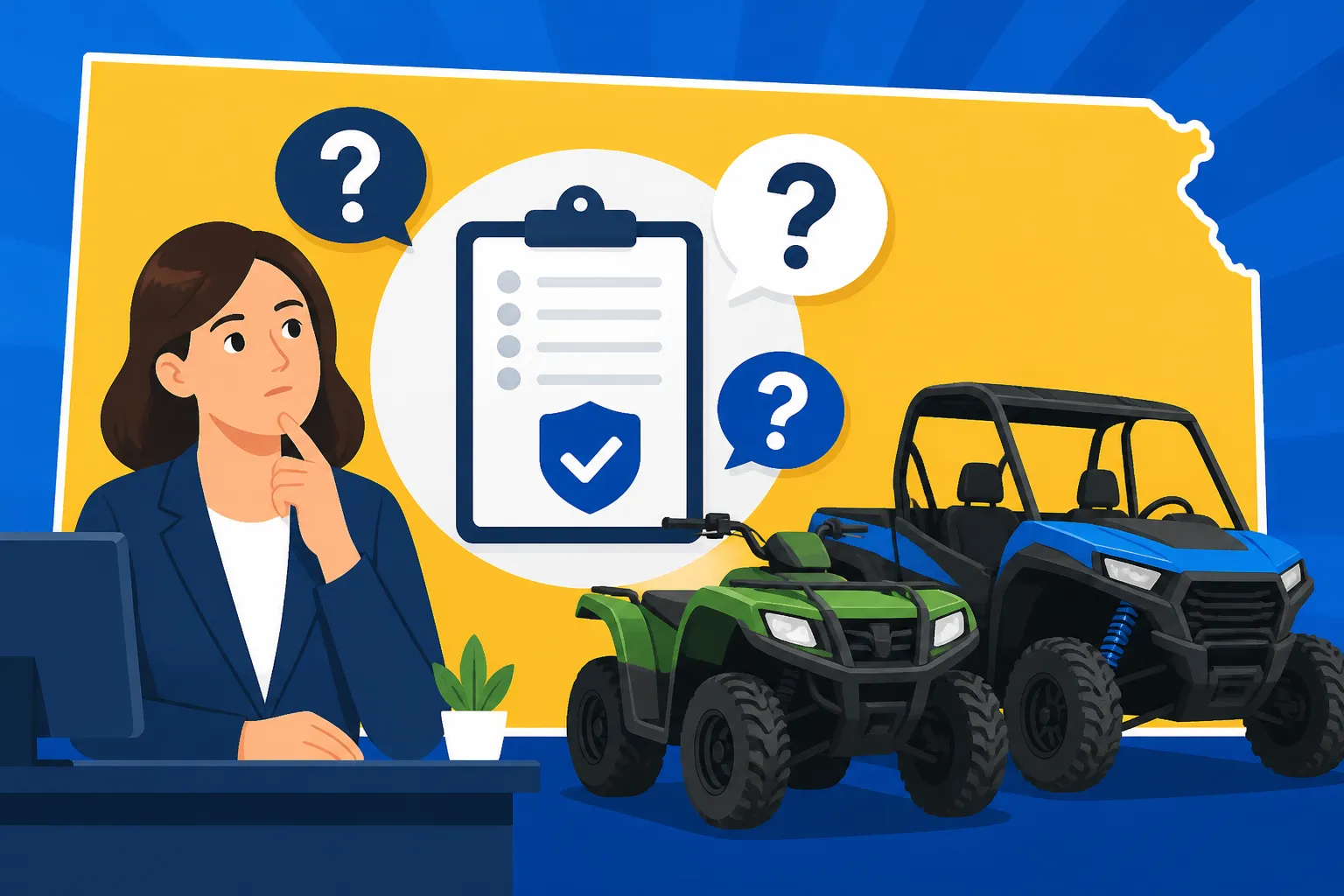
Kansas Title Questions Treasurers Hear
The world of ATV and UTV titling in Kansas can feel like navigating a maze blindfolded, especially when you're trying to figure out what paperwork you need or why things work a certain way. Many folks show up at their local county treasurer's office with a machine they just bought, only to realize they're missing a crucial piece of the puzzle. This guide aims to clear up some of the most common questions and frustrations that Kansas county treasurers hear daily, helping you get your off-road vehicle properly titled without unnecessary headaches.
Understanding the Basics of Kansas Nonhighway Titles
Before we dive into the nitty-gritty, let's establish a foundational understanding of how Kansas views ATVs and UTVs for titling purposes. This isn't like titling your family car or even a motorcycle; there are specific distinctions that often trip people up, and the county treasurer's clerks are usually the first line of defense in explaining these nuances.
What Exactly is a Nonhighway Vehicle in Kansas?
One of the biggest sources of confusion stems from the very classification of your ATV or UTV. In Kansas, most all-terrain vehicles and utility terrain vehicles fall under the umbrella of "nonhighway vehicles." What does that mean in practical terms? It means the state views these machines as primarily designed for off-road use, not for regular travel on public roads and highways. This classification is critical because it dictates how your machine is titled and what, if any, registration it requires.
For many owners, especially those new to the off-road world, this can be a significant "aha!" moment. They might assume that because their neighbor drives a UTV on city streets in a different town, theirs must be treated the same. However, the initial state classification as a nonhighway vehicle is a blanket rule that applies across the board, setting the stage for specific titling procedures. It's truly a foundational piece of information, and understanding [How Kansas Law Defines a Nonhighway Vehicle] is the first step to avoiding misunderstandings at the treasurer's counter.
The All-Important $10 Title Fee
When you finally get to the treasurer's office to title your ATV or UTV, one of the first things you'll encounter is the title fee. In Kansas, for nonhighway vehicles, this fee is a flat $10. It might seem surprisingly low, especially compared to the fees associated with titling a car or truck, and that often leads to questions about what it actually covers.
This $10 fee is a one-time cost to establish official ownership of your machine. It pays for the creation and issuance of your Kansas Nonhighway Title, which is a crucial document proving that you are the legal owner. What it doesn't cover, and this is where more confusion arises, is any form of annual registration or road-use tags. Think of it purely as the administrative cost for the ownership record itself. It's a small but mighty fee that validates your legal claim to your off-road pride and joy, so make sure you budget for [Kansas Charges $10 for a Title] as part of your purchase.
Why No Annual Tag?
This is perhaps the most frequently asked question at county treasurer's offices regarding ATVs and UTVs: "Where's my license plate?" or "When do I renew my tags?" The simple, and often surprising, answer is: there isn't one. Kansas law explicitly states that nonhighway vehicles are exempt from annual registration and the associated tag fees.
This exemption directly ties back to their nonhighway classification. Since these machines are not designed or legally permitted for general public road use by default, there's no need for an annual registration sticker or license plate typically associated with street-legal vehicles. For many, this is a relief, as it saves money and hassle. However, it also underscores the limitations of where you can legally operate your ATV or UTV. It’s important to remember that [Kansas Has No OHV Registration] because the state fundamentally distinguishes these vehicles from those meant for the highway. Don't confuse the lack of an annual tag with a free pass for road use; it simply means the state doesn't track these machines for highway purposes. That's [Why a Kansas Nonhighway Title Never Comes With a Tag].
Navigating the Titling Process: Common Hurdles
Even with the basic definitions down, the actual process of titling an ATV or UTV can throw some curveballs. County treasurers and their staff frequently help people navigate common administrative pitfalls, from deadlines to missing paperwork, ensuring they can eventually hit the trails or get to work on their land without legal worries.
The 60-Day Deadline: What Happens If You're Late?
One of the most critical pieces of information you'll receive (or wish you had received) is the 60-day deadline for titling your newly acquired machine. Whether you bought it new from a dealer or used from a private seller, you have 60 days from the date of purchase or assignment on the title to apply for a new title in your name. This isn't a suggestion; it's a legal requirement designed to ensure prompt and accurate ownership records.
If you miss this 60-day window, you'll be subject to late filing penalties. These penalties can add up, increasing the overall cost of your purchase and creating an unnecessary burden. It's easy to let time slip away, especially if you're excited about your new machine and just want to ride. However, it’s imperative to prioritize that trip to the county treasurer's office. Don't wait until day 59. Plan ahead, gather your documents, and get it done. The county treasurer's office sees folks come in well past this deadline all the time, and unfortunately, their hands are tied on the late fees. Make sure you act within [Kansas Gives You 60 Days to Apply] and be aware of potential [Kansas Title Late Filing Penalties].
Private Sales and Missing Paperwork
Buying an ATV or UTV from a private seller can often be a great way to save money, but it also introduces a unique set of challenges, especially concerning paperwork. Unlike a dealer, a private seller might not be as meticulous about providing all the necessary documentation, or they might not even know what’s required. A common scenario is when a seller has lost the original Manufacturer's Certificate of Origin (MCO) or the previous Kansas Nonhighway Title.
In these situations, the county treasurer's office will often guide you through the process of using a TR-13 Nonhighway Affidavit. This affidavit, sometimes referred to as a "no title affidavit," can be used when the original title document is legitimately unavailable. You'll need to provide details about the purchase, confirm the VIN, and swear under penalty of perjury that you are the rightful owner and that no lien exists. It’s also incredibly important to have a solid bill of sale, even if it's handwritten. Tools like LawDepot can help you generate a professional and legally sound bill of sale, even for private transactions, ensuring all necessary details are captured. This can prevent headaches down the road and provide additional proof of purchase when you encounter [Kansas Title Without a Bill of Sale] or need to use [Using a TR-13 Affidavit When There Is No Title].
The Role of the County Treasurer's Office
When it comes to titling your ATV or UTV, the county treasurer's office is your destination. Many people mistakenly believe they need to go to a state office or even the Department of Motor Vehicles, but in Kansas, all vehicle titling, including nonhighway machines, is handled at the county level. This local approach is convenient but also means you need to be familiar with the specific requirements of your county.
Each of Kansas's 105 counties has a treasurer's office, and these offices are equipped to process your title application, collect sales tax, and issue your official nonhighway title. When you visit, be prepared with all your documentation: the original MCO or properly assigned title, a bill of sale, proof of identity, and payment for the title fee and sales tax. The clerks at these offices are experts in Kansas titling law and are there to assist you, but coming prepared will make the process much smoother for everyone involved. For a smooth transaction, remember that [Kansas County Treasurers Handle Titles] and ensure you know [What to Bring to the Treasurer's Office to Title].
Special Scenarios and Machine Types
Not all ATVs and UTVs are created equal in the eyes of Kansas law, and some machines or ownership situations require specific attention. The county treasurer's staff often fields unique questions about certain vehicle classifications or how to handle machines that come from unusual circumstances, highlighting the need for detailed information.
Titling a Side-by-Side: Is it a WSUV?
Side-by-sides, also known as UTVs, are incredibly popular for both work and recreation. However, their titling can sometimes be more complex than a standard ATV because some models might qualify as a Work-Site Utility Vehicle (WSUV). This is a distinct classification in Kansas law that allows for slightly different rules, particularly regarding limited road use, though it’s still a nonhighway title.
For a side-by-side to be titled as a WSUV, it must meet specific criteria: it must be at least 48 inches wide, weigh more than 800 pounds unladen, and be equipped with a bench or bucket seat designed to carry at least two passengers side-by-side. If your UTV meets these requirements, it's titled differently than a standard ATV. It's crucial to understand these distinctions when you're looking at [Titling a Side-by-Side in Kansas] because it impacts how your vehicle is classified and potentially used. Knowing [What Makes a Side-by-Side a Work-Site Utility Vehicle] can save you a lot of confusion and ensure your machine is titled correctly.
Inherited, Gifted, or Out-of-State Machines
Life happens, and not every ATV or UTV comes into your possession through a straightforward new purchase. County treasurers frequently help individuals title machines that have been inherited, gifted, or brought in from out of state. Each of these scenarios has its own specific set of documentation requirements that can differ significantly from a standard sale.
For inherited machines, you'll often need probate court documents or an affidavit of heirship, proving your legal right to the property. If the machine was a gift, a gift affidavit may be required in addition to a bill of sale (which could still be useful for proving value for sales tax purposes, even if you’re exempt from the tax itself). When bringing a machine from another state, you'll need the out-of-state title, and depending on that state's laws, potentially other documents. The treasurer’s office needs to verify a clear chain of ownership, especially for [Kansas Titles for an Inherited Machine] or when dealing with [Kansas Titles for an Out-of-State Machine]. Always call ahead to your specific county treasurer's office if you have one of these unique situations to confirm exactly what paperwork they require.
Dealer vs. Private Sale Paperwork
The type of seller you buy from – a licensed dealer or a private individual – significantly impacts the paperwork you’ll need to bring to the county treasurer’s office. This difference is a frequent source of questions, as buyers often assume the documents will be the same regardless of where they purchased their machine.
When you purchase a new ATV or UTV from a dealer, they will provide you with a Manufacturer’s Certificate of Origin (MCO), sometimes called an MSO (Manufacturer’s Statement of Origin). This is the equivalent of a birth certificate for your machine and proves it’s never been titled before. The dealer will also usually provide a purchase agreement or invoice. If you buy a used machine from a dealer, they should provide you with a properly assigned previous title. However, for a private sale, the primary document you'll receive is a bill of sale. While a handwritten bill of sale can suffice, it's always better to use a comprehensive document that includes the buyer's and seller's full names and addresses, the sale date, the purchase price, and the machine's VIN. Again, resources like LawDepot can be invaluable for creating a detailed bill of sale for private transactions, protecting both parties. Understanding the difference between [Kansas Dealer Paperwork at Delivery] and the expectations for [Buying From a Private Seller in Kansas] is crucial.
Addressing Practical Questions and Misconceptions
Beyond the core titling process, many practical questions and common misconceptions arise, especially concerning sales tax, VIN issues, and road legality. These are areas where county treasurers often spend a lot of time clarifying the rules and dispelling myths for ATV and UTV owners.
Sales Tax Collection at Titling
One of the most surprising aspects for many private buyers is the collection of sales tax at the county treasurer’s office. Unlike purchasing a car from a dealer where sales tax is usually paid at the dealership, if you buy an ATV or UTV from a private seller, the sales tax will be collected when you apply for your nonhighway title. This often catches people off guard, as they might not have budgeted for it.
The county treasurer acts as an agent for the Kansas Department of Revenue, collecting both the state sales tax (which is a flat percentage) and any applicable local sales taxes (county and city rates) based on where the machine will primarily be kept. This means the total sales tax percentage can vary significantly depending on your specific location within Kansas. It’s essential to be prepared to pay this tax when you title your machine, as it’s a non-negotiable part of the process. If you're wondering about your specific rate, the treasurer's office will calculate it for you based on the purchase price listed on your bill of sale. For more details on this often-overlooked cost, check out [Kansas Sales Tax Collected at Titling] and [Kansas ATV Sales Tax Rate].
| Scenario | Documents Typically Needed | Sales Tax Collection | Late Fee Risk |
|---|---|---|---|
| New from Dealer | MCO, Dealer Invoice | By Treasurer | If not titled within 60 days of purchase date |
| Used Private Sale | Signed Original Title, Bill of Sale | By Treasurer | If not titled within 60 days of assignment date |
| Used Private Sale (No Title) | TR-13 Affidavit, Bill of Sale | By Treasurer | If not titled within 60 days of assignment date |
| Inherited | Death Certificate, Probate Docs/Affidavit of Heirship | By Treasurer (if applicable) | Varies by probate completion and application date |
| Out-of-State Purchase | Out-of-State Title, Bill of Sale | By Treasurer | If not titled within 60 days of bringing to Kansas |
Why the VIN is Crucial (and What to Do if It's Gone)
The Vehicle Identification Number (VIN) is the unique identifier for your ATV or UTV, much like a serial number. It's absolutely crucial for titling, proving ownership, and especially for checking if a machine has been reported stolen. The VIN helps county treasurers verify the machine's identity and ensures that the title they issue matches the physical vehicle.
Sometimes, especially with older machines or those that have seen a lot of rough use, the VIN plate might be damaged, unreadable, or even missing entirely. This can be a major hurdle at the treasurer's office. If the VIN is obscured or gone, the office cannot process your title application without further verification. You might be directed to have a law enforcement officer inspect the machine, or in some cases, the Department of Revenue may need to issue a new VIN. It’s a process that adds time and complication, so always check the VIN before you buy, and certainly before you head to the treasurer’s office. This verification process is why [Kansas Title When the VIN Is Gone] is such a common and challenging question for clerks, and why it's a good idea to research [Checking a Used Quad Against Stolen Vehicle Records] before you complete a private sale.
Road Legality and the Nonhighway Title
This is perhaps the most persistent and widespread misconception that county treasurers encounter: the idea that once an ATV or UTV has a title, it's automatically street legal. Let's be unequivocally clear: acquiring a Kansas Nonhighway Title does not make your ATV or UTV legal to operate on public roads and highways. By its very definition, a nonhighway vehicle is intended for off-road use.
While there are specific, limited exceptions for agricultural purposes, crossing a highway, or in certain cities that have passed local ordinances allowing UTVs on their streets, these are exceptions to a general statewide prohibition. The title itself does not confer road-legal status. It's simply proof of ownership for a machine that is primarily meant for trails, private land, or designated riding areas. Relying solely on the presence of a title to justify road use can lead to fines, citations, and even impoundment of your machine. Always be aware that [Having a Title Does Not Make an ATV Street Legal] and thoroughly research [Can You Drive an ATV on the Road in Kansas?] for the specifics of where you plan to ride.
Disclaimer
This article is for general informational purposes only and does not constitute professional advice. Laws, prices and regulations vary by location and change over time. Consult a qualified professional for guidance on your specific situation.