Kansas Title for a Golf Cart
It can be incredibly confusing trying to figure out the rules for something as seemingly simple as a golf cart here in Kansas. You might use it strictly on the course, or maybe you've got it scooting around your farm, or even hoping to take it on a quiet street in town. The moment you need official state paperwork, like a title, a lot of folks hit a wall of questions. This guide is going to walk you through exactly what Kansas requires to title your golf cart, clearing up the common misconceptions and making the process feel a whole lot less daunting.
Understanding How Kansas Classifies Golf Carts
First things first, let's talk about how Kansas law actually sees your golf cart. It’s not as straightforward as titling a car, and it's definitely different from how many other states might handle it. Understanding this foundational classification is key to navigating the titling process successfully.
The General "Nonhighway Vehicle" Status
For the vast majority of golf carts in Kansas, they fall squarely into the category of a "nonhighway vehicle." This means the state generally recognizes them as machines designed for off-road use or for use on very specific, limited roadways, typically private property or golf courses themselves. Unlike a car, truck, or even some larger utility vehicles, a golf cart isn't built or intended by its manufacturer for general public highway travel at typical road speeds.
This "nonhighway vehicle" designation is crucial because it dictates the type of title you'll receive. You won't get a standard vehicle title that implies road legality. Instead, you'll be issued a [Kansas Nonhighway Title Explained], which is distinct. This title primarily serves as proof of ownership, a vital document for establishing who legally owns the machine, especially if you ever need to sell it, register it for a city's specific street use, or prove ownership after an accident or theft. It also means you won't be dealing with annual registration fees or license plates at the state level, because [Kansas Has No OHV Registration] for these types of machines. The manufacturer's Certificate of Origin (MCO), which comes with a new golf cart, will usually explicitly state its classification as a golf cart or low-speed vehicle, guiding the County Treasurer's office in issuing the correct nonhighway title.
When a Golf Cart Isn't Just a Golf Cart
Now, here's where it can get a little tricky, and it's a question many owners ponder: what if my golf cart has been modified, or what if it's a golf cart style vehicle that the manufacturer actually built with different intentions? While rare for a traditional golf cart, some machines that look like golf carts might technically fall into other categories under Kansas law, such as a "work-site utility vehicle" (WSUV) or even a "micro utility truck." These classifications have their own specific criteria related to width, weight, seating, and steering mechanisms.
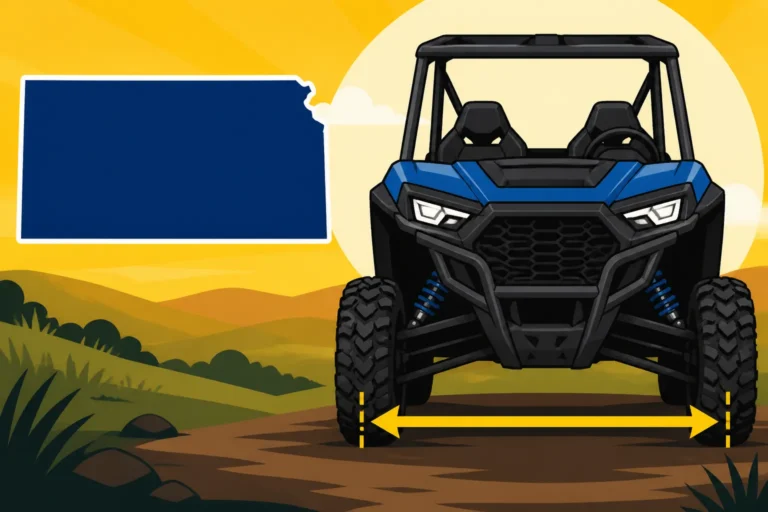
For instance, a machine defined as a [Kansas WSUV Weight Over 800 Pounds] or [Kansas WSUV Width of 48 Inches] would be titled differently. A golf cart, by its nature, is usually lighter and narrower than what typically qualifies as a WSUV. The key differentiator often comes down to the manufacturer's original design and purpose. If the factory built it specifically as a golf cart, that's almost certainly how it will be titled, regardless of any aftermarket lift kits or fancy wheels you've added. However, if you've got a vehicle that's essentially a small utility vehicle but often mistaken for a beefed-up golf cart, like some smaller utility side-by-sides, it’s worth double-checking the manufacturer’s documentation to ensure you're not trying to title a WSUV as a golf cart, or vice versa. The County Treasurer's office relies heavily on that original MCO to determine the correct classification, so always have that ready.
The Titling Process for a Kansas Golf Cart
Alright, you've got your golf cart, you understand its nonhighway classification – now it's time to get that title. The process is pretty straightforward, but like all government paperwork, it requires attention to detail and having the right documents in hand.
Gathering Your Essential Paperwork
Before you even think about heading to the County Treasurer's office, you need to ensure you have all your ducks in a row paperwork-wise. Missing even one piece can mean a wasted trip and a lot of frustration.
Here's what you'll typically need:
- Manufacturer's Certificate of Origin (MCO): If you bought your golf cart new from a dealer, this is the original document provided by the manufacturer. It's like the birth certificate for your machine and is absolutely critical for the first title.
- Bill of Sale: If you purchased your golf cart from a private seller, you'll need a bill of sale. This document proves the transfer of ownership from the previous owner to you. It should include the golf cart's make, model, year, VIN, purchase price, and the names, addresses, and signatures of both the buyer and seller. If you're drawing up a bill of sale, or need one for your records, templates from services like LawDepot can be very helpful to ensure all the necessary information is included. A well-written bill of sale can prevent headaches down the road, especially if you're dealing with a private party transaction.
- Proof of Identity: Your valid driver's license or state-issued ID card will work just fine. This is to confirm who you are.
- Proof of Address: A utility bill, lease agreement, or other official document showing your current Kansas address is usually sufficient. This confirms your residency within the county where you'll be titling the machine.
- Previous Title (if applicable): If you bought a used golf cart from a private party who already had a Kansas title, that title, properly assigned to you by the seller, will be required. Ensure the seller has signed off on the back of the title in the correct spot. If the previous owner never titled it, or if the title is lost, you might be looking at a more involved process involving affidavits, so be prepared for that possibility. In such cases, understanding options like [Kansas Nonhighway Affidavits] can be a lifesaver.
It's always a good idea to make copies of everything for your own records before you hand over the originals. This way, if anything gets misplaced, you have backups.
Visiting Your County Treasurer's Office
Once your paperwork is organized, your next stop is your local [Kansas County Treasurers Handle Titles]. This is where the magic happens – or at least, where the official titling process occurs. Remember, titling is handled at the county level, not by a state agency directly for these types of vehicles.
When you arrive, you’ll typically:
- Present your documents: Hand over all the paperwork you've gathered to the clerk. They'll review everything to ensure it's complete and correct.
- Complete the title application: You'll fill out a form, often called a "Title and Registration Application" (even though golf carts don't typically register annually, this form covers the titling part). This form will ask for details about you and your golf cart, including the VIN, which is critical.
- Pay applicable fees and sales tax: There's a state titling fee, which is a flat rate ([Kansas Charges $10 for a Title]). On top of that, you'll pay Kansas sales tax on the purchase price of your golf cart, unless a specific exemption applies. The sales tax is collected by the County Treasurer at the time of titling, not by the dealer (if it was a private sale or an out-of-state dealer). [Kansas Sales Tax Collected at Titling] means you'll pay both the state and any local sales tax rates that apply in your county.
- Receive temporary documentation: The clerk will process your application. You'll usually walk out with a temporary receipt or some form of proof that you've applied for the title. The actual printed title will then be mailed to you later.
A critical point to remember is the [Kansas Gives You 60 Days to Apply] for a title from the date of purchase or assignment. If you miss this deadline, you can face penalties for late filing, so don't procrastinate!
Here's a quick summary of what you'll likely need:
| Document Type | Description | Source | Required For |
|---|---|---|---|
| Manufacturer's Certificate | Original document from manufacturer, proving first ownership. | Dealer (new cart) | New Golf Cart Titling |
| Bill of Sale | Proof of purchase from a private seller, showing transfer of ownership. | Private Seller / LawDepot template | Used Golf Cart Titling |
| Previous Kansas Title | Properly assigned title from prior Kansas owner. | Private Seller (if titled previously) | Used Golf Cart Titling |
| Valid Photo ID | Driver's License or State ID. | Kansas DMV | All Titling |
| Proof of Kansas Residency | Utility bill, lease, etc. | Personal Records | All Titling |
| Payment for Fees & Sales Tax | Cash, check, or card (check with county for accepted methods). | Your Funds | All Titling |
Common Questions and Potential Pitfalls
Titling a golf cart can throw a few curveballs your way, especially if you're not used to navigating the nuances of Kansas's nonhighway vehicle laws. Let's tackle some of the most common questions and potential issues people run into.
What If My Golf Cart Doesn't Have a Title?
This is a scenario that causes a lot of head-scratching. You might have inherited an old golf cart, bought one at a farm auction, or picked one up from a private seller who never bothered to title it themselves. Or perhaps the original paperwork was lost years ago. If your golf cart lacks a traditional title or a clean bill of sale linking you to the last titled owner, it complicates things, but it's often not a dead end.
Kansas offers mechanisms for these situations, primarily through affidavits. You might be able to use a [Kansas Nonhighway Affidavits] to attest to the ownership history and how you acquired the machine. This usually involves signing a sworn statement outlining the facts of your ownership and explaining why a traditional title or bill of sale isn't available. The County Treasurer's office will review these affidavits to determine if they meet the legal requirements for issuing a new title. It's important to be completely truthful and provide as much supporting documentation as possible, even if it's just a handwritten bill of sale. For cases where you genuinely have [Kansas Title Without a Bill of Sale], an affidavit might be your best bet, but be prepared for a potentially longer process as the treasurer's office may need to verify details. Sometimes, if the machine is very old and the VIN is difficult to locate, they might even require a VIN inspection by law enforcement.
Road Use vs. Titling: A Critical Distinction
This is perhaps the biggest point of confusion for golf cart owners in Kansas: getting a title does NOT automatically make your golf cart legal to drive on public roads. A nonhighway title simply establishes legal ownership; it does not confer street-legal status. It's like having the title to a dirt bike – you own it, but you can't just ride it on the highway.
Kansas state law generally restricts golf carts from operating on public streets and highways. However, there's a significant exception: individual cities and counties have the authority to pass their own ordinances allowing golf cart use on certain local streets. This means road legality is a highly localized issue. What's allowed in one town might be strictly prohibited just a few miles down the road.
If you're hoping to drive your golf cart on city streets, your homework involves checking with your specific city or county clerk's office. They can tell you if an ordinance exists, what the requirements are (e.g., minimum age of driver, insurance, specific equipment like lights or turn signals), and if there's a local permit or registration process. Some cities, for example, require you to pay an annual fee and pass a safety inspection to get a city-issued tag for road use. For more on this, you can explore resources like [Kansas Golf Cart Road Rules] or dive into specific examples like [Kansas Golf Cart Ordinances by City] to see how local jurisdictions handle it. Don't assume anything; always verify with local authorities before you take your titled golf cart onto any public street. The penalty for illegal road riding can be a costly ticket, and nobody wants that.
Specific Scenarios and Considerations
Beyond the standard titling process, you might encounter a few unique situations depending on where and how you acquired your golf cart. Knowing what to expect in these scenarios can save you time and frustration.
Buying from a Dealer vs. Private Seller
The source of your golf cart purchase significantly impacts the paperwork you'll need for titling.
When you buy a new golf cart from a Kansas dealer, the process is usually smoother from a paperwork perspective. The dealer will provide you with the Manufacturer's Certificate of Origin (MCO), which is the crucial document for getting the first title issued. They'll also give you an invoice. While the dealer doesn't collect the state title fee, they might handle some initial paperwork to expedite the process for you. Crucially, they typically don't collect Kansas sales tax on these nonhighway vehicles at the point of sale; you'll pay that directly to the County Treasurer when you apply for the title.
For a used golf cart purchased from a private seller, you'll primarily rely on a properly assigned title from the previous owner or a comprehensive bill of sale. If the golf cart was previously titled in Kansas, the seller needs to sign off on the existing title, transferring ownership to you. Make sure all the blanks are filled in, including the sale price and odometer reading (though for nonhighway vehicles, odometer readings are often "exempt"). If the golf cart was never titled by the previous owner, or if they lost the title, you'll need that detailed bill of sale. Using a template, perhaps from LawDepot, can help ensure your [Using a Handwritten Bill of Sale to Title a Quad] (or golf cart, in this case) contains all the necessary information, protecting both you and the seller. The purchase price stated on the bill of sale will be what the County Treasurer uses to calculate the sales tax you owe, so ensure it's accurate.
Titling an Out-of-State Golf Cart
Moving to Kansas with your golf cart, or perhaps buying one from a private seller or dealer across the state line? Titling an out-of-state golf cart in Kansas involves a few extra steps, but it's generally manageable.
The core principle remains the same: you'll need proof of ownership. This will typically be the title from the previous state, properly assigned to you by the seller. If you're a new Kansas resident bringing your own golf cart, you'll simply present your out-of-state title. The County Treasurer's office will check the VIN and other details from the out-of-state title against Kansas requirements. They may also ask for an inspection of the VIN by law enforcement if there are any discrepancies or if the out-of-state title format is unfamiliar to them.
You will still pay the standard Kansas title fee and any applicable Kansas sales tax if you purchased the golf cart out-of-state and haven't paid sales tax equivalent to Kansas's rate. If you did pay sales tax in another state, you might receive a credit for that against the Kansas sales tax amount, preventing double taxation. This can be a bit nuanced, so it's always wise to bring all your purchase receipts and out-of-state title documents when you're titling [Kansas Title for an Out-of-State Machine]. The treasurer's office can walk you through the specifics based on your unique situation. Remember, the 60-day titling deadline applies to you as a new resident or out-of-state buyer as well, so don't delay your visit to the county office.
Disclaimer
This article is for general informational purposes only and does not constitute professional advice. Laws, prices and regulations vary by location and change over time. Consult a qualified professional for guidance on your specific situation.