Hauling a Machine to a Corps Area
Figuring out the best way to get your ATV or UTV to a fantastic riding spot like a Corps of Engineers area in Kansas can be a real headache. You want to make sure your machine arrives safely, that you're following all the rules of the road, and that you're prepared for the riding ahead. This comprehensive guide will walk you through everything you need to know about safely and legally hauling your off-road machine to a Kansas Corps area, from choosing the right trailer to understanding local regulations.
Understanding Kansas Corps Areas and Machine Access
When you're itching to hit the trails, Kansas Corps of Engineers areas offer some wonderful opportunities for off-road enthusiasts. These aren't just pretty lakes; many have designated areas where you can really stretch your machine's legs. However, unlike just riding out your back door, there are specific regulations you'll need to know, and the biggest one for many is how to even get your ATV or UTV there. Since most Corps areas aren't adjacent to open road-legal trails, hauling is almost always the answer.
What are Corps of Engineers Riding Areas in Kansas?
The U.S. Army Corps of Engineers manages numerous reservoirs and recreational lands across Kansas, providing diverse outdoor experiences. For ATV and UTV riders, areas like Tuttle Creek ORV Area and School Creek ORV Area are prime destinations. These aren't state parks or private parks in the traditional sense, but federally managed lands. They offer designated spaces where off-highway vehicles (OHVs) are permitted, usually with specific rules about where you can ride, what kind of machine is allowed, and operating hours. You'll often find these areas provide a mix of terrain, from open fields to wooded trails, and sometimes even some challenging mud sections after a good rain. It's truly a breath of fresh air to have public land available for our machines.
The appeal of these Corps areas often lies in their accessibility and the variety of riding they offer, making the effort to haul your machine completely worthwhile. You might be craving the open space of [Tuttle Creek ORV Area in Kansas] near Randolph or the slightly more restrictive 50-inch trails at [School Creek ORV Area in Kansas] by Milford Lake. Each location has its unique flavor, and knowing what to expect before you arrive helps immensely with planning your hauling strategy.
Why Hauling is Often Your Only Option
It's a common misconception that because you own an ATV or UTV, you can simply drive it from your home to any nearby riding area. In Kansas, however, driving most ATVs and UTVs on public roads is highly restricted, and often outright illegal. This is why hauling becomes an absolute necessity for accessing Corps areas. Your ATV is typically titled as a [Kansas Titles ATVs as Nonhighway Vehicles], which means it's not designed or authorized for regular street use. While some cities have enacted ordinances allowing UTVs on certain streets, these are exceptions, not the rule, and they certainly don't extend for miles across county roads to a Corps entrance.
Even if you live just a few miles down the road from a Corps area, the legal risks of riding your machine on a public highway or county road to get there are significant. You could face fines, have your machine impounded, and even void your insurance coverage if an accident were to occur. Plus, [Kansas Has No OHV Registration] statewide that would grant you road-legal status for an ATV. So, for the vast majority of riders, a trailer and a reliable tow vehicle are essential pieces of equipment for enjoying the trails at any Corps-managed site.
Essential Equipment for Hauling Your ATV or UTV
Hauling an ATV or UTV isn't as simple as just throwing it in the back of a truck and hitting the road. To ensure the safety of your machine, your vehicle, and everyone else on the road, you need the right equipment and a good understanding of how to use it. Neglecting proper hauling techniques can lead to costly damage or, worse, serious accidents.
Choosing the Right Trailer for Your Machine
The first and most critical piece of equipment is your trailer. There's a wide range of options out there, each with its own pros and cons, and the best choice for you depends on your machine, your tow vehicle, and how often you'll be hauling.
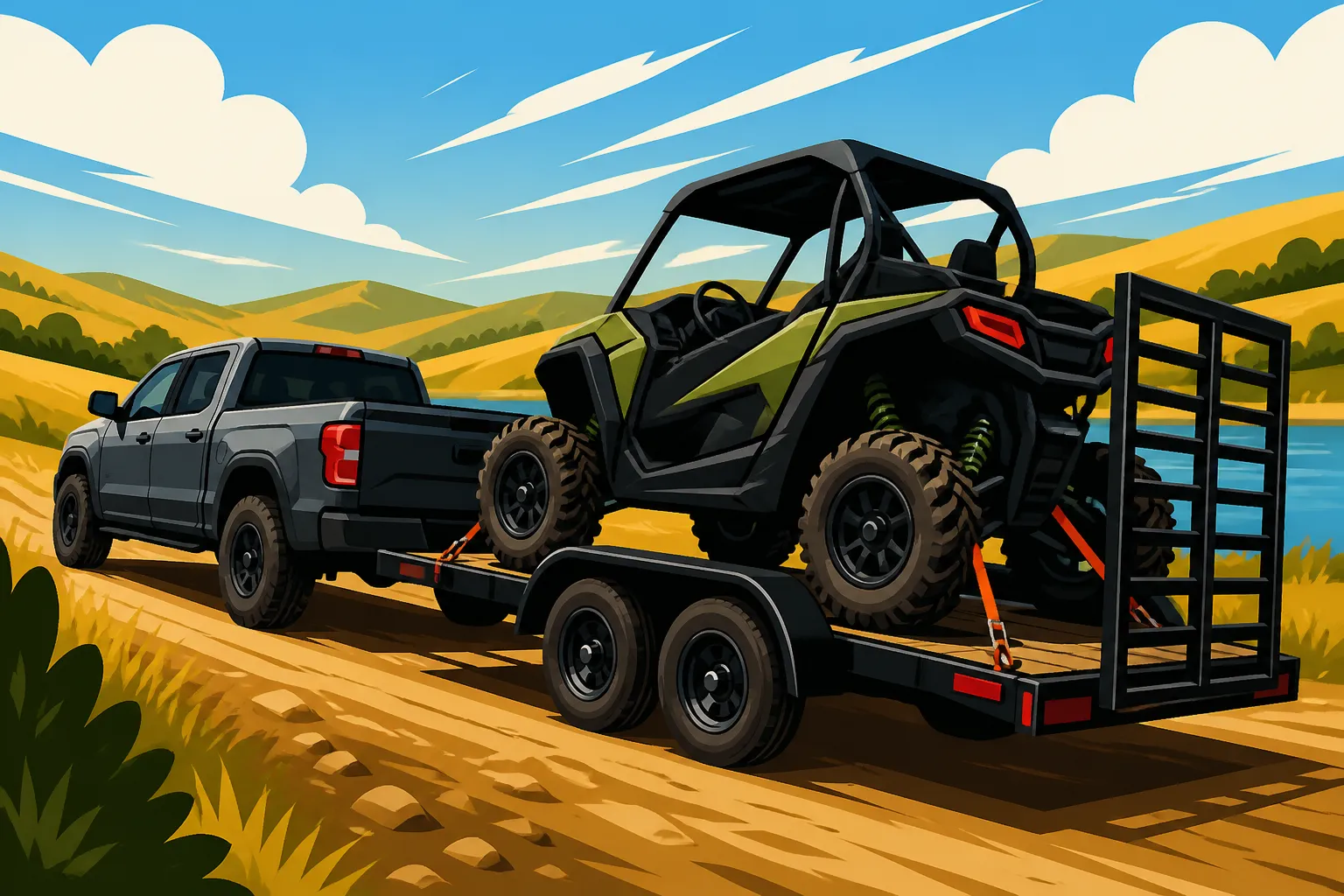
- Utility Trailers: These are perhaps the most common choice. They come in various sizes, with or without sides, and often have a ramp gate for easy loading. They're versatile and can be used for more than just your OHV. Ensure the trailer is rated for the weight of your ATV or UTV, plus any additional gear you'll be carrying. A single ATV might fit on a smaller 5×8 trailer, but a side-by-side will definitely need something larger, like a 6×10 or even a 7×12, especially if you have an extra-long machine or plan to haul multiple ATVs.
- Dedicated ATV/UTV Trailers: Some trailers are specifically designed for off-road machines, featuring lower profiles for easier loading, multiple tie-down points, and sometimes even specialized wheel chocks. These can be single or multi-machine trailers. If you frequently haul multiple quads, a multi-machine trailer with a wider deck or even a double-deck design can be incredibly efficient.
- Open vs. Enclosed Trailers: Open trailers are lighter, more affordable, and allow for easy access to your machine. However, your ATV or UTV will be exposed to the elements and road grime during transport. Enclosed trailers offer protection from weather, theft, and keep your machine cleaner, but they are significantly heavier, more expensive, and require a more capable tow vehicle. For most occasional riders heading to a Corps area, an open utility trailer is perfectly adequate.
| Trailer Type | Pros | Cons | Ideal For |
|---|---|---|---|
| Open Utility | Affordable, versatile, lighter | Machine exposed to elements/theft | Most ATV/UTV owners, occasional hauling |
| Dedicated OHV | Optimized for machines, easy loading | Less versatile for other uses, specialized | Frequent OHV hauling, multiple machines |
| Enclosed Cargo | Machine protected from elements/theft | Heavier, more expensive, requires stronger tow | High-value machines, year-round hauling |
Always check that your trailer's Gross Vehicle Weight Rating (GVWR) exceeds the combined weight of your machine(s) and any cargo. Overloading a trailer is not only dangerous but illegal. Make sure your trailer lights work, tires are properly inflated, and bearings are well-maintained before any long haul.
Securement and Loading Best Practices
Properly securing your ATV or UTV on the trailer is non-negotiable. An unsecured machine can shift, damage itself or the trailer, or even come off the trailer entirely, causing a catastrophic accident.
- Tie-Down Straps: Invest in high-quality ratchet straps. The cheap friction-buckle straps often aren't strong enough to prevent movement. You'll want at least four good ratchet straps – one for each corner of your machine. Secure them to solid points on your ATV/UTV frame (not just plastics or suspension components that might flex or break) and to the trailer frame. Cross-strapping (strapping the front left of the machine to the front right of the trailer, for example) can help prevent side-to-side movement.
- Loading Ramps: If your trailer doesn't have a built-in ramp gate, you'll need sturdy loading ramps. Make sure they are wide enough for your machine's tires and rated for its weight. Always load on level ground, engage your machine's parking brake, and go slowly. Many accidents happen during loading and unloading. Have someone spot you if possible.
- Chocks and Blocks: For extra security, especially with heavier UTVs, consider using wheel chocks or blocks to prevent forward or backward movement of the tires. This can be particularly useful if you have a long journey ahead.
- Tarps and Covers: If you're using an open trailer and anticipate bad weather, a good tarp or a fitted cover can protect your machine from rain, road grit, and debris. Just make sure the tarp itself is securely fastened so it doesn't flap loose and become a hazard.
Remember, a machine that looks secure might not be. Give it a good shake once it's strapped down to ensure there's no play. It's much better to over-secure than to under-secure.
Pre-Trip Checks and Legal Considerations When Hauling
Before you even hitch up your trailer and pull out of the driveway, there are several crucial checks and legal details you need to address. Ignoring these could lead to roadside trouble, fines, or even invalidate your insurance if something goes wrong. This isn't just about good practice; it's about staying compliant with Kansas law.
Vehicle and Trailer Readiness
Your tow vehicle is just as important as your trailer and machine. It needs to be in tip-top shape to handle the extra load.
- Tow Vehicle Capacity: Always know your vehicle's towing capacity. This includes its gross combined weight rating (GCWR), which is the maximum allowable weight of the fully loaded tow vehicle and trailer combined. Exceeding this is dangerous and can void warranties. Check your owner's manual for specific figures.
- Tires: Inspect the tires on both your tow vehicle and the trailer. Look for proper inflation (trailer tires often require higher pressure than car tires), adequate tread, and any signs of wear, cracking, or bulging. A tire blowout on a trailer can be incredibly dangerous.
- Lights and Brakes: Ensure all trailer lights (tail lights, brake lights, turn signals) are working correctly before every trip. If you have an electric brake system on your trailer, test it. If your trailer is heavy enough to require brakes (usually over a certain weight, which varies by state, but it's good practice for most UTV trailers), confirm they are operational.
- Hitches and Connections: Verify that your hitch ball is the correct size for your trailer coupler and that the coupler is securely latched and pinned. Connect safety chains, crossing them under the tongue of the trailer, and ensure your breakaway cable (if you have one) is properly attached. Don't forget to remove the plastic cap from your hitch receiver and insert the hitch pin!
Performing these checks consistently will give you peace of mind and significantly reduce the chances of a breakdown or accident on your way to a [Kansas Corps of Engineers Riding Areas].
Understanding Kansas Road Laws for Hauling
While your ATV itself might be considered a nonhighway vehicle, the combination of your tow vehicle and trailer is absolutely subject to Kansas road laws. It's easy to overlook these details when you're excited about hitting the trails, but they are critical.
- Driver's License and Insurance: You'll need a valid driver's license for your tow vehicle. Your auto insurance policy should cover liability for your trailer while it's hitched to your vehicle. However, it’s worth checking with your insurance provider to ensure your machine itself is covered for damage or theft while in transit. Many standard auto policies won't cover damage to cargo. You might need a separate off-road vehicle policy to cover your ATV or UTV, especially if you're taking it to a public riding area.
- Vehicle Titling and Registration: Your tow vehicle needs to be properly titled and registered in Kansas, and your trailer usually does too. If you've just moved to the state, you'll need to handle your [Kansas Title for a New Resident] for your truck and register your trailer promptly. For the ATV or UTV itself, you’ll have obtained a [Kansas Titles ATVs as Nonhighway Vehicles] or a work-site utility vehicle (WSUV) title, as discussed in [Kansas Title Paperwork Explained]. This title proves ownership but does not grant road-legal status for the machine itself.
- Weight Restrictions and Speed Limits: Kansas has weight restrictions for vehicles and trailers, especially on certain roads or bridges. While most recreational haulers won't hit commercial trucking limits, it's good to be aware. Also, remember that towing a trailer often means reduced speed limits in certain areas, particularly on divided highways or within city limits. Pay attention to signage.
- Documentation: Always carry your driver's license, vehicle registration, proof of insurance for your tow vehicle, and your ATV's nonhighway title. While [Kansas Has No OHV Registration] requirement for the machine itself, the title is your proof of ownership. You can find forms to help with sales or legal agreements for your machine through services like LawDepot, which could be helpful if you're borrowing a machine or have just finalized a private sale. Even though you aren't registering the ATV, knowing you have all your ducks in a row for the tow vehicle and trailer is key.
Paying attention to these details helps ensure a smooth, legal journey to and from the Corps areas.
Arriving and Unloading at a Corps Area
You’ve navigated the highways and country roads, kept an eye on your load, and now you’re finally pulling into the parking lot of [Kansas Corps of Engineers Riding Areas]. The excitement is building, but the final steps of unloading and preparing to ride are just as important as the journey itself. Rushing this part can lead to unnecessary hassle or even damage to your machine.
Navigating Corps Area Parking and Rules
Corps areas, while public lands, often have specific rules regarding where you can park, unload, and operate your machine, even within the designated riding zones. It's never a bad idea to do a little homework on the specific location you're visiting.
- Designated Parking Areas: Most Corps riding areas will have clear signs indicating where trailer parking is permitted. These spots are usually larger and designed to accommodate trucks with trailers. Avoid parking in areas not designated for trailers, as you could block access or receive a citation. Some smaller Corps access points might not have extensive parking, so arrive early on busy days.
- Entry Permits and Fees: While many Corps areas allow free access to their ORV trails, some might have a day-use fee or require a permit. For example, some KDWP (Kansas Department of Wildlife and Parks) managed lands within Corps boundaries might require an unconventional vehicle permit. While [Kansas Has No State OHV Permit] that covers all trails, specific sites can have their own requirements. Always check the specific Corps area's website or signage at the entrance before you unload.
- Reading Posted Rules: Before you even unstrap your machine, take a moment to read any posted signs at the trailhead or parking area. These signs will outline operating hours, specific trail rules (like speed limits, noise restrictions, or types of machines allowed), and any other pertinent information. For instance, [School Creek's 300 Acres in Kansas] has a 50-inch width limit for machines, which is crucial to know before you attempt to ride a wider UTV. Ignoring these rules can lead to fines or being asked to leave.
- Wildlife and Environment: Corps lands are often rich in wildlife. Be mindful of your surroundings, stay on marked trails, and practice Leave No Trace principles. This ensures these areas remain open and enjoyable for all users in the future.
Taking a few minutes to understand the local nuances will make your riding experience much more enjoyable and hassle-free.
Safe Unloading and Pre-Ride Checks
Now for the fun part – getting your machine off the trailer and ready for adventure! Just like loading, unloading requires care and attention to detail.
- Choose a Level Spot: Find a flat, stable area for unloading. This reduces the risk of your machine rolling off the ramps or your trailer shifting. Avoid soft ground or inclines.
- Ramp Placement: Position your loading ramps securely between the trailer and the ground. Ensure they are stable and won't slip. Again, having a spotter is invaluable here.
- Slow and Steady: Drive your ATV or UTV off the trailer slowly and deliberately. Once the machine is on solid ground, engage the parking brake immediately.
- Pre-Ride Inspection: Before you hit the trails, give your machine a quick once-over.
- Tires: Check tire pressure. You might air down a bit for certain terrain like sand at [Syracuse Sand Dunes Park in Kansas], but ensure it's appropriate for the conditions you'll be riding.
- Fluids: A quick check of oil and coolant levels is always a good idea.
- Controls: Test your brakes, throttle, and steering.
- Lights: If you plan on riding near dusk or after dark (where permitted), ensure your lights are working. You'll need to know [Kansas Rules for Riding After Dark] if you intend to push those limits.
- Loose Items: Make sure nothing is loose or rattling that could fall off on the trail.
- Secure Your Tow Vehicle and Trailer: Once your machine is off, move your tow vehicle and trailer to their designated parking spot. Make sure they are locked and secure, especially if you'll be out on the trails for an extended period. Some people like to use formal checklists for pre-ride checks, and creating one with a tool like LawDepot could help ensure you never miss a step, especially if you ride different machines or with different groups.
By following these steps, you'll ensure a safe start to your riding adventure at any Kansas Corps of Engineers area. Enjoy the trails, be safe, and respect the land!
Disclaimer
This article is for general informational purposes only and does not constitute professional advice. Laws, prices and regulations vary by location and change over time. Consult a qualified professional for guidance on your specific situation.