Kansas Campgrounds Next to a Riding Area
Kansas offers a handful of useful pairings for riders who want to camp close to an ATV or UTV riding area, but “nearby” can mean anything from an on-site campsite to a drive with a trailer. This guide compares practical Kansas options, explains what to confirm before booking, and helps you plan a weekend without arriving to find the campground, trail, or access road does not fit your needs.
How to choose a Kansas campground near an ATV riding area
Decide whether you want to camp on-site or nearby
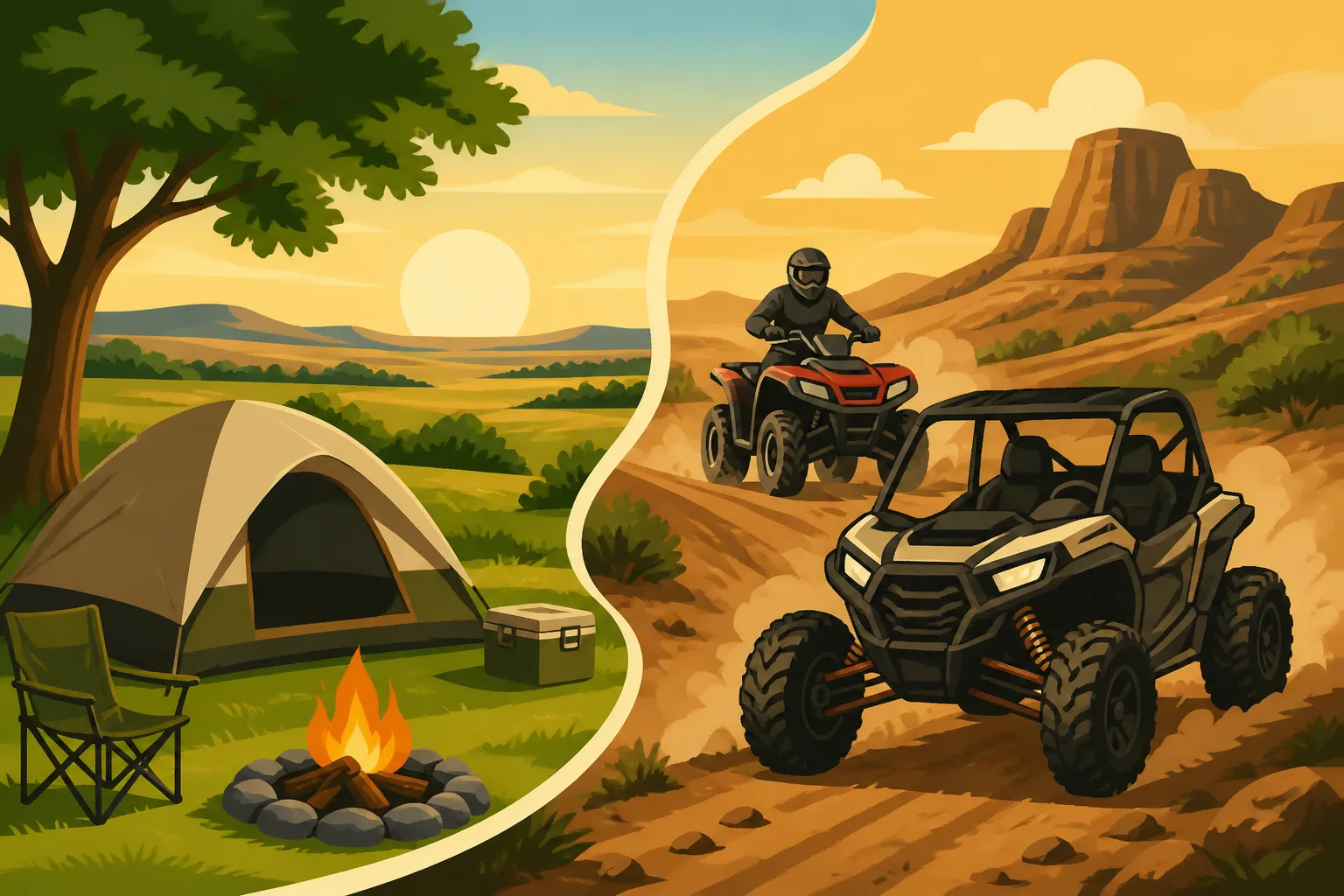
Camping beside a riding area makes mornings easier: unload once, keep the tow vehicle parked, and spend less time shuttling between camp and the trails. Some private parks offer camping at or near the riding property, while public riding areas may have campgrounds elsewhere around a lake or reservoir. The details matter, especially if your group is counting on riding directly from the campsite.
Syracuse Sand Dunes is one of the clearest options for pairing camping with riding because the riding property has camping facilities. Kansas Rocks Recreation Park near Mapleton is another private riding destination worth investigating if you want a campsite connected to a riding weekend. Confirm the current camping setup, reservations, vehicle rules, and whether the campsite location allows you to ride to the trail area. Private parks set their own policies, so do not assume one property’s rules apply at another.
For public riding areas, nearby camping may be managed separately from the riding site. Around Tuttle Creek and Milford Lake, for example, there are recreation areas and campgrounds to consider, but you should verify the driving route and access arrangements rather than assume a campsite sits next to the riding entrance. Start with [Kansas OHV Camping With Trail Access] and [Kansas Corps of Engineers Riding Areas] when comparing those public-land possibilities.
Be specific about what “next to” means
A campground can look close to a riding area on a map and still be inconvenient with a trailer. A lake shoreline, a locked gate, a one-way access road, or a route that requires getting back onto a public highway can turn a short-looking distance into a longer trip. Check the actual driving route, not just the straight-line distance.
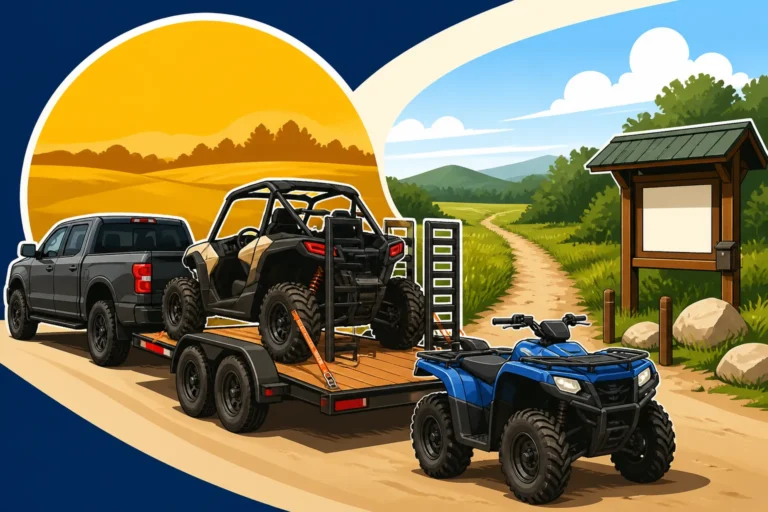
Before booking, ask whether your trailer can be left at the campsite, whether the campground has enough room to turn around, and whether the riding area allows machines to travel between camp and trailhead. If riding between the two is not permitted, find out where you can park and unload. [Kansas Trailheads With Trailer Parking] is a useful companion topic if trailer space is a key part of your plan.
| Riding-area pairing | Camping approach to investigate | Best suited to | Confirm before booking |
|---|---|---|---|
| Syracuse Sand Dunes | Camping at the riding property | Riders who want a ride-and-camp weekend in one place | Site availability, hookups, machine rules, and reservation details |
| Kansas Rocks near Mapleton | Camping connected with a private riding park | Riders looking for a private park experience | Camping location, park access, and operating schedule |
| Tuttle Creek ORV Area | Campgrounds around the Tuttle Creek area | Riders who want to combine riding with lake-area camping | Route to the ORV area, trailer parking, and campground access |
| School Creek ORV Area | Campgrounds around Milford Lake | Riders seeking a reservoir-area base | Distance by road, riding-area access, and campsite rules |
| Perry Lake Spillway area | Nearby camping around Perry Lake | Riders planning a day ride with a lake-area stay | Whether the campground and riding area are open and accessible for your dates |
Use the table as a starting point, not a guarantee of current access or availability. Contact the campground and riding-area operator separately. A campsite reservation does not automatically give you permission to ride on every road or parcel nearby.
Kansas riding areas to consider for a camping weekend
Syracuse Sand Dunes for camping and sand riding
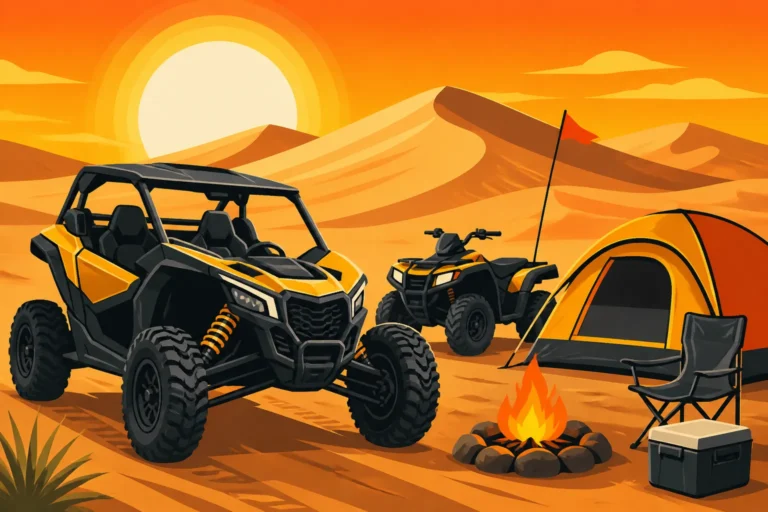
Syracuse Sand Dunes is a natural option when the goal is to camp and ride at the same destination. The riding experience is different from a rocky or wooded trail system: sand can be demanding on both riders and machines, especially when the day is hot or the group is not used to riding in loose conditions. Plan breaks, bring water, and make sure your machine is prepared for the terrain.
If you are bringing a camper, check the park’s current site options and rules before you travel. Ask about the kind of site you need, whether you need to reserve ahead, and how the park handles machine registration or entry requirements. Confirm whether riding is allowed right from the camping area or whether you must use a designated route to reach the riding ground. The details can change how you load and park your equipment.
Sand also makes cleanup part of the trip. Bring a way to brush or rinse off gear and consider how you will keep sand out of sleeping areas, tents, and vehicle interiors. If this is your first visit, read [Kansas Syracuse Dunes Park Rules] and [Kansas Trail Conditions Before You Tow]. A little preparation can prevent the familiar end-of-weekend scramble of trying to get a sandy machine secured while everyone is tired and ready to head home.
Tuttle Creek and School Creek for reservoir-area trips
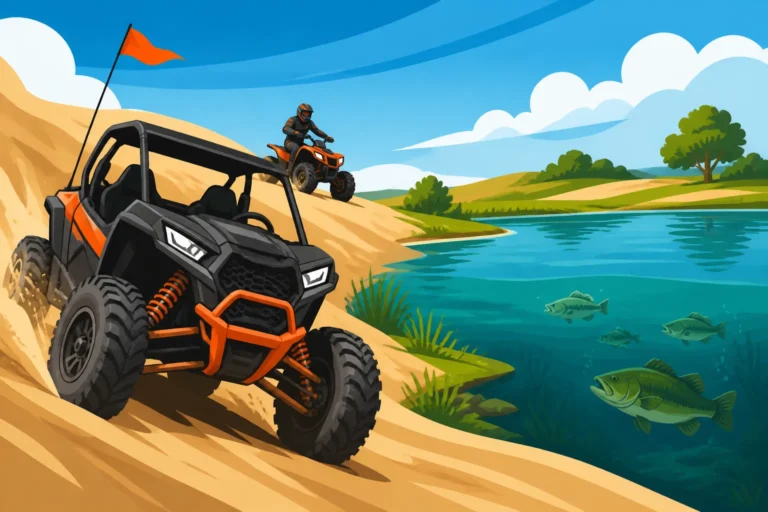
Tuttle Creek ORV Area and School Creek ORV Area can work well for riders who want to build a camping trip around a lake region. They are separate riding destinations, so treat them as different trip plans rather than assuming one campground or access arrangement serves both. Look into [Tuttle Creek ORV Area in Kansas] and [School Creek ORV Area in Kansas] to get oriented before choosing your base.
For Tuttle Creek, check the road route between your campground and the ORV area, including where you can park a truck and trailer. Lake-area campgrounds may offer a pleasant place to spend the evening, but the campsite itself may not connect directly to the riding area. Ask the campground operator about trailer space and ask the riding-area manager about parking and entry. [Kansas Riding Near Randolph] can help put the Tuttle Creek area in context when you are comparing the trip with other Kansas options.
School Creek sits in the Milford Lake area, where a camping plan can also include time by the water. That combination can be appealing for a mixed group: some people can ride while others relax at camp or enjoy the lake. Still, do not count on a campground being immediately beside the ORV area. Check the driving distance, access road conditions, and whether the riding area is open for your planned dates. [Kansas Riding at Milford Lake] offers another useful angle for planning around the lake.
Private parks can simplify the camp-and-ride logistics
Private riding parks may be a better fit if your priority is a single destination with defined entry procedures and a clear set of park rules. Kansas Rocks Recreation Park near Mapleton is one private option to research. Syracuse Sand Dunes is another. Neither should be treated as interchangeable: terrain, camping arrangements, opening schedules, and machine requirements can differ substantially.
Before you commit, confirm whether the park allows tent camping, RVs, or both, and whether campsites must be reserved separately from riding access. Ask about arrival and departure procedures, noise expectations, passenger rules, and what happens if weather affects riding. A park may limit access to particular days or require riders to follow routes that are not obvious from a general road map. [Kansas Private Off-Road Parks] and [Kansas Riding Areas That Take Reservations] can help you compare the practical details.
A mapping app such as onX Offroad can help you look at the surrounding road network and plan how your group will reach the property. Use it as a planning aid, not as proof that a road or parcel is open to public riding. Confirm boundaries, access, and current conditions with the park or land manager before unloading.
Plan the campsite, trailer, and riding access before you leave
Ask the right questions before booking
A quick call or message can save a long and frustrating drive. When you contact a campground, explain that you are bringing an ATV or UTV and a trailer. Ask whether the site has room for both, whether the trailer can stay at the campsite, and whether the access road is manageable for your vehicle. If you are arriving with a large RV and a separate machine trailer, describe the setup rather than simply asking whether the campground “takes trailers.”
Then contact the riding-area operator. Verify open dates and hours, allowed machine types, parking arrangements, required permits or passes, and any trail closures. Ask whether a riding-area reservation is separate from a campsite reservation. If the campground and riding area are managed by different organizations, you need answers from both. [Kansas Riding Areas That Take Reservations] and [Kansas Trail Conditions Before You Tow] are useful reminders to check the details before departure.
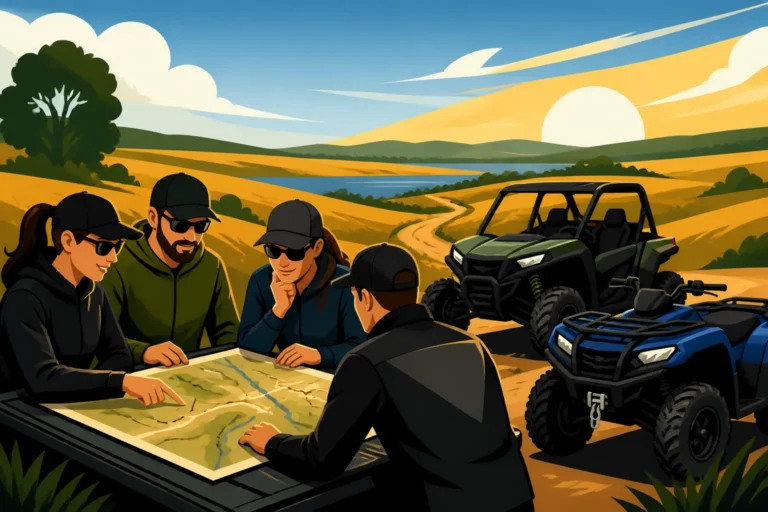
Keep the answers together in your trip notes. A simple list can include the campsite confirmation, riding-area contact details, directions to the entrance, any required paperwork, and a backup riding option. This is especially helpful if cell service is weak near the campground or the trailhead. onX Offroad can help you review a route in advance, but save key directions offline and carry the campground’s address or entrance instructions separately.
Match your campsite to your group and equipment
Think about who is coming and how they will use the site. A family with young children may care most about a quiet campsite, restrooms, and a short route to the riding area. A group of friends with multiple machines may need space to park, unload, and secure equipment without blocking neighboring sites. If some riders are bringing UTVs and others are bringing quads, confirm that the trail system and park rules accommodate every machine in the group.
Make a practical gear list before packing. Include tie-downs, a tire-pressure gauge, basic tools, drinking water, first-aid supplies, machine keys, and any chargers you need. For a sandy destination, plan for dust and cleanup; for a lake-area weekend, bring rain gear and footwear that can handle wet ground. If you expect to arrive after dark, ask about gate procedures and campsite check-in instructions so you are not maneuvering a trailer around an unfamiliar campground without clear directions.
Be honest about your towing setup, too. Narrow roads, tight turns, soft ground, and crowded campground loops can be stressful when you are hauling a machine. Check the campground’s site layout and ask whether there is a designated place to unload. For more preparation ideas, see [Kansas Trail Etiquette Locals Expect] and [Kansas Trailheads With Trailer Parking].
Make the ride-and-camp weekend smoother
Build a backup plan for weather and trail changes
Kansas weather can change the character of a riding weekend quickly. Rain may make some trails difficult or lead to closures, while heat and wind can make long riding days tiring. Check conditions shortly before leaving and again before unloading. If a trail area closes, respect the closure rather than trying to find an unofficial route around it.
A backup plan does not need to be complicated. Identify another activity near the campground, a second riding area that is genuinely open to your machine, or a flexible departure time. Do not assume you can simply transfer a reservation or ride on nearby land if your original plan falls through. Contact the relevant operator and confirm what alternatives are permitted.
For route planning, onX Offroad can help you review the broader area and keep your intended route organized. Compare that plan with the official directions and access information from the campground or riding-area manager. A map can show where a road appears to go; it does not replace permission to use that road.
Respect campground neighbors and riding-area rules
Riding and camping put you close to other people, sometimes in ways that are easy to overlook after a full day outdoors. Keep machines within posted routes, follow speed limits, and avoid unnecessary engine noise around campsites. Use designated unloading areas where available, and do not ride through campground loops unless the rules specifically allow it.
At the trail area, stay on marked routes and give other riders room. If you are traveling with children or a mixed-experience group, agree on a meeting point and a simple plan for what to do if someone gets separated. Pack out trash, secure food, and leave the campsite in good condition. These small habits make a difference to campground staff, neighboring campers, and the next riding group.
The best Kansas ATV camping trip is not necessarily the one with the shortest line on a map. It is the one where the campsite fits your equipment, the riding area is open and appropriate for your machine, and everyone knows how to get between the two. Compare the options, confirm access with the people who manage each property, and keep a flexible backup plan before you hitch up.
Disclaimer
This article is for general informational purposes only and does not constitute professional advice. Laws, prices and regulations vary by location and change over time. Consult a qualified professional for guidance on your specific situation.