Kansas Machines Exempt From Registration
One of the most common points of confusion for folks in Kansas who own ATVs, UTVs, or other off-road machines is whether they need to register them. Many assume that any motorized vehicle hitting the dirt or even a gravel road needs to have a tag, just like their car or pickup. This simply isn't the case in the Sunflower State, and that misunderstanding can lead to a lot of unnecessary worry or, worse, incorrect assumptions about road legality. This guide aims to clear up that confusion, diving deep into which Kansas machines are exempt from registration, why, and what that actually means for you as an owner.
The Core Truth About Kansas ATV Registration
When you first bring home that shiny new quad or a rugged side-by-side, it's natural to wonder about all the legal hoops you might need to jump through. For cars, it's pretty straightforward: you title it, you register it annually, and you get a license plate. But for most off-road machines in Kansas, the rules are a little different, and it's a difference that trips up a lot of people. The key takeaway right from the start is this: most ATVs and UTVs in Kansas are exempt from the kind of annual, statewide registration that would give you a license plate for road use.
This isn't to say there's no paperwork or oversight. Far from it. It simply means that the state's vehicle laws categorize these machines in a way that bypasses the typical registration process. Understanding this fundamental distinction is the first step in making sure you're compliant and confident in how you own and use your off-road pride and joy.
Why "Registration" Is Often the Wrong Word for ATVs in Kansas
The biggest source of misunderstanding comes from the word "registration" itself. In the context of motor vehicles, "registration" usually implies an annual fee paid to the state, which results in a license plate or tag that allows the vehicle to be operated on public roads. For most ATVs and UTVs in Kansas, this simply doesn't happen. You won't be paying an annual fee to the state for a license plate, because these machines are generally not intended or legally allowed for extensive public road use.
Instead, Kansas law classifies most ATVs and UTVs as "nonhighway vehicles." This classification is crucial because it immediately sets them apart from automobiles, trucks, and motorcycles when it comes to state-level road-use regulations. While you absolutely title these machines, proving ownership, you don't typically register them in the sense that your car is registered. It's a one-time ownership document rather than an ongoing permission slip for public roads. This is why you'll often hear us emphasize that [Kansas Titles ATVs as Nonhighway Vehicles], but you'll never see a standard Kansas license plate on an ATV or typical UTV that's solely operating under state law.
The Key Statutes Defining Exemptions
The reason for these exemptions isn't arbitrary; it's rooted in specific Kansas statutes. The state's laws meticulously define different types of vehicles and outline their permitted uses and corresponding requirements. For ATVs and many UTVs, the definitions focus on their design and intended purpose: primarily for off-road recreational or work use, not for general transportation on paved public highways. These machines are built for trails, fields, and rugged terrain, not for cruising down K-10 or I-70.
Because they're not designed for, and generally not permitted on, public roads, the state does not require them to go through the same registration process as road-legal vehicles. This exemption from annual registration is a direct consequence of their legal classification as nonhighway vehicles. While this simplifies one aspect of ownership by removing an annual fee and renewal process, it also means that their use on public roads is severely restricted, if not outright prohibited, by state law. It's a trade-off that many owners appreciate, as it streamlines the paperwork for machines intended for dirt, not asphalt.
Understanding Kansas's Nonhighway Vehicle Classification
The term "nonhighway vehicle" is the lynchpin of Kansas's ATV and UTV regulations. It's a specific legal designation that dictates how these machines are titled, taxed, and, most importantly, where and how they can be operated. For many new owners, this term can feel a bit vague or confusing, especially if they're used to the clear-cut categories of cars and trucks. However, grasping this classification is essential to understanding why your machine is exempt from registration and what your responsibilities are as an owner.
Essentially, a nonhighway vehicle is any motorized vehicle that isn't designed or manufactured for operation on public highways. It's built for a different environment, with features and capabilities geared towards off-road performance. This distinction is critical because it underpins the entire framework of ATV and UTV laws in Kansas, clarifying why certain machines don't need a license plate and annual registration like your daily driver.
What Constitutes a Nonhighway Vehicle?
In Kansas, a nonhighway vehicle is generally defined as a motorized vehicle designed to travel on land, not on public roads. Think of it this way: if it wasn't built by the factory to have turn signals, brake lights, and a horn for street use, it's probably a nonhighway vehicle. This broad category includes the vast majority of all-terrain vehicles (ATVs), dirt bikes, and many side-by-sides (UTVs). Their construction, often featuring knobby tires, high ground clearance, and suspension systems designed for rough terrain, signals their off-road intent.
The primary purpose of these machines, as understood by Kansas law, is recreational off-road riding, farm work, or utility tasks on private property. They're not designed to comply with federal highway safety standards, which is why the state wisely places them in a separate class. This means that while they're incredibly capable in their intended environment, they typically lack the safety features required for legal and safe operation on public highways. Understanding this core definition helps clarify why you won't be visiting the Department of Motor Vehicles for an annual tag for your mud-slinging quad.
The Distinction Between Titling and Registration for Nonhighway Machines
It's absolutely critical to differentiate between titling and registering your nonhighway vehicle in Kansas. Many people use these terms interchangeably, leading to widespread confusion, but they refer to two very distinct processes. Titling is the act of establishing legal ownership of your machine. When you purchase an ATV or UTV, whether new or used, you are required to apply for a title through your county treasurer's office. This title is a certificate issued by the state that identifies you as the rightful owner and records any liens on the machine. It's a one-time process, much like titling a car when you buy it, and it's absolutely essential for proving ownership, selling the machine, or recovering it if stolen.
Registration, on the other hand, typically involves an annual fee and the issuance of a license plate or tag, which grants permission to operate the vehicle on public roads. For most nonhighway vehicles in Kansas, this annual registration process does not exist. You will get a title, but you will not receive an annual license plate or sticker for regular road use. This is precisely [Why a Kansas Nonhighway Title Never Comes With a Tag]. The title confirms you own it, but it does not confer blanket permission to drive it on every public road in the state. Instead, the title often explicitly states its nonhighway status, reinforcing that its primary domain is off the beaten path.
Specific Machine Types and Their Registration Status
The world of off-road machines is incredibly diverse, from nimble ATVs to powerful side-by-sides and more specialized utility vehicles. Each type serves a different purpose, and understandably, owners often wonder if their specific machine is treated differently under Kansas law. While the general rule for nonhighway vehicles holds true for most, there are nuances and specific classifications that are worth exploring. Understanding these distinctions is key to ensuring you're compliant, whether you're ripping through trails or just using your machine around the farm.
The good news is that for the vast majority of these machines, the state of Kansas keeps things relatively simple: if it's designed primarily for off-road use, it's usually exempt from annual state registration. However, there are a couple of classifications that can sometimes lead to confusion, especially with the rise of multi-purpose utility vehicles and golf carts. Let's break down how different types of machines fit into Kansas's registration framework.
All-Terrain Vehicles ATVs and Dirt Bikes
For traditional ATVs (often called quads) and dirt bikes, the situation in Kansas is quite clear-cut. These machines are quintessential nonhighway vehicles. They are explicitly designed for off-road use, with features like knobby tires, limited seating (often just one rider), and suspensions built for uneven terrain. Because of this design and intended use, they fall squarely into the category of machines exempt from state registration.
When you purchase an ATV or dirt bike in Kansas, you are required to title it, much like any other significant asset. This process establishes your ownership, which is crucial for resale, insurance purposes, and proving the machine belongs to you. However, you will not receive an annual registration tag or license plate from the state. The title confirms ownership, but it doesn't grant you general permission to ride on public roads. Any road use for ATVs and dirt bikes is extremely limited and subject to specific, narrow exceptions, as state law generally prohibits their operation on highways. This distinction is vital for understanding your responsibilities and avoiding potential legal trouble.
Side-by-Sides UTVs and the "Work-Site Utility Vehicle" Exception
Side-by-sides (UTVs) present a slightly more complex picture than ATVs, though most still fall under the nonhighway vehicle umbrella. The majority of UTVs, with their multi-passenger seating, cargo beds, and higher top speeds, are still primarily designed for off-road work, recreation, or property management. As such, these machines also require titling, but are generally exempt from annual state registration. You'll go through the process to [Titling a Side-by-Side in Kansas], but you won't get a standard license plate.
However, Kansas law does include a special classification that can sometimes lead to a bit of confusion: the "Work-Site Utility Vehicle," or WSUV. This class applies to UTVs that meet specific dimensions (typically no more than 48 inches wide, weighing over 800 pounds unladen) and are primarily used for work functions. While a WSUV is still generally considered a nonhighway vehicle by the state, this classification can open the door for certain cities to pass local ordinances allowing them to be operated on city streets, often with the issuance of a city-specific tag. It's important to understand [What Makes a Side-by-Side a Work-Site Utility Vehicle] because while it doesn't change the state's non-registration stance, it can influence local rules. Even with a city tag, this is not state registration, and the tag is only valid within that specific city's limits.
Golf Carts and Micro Utility Trucks
Golf carts and micro utility trucks occupy their own distinct categories under Kansas law, separate from the broader "nonhighway vehicle" definition, but they share a similar registration status. Both are generally exempt from statewide annual registration. You'll typically title these machines for ownership purposes, but you won't receive a standard state license plate or be required to pay annual registration fees to the state.
For golf carts, their design is clearly for golf courses or private communities, not public highways. Similarly, micro utility trucks, which are small, low-speed vehicles designed for light-duty tasks, are not intended for high-speed highway travel. Just like with WSUVs, however, individual cities in Kansas have the authority to pass local ordinances allowing golf carts and micro utility trucks to operate on their city streets, usually within specific speed limits and often requiring a city-issued tag, proof of insurance, and possibly an inspection. This means while the state doesn't require registration, your local city council might have rules for street use. You can learn more about [Kansas Golf Cart Road Rules] and [What Counts as a Micro Utility Truck] to ensure you're in compliance with any local mandates.
When a Machine Might Need a "Tag" in Kansas
Despite the general rule that most ATVs and UTVs are exempt from state registration and don't get a license plate, it's not uncommon to see some off-road machines sporting a "tag" in Kansas. This can be incredibly confusing for owners who have just learned their machine doesn't require state registration. The key here is to understand that these tags are almost always local city tags or special permits for very specific types of use, rather than the statewide annual registration tag you'd see on a car. It's a nuance that can make all the difference in understanding where and how you can legally operate your machine.
These exceptions highlight the patchwork nature of regulations when it comes to off-road vehicles. While state law provides a baseline, local municipalities and state agencies with specific land management responsibilities can introduce their own rules that require a form of identification or permit. It’s crucial not to confuse these with full state registration, as their scope and validity are often much more limited.
Local City Ordinances for Street Use
The most common reason you might see a "tag" on a UTV or golf cart in Kansas is due to local city ordinances. While state law generally restricts ATVs and UTVs from public roads, it also grants local city councils the authority to create their own rules regarding the operation of these vehicles on city streets. Many cities across Kansas have exercised this authority, allowing specific types of machines, most often UTVs (especially those meeting the Work-Site Utility Vehicle definition) and golf carts, to be driven on designated public roads within city limits.
When a city passes such an ordinance, it typically establishes its own set of requirements for obtaining a "city tag" or permit. These requirements often include proving ownership, showing proof of insurance, undergoing a safety inspection, and paying an annual fee to the city. It's vital to remember that these tags are issued by the city, not the state, and are only valid within the boundaries of that specific municipality. They do not make your machine street-legal on state or federal highways, or even in an adjacent town without its own ordinance. Cities like Louisburg, Andover, De Soto, and Scott City are good examples of communities that have adopted such local rules. You can find detailed information about specific city requirements in articles like [Kansas UTV Street Legal Rules by City] or by checking with your local city hall. For example, [Louisburg's UTV Tag Fees in Kansas] outline the specific costs and regulations for their city permits.
Agricultural and Work Exceptions for Road Use
Beyond city ordinances, Kansas law does provide very specific and limited exceptions that allow non-registered ATVs and UTVs to use public roads without a tag, primarily for agricultural or utility work. These are use exceptions, not registration exemptions, meaning they allow the machine to be on the road for a specific purpose, but don't change its nonhighway status or require an annual tag.
One of the most widely used exceptions is for agricultural purposes. Farmers and those engaged in farming operations can often operate their ATVs or UTVs on public roads for short distances to cross or travel between fields, perform farm-related tasks, or access equipment. This is a practical recognition of how essential these machines are to modern farming. Similarly, certain government employees or contractors, such as those working for noxious weed control departments, may have specific permissions to use ATVs or UTVs on road rights-of-way for official duties. It's important to understand the narrow scope of [Kansas's Agricultural Exception for Road Use] and other work-related allowances. These exceptions are typically for incidental, short-distance travel and require the operator to be licensed, and often involve specific lighting requirements, especially during dusk or dawn. They are not an invitation for recreational joyrides on public roads.
The Unconventional Vehicle Permit for State Park Roads
Another instance where you might encounter a "permit" for an otherwise non-registered machine is within certain Kansas state parks or wildlife areas. The Kansas Department of Wildlife, Parks and Tourism (KDWP) offers an "Unconventional Vehicle Permit" that allows machines like golf carts and UTVs to be operated on designated park roads and parking areas. This permit is often required to move from your campsite to a boat ramp, for instance, or to access specific areas within a park that are not trails.
It's critical to understand what this permit is and isn't. The [Kansas Unconventional Vehicle Park Permits] are issued by KDWP for use on KDWP property only. This permit does not make your machine street-legal on state highways, county roads, or city streets outside of the park. It is also not a trail pass; it's specifically for designated roads within the park system, where conventional vehicles would typically drive. The purpose is to allow easier access within the park for those using golf carts or UTVs, but it's a far cry from a full state registration for public road use. This permit is a perfect example of a very specific, limited-scope authorization, as explained in articles like [The Park Permit That Covers Roads, Not Trails].
The Titling Process for Exempt Machines
So, if your ATV or UTV is exempt from annual state registration, does that mean you don't need any paperwork? Absolutely not! While you might not get a license plate, the state of Kansas still requires you to obtain a title for most ATVs, UTVs, golf carts, and micro utility trucks. This is a fundamental step in establishing legal ownership and is just as important for these off-road machines as it is for your car or truck. Skipping the titling process can lead to significant headaches down the road, from legal disputes over ownership to difficulties in selling your machine or proving its value for insurance purposes.
The titling process itself is usually straightforward, but it requires specific documents and adherence to timelines. Understanding what's needed and where to go will save you a lot of time and potential frustration. It's a one-time administrative task that solidifies your claim to the machine and provides a paper trail for its history.
Why a Title is Still Crucial
A title for your ATV or UTV is much more than just a piece of paper; it's the official proof that you own the machine. Without a proper title, you can run into a multitude of problems. Imagine trying to sell your machine privately – a buyer would rightfully be wary of a transaction without a title, as it makes their own ownership uncertain and problematic. Similarly, if your machine is ever stolen, a title is indispensable for reporting it to law enforcement and for working with your insurance company to prove your ownership and value.
The title also records any liens on the machine, which is important if you financed its purchase. It tells the complete ownership history, providing transparency for future buyers and protecting you as a seller. Even though your machine doesn't get an annual registration tag, the title is the cornerstone of its legal existence. It formalizes your investment and prevents disputes, making it an absolutely crucial document for any ATV or UTV owner in Kansas. For a deeper dive into all the forms and steps, take a look at [Kansas Title Paperwork Explained].
Key Documents Needed for Titling
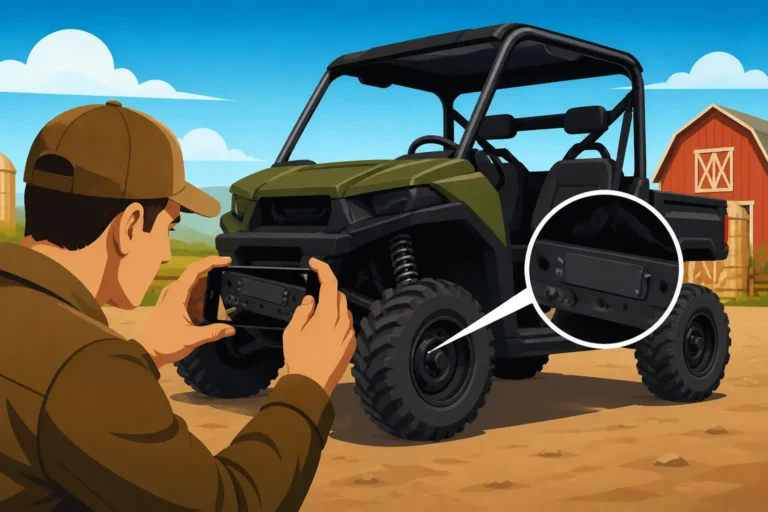
When you head to your local county treasurer's office to title your ATV or UTV, you'll need to come prepared with a few key documents. The exact paperwork can vary slightly depending on whether the machine is new or used, and where you purchased it, but there are common requirements that you should always expect. For a new machine purchased from a dealership, the most important document is the Manufacturer's Certificate of Origin (MCO). This is essentially the birth certificate of your vehicle, proving it's new and has never been titled before.
If you're titling a used machine, you'll need the previously issued title, properly signed over to you by the seller. This is where a clear chain of ownership becomes vital. In addition to the MCO or previous title, you will almost always need a bill of sale. This document, signed by both the buyer and seller, details the transaction, including the purchase price, date, and vehicle identification number (VIN). If you're buying privately and the seller doesn't have a formal bill of sale, or if you want to ensure all the necessary details are covered, online resources such as LawDepot provide customizable bill of sale templates that can be incredibly helpful for Kansas residents. These templates help you create a comprehensive record that protects both buyer and seller. You may also need proof of identity and residency. All of these documents are presented to the clerks at your [Kansas County Treasurers Handle Titles] office, where the titling process officially takes place. For a complete walkthrough, refer to [How to Title an ATV in Kansas].
The Cost and Timeline for a Kansas Nonhighway Title
The titling process for a nonhighway vehicle in Kansas is not only straightforward but also quite affordable compared to the overall investment in your machine. The state charges a nominal, one-time fee for issuing a nonhighway title. This is a single payment that covers the administrative cost of recording your ownership and issuing the certificate. It’s a very reasonable fee, especially when you consider the legal protection and peace of mind that a clear title provides. This fee is a state-mandated cost and is typically collected at your county treasurer's office when you submit your titling paperwork. You can find more specific details on the exact cost in guides like [Kansas ATV Title Cost].
Equally important is understanding the timeline for titling. Kansas law requires you to apply for a title within 60 days of the date of purchase or the date the vehicle was assigned to you. This 60-day window is not just a suggestion; it's a legal requirement. Failing to title your machine within this period can result in late fees and penalties, adding unnecessary expense and hassle to the process. So, as soon as you bring that new machine home, make it a priority to gather your documents and visit the county treasurer's office. Don't procrastinate on this crucial step, as [Kansas Gives You 60 Days to Apply] for your title, and missing that deadline can become a costly mistake.
Common Misconceptions and What to Watch Out For
The unique status of ATVs and UTVs in Kansas – titled but generally exempt from state registration – often leads to a fertile ground for misconceptions. Many owners, eager to hit the trails or get work done, can sometimes misinterpret the rules, leading to frustrating encounters or, in some cases, legal trouble. It's easy to assume that if there's no annual tag, there are no rules, but nothing could be further from the truth. Understanding these common pitfalls is just as important as knowing the regulations themselves.
Navigating the landscape of off-road vehicle laws requires a clear head and a realistic understanding of what the exemptions truly mean. It's about being informed and responsible, ensuring you can enjoy your machine without inadvertently breaking the law or putting yourself at risk. Let's tackle some of the most frequent misunderstandings that Kansas ATV and UTV owners face.
"No Registration Means No Rules" – A Dangerous Myth
This is perhaps the most dangerous and widespread misconception among off-road vehicle owners in Kansas. The idea that "if it doesn't have a license plate, the rules don't apply" is simply false and can lead to serious consequences. While your ATV or UTV may be exempt from state registration, it is by no means exempt from all laws. You are still fully subject to traffic laws when operating on any public thoroughfare (even if only for a permitted crossing), trespass laws when riding on private property, and certainly laws regarding reckless operation or driving under the influence.
For instance, [Kansas DUI Law and Off-Road Machines] applies to operating an ATV or UTV, regardless of its registration status. Operating one of these machines while impaired can lead to the same severe penalties as driving a car under the influence. Similarly, you cannot simply ride wherever you please. Private property always requires landowner permission, and even public lands have designated riding areas and specific rules. The absence of a license plate does not grant you a license to disregard the law or operate unsafely. Always assume you are accountable for your actions and adhere to all applicable laws and common sense safety practices.
The Difference Between State and Local Rules
Another area of frequent confusion stems from the interplay between state law and local city ordinances. State law in Kansas generally prohibits the operation of ATVs and UTVs on public highways and inside city limits. This is a crucial starting point: by default, your non-registered machine is not street legal. As highlighted in [Kansas Bans ATVs Inside City Limits by Default], this is the general rule.
However, as we discussed, cities have the authority to pass their own ordinances that override this state-level prohibition within their municipal boundaries. This means that while your UTV might be perfectly legal to drive on the streets of Louisburg (with their city tag), it would be illegal to drive that same UTV on the streets of an adjacent town that hasn't passed such an ordinance, or on a state highway connecting the two. The critical takeaway here is that you cannot assume. If you plan to operate your machine on city streets, you must check the specific ordinances for that particular city. Relying on what's allowed in one town for another can lead to citations and fines.
How LawDepot Can Help With Essential Paperwork
Navigating the nuances of private sales and ensuring you have all the necessary documentation can be daunting, especially when dealing with vehicles that have unique titling and registration requirements like ATVs and UTVs. This is where clear, legally sound documentation becomes invaluable. Even though your machine doesn't require annual state registration, a robust bill of sale is paramount for a smooth transfer of ownership and for protecting both the buyer and seller.
Websites like LawDepot offer user-friendly templates for bills of sale, helping you create a comprehensive record that covers all the essential details. This includes everything from the vehicle identification number (VIN) and detailed description of the machine to the purchase price, date of sale, and signatures of both parties. Having this structured paperwork can be a real game-changer, preventing disputes, providing proof of purchase for titling, and offering peace of mind. Whether you're buying from a private party or selling your own machine, utilizing a professional template from a service like LawDepot ensures you cover all your bases, safeguarding your investment and making the titling process with the county treasurer much smoother.
Practical Implications for Owners
Understanding that your Kansas ATV or UTV is exempt from state registration but requires a title has several important practical implications for you as an owner. This unique status affects everything from how you insure your machine to how you legally transport it and even its resale value. It's not enough to simply know the rules; you need to understand how they translate into everyday decisions and responsibilities.
For many, the initial relief of avoiding annual registration fees can be quickly replaced by questions about insurance, safety, and operational legality. Let's delve into these practical aspects to ensure you're fully prepared and informed to enjoy your off-road machine responsibly and confidently.
Insurance Considerations for Exempt Machines
Just because your ATV or UTV isn't subject to state registration doesn't mean you shouldn't insure it. In fact, insurance is a highly recommended, and often critical, investment for any off-road machine owner in Kansas. While the state itself doesn't mandate insurance for ATVs and UTVs used exclusively off-road, individual cities that allow street use (via local ordinance and city tags) almost always require proof of liability insurance. Beyond legal requirements, common sense dictates the value of coverage.
Imagine a scenario where you're riding on private property, and an accident occurs, causing injury to a passenger or damage to someone else's property. Without liability insurance, you could be personally responsible for significant costs. Comprehensive and collision coverage can protect your investment against theft, vandalism, or damage in an accident. These machines are not inexpensive, and replacing one out-of-pocket can be a major financial hit. Therefore, even though [Do You Need ATV Insurance in Kansas?] technically might be "no" for purely off-road state compliance, a responsible owner almost always chooses to carry it. Talk to your insurance agent about specific off-road vehicle policies or riders that can be added to your existing home or auto insurance.
Transporting Your Exempt Machine
Since most ATVs and UTVs are not street-legal by state law, you cannot simply drive them down the highway to your favorite riding spot or hunting ground. This means transportation almost always involves a trailer. Understanding the rules for trailers is just as important as understanding the rules for your machine itself. While your ATV or UTV might be exempt from state registration, the trailer you use to haul it is not.
Trailers, if they meet certain size and weight criteria, are considered separate vehicles and typically require their own registration and a license plate from the state of Kansas. This involves an annual registration fee and ensures the trailer itself is road-legal. So, while you won't be paying an annual tag fee for your quad, you will for the trailer that gets it to where it needs to go. Always ensure your trailer is properly registered, tagged, and equipped with working lights and safety chains. Failing to do so can lead to traffic stops and fines. Remember, [Trailer Tags Are Required Even When ATV Tags Are Not], emphasizing the distinction between the machine and its mode of transport.
Resale Value and the Importance of a Title
When the time comes to sell your ATV or UTV, having a clear and proper title will significantly impact both the ease of sale and the machine's resale value. A buyer will almost certainly expect a title, as it's their only guarantee of legitimate ownership. Attempting to sell a machine without a title can be a major red flag, raising suspicions about its origin and potentially signaling past legal issues. Most informed buyers will simply walk away from a no-title sale, or they'll demand a significantly reduced price to account for the risk and hassle they'll face trying to obtain a title themselves.
Moreover, for private sales, ensuring you have a proper bill of sale is paramount for a smooth transfer and proving ownership. Platforms like LawDepot can assist in creating these vital records, giving you confidence in the transaction. A machine with a clear title confirms its legitimate history, makes the transaction transparent, and ensures that the new owner can easily title it in their name. Conversely, buying a machine without a title, or with a title that has discrepancies, can lead to endless headaches, legal battles, and difficulty registering it in your name. Always prioritize obtaining and maintaining a clear title for your ATV or UTV; it's an investment in your peace of mind and the future value of your machine.
| Machine Type | State Registration Required | State Title Required | City Tag Possible? | Primary Road Use (State Law) |
|---|---|---|---|---|
| ATV (Quad) | No | Yes | No | Generally Prohibited |
| Dirt Bike | No | Yes | No | Generally Prohibited |
| UTV (Side-by-Side) | No | Yes | Yes ( ചില Cities)* | Generally Prohibited |
| Work-Site Utility Vehicle (WSUV) | No | Yes | Yes ( ചില Cities)* | Limited Road Crossings, Farm Use |
| Golf Cart | No | Yes | Yes ( ചില Cities)* | Generally Prohibited |
| Micro Utility Truck | No | Yes | Yes ( ചില Cities)* | Generally Prohibited |
*Note: "City Tag Possible" means individual cities may have ordinances allowing street use and require a local tag. This is not statewide registration and is only valid within that city's limits. Always check local ordinances.
Disclaimer
This article is for general informational purposes only and does not constitute professional advice. Laws, prices and regulations vary by location and change over time. Consult a qualified professional for guidance on your specific situation.