Kansas Private Off-Road Parks
Private off-road parks can make Kansas riding possible when public trail options are limited, but a long drive to a closed gate, unsuitable trail, or unexpected rule is a frustrating way to start a weekend. This guide explains what to expect at Kansas’s private riding areas, how to choose one for your machine, and what to check before loading up.
What makes a Kansas off-road park private
Private parks and public riding areas are not interchangeable
A private off-road park is operated on privately managed land, and access depends on the operator’s permission and rules. That can mean scheduled opening days, advance arrangements, a gate procedure, a waiver, or limits on which machines may ride. The important point is that a place being known as a riding destination does not mean it is open whenever you arrive.
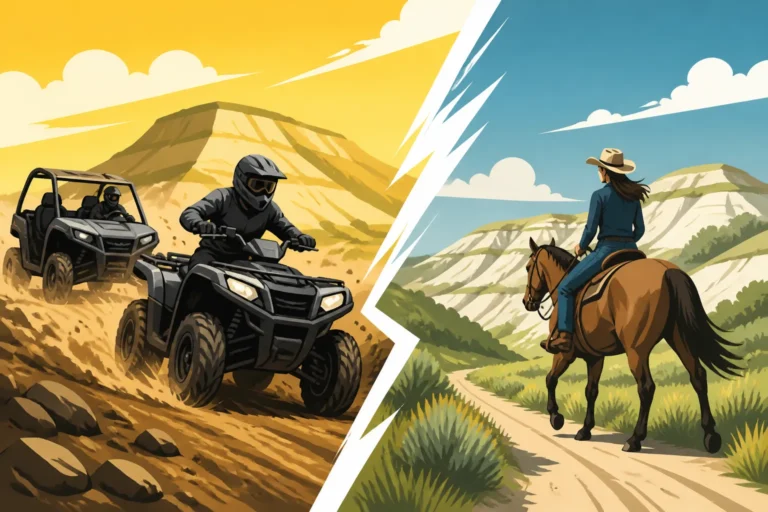
Kansas also has public areas where off-road riding is permitted under specific rules. Tuttle Creek ORV Area, School Creek ORV Area, and Perry Lake Spillway are examples of public riding locations, not private parks. Their access arrangements and land-management rules differ from those at privately run destinations. For public options, see [Kansas ATV Trails: Where You Can Actually Ride](Kansas ATV Trails: Where You Can Actually Ride) and [Kansas Corps of Engineers Riding Areas](Kansas Corps of Engineers Riding Areas).
That distinction matters when you are planning a route. Public-land rules may restrict riding to designated areas or roads, while a private park may offer trails on land managed specifically for recreation. Neither label guarantees that every trail is open to every vehicle. Always confirm the actual riding area and permitted machine types with the property operator or land manager.
Kansas’s private riding options are limited
Two commonly discussed private destinations are Kansas Rocks Recreation Park near Mapleton in southeast Kansas and Syracuse Sand Dunes in southwest Kansas. They offer very different kinds of riding. Kansas Rocks is associated with rocky terrain and technical obstacles; Syracuse offers sand riding. The terrain alone can shape what machine, tires, recovery gear, and riding experience make sense.
There may also be private landowners, clubs, or event organizers who arrange access for a particular ride or gathering. That does not necessarily mean the land is a public park or that access is available on an ordinary weekend. A private invitation, event listing, or old social post is not a reliable substitute for checking directly with the organizer.
A useful starting point is to decide what kind of outing you want, then verify that the location is open to your vehicle and group on your intended date. The park’s own rules are the final word on admission, vehicle eligibility, safety requirements, and where riding is allowed. If you are comparing private and public options, [Kansas Private Off-Road Parks](Kansas Private Off-Road Parks) is a useful topic to keep separate from [Kansas State Parks Have No OHV Trails](Kansas State Parks Have No OHV Trails).
What admission does and does not mean
Paying for access generally gives you permission to use the areas and facilities covered by the park’s rules. It does not automatically make the machine street-legal, authorize travel on nearby public roads, or give permission to ride across neighboring property. Keep the entire trip in view: the trailer route, the unloading area, and the park’s boundaries all matter.
Likewise, a park pass or event wristband does not necessarily replace proof of ownership, insurance, or any permit that may apply to a separate public location. Requirements depend on where you are riding and who manages the land. Read the operator’s instructions rather than assuming one park’s paperwork applies everywhere.
Before your trip, save the park’s address, check-in instructions, contact details, and any posted map or rules. If you arrive and a gate is closed, do not try to enter by another route or treat a nearby track as part of the park. Private access is permission-based, and respecting that boundary protects future access for other riders.
Compare Kansas private parks by terrain and machine
Kansas Rocks is a rocky-terrain destination
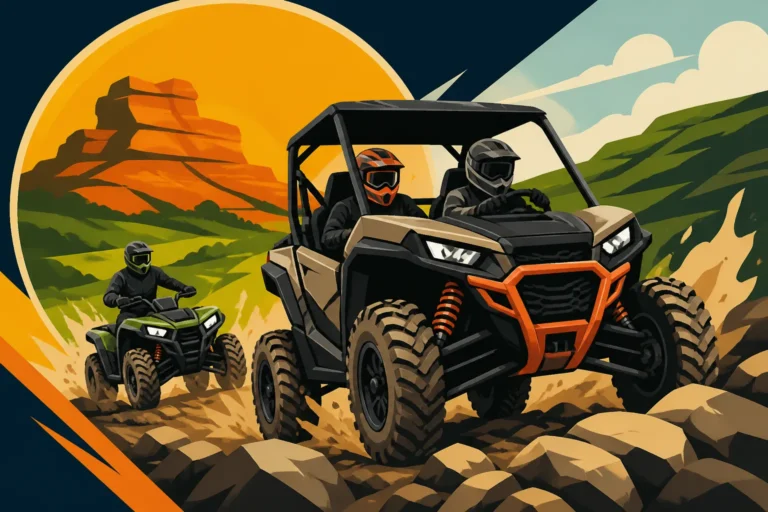
Kansas Rocks Recreation Park, near Mapleton, is often the natural choice for riders looking for rocks, ledges, and technical terrain rather than open sand. A machine that feels comfortable on smooth pasture roads may feel very different when it has to crawl over uneven rock. Ground clearance, tire condition, traction, and low-speed control can matter more than top speed.
Terrain can also affect the pace of a group. One rider may move quickly through a section while another takes time to pick a line, guide a passenger, or recover from a stuck machine. For a mixed-experience group, agree in advance that everyone can ride at their own pace and regroup at safe, obvious stopping points. Avoid pressuring a newer rider into an obstacle simply because the most experienced person in the group clears it easily.
Check the park’s current vehicle and trail rules before choosing a route. Do not assume that every UTV fits every trail, or that an ATV route has enough clearance for a wide side-by-side. The distinction between machine width, rider skill, and park access is worth reviewing alongside [Kansas Trails That Allow Side-by-Sides](Kansas Trails That Allow Side-by-Sides). For a park-specific overview, see [Kansas Rocks Park Rules for Riders](Kansas Rocks Park Rules for Riders).
Syracuse Sand Dunes offers a different kind of day
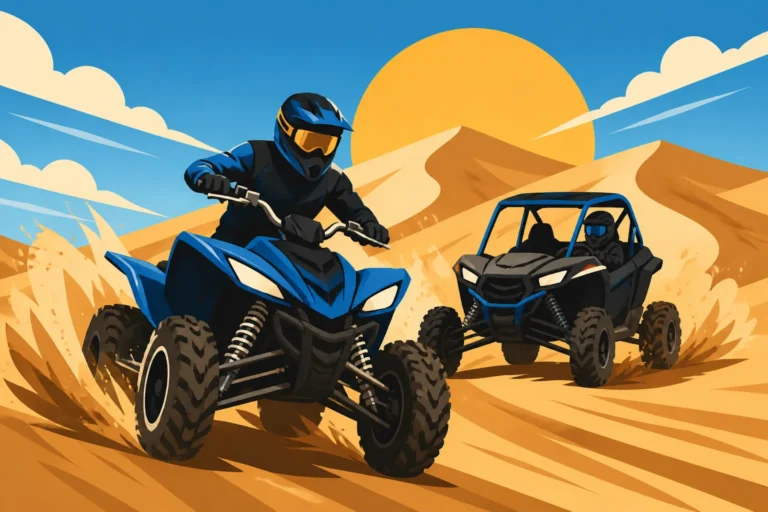
Syracuse Sand Dunes, in Hamilton County in southwest Kansas, is associated with sand riding. Sand asks different things of a rider than rocky terrain does. A machine can lose momentum quickly if it is driven into a soft climb without a plan, and a rider unfamiliar with sand may find steering and throttle control less predictable than on packed dirt.
Preparation should match the conditions. Inspect tires, check the machine’s cooling system and air intake, and think through how you will deal with sand that gets into equipment. Riders should also be prepared for dust, changing visibility, and the possibility that a group becomes spread out across open ground. Stay within the park’s marked boundaries and follow its directions about flags, trails, speed, and safe passing.
Do not treat a dune park as an open area where any route is acceptable. The operator may specify which sections are available, how to enter or cross an area, and what safety equipment is required. Start with the park’s own posted information, then compare it with [Syracuse Dunes Park Rules for Riders](Syracuse Dunes Park Rules for Riders) and [Kansas Trails That Allow Dirt Bikes](Kansas Trails That Allow Dirt Bikes) if your group includes different machine types.
| Planning factor | Kansas Rocks near Mapleton | Syracuse Sand Dunes in Hamilton County |
|---|---|---|
| Terrain to plan for | Rocky, uneven, potentially technical sections | Sand, loose surfaces, dust, and changing traction |
| Useful preparation | Check clearance, tires, recovery equipment, and rider skill | Check tires, cooling, air intake, dust protection, and recovery plans |
| Group concern | Different abilities can make obstacle sections slow | Riders can spread out or lose visibility in dust |
| Confirm before travel | Vehicle eligibility, access, trail rules, and opening arrangements | Vehicle eligibility, access, sand-area rules, and safety requirements |
| Good question to ask | Which routes suit my machine and experience level? | What equipment and operating rules apply to this riding area? |
Match the route to the vehicle, not the other way around
A machine’s size and configuration can be as important as its engine power. A narrow ATV may fit places a wide UTV cannot, while a side-by-side may be better suited to carrying a passenger or gear. The park decides what is allowed on its property, so avoid relying on a machine’s advertised capabilities as proof that it will be accepted on every trail.
Read the manufacturer’s guidance and check the park’s restrictions before planning a route. Ask about width limits, passenger rules, noise or equipment standards, and whether any areas are reserved for particular vehicle types. You can also review [Kansas Trails That Allow Side-by-Sides](Kansas Trails That Allow Side-by-Sides) when comparing trail access and [Kansas Trails That Allow Dirt Bikes](Kansas Trails That Allow Dirt Bikes) if your group includes motorcycles.
If your group brings several kinds of machines, plan for the least suitable vehicle rather than assuming everyone can ride together everywhere. A family trip with a youth quad, a two-seat ATV, and a full-size UTV may need a different route and pace than a ride with similarly sized, similarly equipped machines. Confirm whether the park allows the whole group to use the same areas before you commit to the drive.
Confirm access before you tow
Check the operating schedule and arrival process
Private parks can have operating schedules that differ from public recreation areas. Access may be tied to particular days, events, reservations, weather, or other arrangements set by the operator. A listing that appears in a search result or an old post may not reflect the current access plan, so verify directly before setting out.
Ask what time riders may arrive, how check-in works, where to unload, and whether the gate is staffed. If the park uses reservations or requires advance notice, find out what information is needed and whether your group should arrive together. A little planning can prevent a frustrating scene in which one truck is at the entrance while the rest of the group is still looking for the correct turnoff.
Confirm the location carefully, especially when driving in rural areas where cell reception may be inconsistent. Download or save the directions before leaving, and keep the operator’s contact information available. onX Offroad can help you review routes and terrain on a map, but map information should not be treated as proof of permission or a substitute for the park’s instructions. Check [Kansas Trail Conditions Before You Tow](Kansas Trail Conditions Before You Tow) when weather or access conditions could affect the trip.
Ask specific questions instead of relying on a general yes
A simple question such as “Are you open?” may not tell you whether your exact machine is allowed. Before traveling, provide the park with the vehicle type and, if relevant, its width, number of seats, and intended use. Mention whether you are bringing a dirt bike, ATV, UTV, or youth machine, and ask whether there are restrictions for the day you plan to visit.
It is also worth asking whether the park has separate rules for passengers, children, helmets, eye protection, noise, or safety inspections. Rules can differ by park and may also change depending on the event or activity. Get any important instructions in writing or save the operator’s posted guidance so you can review it with the group before arrival.
If you are planning a gathering, be clear about the size of your group and whether you need to camp or use other facilities. A park that can accommodate a small group may have different arrangements for a large family gathering, club ride, or organized event. Ask before advertising the outing to others; a post inviting people to private land does not create permission if the operator has not approved the group.
Make a weather and backup plan
Weather can change the experience of a private riding area quickly. Rain may make routes slick or lead an operator to close sections, while dry conditions may increase dust. Sand and rock respond differently to moisture, so do not assume that conditions at home or along the highway accurately reflect conditions inside the park.
Check for park updates close to departure and again before you leave home. If the operator says a route is closed or recommends postponing, treat that as part of the safety plan rather than an inconvenience to work around. Do not look for an unofficial entrance or use a neighboring road to bypass a closure.
Have a backup plan that does not depend on trespassing or arriving at another site without permission. That might mean rescheduling, choosing a different permitted destination, or turning the day into a non-riding trip. onX Offroad can be useful for reviewing nearby roads and terrain while planning, but always confirm that any alternate destination is open and that your group is authorized to ride there.
Understand rules, waivers, and safety expectations
Read the park’s waiver and posted rules
Private parks commonly set conditions of entry, which may include a waiver or acknowledgment of risk. Read it before you sign. Make sure everyone in the group understands the rules, including adults responsible for minors. If a document or rule is unclear, ask the operator before riding rather than guessing at the gate.
A waiver is not a substitute for safe riding, and signing one does not mean every activity is permitted. Parks can restrict areas, speeds, machine types, passengers, alcohol, pets, or other conduct. Those restrictions may be posted at the entrance, included in check-in materials, or explained by staff. Take time to review all of them, even if someone in your group has visited before.
Rules for helmets and protective gear can vary between locations, so do not assume one park’s policy applies to another. A helmet and eye protection are sensible precautions even where a particular item is not required by the park. Review [Kansas Private Park Waivers and Rules](Kansas Private Park Waivers and Rules) and [Kansas Private Park Helmet Rules](Kansas Private Park Helmet Rules), then follow the specific operator’s instructions.
Ride within your ability and leave room for other riders
A difficult obstacle is not a test you have to pass. If you are uncertain about a line, stop in a safe place, look at the route, and decide whether your skill and machine are suited to it. The responsible choice may be to walk around, turn back, or choose an easier trail. Trying to keep up with a faster rider can turn a recreational outing into a preventable injury or breakdown.
Agree on basic group habits before leaving the staging area. Establish who rides in front, who keeps track of the last rider, where to regroup, and how to communicate if someone stops. Do not assume everyone can see or hear one another, especially in wooded, rocky, or dusty areas. Keep enough distance to respond if the rider ahead brakes or encounters an obstacle.
Respect other people’s pace and space. Pass only where the park allows and where there is clear visibility and room. Avoid stopping around blind corners or on the approach to an obstacle. Good habits are especially important on narrow routes where an oncoming group, a disabled machine, or a rider walking a section may be difficult to spot. See [Kansas Trail Etiquette Locals Expect](Kansas Trail Etiquette Locals Expect) for more on sharing riding areas responsibly.
Make a practical recovery and emergency plan
Even a short ride can become complicated if a machine breaks down, someone is injured, or a group becomes separated. Carry a charged phone, but do not count on continuous reception. Tell someone who is not riding where you plan to be and when you expect to return. If the park has an emergency procedure or contact number, save it before leaving the staging area.
Bring basic supplies that suit the terrain and the length of the ride. A first-aid kit, water, appropriate clothing, a tire or repair kit, and recovery equipment may all be useful, but the right choices depend on your machine and route. Know how to use the gear you bring. A winch or tow strap is not much help if nobody in the group understands the safe way to operate it.
If a rider is injured, do not rush into an unstable recovery or move someone unnecessarily. Contact emergency services when needed, give the park staff clear location information, and follow their instructions. Afterward, report damaged trail features or hazards to the operator. A quick, accurate report can help protect the next group from the same problem.
Plan the day around the terrain
Prepare for rocks, ledges, and uneven ground
For rocky riding, inspect tires and wheels before the trip, and check that the machine’s protective components are secure. Pay attention to ground clearance and avoid assuming a route is manageable simply because another rider cleared it. The same line can feel very different depending on machine size, load, tire setup, and experience.
Approach technical sections slowly enough to make deliberate decisions. Look for loose stones, sharp edges, and places where the chassis or undercarriage could contact the ground. If the group includes riders who are new to technical terrain, agree that walking a line or bypassing an obstacle is acceptable. A damaged machine can leave the entire group waiting while someone arranges a tow or repair.
Protective equipment for the machine should fit the riding conditions and be installed appropriately. A skid plate may help shield vulnerable components, but no accessory makes every obstacle safe. Check the park’s route guidance and do not modify a marked trail or remove rocks, signs, or barriers to make a passage easier.
Prepare for sand, heat, and dust
Sand riding can demand steady, thoughtful control. If you are unfamiliar with it, avoid abrupt inputs and give yourself room to adapt before attempting steeper or more challenging sections. Follow park guidance about tire pressure, flags, traffic direction, and safe spacing, if those rules apply at the destination.
Dust affects visibility and breathing comfort, especially when several vehicles travel close together. Leave more space than you might on a hard-packed trail, and slow down if you cannot see clearly. Eye protection can make a significant difference on a dusty ride, while water and breaks help riders manage warm, dry conditions.
Do not assume that a machine prepared for rocky trails is automatically ready for sand. Ask the park what equipment or maintenance it recommends, and inspect the air intake, cooling system, and other components after riding in dusty conditions. For travel planning, onX Offroad can help you view the general area and road connections, but rely on the park for current riding-area directions and conditions.
Plan around distance, daylight, and group needs
A ride that looks short on a map can take much longer once the group stops, navigates obstacles, or helps a rider. Set a turnaround time that leaves room to return before dark. If the group includes children, newer riders, or passengers, build in more breaks and avoid planning a route that depends on everyone maintaining a fast pace.
Carry enough water and suitable clothing for the conditions. Kansas weather can feel very different in the sun, wind, or sudden rain, and riders on an open machine are exposed for much of the day. Check the forecast, but also be ready to change plans if conditions shift or the park updates its access information.
Make sure everyone knows the plan before engines start: where the group is going, how often it will stop, and what to do if someone becomes separated. Share a map or meeting point, and avoid splitting the group unless riders have agreed on a safe way to reunite. This matters even more when cell service is weak or the park’s terrain blocks visibility.
Camping, facilities, and group logistics
Ask what amenities are actually available
Do not assume that a private riding park has fuel, repairs, food, showers, water, or a store on site. Facilities vary, and some may be limited or available only under particular arrangements. Ask what is provided and what you need to bring, including drinking water and supplies for any children or passengers.
If you need to refuel during the day, identify a suitable place before you leave home. Carrying fuel may be subject to park rules and safe-storage requirements, so ask the operator rather than improvising. Similarly, check whether there is a wash area or whether you should plan to clean the machine elsewhere. Sand and mud can be hard on equipment and may need to be handled thoughtfully.
Parking and unloading deserve attention, too. Confirm where trailers may be parked and whether the staging area can accommodate the size of your group. Arriving with a long trailer and no plan for turning around can create a problem for you, other visitors, and park staff. The operator’s directions should take priority over navigation-app suggestions.
Verify camping and overnight arrangements
Camping access is not automatic just because a park allows day riding. Some sites may require advance arrangements, separate permissions, or compliance with additional rules. Ask whether camping is allowed, where overnight vehicles may be placed, and what facilities are available before you pack for a stay.
Check policies for fires, generators, pets, quiet hours, and waste disposal. Do not light a fire unless the operator permits it and conditions are safe. During dry or windy weather, an open flame can be a serious hazard. Leave the campsite clean and use the designated disposal options rather than leaving trash for the next visitors.
For more detail on this part of trip planning, see [Kansas Private Park Camping Rules](Kansas Private Park Camping Rules). If the park has no overnight facilities, look for lodging or a campground with permission for your group and trailer. Confirm that you can reach it with your vehicle and that the reservation matches your arrival plan.
Coordinate a group without creating pressure
A group ride works best when someone has confirmed the details in advance. Choose a point person to communicate with the park, gather vehicle information, and relay the rules to everyone attending. Ask each rider to confirm that their machine is eligible and in working condition before the trip, rather than trying to resolve those questions at the entrance.
Set expectations for the ride itself. Explain that participants should follow park directions, stay on designated routes, and respect the abilities of the slowest rider. Agree that nobody has to attempt an obstacle to keep up with the group. If the group is large, ask the operator whether there are limits or special procedures for organized visits.
Use onX Offroad or another mapping tool to help people understand the general route to the area, but send the park’s official directions as well. A navigation app may suggest roads that are unsuitable for trailers or lead to a private boundary. Keep the group together when approaching the entrance and avoid blocking driveways, rural roads, or access points while waiting to check in.
Common mistakes and a reliable pre-ride checklist
Mistakes that can spoil the trip
One common mistake is treating an old listing or social post as confirmation that a park is open. Access arrangements can change, and a location that hosted an event in the past may not allow general riding whenever visitors choose. Call or check the operator’s own updates before loading the trailer.
Another mistake is assuming that a pass, registration document, or title makes a machine acceptable on every trail. A title identifies ownership; it does not certify that the vehicle fits a park’s width limit or that a public road is open to off-road machines. Park rules and road rules are separate issues. Review [Why Road Rules Change With the Machine You Ride](Why Road Rules Change With the Machine You Ride) if your plans include riding beyond private property.
Finally, riders sometimes underestimate recovery time. A broken belt, punctured tire, overheated machine, or minor injury can affect the entire group. Bring basic tools and supplies suited to your vehicle, ride within your limits, and leave enough daylight for a careful return. Turning around early is better than continuing when conditions or fatigue make the ride unsafe.
Questions to ask before you leave home
Use a short checklist to turn vague plans into useful answers. Confirm the park is open to your group, the vehicle types are accepted, and the route matches your experience. Ask whether advance arrangements are needed, what payment methods are accepted, where to unload, and whether there are separate rules for passengers, minors, helmets, or other equipment.
Also ask about conditions. Are any trails closed? Has weather changed access? Are there special instructions for sand or technical sections? Is there a contact number for the day of your visit? These questions are especially useful when you are driving a long distance from Topeka, Wichita, Kansas City, or another part of the state.
Share the answers with everyone coming along. One person’s phone conversation does not help a passenger who does not know the helmet rule or a second driver who has not seen the arrival directions. Save the park’s instructions offline in case reception drops before you reach the entrance.
A pre-ride checklist for Kansas private parks
Before departure, verify access directly with the operator, confirm the park’s address and arrival process, and check that every machine is allowed. Review the waiver and rules, and make sure every rider understands the group plan. Inspect tires, controls, lights, fluids, recovery gear, and protective equipment before the trailer is loaded.
Pack water, weather-appropriate clothing, basic repair tools, first aid supplies, and any items required by the park. Confirm where trailers can be parked and whether the group has permission to camp or use any facilities. Download directions and maps, but treat the operator’s instructions as authoritative for access and trail use.
Once you arrive, check in, stay within the authorized riding area, and follow posted restrictions. Keep a conservative pace, leave space for other riders, and stop if visibility or conditions become unsafe. A little preparation does not eliminate every surprise, but it can prevent the avoidable ones that turn a good Kansas riding weekend into a long trip home.
Disclaimer
This article is for general informational purposes only and does not constitute professional advice. Laws, prices and regulations vary by location and change over time. Consult a qualified professional for guidance on your specific situation.