Getting Written Permission From a Landowner Before You Ride
There’s nothing quite like the freedom of exploring the vast Kansas landscape on your ATV or UTV, feeling the wind and enjoying the open country. But that freedom comes with a really big responsibility, especially when you’re not on public land or a designated riding park. One of the trickiest situations many riders find themselves in is assuming they have the green light to ride on private property, only to discover later that "understanding" or "friendship" doesn't hold up when things go wrong. This guide is all about cutting through that confusion and making sure you know precisely why and how to get written permission from a landowner before you ever turn a wheel on their property.
The Absolute Necessity of Written Landowner Permission in Kansas
Let's be blunt: riding on someone else's land without explicit, documented permission is a recipe for disaster. It can quickly turn a fun day into a legal nightmare, damage relationships, and even get your machine impounded. In Kansas, like most places, private property rights are taken seriously, and ignorance of those rights is rarely an excuse that holds up.
Why "Implied" Permission Just Doesn't Cut It
You might have a neighbor who always said, "Oh, sure, ride through my back forty anytime you want!" Or maybe you've been riding on a relative's farm for years without a second thought. While these verbal agreements might feel solid, they're incredibly fragile. What happens if the landowner sells the property? What if they have a falling out with you? What if they simply forget they gave you permission, or remember it differently?
Think about it: memory fades, details get fuzzy, and intentions can be misinterpreted. "Anytime" to one person might mean during daylight hours on weekends, while to another it means literally any time, day or night. Without a clear, written record, you're relying on a handshake and a hope, and that's just too risky. If a sheriff's deputy rolls up on you and you can only offer, "But old Farmer John said it was okay!", you're likely going to find yourself in hot water, facing potential trespassing charges. This is why having something in writing is paramount, not just for your protection, but for the landowner's too. It eliminates ambiguity and provides a clear point of reference for everyone involved. [Kansas Trespass Law for Riders] is very real, and you don't want to learn about it firsthand in court.
Protecting Yourself and the Landowner Legally
When you ride an ATV or UTV on private land, you're not just enjoying the scenery; you're entering into a situation with potential legal ramifications. If you get hurt on the property, who is liable? If your machine kicks up a rock that damages a fence, or you accidentally leave a gate open and cattle get out, who is responsible for the costs? These are not hypothetical "what ifs"; they are very real possibilities that can lead to significant financial and legal headaches.
A written permission agreement can clearly outline who is responsible for what. It can specify that you, the rider, assume all risks of injury, releasing the landowner from liability (to the extent allowed by Kansas law). It can also detail your responsibility for any damage your machine causes to the property. This clarity protects the landowner from unexpected lawsuits and protects you from being blamed for things you didn't do or weren't aware of. It also makes things much smoother if your insurance company needs to get involved. [Do You Need ATV Insurance in Kansas?] is often a question tied directly to how and where you're riding. A good agreement ensures everyone understands the boundaries of responsibility.
What to Include in a Written Permission Agreement
Crafting a good written permission agreement doesn't have to be overly complicated, but it does need to be thorough. The goal is to leave no room for doubt about who, what, when, where, and why.
Key Information for a Solid Agreement
Here’s a breakdown of the essential elements you should absolutely include in any written permission form:
- Names and Contact Information: Full legal names, addresses, and phone numbers for both the landowner(s) and every rider being granted permission. If there are multiple riders, list them all.
- Property Description: A clear, specific description of the land. This could be a legal description (if the landowner has it handy), an address, or even a detailed map with boundaries clearly marked. Just saying "the farm" isn't enough; you need to pinpoint the exact parcels.
- Dates and Duration: When does this permission start, and when does it end? Is it for a single day, a specific weekend, or an entire season? Be precise. A rolling agreement that automatically renews might sound convenient, but it can lead to issues, so definite end dates are usually better.
- Specific Machines Allowed: List the make, model, and VIN (Vehicle Identification Number) of each ATV or UTV that will be ridden on the property. This prevents someone from bringing an unauthorized machine. If you've tricked out your side-by-side with heavy-duty SuperATV suspension or upgraded tires, those details don't need to be on the form, but identifying the specific machine is crucial.
- Designated Riding Areas: This is incredibly important. Is it the entire property, or only certain trails, fields, or sections? Clearly mark these on a map attached to the agreement. For instance, "Riding is permitted only on established trails marked in red on the attached map, and in the designated sandpit area." This prevents accidental straying into sensitive areas or pastures with livestock.
- Permissible Activities: What exactly are you allowed to do? Are you just trail riding for recreation, or are you performing farm work? Are you allowed to hunt, gather firewood, or access fishing spots? Be explicit. [Kansas Rules for Riding Farm Ground] are often tied to specific activities.
- Special Conditions or Restrictions: This is where the landowner can outline any specific rules. This could include no night riding, specific speed limits, requirements to close all gates, stay clear of certain crops, or avoid livestock.
- Indemnification and Release of Liability: This is a crucial legal clause where the rider agrees to hold the landowner harmless for any injuries or damages incurred while on the property. It also states that the rider is responsible for any damage they cause. You'll want this language vetted by someone knowledgeable, but a basic clause can protect everyone.
- Signatures and Date: Both the landowner(s) and all permitted riders must sign and date the document. Having a witness or notarizing the document can add an extra layer of legal weight, though it's not always strictly necessary for a basic agreement.
Setting Boundaries and Expectations
Beyond the basic information, a good permission agreement also sets clear expectations for behavior and land use. Landowners often have very specific concerns, and addressing these upfront can build immense trust. For instance, they might be worried about noise disturbing livestock or neighbors, especially if you're riding machines with aftermarket exhaust. Or, if you're using SuperATV portal gears and bigger tires, they might be concerned about the impact on fragile trails.
Common restrictions often include:
- Time of Day: Limiting riding to daylight hours.
- Area Restrictions: Prohibiting riding near residences, barns, cultivated fields, or active pastures.
- Gate Protocol: Emphasizing that all gates must be left as found (open if open, closed if closed).
- Fire Prevention: Especially during dry Kansas summers, prohibiting campfires or smoking in certain areas.
- Environmental Impact: Staying on established paths to prevent erosion or damage to vegetation.
- Hunting Seasons: Restricting ATV/UTV use during specific hunting seasons to avoid disturbing game or other hunters. [Riding a Quad on Ground You Lease for Hunting] can often have these specific restrictions.
By having these discussions and putting them in writing, you demonstrate respect for the landowner's property and their wishes. This mutual understanding is the foundation of a long-lasting, positive relationship.
How to Approach a Landowner for Permission
Asking for permission can feel intimidating, but remember, most landowners appreciate transparency and respect. The way you approach them can make all the difference.
Building Trust and Respectful Communication
Your initial approach should always be with respect and a willingness to understand their perspective. Don't just show up unannounced, especially if you don't know them well. A polite phone call or a brief, scheduled visit is much better. Explain clearly who you are, what you're interested in doing (e.g., "I'd love to ride my UTV on some of your trails, if you'd allow it"), and that you're committed to being a responsible visitor.
Offer to help out. Many Kansas landowners, especially on farms and ranches, could use an extra set of hands. Offering to help mend fences, move hay, or even just pick up trash can go a long way in building goodwill. This isn't just about getting access; it's about fostering a relationship. Emphasize that you will treat their property with the utmost care, as if it were your own. Be prepared to talk about your experience as a rider and your commitment to safety. [Landowner Permission Rules] are often unwritten until you start this conversation.
Presenting a Professional Request
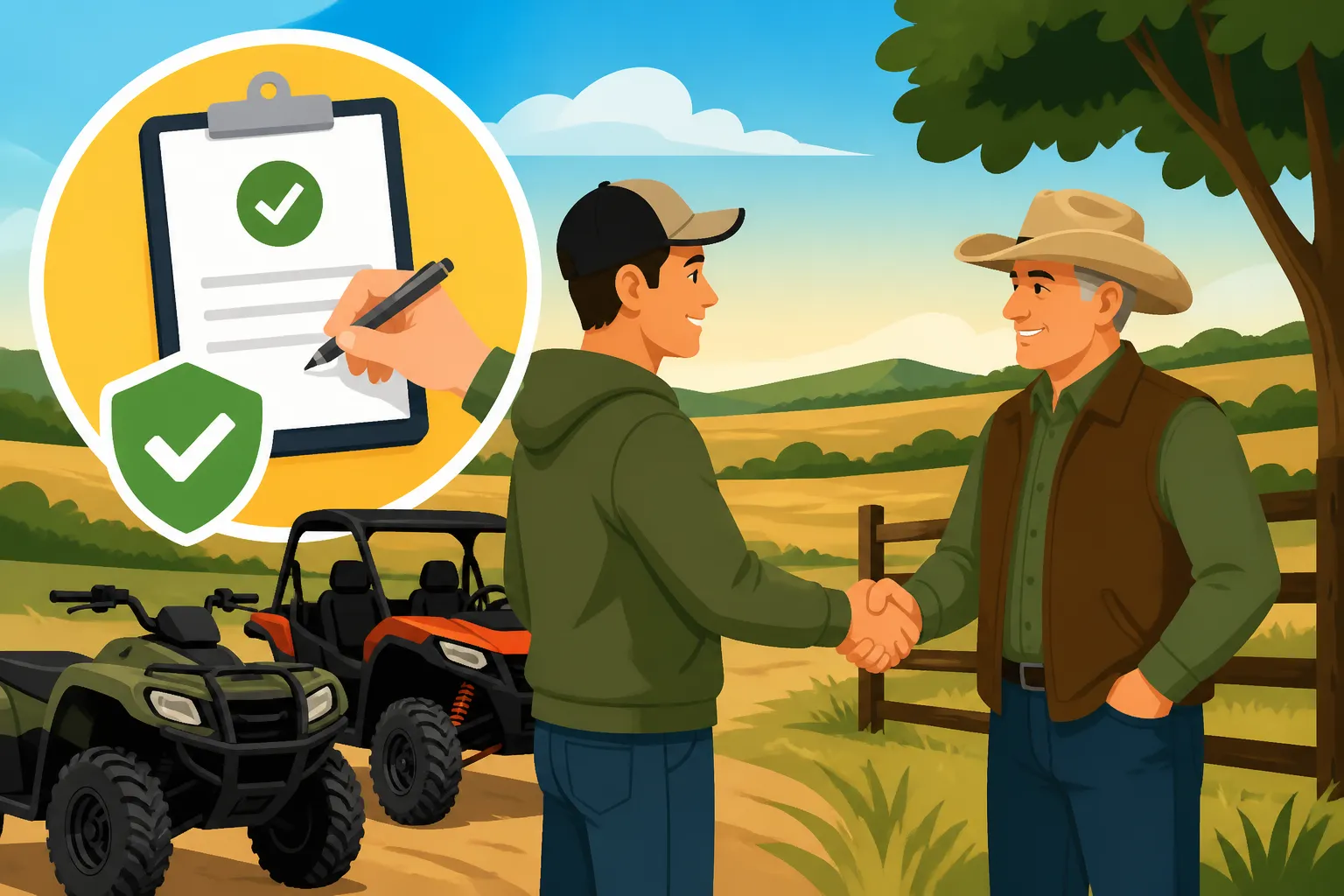
When you meet, come prepared. Having a draft permission form can show them you're serious and have thought this through. It allows them to see exactly what you're asking for and gives them something concrete to review. You can highlight how the written agreement protects them by clearly outlining responsibilities and limiting their liability.
Instead of just asking, "Can I ride?", frame it as, "I'm looking for a safe, designated place to enjoy my ATV, and I'd be honored if you'd consider allowing me to use a portion of your property under a clear, written agreement that protects both of us. I've even drafted a basic form we can look over." This proactive approach is often very well received. Be open to their suggestions and modifications to the agreement. They know their land best, and their conditions might be entirely reasonable. Remember, a "no" isn't a personal rejection; it's often based on past experiences or legitimate concerns. Thank them for their time, regardless of the outcome.
Common Scenarios and Special Considerations
Different types of land and different reasons for riding can influence the specifics of your permission agreement. It's not a one-size-fits-all situation.
Riding on Leased Hunting Property
Many riders lease land specifically for hunting. If you're using an ATV or UTV to access hunting blinds, retrieve game, or scout, you need to be very clear about machine use in your hunting lease agreement. Often, hunting leases have specific clauses about vehicle access, limiting use to certain paths or requiring machines to be parked in designated areas. You might even find restrictions on specific times you can operate a machine to avoid disturbing wildlife or other hunters.
If you're part of a larger hunting group, ensure everyone understands and agrees to the terms regarding vehicle use. Misunderstandings can quickly lead to friction between hunters and with the landowner. What if your buddy shows up with a heavily modified UTV equipped with SuperATV lift kits and massive tires, and the landowner only approved smaller, quieter machines? Clear communication and documented permission prevent these kinds of issues. For more details on hunting land, look up [Kansas Rules for Carrying a Rifle] in relation to vehicle use, as some restrictions may apply.
Farm and Ranch Operations
For those who live and work on farms and ranches, ATVs and UTVs are indispensable tools. While you might assume you can ride your own machine on your own land without "permission," it's still a good practice to have clear internal guidelines, especially if family members, employees, or even friends are using the machines. A written policy, even for your own operation, can clarify safety rules, maintenance responsibilities, and designated areas for specific tasks. This can be particularly important for young riders. [What a Parent Is Responsible For Off-Road] might include clear boundaries even on your own property.
If your farm work involves crossing public roads, the rules change entirely. While Kansas has agricultural exceptions for certain road uses, it's not a free pass to drive your ATV down the highway. [Kansas Rules for Riding Farm Ground] are primarily about private land, but crossing public ways involves a different set of laws. Make sure your machines, whether they have a SuperATV cargo bed full of tools or are just being used for scouting, comply with any specific lighting or safety requirements for road crossings.
Consequences of Riding Without Permission
Let's circle back to the real stakes here. The consequences of riding without proper permission in Kansas can range from a polite request to leave to serious legal trouble.
- Trespassing Charges: This is the most immediate risk. Depending on the specifics, it can lead to fines, court costs, and a criminal record.
- Impoundment of Your Machine: Law enforcement has the authority to impound vehicles used in illegal activities, including trespassing. Getting your ATV or UTV back can be a costly and time-consuming process.
- Liability for Damages: If you cause damage to the property – a fence, crops, irrigation equipment, or scare livestock – you could be held financially responsible. This can extend to personal injury if someone (including yourself) is hurt on the property while you were trespassing. [Kansas Accident Reporting for an ATV Crash] applies regardless of permission, but the legal context changes everything.
- Loss of Trust and Reputation: Beyond legal issues, riding without permission erodes trust and gives all off-road riders a bad name. It can lead to landowners being less willing to grant permission in the future, even to responsible riders.
- Confrontation: In rural areas, landowners may be armed and protective of their property. While extreme, confrontations can escalate quickly.
A simple, written agreement prevents all of these headaches. It's a small investment of time for immense peace of mind.
Here’s a quick overview contrasting verbal and written permission:
| Feature | Verbal Permission | Written Permission |
|---|---|---|
| Clarity | Prone to misinterpretation, forgotten details. | Clear, explicit, legally binding. |
| Proof | Difficult to prove in a dispute. | Provides undeniable evidence. |
| Protection | Limited legal protection for both parties. | Strong legal protection for landowner and rider. |
| Liability | Ambiguous; can lead to costly lawsuits. | Clearly outlines responsibilities and indemnification. |
| Duration | Often vague ("anytime"). | Specific start and end dates. |
| Scope | General ("ride on my land"). | Defines specific areas, activities, and restrictions. |
| Relationship | Relies solely on personal trust; fragile. | Builds trust through transparency and mutual agreement. |
| Consequences | High risk of trespassing charges, impoundment, damage. | Low risk when adhered to; issues are resolved per agreement. |
This article is for general informational purposes only and does not constitute professional advice. Laws, prices and regulations vary by location and change over time. Consult a qualified professional for guidance on your specific situation.