Matching a Child to the Right Machine Size
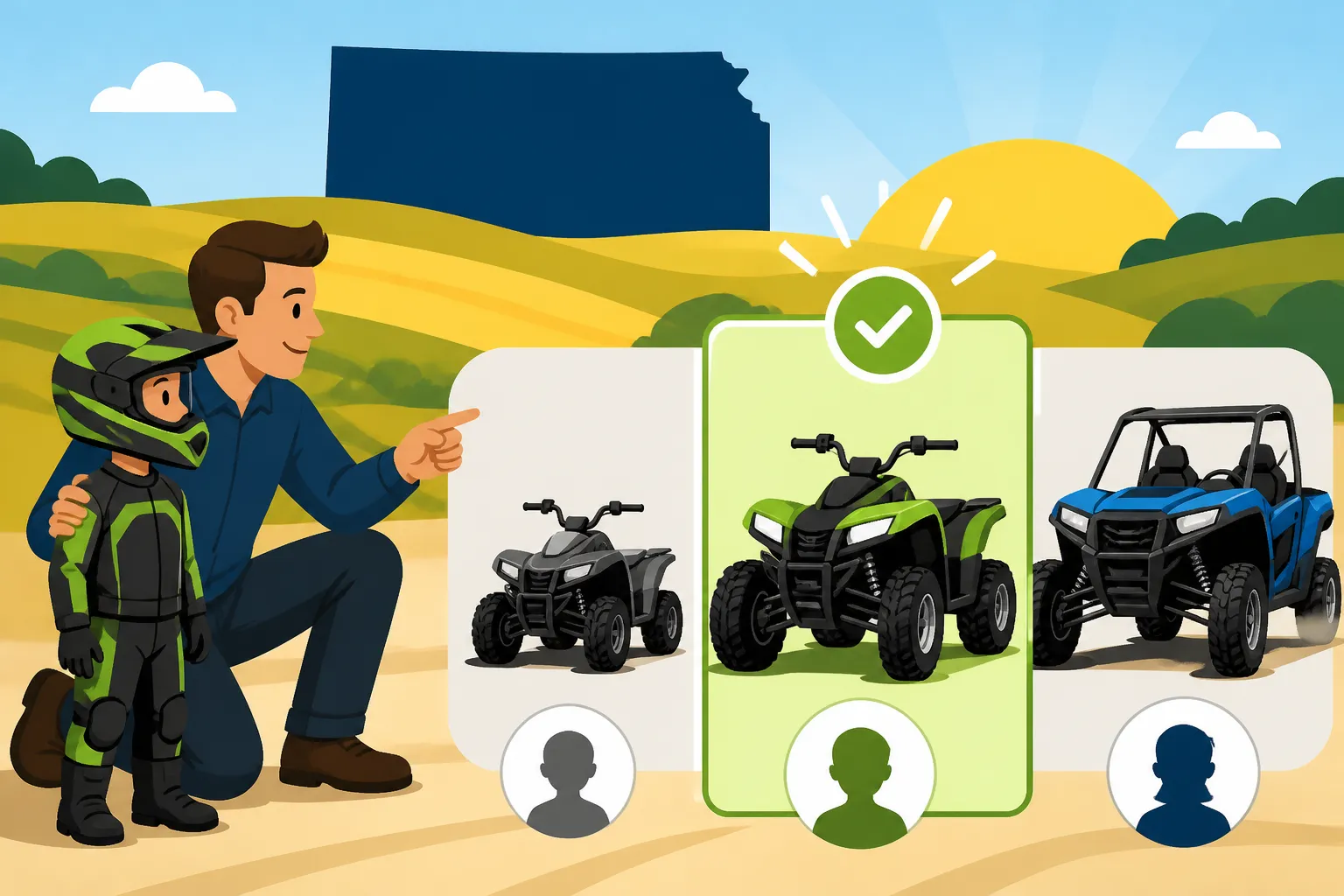
One of the biggest worries for any parent looking to get their child into the exciting world of ATV or UTV riding is safety, and often, that worry boils down to one critical question: "Is this machine the right size for my child?" It's a common struggle to navigate the options, feeling the pressure to pick something that's both fun and safe, without being too powerful or too small. This guide is here to walk you through exactly how to ensure your young rider is matched with an off-road machine that fits them perfectly, making their Kansas adventures as safe and enjoyable as possible.
Why Size Matters So Much for Young Riders
It might seem obvious, but the size of an ATV or UTV in relation to the child operating it is fundamentally linked to their ability to control the machine. Imagine trying to drive a semi-truck if you're only five feet tall – the pedals are too far, the steering wheel is too big, and you can barely see over the dashboard. The same principle applies, perhaps even more critically, to young riders on off-road machines.
When a child is on a machine that's too large, they simply can't reach and operate the controls effectively. Their hands might struggle to grip the handlebars firmly, their fingers might not have the leverage needed for the brake levers, and their feet might dangle off the footrests, unable to shift their weight properly or reach the foot brake. This lack of control isn't just an inconvenience; it's a serious safety hazard. An oversized machine is harder to steer, slower to respond to braking, and much more likely to tip or roll, especially on uneven terrain or during sharp turns. They also might not be able to put their feet down quickly if they lose balance, a crucial reflex for preventing falls.
Conversely, a machine that's too small might not seem as dangerous, but it presents its own set of issues. A child can quickly outgrow a very small ATV, meaning their knees might be hitting the handlebars, or their body position becomes cramped and awkward. This can lead to discomfort, fatigue, and an inability to correctly shift their weight for balance. While less common, an undersized machine could also feel unstable if the child's weight distribution is off, especially as they grow and become heavier. The goal is a comfortable, confident riding posture that allows for full control and natural body movements.
Beyond the immediate physical dangers, a poorly matched machine can completely undermine a child's confidence. If they're constantly struggling to manage a machine, or if they have an early negative experience due to an ill-fitting ride, it can deter them from riding altogether. We want to foster a love for the outdoors and off-road adventures, and that starts with putting them in a position to succeed safely.
Key Factors in Determining the Right Fit
Finding that sweet spot for your child's off-road machine involves looking at a few crucial elements beyond just the number of wheels. It’s a holistic assessment that prioritizes their safety, comfort, and ability to learn and grow as a rider.
Age and Experience
While age is often the first thing parents consider, it's really just a starting point. A child's maturity level, their attention span, and their ability to follow instructions are just as vital, if not more so, than their chronological age. A cautious, attentive 8-year-old might be far better equipped to handle a machine than a boisterous, easily distracted 10-year-old. Always consider their overall temperament and readiness.
Experience also plays a huge role. Has your child ridden anything before? A bicycle? A scooter? Even non-motorized experience can give them a foundational understanding of balance and control. For a brand-new rider, even if they meet the physical criteria for a slightly larger machine, starting with a smaller, less powerful option is almost always the safest bet. It allows them to build skills gradually, developing muscle memory and confidence without being overwhelmed. Think of it like learning to drive a car; you don't start with a high-performance sports car, no matter how old you are. Many reputable brands offer specific youth models, and companies like SuperATV also offer various safety and control components that can help tailor a machine for a beginner, like throttle limiters.
Physical Size: Height and Weight
This is where the rubber meets the road, quite literally. A child's physical stature is paramount for ensuring they can correctly interact with the machine.
When sitting on an ATV, your child should be able to:
- Reach the handlebars comfortably: Their arms should have a slight bend at the elbow, allowing for full steering lock without stretching.
- Grip the handlebars firmly: Their hands should be able to wrap fully around the grips.
- Operate all controls: This includes the throttle and brake levers, typically with their fingers, without excessive strain or having to shift their grip significantly.
- Reach the footrests: Their feet should be firmly placed on the footrests, not dangling.
- Shift their weight: They need to be able to move their body side-to-side and front-to-back to aid in steering and stability, especially on an ATV.
- Touch the ground: For ATVs, they should be able to place at least one foot flat on the ground when seated, or preferably both balls of their feet, for balance and quick dismounts.
For UTVs (side-by-sides), the considerations are slightly different as they are designed with bucket or bench seating and a steering wheel. Here, the focus is on:
- Reaching the pedals: Their feet must be able to comfortably reach and operate the accelerator and brake pedals.
- Reaching the steering wheel: Their arms should have a comfortable bend, allowing for full steering input.
- Secure seating: They should be able to sit securely in the seat with the seatbelt fastened, without slouching or excessive movement.
Remember, children grow fast! What fits today might be a bit snug next year. Some parents opt for machines that are "a little big" with the idea that the child will grow into it, but this can be dangerous. It's better to find a machine that fits now and consider reselling or trading up as they physically develop.
Engine Size (CCs)
The engine's cubic centimeters (cc) directly correlate with the machine's power and speed. Generally, smaller engines are for younger, less experienced riders, offering lower top speeds and more manageable acceleration.
Here's a general guideline for ATVs, though manufacturer recommendations are key:
| Age Range | Recommended ATV Engine Size (ATV) | Notes |
|---|---|---|
| Under 6 years | Not Recommended | Most experts advise against motorized ATVs for this age group. Consider alternative youth activities. |
| 6-11 years | Up to 70cc (2WD) | Single-cylinder, often with automatic transmissions. Low speed, easy to control. |
| 12-15 years | 70cc-90cc (2WD) | More power, but still manageable. Introduction to manual shifting (some models). |
| 16 years and up | 90cc-125cc+ (2WD or 4WD) | Can often transition to adult-sized machines depending on experience and physical stature. |
For UTVs, youth models typically range from 125cc to 200cc. They often come with features like speed limiters that can be adjusted as the child gains experience. This allows parents to control the maximum speed, providing an excellent way to gradually increase the challenge as skills improve. Accessories from companies like SuperATV can also include specialized youth control systems or roll cages for added safety.
Machine Type (ATV vs. UTV)
The choice between an ATV (all-terrain vehicle, typically a quad) and a UTV (utility task vehicle, or side-by-side) also impacts the fit for a child.
-
ATVs: These are single-rider machines that require active body movement and balance for control. They are often sportier and more agile. For a child, mastering an ATV teaches crucial balance, coordination, and weight-shifting skills. However, they are also more prone to rollovers if not ridden correctly or if the rider is too small to manage the machine's dynamics. The American National Standards Institute (ANSI) has specific standards for youth ATVs, including speed limits and physical dimensions.
-
UTVs: Side-by-sides typically offer a more stable platform with a roll cage, seatbelts, and a steering wheel, similar to a car. They are designed for multiple passengers (though youth models are often single-seat or have restricted passenger capacity) and are generally perceived as offering a higher level of passive safety due to the enclosed nature and seatbelts. For children who might struggle with the balance required for an ATV, or for those who prefer a more car-like experience, a youth UTV can be an excellent choice. Many youth UTVs also come with parental control features, like geofencing or speed limiters, which add an extra layer of safety. This makes them a strong option for younger or less experienced riders, or for families who want a machine that allows for supervised riding with more stability.
Practical Steps to Assess Machine Fit
Beyond the general guidelines, there are concrete steps you can take to make sure that the machine you’re considering is truly the right fit for your child. It’s not just about reading a spec sheet; it’s about hands-on evaluation.
Manufacturer Guidelines
Always, always start with the manufacturer's recommendations. Every reputable ATV and UTV manufacturer provides age, height, and weight guidelines for their youth models. These aren't arbitrary suggestions; they're based on extensive testing and engineering to ensure the machine is safe and controllable for its intended rider. You can usually find these in the owner's manual or on the manufacturer's website. Deviating from these guidelines significantly increases the risk of an accident and can even void warranties. For instance, putting a small child on an adult-sized machine, even with supervision, goes against every safety recommendation.
The "Feel" Test
This is the most crucial step. Bring your child to the dealership or where the machine is located, and let them sit on it. Observe them closely:
-
On an ATV:
- Can their feet touch the ground or flat on the footrests? Ideally, the balls of their feet should be able to touch the ground easily. Their knees should have a slight bend when their feet are on the footrests, not locked straight or cramped.
- Do their arms have a slight bend at the elbows when gripping the handlebars? They should not be stretching to reach or have their arms completely straight.
- Can they comfortably turn the handlebars all the way from left to right?
- Can their fingers easily reach and operate the brake levers without having to remove their hands from the grips?
- Ask them to shift their weight side-to-side. Does the machine feel stable beneath them, or do they feel like they’re fighting it?
-
On a UTV:
- Can their feet reach the pedals (accelerator and brake) without stretching excessively, and can they operate them smoothly?
- Do their arms have a comfortable bend when gripping the steering wheel? Can they turn the wheel fully in both directions?
- Are they able to sit upright and comfortably in the seat with the seatbelt fastened? Is the seatbelt snug, or is there too much slack?
- Can they easily see over the dashboard and out of the front of the vehicle?
If anything feels off or looks awkward, it’s a red flag. Trust your parental instincts here. If your child seems hesitant or uncomfortable, it's probably not the right fit. Remember, a machine like a [Kansas Title for a Youth Quad] should be built specifically for younger riders, not just a scaled-down adult model.
Testing Controls and Features
Beyond just sitting, have your child practice operating the controls while the machine is off or in a safe, controlled environment.
- Throttle: Can they smoothly engage and release the throttle? For many youth models, a throttle limiter can be installed to restrict speed, which is an excellent feature for beginners. Even aftermarket suppliers like SuperATV offer adjustable throttle systems or restrictors.
- Brakes: Can they apply both front and rear brakes (if applicable) effectively? Do they understand which lever/pedal controls what? Practice emergency stops at very low speeds.
- Steering: Can they consistently steer the machine in the direction they intend?
- Starting/Stopping: For machines with a key or electric start, can they easily start and stop the engine? Do they know where the kill switch is and how to use it?
Many youth ATVs and UTVs come with remote engine shut-off switches, which allow a parent to kill the engine from a distance if a child gets into trouble. This is an invaluable safety feature, especially for beginners.
Supervision and Training
Regardless of how perfectly a machine fits, consistent adult supervision is non-negotiable for young riders. This means being present, actively watching, and ready to intervene. It’s also crucial to enroll your child in an approved rider safety course. These courses teach fundamental riding techniques, safety protocols, and responsible riding habits that no amount of informal instruction can replicate. While [Kansas Has No Safety Course Requirement] at the state level, many private organizations and manufacturers offer excellent courses that are highly recommended. A properly trained child on a correctly sized machine is the safest scenario you can achieve.
Kansas-Specific Considerations for Youth Riders
While the core principles of matching a child to an ATV or UTV are universal, it’s important to understand how Kansas law and local practices might influence your decisions. Knowing the lay of the land, both legally and practically, helps ensure not just safety, but compliance.
Helmet Laws and Safety Gear
This is an area where Kansas might surprise some parents. Unlike many states with strict helmet mandates for all ATV riders, [Does Kansas Have an ATV Helmet Law at All?] for off-road use, the answer generally points to no statewide statute specifically for ATVs. The existing helmet law in Kansas, K.S.A. 8-1598, primarily applies to "motorcycle" and "motor-driven cycle" operators and passengers. While many off-road machines are titled as non-highway vehicles, they aren't usually classified as motorcycles under this specific statute.
However, a lack of a state law does not mean helmets aren't essential. As a parent, you should absolutely require your child to wear a DOT-compliant helmet every single time they ride. Their developing brains are incredibly vulnerable, and a helmet is the single most effective piece of safety gear against head injuries. In addition to a helmet, sturdy boots, gloves, long pants, a long-sleeved shirt, and eye protection are all critical. Many private riding parks in Kansas, such as Kansas Rocks Recreation Park or Syracuse Sand Dunes Park, will have their own mandatory helmet rules, regardless of state law. These private parks prioritize safety, and often their [Kansas Private Park Helmet Rules] are stricter than what the state mandates for general off-road use.
Age and Passenger Restrictions
Kansas law does not have a comprehensive statewide age restriction for operating ATVs on private property, which is where most youth riding occurs. However, manufacturers themselves have strict age recommendations that are widely endorsed by safety organizations. For instance, most ATVs under 70cc are recommended for riders 6 and older, while machines 70-90cc are for 12 and older, and 90cc and up for 16 and older. Adhering to these manufacturer guidelines is paramount for safety.
When it comes to passengers, Kansas law is clearer. An ATV is generally designed for a single operator unless it is specifically designed by the manufacturer to carry a passenger. Carrying a second rider on a single-seat quad is dangerous and illegal on public lands, and often against rules even on private property due to the risk of upsetting the machine's balance. UTVs, being multi-passenger vehicles, are designed to carry passengers, but parents must ensure that any child passenger is properly secured with seatbelts and that the machine's capacity is not exceeded. Always check [Kansas Rules for a Child Passenger] to understand the nuances of local ordinances or private park rules.
Private Park Rules
Given that Kansas has limited public riding trails, many riders utilize private off-road parks. These parks often have their own comprehensive rules and regulations concerning rider age, machine size, and mandatory safety gear. For example, School Creek ORV Area, a Corps of Engineers park, has a [Kansas's 50-Inch Limit at School Creek] rule, which means wider side-by-sides are not allowed, impacting what machine might be suitable for a child if that's where you plan to ride.
Before heading out, always check the specific rules of the park you intend to visit. They might have age minimums, require specific types of machines (e.g., [Kansas Trails That Allow Side-by-Sides] vs. those that only allow ATVs), or have specific requirements for supervision. These rules are put in place for safety and to manage the types of machines on their terrain. Knowing them ahead of time can save you a wasted trip and ensure your child is riding in an appropriate environment.
Matching your child to the right-sized ATV or UTV is a critical step in ensuring their safety and fostering a lifelong love for off-road riding. It's about more than just engine size; it's about their physical fit, maturity, and the environment they'll be riding in. Take the time to do your research, involve your child in the "feel test," and prioritize safety gear and training. This diligent approach will lead to countless safe and enjoyable adventures for your young rider across the Sunflower State.
Disclaimer
This article is for general informational purposes only and does not constitute professional advice. Laws, prices and regulations vary by location and change over time. Consult a qualified professional for guidance on your specific situation.