Riding in a Town That Never Passed an Ordinance
It's incredibly frustrating, isn't it? You've got your ATV or side-by-side, ready to run a quick errand or just enjoy a cruise through your small town, only to find yourself utterly confused about whether it's even legal to ride on the streets. This isn't just a minor inconvenience; it’s a genuine headache born from the patchwork of laws and local rules that can make owning and operating these machines in Kansas feel like navigating a legal minefield. This guide is here to clear the fog, explaining exactly what happens when your town hasn't passed a specific ordinance about ATV or UTV use on its roads, helping you understand the default rules and why clarity is so important.
The Default Kansas Law: An Outright Ban on Most Roads
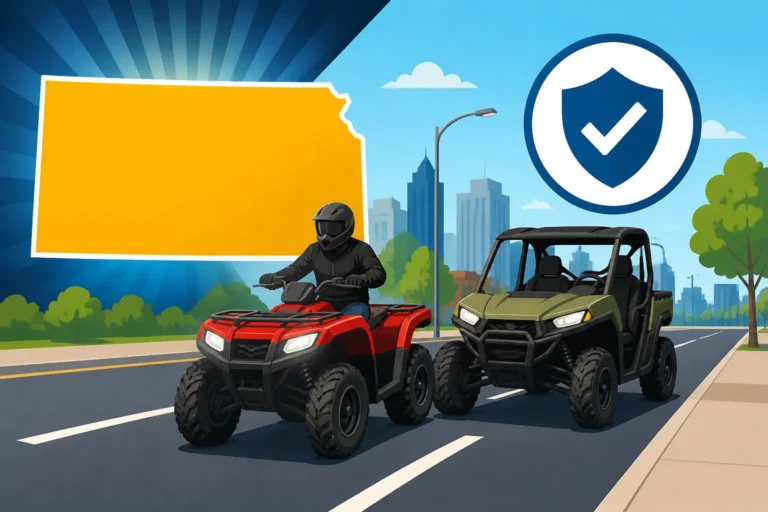
Let's cut right to the chase: if your town hasn't specifically passed an ordinance allowing ATVs or UTVs on its streets, the default stance of Kansas state law is that they are generally prohibited. This can feel counterintuitive, especially if you see machines being ridden elsewhere, but it's the foundational rule that local jurisdictions can, but don't always, override. Understanding this default ban is crucial before you ever consider hitting the pavement.
Why Most ATVs and UTVs Are Banned by Default
Kansas law, like many states, classifies ATVs and UTVs as "nonhighway vehicles." This designation immediately sets them apart from cars, trucks, and motorcycles, which are explicitly designed and regulated for highway use. The state statutes generally prohibit the operation of these nonhighway vehicles on public highways, roads, and streets. This isn't some obscure, rarely enforced rule; it's a broad prohibition that applies across the board unless a specific exception or local ordinance is in place.
Think about it this way: your ATV or side-by-side isn't built to the same safety standards as a street-legal car. They often lack turn signals, mirrors, or even robust braking systems designed for high-speed road travel and interaction with other traffic. While many modern UTVs are getting closer to meeting these standards, the underlying legal framework in Kansas still treats them as off-road machines first and foremost. This default ban is rooted in safety concerns for both the riders and other motorists. It's the state's way of saying, "These machines belong off the road unless specific local conditions allow otherwise." This is why you'll often hear about [Kansas Bans ATVs Inside City Limits by Default].
What About "Nonhighway Vehicle" Status?
Many new ATV or UTV owners in Kansas will go through the process of getting a [Kansas Nonhighway Title Explained] for their machine. This is a mandatory step for ownership in most cases, but it’s vital to understand what this title doesn’t do. A nonhighway title serves as proof of ownership and helps track sales and tax collection, but it absolutely does not grant permission to ride your machine on public roads or streets.
This is a point of significant confusion for many riders. They've done their due diligence, obtained a title from the county treasurer's office, and assume that since their machine is "titled," it must be legal to operate in more places. However, the nonhighway title explicitly indicates that the machine is not for highway use. There's no corresponding "tag" or license plate that makes an ATV or UTV street legal in the way a car or motorcycle has. As we've discussed before, [Why a Kansas Nonhighway Title Never Comes With a Tag] is a key indicator of its intended use. So, while you might legally own your machine and have the paperwork to prove it, that paper doesn't magically transform it into a street-legal vehicle for general city street use.
The Farm and Ranch Exception
Now, Kansas law does include a crucial, albeit narrow, exception for agricultural operations. If you're a farmer or rancher, you might be able to operate your ATV or UTV on public roads for agricultural purposes. This [Kansas's Agricultural Exception for Road Use] typically allows for crossing a highway or traveling short distances along it to move between fields, access agricultural land, or perform farm-related tasks.
However, it’s critical not to misinterpret this exception. This isn't a blanket pass for recreational riding or running errands into town just because you live in a rural area. The use must be directly related to agricultural operations. If you're hauling fencing supplies from one pasture to another, that's likely covered. If you're cruising down Main Street to pick up groceries, even if you live on a farm, that's almost certainly not. Law enforcement understands the difference between legitimate farm use and recreational joyrides, and they will enforce the law accordingly. This exception exists to support the backbone of Kansas's economy, not to circumvent the general ban on nonhighway vehicles on public roads.
How Cities and Towns Can Override the State Ban
While the state law provides a general prohibition, it also wisely empowers local municipalities to make their own decisions regarding street legal UTVs and, in some rarer cases, ATVs. This flexibility is what leads to the highly varied landscape of rules across Kansas, where one town might embrace UTVs on its streets, and a neighboring town might strictly forbid them.
The Power of Local Ordinances
Kansas state law explicitly allows cities and towns to pass their own ordinances that can permit the operation of specific off-road vehicles—most commonly UTVs and golf carts, less often ATVs—on their municipal streets. This is an "opt-in" system, meaning the local government has to take deliberate action to allow it. If they haven't passed such an ordinance, the state's default ban remains firmly in place. This is where the confusion for many riders stems from: the absence of an ordinance isn't a loophole; it's a reinforcement of the ban.
A city council must go through a formal process to adopt these rules. This usually involves public hearings, drafting specific language, and then a vote. When a city passes such an ordinance, they are essentially saying, "Within our city limits, we are choosing to allow these types of vehicles under certain conditions, overriding the state's general prohibition." This is the only way a non-agricultural ATV or UTV can become "street legal" in a Kansas town. For a deeper dive into this process, you might look into [How a City Council Opens Its Streets to UTVs].
What a City Ordinance Typically Covers
When a town does decide to allow UTVs or golf carts on its streets, it almost always comes with a host of regulations designed to ensure safety and maintain order. These aren't just "anything goes" passes; they are carefully crafted rules that riders must abide by. Common provisions include:
- Vehicle Types: Ordinances are very specific. They might allow UTVs (often defined by width, weight, and seating), golf carts, or sometimes [Kansas Work-Site Utility Vehicle Road Rules], but rarely ATVs due to their inherent design for off-road maneuvering and higher risk profile on pavement.
- Speed Limits: Most city ordinances will impose a strict speed limit for these machines on public streets, often significantly lower than the posted limit for cars. This is usually around 25 or 35 mph, acknowledging their different performance characteristics.
- Equipment Requirements: This is where many riders need to make modifications. Ordinances frequently require headlamps, taillamps, brake lights, turn signals, rearview mirrors, windshields, and even seatbelts. These are vital for visibility and communication with other traffic. Many riders turn to aftermarket companies like SuperATV for street-legal conversion kits that provide these necessary additions, ensuring their machine meets local requirements.
- Insurance: Proof of liability insurance is almost always a prerequisite for obtaining a city permit or tag. This protects everyone in case of an accident. You can find more details on [Kansas City Insurance Requirements].
- Driver's License: Operators are typically required to possess a valid driver's license, even if the machine is not a traditional motor vehicle.
- City Tags/Permits: Many towns require an annual permit or "city tag" to be displayed on the machine, often for a fee, which helps fund enforcement and administration.
- Operating Hours: Some ordinances might restrict use to daylight hours only, or specify times when machines are allowed.
The crucial takeaway here is that these rules can vary dramatically from one municipality to the next. What's perfectly legal in Louisburg might get you a ticket in Andover. This makes it incredibly important to check the specific rules for your town.
Finding Out Your Town's Rules
Given the variation, how do you find out if your specific town allows UTVs or ATVs on its streets, and under what conditions? The most reliable sources are always official ones.
Your first stop should be your city clerk's office or the local police department. They are the keepers of city ordinances and will be able to tell you definitively whether such a rule exists and what it entails. Don't be afraid to ask for a copy of the ordinance itself so you can read the exact language. Many cities also post their ordinances online on their official municipal websites. A quick search for "[Your Town Name] UTV ordinance" or "golf cart rules" might yield results.
It's also a good idea to chat with local law enforcement directly. They are the ones enforcing these rules and can offer practical advice. However, always verify what you hear with the official written ordinance. Hearsay from a neighbor or a buddy, while well-intentioned, is not a substitute for checking the actual law. You really need to know [How to Tell If Your Kansas Town Allows UTVs] before you ever consider riding on city streets.
Remember, the absence of an ordinance is not a green light. It defaults to the state ban. So, if your town's official sources yield no information about an ordinance permitting off-road vehicles on streets, assume it's prohibited.
Practical Implications for Riders in Undecided Towns
So, what does all of this mean for you, the rider, living in a town that simply hasn't bothered to pass a specific ordinance about ATVs or UTVs on its streets? It means you need to proceed with extreme caution and understand the very real risks involved.
The Risk of Riding Where There's No Ordinance
If your town has not passed a specific ordinance permitting ATVs or UTVs on its streets, then the state's general prohibition is in full effect. This means that riding your machine on city streets is illegal. Period. There's no gray area when a city hasn't acted.
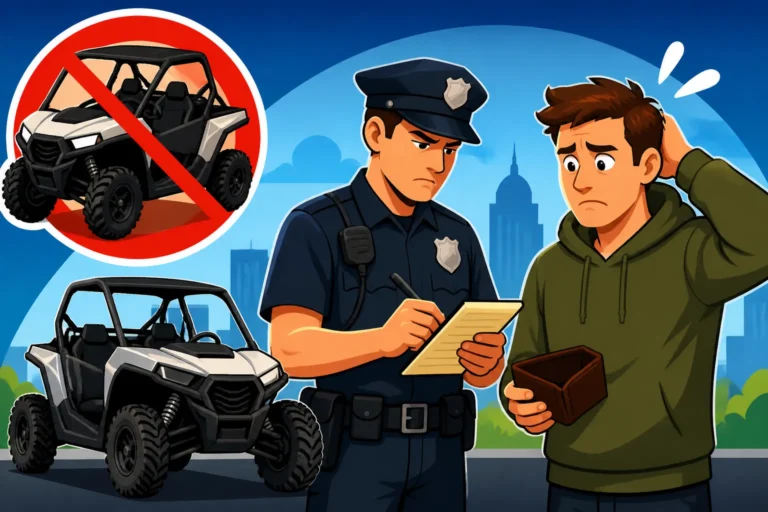
What are the consequences? You could face tickets, hefty fines, and potentially even impoundment of your machine. Law enforcement officers, whether city police or county deputies, are obligated to enforce state law. If they pull you over on a city street in a town without a permissive ordinance, they are within their rights to issue a citation for illegal operation of a nonhighway vehicle on a public road. These penalties can be significant, and fighting such a ticket in municipal court can be a time-consuming and expensive process. It's simply not worth the risk. Understanding [Kansas Penalties for Illegal Road Riding] is essential for any off-road vehicle owner.
Crossing Roads vs. Traveling on Roads
There's an important distinction to make between using city streets for general travel and merely crossing a highway or road. Kansas state law does allow for the crossing of certain roads, including state highways, under very specific conditions. This usually means crossing at a right angle, yielding to all traffic, and doing so only when safe and necessary to get from one piece of private property to another. For more on this, check out [Crossing a State Highway in Kansas].
However, this allowance for crossing does not extend to traveling down city streets or using them as a thoroughfare for any distance. A brief, direct crossing is a world away from riding several blocks to the convenience store or driving to a friend's house. Don't confuse the limited ability to cross a road with a general permission to operate your machine on public streets. The intent and duration of your road use are critical in the eyes of the law.
Considering Alternatives
If your town hasn't passed an ordinance, and you're therefore prohibited from riding on city streets, it doesn't mean your off-road machine has to sit idle. There are still plenty of ways to enjoy your ATV or UTV legally and safely.
- Private Land with Permission: The vast majority of off-road riding in Kansas happens on private land. If you have access to your own property, or have secured written permission from a landowner, you can ride to your heart's content, respecting property lines and local noise ordinances.
- Designated Off-Road Parks and Trails: Kansas, while not known for its vast public trail systems, does have a few dedicated off-road riding areas where you can legally cut loose. Places like Tuttle Creek ORV Area, School Creek ORV Area, Kansas Rocks Recreation Park, and Syracuse Sand Dunes Park offer a variety of terrains and experiences. These are fantastic places to ride legally and safely, without worrying about street legality. You can learn more about these options by looking into [Kansas ATV Trails: Where You Can Actually Ride].
- Trailers are Your Friend: If you want to ride in a legal area that's not on your property, a trailer is your best friend. Load up your machine and haul it to your destination. This is the safest and most legally compliant way to transport your ATV or UTV to where it's truly meant to be ridden.
Ultimately, being a responsible ATV or UTV owner in Kansas means knowing the rules, even when those rules are determined by the absence of a local decision. The table below summarizes the core differences.
| Feature | Town Without Ordinance (Default State Law) | Town With Permissive Ordinance (Example) |
|---|---|---|
| Street Use | Generally prohibited (nonhighway vehicle) | Permitted under specific conditions |
| Primary Authority | Kansas State Law | Local City Ordinance |
| Required Equipment | Minimal (off-road standards) | Headlights, taillights, turn signals, mirrors, etc. |
| Insurance | Not legally required for off-road use | Usually required (liability) |
| Driver's License | Not always required for off-road use | Always required for street use |
| City Tag/Permit | Not applicable | Often required annually |
| Speed Limit | Not applicable | Typically 25-35 mph, even if posted limit is higher |
| Crossing Highways | Allowed under strict conditions (right angle, yield) | Allowed under strict conditions, plus general street use |
| Penalties for Violation | Fines, possible impoundment, legal costs | Fines for violating ordinance, possible impoundment |
Navigating the rules for riding your ATV or UTV on roads in Kansas can feel like a maze, especially when your local town hasn't made its stance clear. However, the overarching message is that the state's default ban holds strong unless a local ordinance specifically overrides it. Always do your homework, contact your city officials, and err on the side of caution. Your safety, your wallet, and your peace of mind are worth the effort of being fully informed.
Disclaimer
This article is for general informational purposes only and does not constitute professional advice. Laws, prices and regulations vary by location and change over time. Consult a qualified professional for guidance on your specific situation.