Kansas Rules for a Machine With a City Tag
It’s a common misconception, isn't it? You go through all the trouble to get your UTV or side-by-side a city tag, pay the fees, get it inspected, and you think, "Great! Now I can ride anywhere." But in Kansas, a city-issued tag for your off-road machine isn't quite the golden ticket to unrestricted street use that many owners hope for. This guide is here to untangle the often-confusing web of regulations that apply to machines with a city tag, helping you understand where you can and cannot ride, and what rules you absolutely need to follow to stay out of trouble and enjoy your machine safely.
Understanding the "City Tag" Phenomenon in Kansas
The world of off-road vehicle laws in Kansas can feel like a patchwork quilt, with different rules applying to different machines and different locations. One of the biggest sources of confusion comes from the "city tag" – that special plate or sticker some towns issue for UTVs. It’s easy to assume this tag grants you carte blanche on all paved surfaces, but the reality is far more nuanced.
Why Cities Create Their Own UTV Ordinances
Kansas state law generally restricts off-road vehicles like ATVs and UTVs from public roads. This can be a real headache for folks who rely on their machines for quick trips around town, to check mailboxes, or visit neighbors in rural subdivisions. Recognizing this need, the state legislature gave cities the power to create their own ordinances, essentially allowing them to "opt-in" to allowing UTVs on their streets. This is why you see such a variety in local rules across the state. Some cities, particularly smaller ones or those with a strong agricultural presence, see UTVs as a practical part of community life. They draft specific ordinances to govern their use, often as a way to allow residents convenience while maintaining a semblance of order and safety. It’s a local solution to a local demand, addressing the frustration of many owners who just want to get from point A to point B without firing up the truck. If you're wondering which towns have taken this step, you'll want to check out [Kansas Cities That Authorize ATV Street Use].
What a City Tag Doesn't Mean for Your UTV
Here's where many owners get tripped up. A city tag, despite looking official, is not the same as a state registration or a traditional vehicle license plate. It's a permit to operate within the specific boundaries of the city that issued it, and under that city's specific rules. It absolutely does not give you permission to cruise down state highways, interstates, or federal roads. Those are under a different jurisdiction and have much stricter regulations. You’ll find that [Kansas Bans ATVs on Interstates] is a hard and fast rule, no matter how many city tags you collect.
Furthermore, a tag from Louisburg, for example, doesn't grant you permission to ride on the streets of Andover or Scott City, unless those cities also have their own ordinances and you've complied with their requirements. It's not a reciprocal agreement across city lines. Think of it more like a special local pass, not a universal driver's license for your off-road machine. This distinction is crucial because mistakenly believing your city tag grants wider access can lead to hefty fines and a lot of frustration with law enforcement.
Navigating Roads with Your City-Tagged Machine
So, you've got your city tag – congratulations! Now comes the critical part: understanding precisely how to use it. Each city’s ordinance is its own little rulebook, and knowing the specific details of your town’s regulations is paramount.
City-Specific Road Rules and Speed Limits
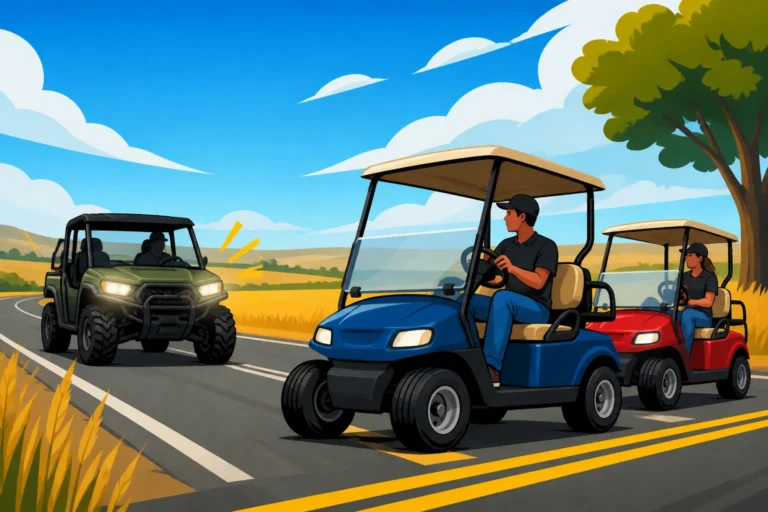
This is perhaps the trickiest part, as there's no "one-size-fits-all" answer. The moment you drive your city-tagged UTV, you are bound by the specific ordinance of that city. Some cities are quite lenient, treating UTVs almost like cars, while others have very strict limitations. For instance, cities often impose specific speed limits for UTVs that are much lower than the posted speed limits for cars. You might find that while the main road is 55 MPH, your UTV is restricted to 30 MPH or even 25 MPH, particularly if it's considered a golf cart or micro utility truck under the city's definition. [Louisburg's 45 mph Street Limit in Kansas] is a good example of how cities set their own specific rules.
Beyond speed, cities often mandate specific equipment upgrades. While your UTV came ready for the trails, a city might require turn signals, a horn, a rear-view mirror (or even side mirrors – a great opportunity to explore robust options from brands like SuperATV), a windshield, or specific lighting. These aren’t suggestions; they’re often prerequisites for getting your tag in the first place, and certainly for staying legal on their streets. Before you even apply for that city tag, it's vital to get a copy of your local ordinance and understand every single requirement.
Crossing State Highways and Leaving City Limits
This is where the city tag truly hits its limitations. While your UTV might be perfectly legal on a side street within your town, venturing beyond its corporate limits or attempting to travel on state or federal highways is generally a no-go. State highways (think K-DOT roads, typically marked with a K followed by a number, or US highways) are regulated by state law, which, as mentioned, prohibits most off-road machines. While you might be able to cross a state highway to get to another part of your town, there are often very specific rules for doing so – usually requiring you to go straight across at an intersection, following all traffic laws, and not traveling along the highway for any distance. For more on this, you can look into [Crossing a State Highway in Kansas].
The moment you leave the geographical boundaries of the city that issued your tag and enter another municipality or unincorporated county territory, your city tag loses its authority. If the neighboring town doesn't have its own ordinance, or if you haven't complied with their separate tagging requirements, you're back to the default state prohibition on road use. This can be incredibly frustrating for riders who live close to a city line or want to visit a nearby community. Many riders are simply unaware that [Riding in a Town That Never Passed an Ordinance] can land them in hot water, even if their UTV is tagged in their hometown. Always know where your city's jurisdiction ends, and don't assume your tag travels with you.
Essential Requirements for City-Tagged UTVs
Obtaining a city tag isn't just about paying a fee; it usually involves proving your machine and you, as the operator, meet certain safety and legal standards. These are in place to protect everyone on the road, including pedestrians, cyclists, and other motorists.
Driver's License, Age, and Insurance Requirements
For any machine operated on public roads in Kansas, regardless of whether it's a car, truck, or a city-tagged UTV, a valid driver's license is almost universally required. This isn't just a suggestion; it’s a fundamental safety and legal expectation. If you're operating a vehicle on a public street, you need to be a licensed driver. [Do You Need a License for an ATV in Kansas?] provides more insight into this, but generally, if you're on a city street, you need a license.
Beyond just having a license, many cities will also stipulate minimum age requirements for operators, even if they possess a valid driver's license. For example, some ordinances might say operators must be 16 or 18 years old.
Perhaps one of the most significant and often overlooked requirements is insurance. While the state doesn't generally mandate insurance for off-road machines used exclusively off-road, many cities require proof of liability insurance before they'll issue a UTV tag. This makes sense from a safety perspective; if you're involved in an accident on city streets, you need to be able to cover damages. [Louisburg's Insurance Requirement in Kansas] is a prime example of a city that prioritizes this. Always carry your proof of insurance with you when operating your city-tagged machine, just as you would in your car.
Equipment Checks and Enforcement
Before your city issues a tag, don't be surprised if they require an inspection of your UTV. This isn't to be punitive; it's to ensure your machine is equipped with the necessary safety features for street use. City officials, often police officers, will check for things like working headlights and taillights, brake lights, a horn, mirrors, and sometimes turn signals. They want to ensure your machine is visible and can communicate its intentions to other drivers. This process is detailed in instances like [Police Inspect a UTV Before a City Tag Issues]. If your UTV isn't up to snuff, you'll need to make the upgrades before you get your tag. Many owners find themselves adding aftermarket accessories like street-legal kits, often sourcing parts like mirrors, turn signals, and windshields from reputable suppliers such as SuperATV, to meet these specific city requirements.
Once you have your tag, enforcement is key. Police officers in the city are authorized to stop you if they suspect you're violating the ordinance. This could be for speeding, not having required equipment, or operating outside the permitted hours (some cities restrict night riding for UTVs). Penalties for violating these ordinances can range from fines to impoundment of your machine. It's not a ride-at-your-own-risk scenario; cities take these rules seriously for the safety of their residents. Understanding [Kansas Penalties for Illegal Road Riding] can help emphasize the importance of compliance.
Beyond the City Limits: Other Road Use Exceptions
While a city tag is powerful within its specific jurisdiction, it’s also important to be aware of other instances where Kansas law does permit some road use for off-road machines, even without a city tag. These are distinct exceptions and shouldn't be confused with the blanket permission a city tag provides.
| Feature | City-Tagged UTV (within city limits) | Agricultural Exception (on certain roads) | General Kansas ATV/UTV State Rule |
|---|---|---|---|
| Legal Authority | City Ordinance | State Statute | State Statute (general prohibition) |
| Area of Use | Only within issuing city's boundaries | Farm roads, county roads (specific purposes) | Off-road only (default) |
| Driver's License | Required | Required (if on road) | Not required (off-road only) |
| Insurance | Often Required by City | Not always required (check policy) | Not required (off-road only) |
| Equipment | City-specific (lights, mirrors, etc.) | Basic lighting (sunset/sunrise) | Minimal for off-road |
| Speed Limit | City-defined (often lower) | Posted road limits (within reason) | N/A |
| Interstate Access | Never Permitted | Never Permitted | Never Permitted |
| Crossing State Hwys | Yes, with specific city rules | Yes, with specific state rules | No |
The Agricultural Exception
One of the most significant state-level exceptions that allows off-road machines on public roads is for agricultural purposes. This rule recognizes that farmers and ranchers often need to move their ATVs and UTVs short distances on roads to access fields, check livestock, or perform other farm-related tasks. This exception is governed by state statute, not local ordinance, and allows for use on certain roads, usually county or township roads, and in some cases, crossing state highways. You can learn more about this by reviewing [Kansas Agricultural Trips on a 65 mph Road].
It’s crucial to understand that "agricultural purposes" is a specific definition. It doesn't mean you can take your UTV on a pleasure cruise to the nearest coffee shop just because you own a few acres. The intent of the trip must be directly related to farming or ranching operations. For example, moving a side-by-side loaded with tools from one field to another, or spraying fence lines, would likely fall under this exception. This exception also typically requires you to operate your machine as far to the right as practicable and adhere to basic lighting requirements if traveling after sunset or before sunrise. This is a very different set of rules than those governing a city-tagged UTV, and the two shouldn't be conflated.
County Roads vs. City Streets
Another point of confusion lies in the distinction between county roads and city streets. A city tag, as we've discussed, only grants you privileges within the corporate limits of that specific city. It does not automatically extend to county roads outside of any incorporated town. County roads fall under the jurisdiction of the county, and generally, the state's default prohibition on off-road vehicle road use applies unless the county itself has a specific ordinance or resolution, which is far less common than city ordinances.
So, if you get a city tag in, say, De Soto, you can ride on De Soto's streets as permitted. But if you then drive out onto a gravel county road just outside of De Soto's limits, your city tag offers no protection, and you could be cited for illegal road use. This is why it's so important to understand [Kansas Rules for Riding a County Road] and to know that [Who Decides If a Kansas County Road Is Open] is a completely separate authority from your city council. Always clarify the rules for the specific roads you intend to use. Never assume that because one jurisdiction allows it, another will too.
Disclaimer
This article is for general informational purposes only and does not constitute professional advice. Laws, prices and regulations vary by location and change over time. Consult a qualified professional for guidance on your specific situation.