Kansas City Insurance Requirements
It can feel like navigating a maze trying to figure out the rules for riding ATVs and UTVs in Kansas, especially when it comes to something as crucial as insurance. You’ve got your machine, you’re ready to hit the trails or maybe even use it for work around town, but then the questions start piling up: Do I need insurance? What kind? And what exactly do "Kansas City insurance requirements" even mean? This guide will cut through the confusion and explain exactly when, where, and why you might need insurance for your off-road vehicle in the Sunflower State.
The Nuance of Kansas ATV and UTV Insurance Laws
One of the biggest sources of confusion for off-road vehicle owners in Kansas is the patchwork nature of the laws. Unlike passenger vehicles, which universally require liability insurance to be driven on public roads, ATVs and UTVs fall into a different category. It's not as straightforward as a single statewide mandate, which can be incredibly frustrating when you're just trying to do things by the book.
No Statewide Insurance Mandate for Off-Road Use
Let's get this clear right from the start: as a general rule, the state of Kansas does not require you to carry insurance on your ATV or UTV solely for off-road use. This means if you're riding exclusively on private property, designated trails, or areas specifically open to off-road vehicles like Tuttle Creek ORV Area, you likely won't face a state-level mandate to have an insurance policy. Many new owners breathe a sigh of relief at this, thinking they’ve dodged a bullet. However, that relief can be short-lived once they start exploring local nuances or the very real risks of riding uninsured.
Even without a statewide mandate, smart riders often choose to carry insurance. Why? Because accidents happen. Theft is a real concern, especially for machines stored in sheds or on trailers. If your pride and joy gets stolen, or if you accidentally damage someone else's property while riding on private land, a comprehensive or liability policy can be a lifesaver. It’s about protecting your investment and your financial well-being, even when the law isn't forcing your hand. Think about it – you’ve likely spent a good chunk of change on your machine, maybe even added some fantastic upgrades from a place like SuperATV to boost its performance or utility. Protecting that investment with a solid insurance policy just makes good sense. You'll find more insights on this topic in [Insuring a Machine With No Tag].
How City Ordinances Change the Game
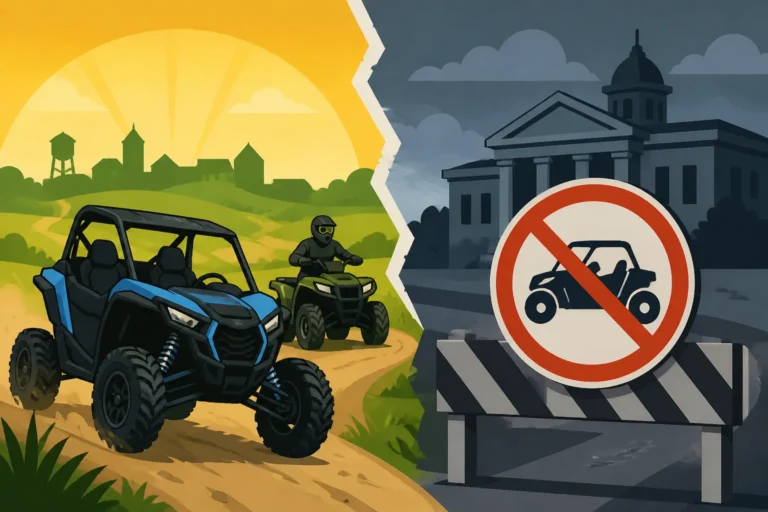
Here’s where the "Kansas City insurance requirements" come into play, and where things get a bit more complex. While the state might be quiet on the insurance front for off-road use, cities and other local municipalities have the authority to create their own ordinances. Many towns in Kansas have recognized the growing popularity and utility of UTVs and, in response, have passed local laws allowing these vehicles on certain city streets. But with the privilege of street use comes the responsibility of adhering to city-specific rules, and these often include an insurance mandate.
So, if you live in a city that has decided to allow UTVs on its roads, you can almost guarantee that one of the requirements for getting a city-issued street-legal tag will be proof of insurance. This isn't just a Kansas City phenomenon; it's a trend you'll see in various communities across the state that have chosen to open their streets to UTVs. These local rules fill a gap left by state law, ensuring that if a UTV is involved in an accident on a public street, there's some financial protection for those affected. It’s a crucial distinction, and one that often catches off-guard riders who assume "no state law" means "no law at all." Understanding these local variations is key to avoiding penalties and enjoying your machine legally. For general guidance on where you can ride, see [Kansas UTV Street Legal Rules by City].
Unpacking City-Specific Insurance Requirements for Street Legal UTVs
When a city opens its doors to UTVs on public roads, they're essentially saying, "Welcome, but play by our rules." And those rules almost always involve insurance. It's a fundamental part of responsible vehicle operation on any public thoroughfare, whether it's a car, motorcycle, or a street-legal UTV.
Common Triggers for Insurance Mandates
The primary trigger for an insurance mandate at the city level is usually the desire to make your UTV street legal within that municipality's boundaries. If you're hoping to drive your side-by-side down Main Street for groceries, head to a friend's house, or simply access nearby trails, you'll need to check your local city ordinances. Cities that authorize UTV street use typically require proof of financial responsibility. This is almost always liability insurance, which covers damages or injuries you might cause to other people or their property while operating your UTV on city streets.
Why do cities care so much about this? Because when your UTV leaves private land and enters the public domain, the risk landscape changes dramatically. An accident involving a UTV on a city street could lead to significant damage to public property, injury to pedestrians or other drivers, or even damage to other vehicles. Without a liability policy, the financial burden of such an incident would fall directly on the UTV owner, or worse, on the victims. Cities implement these requirements to protect their residents and infrastructure, ensuring there's a safety net in place. This isn't about making your life harder; it's about minimizing risk for everyone. You can delve deeper into what makes a city street legal in [Kansas Cities That Authorize ATV Street Use].
What Cities Typically Ask For
While specific monetary limits can vary, cities that mandate insurance for street-legal UTVs generally ask for a minimum amount of liability coverage. This coverage is similar in concept to what’s required for a car: bodily injury liability per person, bodily injury liability per accident, and property damage liability. For example, cities like Louisburg, which have a well-defined ordinance for UTVs, explicitly outline their insurance requirements as a condition for obtaining a city tag. [Louisburg's Insurance Requirement in Kansas] is a prime example of a city that has taken this step.
When you apply for a city-issued UTV tag or permit, you'll be expected to provide proof of this insurance. This usually means presenting your insurance card or a copy of your policy's declaration page, showing that you have the required coverage in force. Beyond insurance, these cities often have other stipulations too, such as specific safety equipment (headlights, taillights, turn signals, mirrors), a valid driver's license, and payment of a city tag fee. Equipping your UTV with necessary safety items, perhaps with high-quality components from a brand like SuperATV, is a great start, but the insurance piece is equally critical for legal street operation. Many cities also inspect your machine to ensure it meets these safety standards before issuing a tag. You'll also likely need to pay [Kansas City Tag Fees for a UTV].
Here’s a simplified look at the difference:
| Aspect | No Statewide Mandate (Off-Road Only) | City Ordinance Mandate (Street Legal UTV) |
|---|---|---|
| Legal Requirement | Generally, no state-mandated insurance for pure off-road use. | Required by local city ordinance to operate on public streets. |
| Type of Coverage | Owner's choice (liability, comprehensive, collision recommended). | Minimum liability coverage is typically specified and required. |
| Purpose | Personal financial protection, theft, damage, optional liability. | Public safety, protection for third parties/property in street accidents. |
| Proof Required? | Not usually, unless for a private park's rules. | Yes, typically required at city hall to obtain a street-legal permit/tag. |
| Consequence of No | Personal financial risk if accident/theft occurs. | Cannot legally operate on city streets; potential fines/penalties. |
Navigating the Process: Getting Your UTV Covered in an Ordinance City
So, you've decided to make your UTV street legal in a Kansas city that allows it, and you know insurance is part of the deal. Now what? Getting the right policy can seem daunting, but it's a straightforward process once you know what to ask for.
What Kind of Policy Do You Need?
When a city requires insurance for a street-legal UTV, they're looking for a policy that specifically covers your machine for on-road use. A standard off-road vehicle (ORV) policy might cover you for trails and private land, but it might not extend to public street use. This is a critical distinction to clarify with your insurance provider. You need to ensure the policy you purchase explicitly includes coverage for your UTV when it's operating on public roads, within the confines of the city's ordinance.
Many insurance companies offer specific ATV/UTV policies that can be tailored to include street-legal endorsements or broader coverage for on-road operation. It's often separate from your auto policy and your homeowner's policy. While some homeowner's policies might offer limited coverage for off-road machines, relying solely on that for street-legal operation in a city is usually not enough, and often not compliant with city requirements. Your best bet is to talk to an insurance agent who specializes in powersports vehicles and understands the nuances of Kansas city ordinances. They can help you determine the right type and amount of coverage to meet local mandates and protect your assets. They'll also be familiar with specific terms like bodily injury liability and property damage liability, which are the cornerstones of street-legal insurance. You'll want to avoid [Title Mistakes Kansas Owners Make Most Often] and ensure your insurance is in order.
Documentation You'll Need at City Hall
Once you've secured the appropriate insurance policy, the next step is typically a visit to your city hall or municipal office to apply for your street-legal UTV permit or tag. Just like with titling an ATV at the county treasurer, there's paperwork involved. You'll need to bring proof of your insurance, usually in the form of an insurance card or a declaration page from your policy. This document should clearly show your name, your UTV's details (make, model, VIN), the policy period, and the types and limits of coverage you have.
Beyond insurance, be prepared to present other documents, which might include:
- Proof of ownership: This could be your UTV's title or bill of sale.
- Valid driver's license: Most cities require the UTV operator to hold a valid driver's license. [Do You Need a License for an ATV in Kansas?] provides additional context.
- Vehicle inspection report: Some cities require a safety inspection by their police department or a certified mechanic to ensure your UTV meets all equipment requirements (lights, mirrors, etc.). Your UTV might already have all the bells and whistles, perhaps with sturdy components and accessories from SuperATV, but a city inspection is often a non-negotiable step.
- Payment for fees: There will likely be an application fee or an annual tag fee associated with the city permit.
Always check your specific city's website or call their municipal office before you go. This will save you time and ensure you have all the necessary documentation to get your UTV legally tagged for street use. Knowing [Kansas Rules for Riding a City Street] is also crucial.
Why Insurance is a Smart Move, Even When Not Required
Even if your specific city doesn't mandate insurance for UTVs, or if you plan to exclusively ride off-road where no state or local laws require it, purchasing insurance is almost always a financially prudent decision. Off-road vehicles are significant investments, and like any valuable asset, they come with inherent risks.
Protecting Your Investment
Your ATV or UTV isn't just a toy; it's an expensive piece of machinery, often used for recreation, hunting, or serious farm work. You've poured your hard-earned money into it, maybe even customized it with durable parts and accessories from SuperATV to make it more capable or comfortable. What happens if it gets stolen? What if it catches fire in your garage, or is damaged in a storm? Without comprehensive and collision coverage, you'd be looking at a total loss out of your own pocket.
- Theft: ATVs and UTVs are unfortunately common targets for thieves. A good policy can help replace your machine if it's stolen, providing immense peace of mind.
- Damage (Collision): Whether you misjudge a turn on a tight trail, roll it while traversing uneven terrain, or have an accident on private property, collision coverage helps pay for repairs or replacement.
- Damage (Comprehensive): This covers events other than collision, such as fire, vandalism, falling objects, or even hitting an animal.
These coverages protect your machine, ensuring that your investment isn't wiped out by an unforeseen event. You've worked hard for your machine, and insurance is simply another layer of protection, just like a heavy-duty skid plate or reinforced A-arms you might get from SuperATV protect the underside of your UTV. Understanding the full picture of ownership costs, including potential insurance, is wise for any owner; check out [Kansas ATV Insurance Costs] for a broader view.
Shielding Yourself from Liability
Beyond protecting your own machine, liability coverage is arguably the most critical aspect of any insurance policy, even when not legally required. Accidents happen, and they can happen anywhere—on the trail, on private land, or even just driving through a field. If you cause an accident where someone else is injured or their property is damaged, you could be held financially responsible. This could mean paying for medical bills, property repairs, or even legal fees, which can quickly climb into tens or even hundreds of thousands of dollars.
Imagine this scenario: you're riding on a friend's private land, and you accidentally swerve and hit their shed, causing significant structural damage. Or, perhaps, another rider unexpectedly crosses your path, and you collide, causing injuries to them and damage to both machines. In these situations, if you don't have liability coverage, you would be personally on the hook for all those costs. This can be financially devastating and strain relationships.
Liability insurance steps in to cover these costs, protecting your personal assets from claims arising from an accident where you are deemed at fault. It provides a crucial financial safety net, allowing you to ride with the peace of mind that comes from knowing you’re protected against the unexpected. Even if you only ever ride on your own property or exclusively on private trails where no specific rules apply, having liability insurance is a responsible decision that protects your financial future. It's a small price to pay for significant protection. When considering [Kansas Penalties for Illegal Road Riding], remember that the financial burden of an accident can far outweigh any fines.
Disclaimer
This article is for general informational purposes only and does not constitute professional advice. Laws, prices and regulations vary by location and change over time. Consult a qualified professional for guidance on your specific situation.