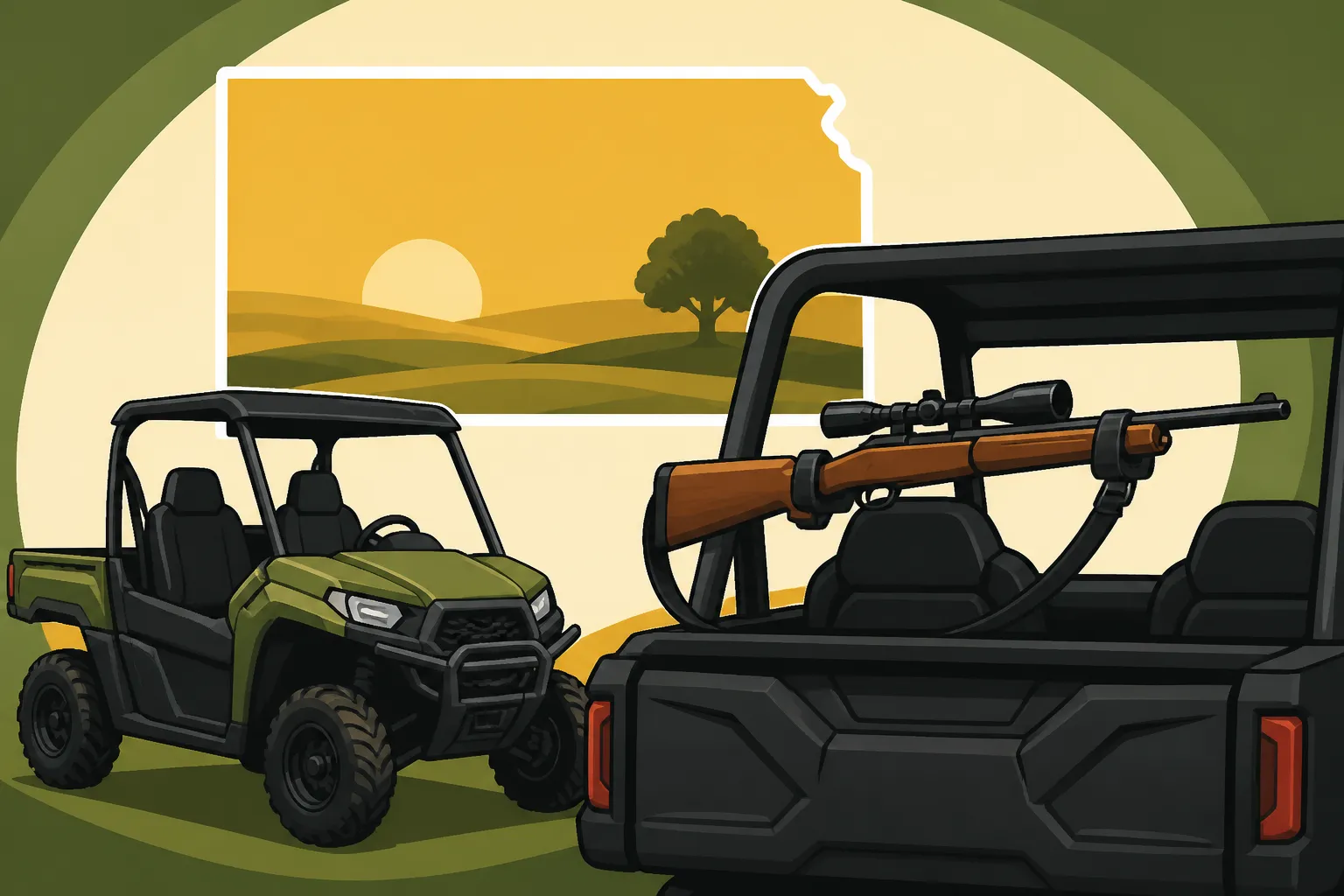
Kansas Rules for Carrying a Rifle
Heading out into the vast, open spaces of Kansas on your ATV or UTV with a rifle can feel like a natural extension of our independent spirit, especially if you're a hunter, rancher, or just someone who appreciates preparedness. However, the rules for carrying a firearm, particularly a rifle, on an off-road vehicle are far from straightforward and can lead to serious headaches if you're not careful. This guide will cut through the confusion, helping you understand the specific Kansas laws and best practices for legally and safely transporting your rifle on your all-terrain vehicle or utility terrain vehicle, whether you're on your own property, public roads, or heading to the field.
Understanding Kansas Firearm Laws and Your Off-Road Vehicle
Kansas is generally known as a gun-friendly state, with relatively permissive laws regarding firearm ownership and carry. However, that doesn't mean you can just throw a rifle in the back of your UTV and hit the trail without a second thought. Off-road vehicles like ATVs and UTVs occupy a unique legal space, often not classified precisely as "motor vehicles" in every single statute, which creates specific nuances when it comes to firearm transport.
The General Rules for Carrying Firearms in Kansas
Before we even get to ATVs and UTVs, it's important to understand Kansas's foundational firearm laws. Kansas is an "open-carry" state, meaning you can generally carry a firearm openly without a permit. You can also carry a concealed firearm without a permit if you are 21 years or older and not otherwise prohibited from possessing a firearm. This broad allowance applies to individuals, but the context of how and where you carry, especially in a vehicle, brings additional layers of regulation.
When it comes to vehicles, Kansas law allows for the open or concealed carry of firearms in a car or truck. However, the moment you transition to an off-road machine, especially one that might be considered a recreational vehicle or even just farm equipment, the interpretation can shift. The critical point often revolves around whether the firearm is "loaded" and "readily accessible" while the vehicle is in operation, and whether you are on private land versus a public right-of-way. It's easy to assume the rules are the same as your pickup, but that's not always the case with an ATV or side-by-side.
Loaded vs. Unloaded: The Crucial Distinction on Your Machine
This is perhaps the most significant distinction you need to grasp when carrying a rifle on your ATV or UTV in Kansas. Generally, Kansas law prohibits carrying a loaded firearm on or in any "motor vehicle" in a way that makes it readily accessible for discharge, unless you have a valid concealed carry permit. While ATVs and UTVs might not always be classified as traditional "motor vehicles" for all purposes (such as registration requirements for on-road use), they very often are when it comes to firearm statutes, especially those concerning public safety and hunting regulations.
The safest and most commonly recommended practice, particularly when traversing any public land, right-of-way, or crossing a road, is to ensure your rifle is unloaded and cased or securely mounted in a scabbard. This means:
- No ammunition in the chamber.
- No magazine inserted into the rifle, or if it is, the magazine should be empty.
- Ammunition should be stored separately from the firearm itself, ideally in a separate compartment or container.
Imagine a scenario: You're riding your UTV down a gravel county road, perhaps making a quick run to check fence lines. If you have a loaded rifle openly displayed or easily within reach on your seat, and a deputy pulls you over for a routine check, you could be in for a lengthy discussion, or worse, a citation. Even if you have a concealed carry permit, the specific wording of "motor vehicle" and "readily accessible" often comes into play. When an officer conducts [Kansas Equipment Checks by Deputies], a visible, loaded rifle is something that will immediately draw their attention. It's best to remove all doubt by keeping your rifle unloaded and properly stowed until you are at your destination, specifically on private land where hunting or target shooting is authorized.
Navigating Public Roads, Private Land, and Hunting Grounds
The legalities of carrying a rifle on your ATV or UTV dramatically change depending on where you are riding. What's perfectly acceptable on your own ranch can get you into trouble on a public road or in a designated recreational area.
Riding on Public Roads or Right-of-Ways
This is where the most significant risks lie. Most Kansas statutes prohibit ATVs and UTVs from public roads unless specific exceptions apply. If your machine is operating under one of these exceptions—for example, as a [Kansas Work-Site Utility Vehicle Explained] with a city tag, or for [Kansas Agricultural Trips on a 65 mph Road]—you still need to adhere to all traffic laws and firearm transport laws that apply to other vehicles.
Even if your city has passed an ordinance allowing UTVs on city streets, having a loaded rifle exposed or readily accessible while driving on that street is a huge red flag. The general rule of thumb for transporting firearms in any vehicle on a public road, including an ATV or UTV that is temporarily allowed on a road, is that the firearm should be:
- Unloaded.
- Enclosed in a case, gun box, or securely wrapped in a package.
- Not readily accessible to the driver or passengers. This might mean storing it in a locked compartment, a securely fastened scabbard, or even a tool box.
Think about it: an ATV or UTV on a public road, even if legal, draws attention. A visible rifle, loaded or not, will certainly draw more. If a county sheriff pulls you over, they have the right to [What a County Sheriff Can Ask a Rider to Show]. Having your rifle properly stowed demonstrates you understand and respect the law, which can make a big difference in the outcome of any interaction.
Private Property and Hunting Activities
On your own private property, or on land where you have explicit permission to ride and hunt, the rules for carrying a loaded rifle on your ATV or UTV are generally much more relaxed. Here, the primary concerns shift from legal prohibitions to safety and responsible firearm handling.
Many ranchers and farmers in Kansas use their ATVs and UTVs as workhorses, and carrying a rifle for predator control or other tasks is common. On these properties, you might carry a loaded rifle in a scabbard or even across the front rack. The key here is that it's private land, and you are exempt from many of the public land or road-based restrictions.
When you're actively hunting during [Kansas Deer Season and Machine Use] or other seasons, your ATV or UTV can be invaluable for accessing remote areas, setting up blinds, or retrieving game. While Kansas generally prohibits shooting from a motor vehicle, transporting your rifle to and from your hunting stand is perfectly fine on private land, as long as you're following general safety guidelines. If you're retrieving a harvested animal, a UTV becomes an essential tool for [Kansas Game Retrieval by Machine], and your rifle should ideally be unloaded and secured once the hunt is over and you're moving. Remember, even on private land, common sense and safety are paramount.
Designated Riding Areas and Public Hunting Lands
Navigating public lands managed by the Kansas Department of Wildlife, Parks and Tourism (KDWP) or other agencies like the Army Corps of Engineers requires careful attention to specific rules. Generally, these areas have strict regulations regarding firearms, even during hunting seasons.
- No shooting from vehicles: This is a common rule on KDWP lands and most public areas. Your ATV or UTV is for transport, not a shooting platform.
- Unloaded and cased: When transporting a rifle through areas where off-roading is permitted but hunting may or may not be (e.g., through an ORV area to access hunting grounds), it must almost universally be unloaded and cased. For example, at popular spots like Tuttle Creek ORV Area, carrying a firearm uncased or loaded on your machine while just trail riding would likely be a violation.
- Specific hunting zones: Some public areas have designated hunting zones or times where rifles are permitted. Always check the local KDWP office or area specific regulations before heading out. The [Kansas KDWP Land Rules for Machines] typically specify where and how machines can be used, and this often includes provisions for firearm transport.
It's critical not to confuse recreational riding areas with public hunting lands, as the rules can differ significantly. When in doubt, call the managing agency for the specific area you plan to visit.
Safe and Legal Transport: Gear and Best Practices
Carrying a rifle on an ATV or UTV isn't just about legality; it's also about safety and protecting your valuable equipment. The bumps, vibrations, dust, and potential for rollovers demand a robust and secure transport solution.
Choosing the Right Rifle Mount or Case
Investing in a quality rifle carrier is a smart move, both for peace of mind and protection. There are several options, each with pros and cons:
| Carrier Type | Pros | Cons | Best Use Case |
|---|---|---|---|
| Hard Case | Excellent protection from impacts, dust, water; can be locked. | Bulky; slower access; may require specific mounting systems. | Long-distance transport; extreme weather; high security needs. |
| Soft Scabbard | Good protection from dust/scratches; relatively quick access; less bulky. | Limited impact protection; not waterproof; can be stolen if unsecured. | Frequent access needs; less extreme conditions; hunting on private land. |
| Open Mount/Rack | Quickest access; often simple installation. | No protection from elements/impacts; rifle exposed to dust/damage; less secure. | Field work on private land where rifle is constantly needed; minimal travel. |
When it comes to securing your rifle, especially if you're navigating rough Kansas terrain, a dedicated mount or case is non-negotiable. Companies like SuperATV offer a range of robust rifle scabbards and mounts that are specifically designed for the demands of off-road use. These are often made to attach securely to your UTV's roll cage or ATV's rack, keeping your rifle stable and preventing it from bouncing around. A good quality, purpose-built mount will keep your rifle safe from impacts and vibrations, reducing the risk of damage to the scope or action.
For me, I lean towards a hard case or a well-padded soft scabbard mounted securely. I've seen too many rifles scratched, scopes knocked out of zero, or even lost due to inadequate transport. Whether it's a hard case from SuperATV designed to withstand the elements, or a soft scabbard for quick access while working on the ranch, ensure it fits your rifle snugly and mounts firmly to your machine. Always check the mounting hardware before each ride to ensure it hasn't loosened from vibrations.
Ammunition and Firearm Separation
As discussed, keeping ammunition separate from your rifle is a crucial safety and legal practice, especially when on public land or crossing roads. Many modern hard cases and UTV storage compartments have dedicated spaces for ammunition boxes.
- Store ammo in a separate, secure container. This prevents rattling, keeps it clean, and reduces the chance of accidental loading.
- Never keep a loaded magazine inserted into your rifle while in transit on public lands.
- Consider a small, designated ammo box that can be easily accessed when you're ready to load up at your destination but kept separate during travel.
This practice isn't just about avoiding a legal issue; it's about responsible firearm handling. An unloaded firearm is a safer firearm, especially when traversing bumpy terrain where accidental discharges are a real, though rare, possibility.
Other Safety Considerations
Beyond legal compliance, there are practical safety considerations for carrying a rifle on your ATV or UTV:
- Muzzle Direction: Even when unloaded, always ensure the rifle's muzzle is pointed in a safe direction. This usually means forward or backward, away from riders and bystanders.
- Trigger Discipline: Keep your finger off the trigger until you are ready to shoot, even when handling an unloaded rifle. This habit is critical.
- Carrying Capacity: Be mindful of your machine's weight limits and how the rifle and its accessories affect balance. Heavy cases mounted high can change your UTV's center of gravity.
- Protection from Elements: Dust, rain, and snow can wreak havoc on a rifle's action and optics. Choose a case or scabbard that offers adequate protection for the conditions you expect to encounter. Investing in quality accessories from trusted brands like SuperATV can make all the difference in protecting your gear and ensuring a safer ride.
- Preventing Loss: A securely mounted rifle is less likely to fall off. If you're using a soft scabbard, consider adding a strap or bungee cord for extra security, especially when riding over rough terrain like what you might find on [Kansas Rules for Riding a Pasture] or through dense brush.
Common Misconceptions and Legal Nuances
Kansas law, like any other, has its subtleties. Understanding some common misconceptions can help you avoid potential problems.
The "Loaded Firearm" Definition in Detail
The definition of a "loaded firearm" can sometimes be a point of confusion. For a rifle, it generally means there is ammunition in the chamber or a loaded magazine attached to the firearm. However, some interpretations can be broader. For instance, if a magazine is loaded with ammunition and simply lying next to the rifle, but not inserted, it's generally not considered loaded. But if that loaded magazine is inserted into the rifle, even if there's no round in the chamber, it could be argued as "loaded" depending on the specific wording of a statute or the discretion of an officer.
To be absolutely safe, especially when traveling on or near public access points, the best practice is to ensure no ammunition is present in the rifle at all, and that any loaded magazines are stored completely separate from the firearm itself. This leaves no room for ambiguous interpretation.
Interaction with Game Laws and Road Use
While this guide focuses on transporting a rifle, it's important to be aware of how this interacts with game laws. Kansas law generally prohibits hunting from any "motor vehicle," which includes ATVs and UTVs. This means you cannot sit on your machine and shoot an animal. Your ATV or UTV is for transport to your hunting spot, not a mobile hunting blind or firing platform. [Kansas Deer Season and Machine Use] details other regulations hunters need to know, but the "no shooting from a vehicle" rule is key here.
Also, be mindful of where your ATV or UTV is allowed to operate. If you're riding a machine that's [Kansas Machines Used Only on a Farm] on your own property and carrying a rifle, that's one thing. If you cross onto a public county road, even for a short distance, the rules for firearm transport shift. Always separate your rifle from ammunition and secure it when traversing any public right-of-way. The temptation to keep a rifle "ready" for coyotes while checking fields can be strong, but crossing that property line onto a public road with a loaded, accessible rifle could lead to an unfortunate interaction with law enforcement.
| Scenario | Rifle Status | Ammunition | Location |
|---|---|---|---|
| Private Land (Hunting/Work) | Loaded & accessible (scabbard/rack) is generally OK | Loaded magazine in rifle or separate, readily available | Ranch, farm, leased hunting ground (with permission) |
| Public Road/Right-of-Way | Unloaded, cased, or securely stowed | Stored separately from rifle in container | County road, state highway crossing, city street (if ATV/UTV permitted) |
| KDWP/Public Hunting Area | Unloaded & cased is safest; check local rules | Stored separately | Designated hunting zones, WMA roads, access points (check for specific exceptions) |
| ORV Area (Recreational) | Unloaded & cased | Stored separately | Tuttle Creek, Syracuse Sand Dunes, private parks (unless specific ranges exist) |
When considering buying a machine, it's worth knowing that Kansas has no state-level off-road vehicle registration or annual tag fee for ATVs or UTVs used strictly off-road. However, if your machine qualifies as a Work-Site Utility Vehicle and is registered for street use in a town that allows it, then city-specific rules and fees might apply, which may also influence how officers view your machine on public roads with a rifle.
Ultimately, carrying a rifle on your ATV or UTV in Kansas demands a blend of understanding state firearm laws, specific ATV/UTV road rules, and responsible gun ownership practices. When in doubt, err on the side of caution: keep your rifle unloaded, cased, and secured, especially when not on private property where specific activities (like hunting) are underway. This approach will help ensure your safety, protect your equipment, and keep you on the right side of the law.
Disclaimer
This article is for general informational purposes only and does not constitute professional advice. Laws, prices and regulations vary by location and change over time. Consult a qualified professional for guidance on your specific situation.