Kansas Rules for Towing a Trailer
Trying to figure out the exact rules for towing a trailer with your ATV or UTV in Kansas can feel like navigating a maze blindfolded. You’ve got a job to do, whether it’s hauling feed to the back forty, bringing tools to a remote worksite, or getting hunting gear out to your stand, and you just want to know if you're going to accidentally break a law by hitching up. This guide is here to clear up the confusion, explaining when and where you can legally tow a trailer with your off-road machine in the Sunflower State, and what you need to consider to do it safely.
The Basics of Towing with an Off-Road Machine in Kansas
When it comes to towing a trailer with your ATV or UTV in Kansas, the very first thing you have to understand is where your machine is generally allowed to operate. This dictates almost everything else about trailer towing rules. For most of us, our off-road vehicles are primarily used on private land, which simplifies things quite a bit. However, the moment you consider venturing onto public roads, even for a short stretch, the rules change dramatically and become much stricter.
Understanding "Off-Road" Versus "Street Legal"
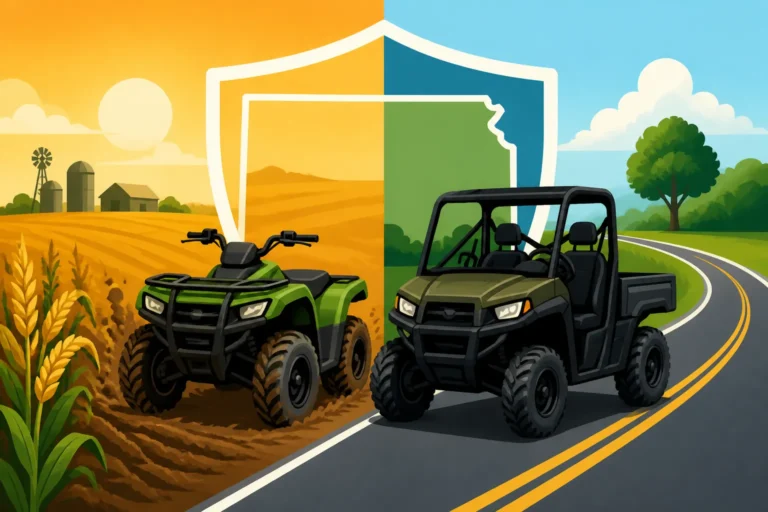
The vast majority of ATVs and UTVs in Kansas are classified as "nonhighway vehicles." This means, by default, they are not designed or permitted for regular use on public roads. It's a fundamental distinction that sets the stage for all other regulations. A title exists for these machines, known as a [Kansas's Nonhighway Title Explained], but it doesn't come with the privilege of street use. Think of it this way: your quad is built for the dirt, the trails, and the fields, not the asphalt. This classification is crucial because it often means that while you can tow to your heart's content on your own property, taking that same setup onto a county road can immediately put you in violation of the law.
This distinction is a common point of frustration for many owners. You bought a powerful machine, maybe even one from a brand known for utility like Polaris or Can-Am, specifically because you wanted to use it for hauling tasks. It seems intuitive that if it can haul a trailer on a ranch, it should be able to cross a road to the next pasture. But state law makes a hard line here. Unless your machine or your specific activity falls under a very narrow exception, using it on a public road with or without a trailer is generally prohibited. This is why it’s so important to understand [Why an ATV Is Titled as a Nonhighway Vehicle] and what those limitations imply for any kind of road use.
When Towing is Generally Allowed: Private Land and Designated Areas
For most Kansas ATV and UTV owners, the primary use, and thus the primary place for towing, is on private property. This includes farms, ranches, hunting leases, and simply your own backyard. On private land, you pretty much have free rein to tow whatever your machine is capable of handling, within the bounds of common sense and safety. Whether you're moving firewood, hauling tools, pulling a small sprayer, or dragging a deer out of the woods, as long as it's on your land, you're generally good to go.
Designated off-road riding areas, like Tuttle Creek ORV Area or Syracuse Sand Dunes Park, also typically allow towing, provided it's within their specific rules for safety and usage. These parks are set up for off-highway enjoyment, and as long as you're not exceeding speed limits or going off marked trails, towing a small utility trailer for gear or supplies is usually fine. Just make sure to check the specific park rules before you go, as some might have limitations on trailer size or type. This is where you'll see machines truly being put to work, hauling everything from camping gear to extra fuel, making the most of their utility.
Specific Scenarios for Towing on Kansas Roads
Now, let's talk about the trickier part: when can you actually tow a trailer with your ATV or UTV on a public road in Kansas? The general answer is "not often," but there are specific, limited exceptions that many owners rely on for essential tasks. Understanding these exceptions is key to staying legal and avoiding potential fines or citations. Each scenario comes with its own set of rules and limitations, so it's not a one-size-fits-all situation.
Agricultural Exemptions and Farm Use
One of the most common and vital exceptions for using an off-road machine on a public road, especially with a trailer, is for agricultural purposes. Kansas law recognizes that farmers and ranchers need to move equipment, feed, and supplies across roads to manage their operations. This exception allows ATVs and UTVs to be operated on highways for agricultural purposes between the hours of sunrise and sunset. This is specifically covered under [Kansas Agricultural Trips on a 65 mph Road] and other related statutes.
However, "agricultural purposes" isn't a blank check. It generally means directly related to farming or ranching activities, like moving hay from one field to another, taking a sprayer to a distant part of your property, or transporting tools for fence repair. You also need to ensure your machine is equipped with the proper lighting, even during the day, and a slow-moving vehicle emblem if traveling at speeds less than 25 mph. A crucial detail often overlooked is that even with this agricultural exception, the driver still needs a valid driver's license. So, while you're hooking up that trailer, hauling something important with your side-by-side, remember that the law expects you to be a licensed driver, operating a properly marked machine, and truly on an agricultural trip.
Work-Site Utility Vehicles WSUVs and Their Towing Privileges
Kansas has a unique classification for some side-by-side machines called "Work-Site Utility Vehicles" (WSUVs). These are generally UTVs that meet specific criteria: they are at least 48 inches wide, weigh more than 800 pounds, and have bench or bucket seating designed to carry people side-by-side. If your UTV fits this description, it falls under the WSUV category, which comes with its own set of rules for road use. You can learn more about this specific classification in [What Makes a Side-by-Side a Work-Site Utility Vehicle].
WSUVs have slightly broader allowances for road use than typical ATVs, specifically in crossing highways and sometimes operating on county or township roads for work-site purposes. This means if you're using your WSUV to haul materials to a construction site, a utility project, or a similar work-related task, you might have more leeway to use public roads, even when towing. However, the use must still be directly related to the work being performed, and the machine must comply with lighting and marking requirements. While a WSUV might be able to pull a small trailer on a county road to get from one part of a large property to another for a specific job, it’s not meant for recreational towing on public streets. Always check [Kansas Work-Site Utility Vehicle Road Rules] to understand the specific limitations and requirements for your area.
City Ordinances and Street-Legal UTVs
Here's where things get really localized and potentially confusing. While state law generally restricts ATVs and UTVs from public roads, some Kansas cities have passed specific ordinances allowing UTVs (and sometimes ATVs) on their city streets. This is a game-changer for residents in those towns, as it opens up possibilities for local travel, including towing. Cities like Louisburg, Scott City, De Soto, and Andover are examples of communities that have opted in. You can explore this more deeply by looking into [Kansas Cities That Authorize ATV Street Use].
If your city has such an ordinance, and you've gone through the process of getting your UTV street-legal (which often involves specific equipment like turn signals, mirrors, and a city-issued tag), then towing a trailer on those authorized city streets might be permissible. The key is that the city ordinance itself will define what's allowed. They might have rules on trailer size, lighting, or even the type of cargo you can haul. It's also critical to remember that even if your UTV is street-legal in one city, it doesn't automatically mean it's street-legal in the next town over or on state highways outside city limits. Furthermore, when operating on city streets, even with a trailer, you'll need to consider [Kansas City Insurance Requirements], as many ordinances stipulate proof of insurance. It's always best to check with your specific city's municipal offices for the most up-to-date and accurate rules regarding UTV and trailer use.
Safety Considerations and Equipment for Towing
Regardless of where you're towing a trailer in Kansas—be it on your private land, a designated ORV park, or under a specific road-use exemption—safety should always be your top priority. An ATV or UTV, while powerful, is not a full-size truck, and proper planning and equipment are essential to prevent accidents, machine damage, and injury. Overlooking basic towing principles can quickly turn a simple task into a hazardous situation.
Matching Your Machine to the Load
One of the most critical safety aspects is understanding and respecting your ATV or UTV's towing capacity. Every manufacturer, whether it's Honda, Polaris, Can-Am, or Yamaha, specifies a maximum towing weight for their machines. This figure is not just a suggestion; it's a hard limit designed to ensure the structural integrity, braking capability, and stability of your vehicle. Overloading your machine can lead to a host of problems:
- Reduced Braking Performance: The added weight will significantly increase your stopping distance, which can be disastrous, especially on inclines or uneven terrain.
- Decreased Stability: A trailer that's too heavy can cause the ATV/UTV to become unstable, leading to jackknifing, loss of control, or even rollovers, particularly when turning or on slopes.
- Strain on Drivetrain Components: Engine, transmission, and axle components are not designed for perpetual overloading. Pushing these limits consistently will lead to premature wear and expensive repairs.
- Suspension Sag: Excessive weight can compress your suspension beyond its intended travel, impacting handling and potentially bottoming out over bumps.
Always check your owner's manual for the specific towing capacity, tongue weight limits, and any other restrictions. A good rule of thumb is to err on the side of caution; if it feels too heavy, it probably is. Never assume your machine can just "handle it" because it seems powerful. SuperATV, for instance, offers heavy-duty components like axles and suspension upgrades that can certainly improve durability, but even with aftermarket parts, you should still respect the manufacturer's intended towing limits.
Essential Towing Equipment
Having the right equipment is non-negotiable for safe towing. This isn't just about the hitch; it's about the entire setup working in harmony to control the load.
- Hitches and Hitch Balls: Most ATVs and UTVs come standard with a receiver hitch or a ball mount integrated into the frame. Ensure you're using a hitch ball that matches the size of your trailer coupler, typically 1 7/8 inch or 2 inch for smaller utility trailers. Make sure the hitch pin is secure.
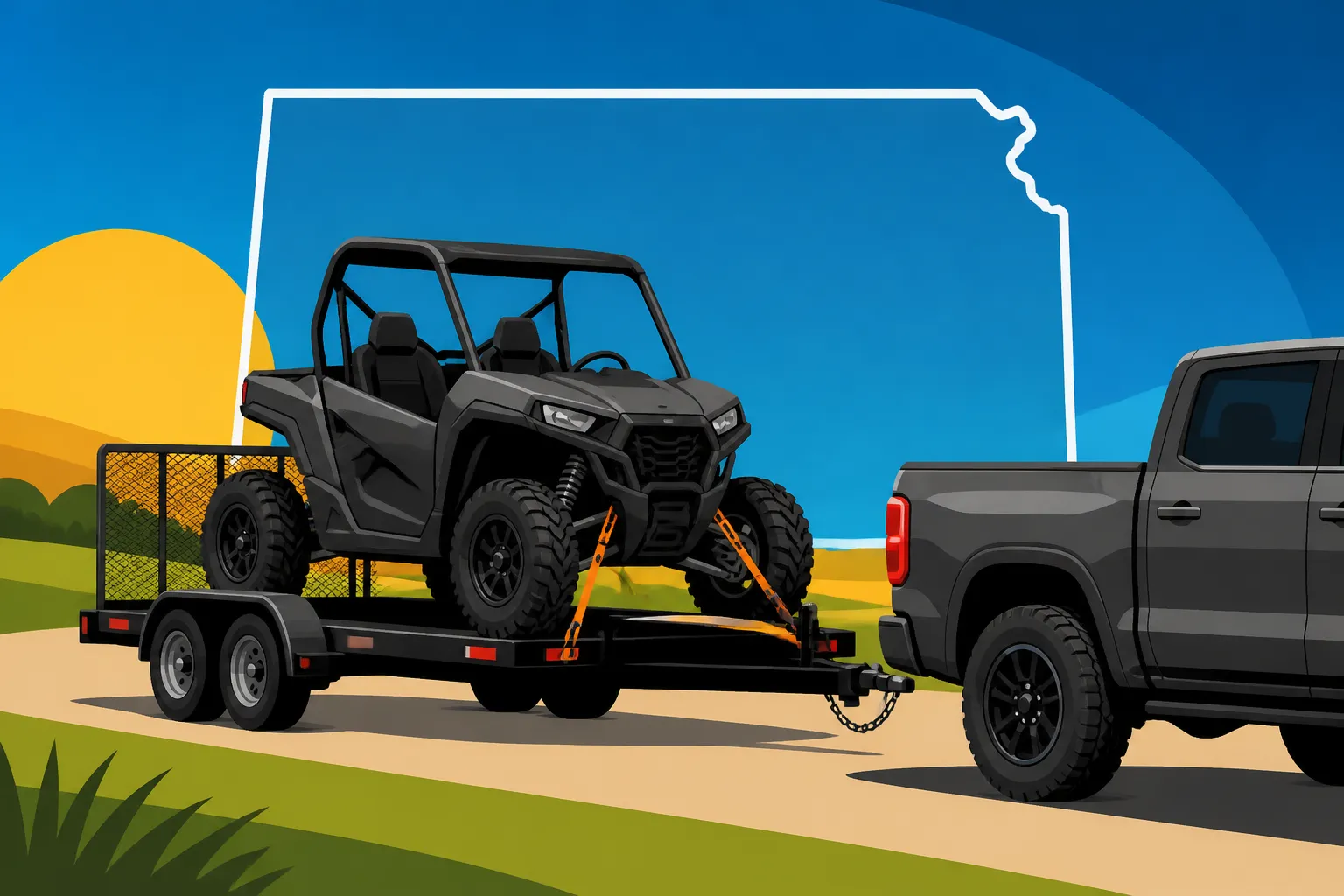
- Safety Chains: These are your last line of defense if the primary hitch connection fails. Always cross your safety chains under the trailer tongue and attach them securely to your ATV/UTV frame. This allows the tongue to be cradled by the chains if it disconnects, preventing the trailer from veering wildly.
- Trailer Lights and Turn Signals: If you're towing on any public road, even under an agricultural or WSUV exception, proper trailer lighting is not just a good idea, it's often a legal requirement. This includes tail lights, brake lights, and turn signals. Even on private land, lights improve visibility, especially at dusk or in low-light conditions. These needs tie directly into [Kansas Lighting Requirements on a Machine] for the towing vehicle itself.
- Trailer Brakes: For heavier trailers, especially those exceeding 1,500 pounds, trailer brakes (either electric or surge brakes) might be necessary or even legally required. These significantly reduce the strain on your ATV/UTV's braking system and enhance overall control. Check the trailer's Gross Vehicle Weight Rating (GVWR) and local regulations.
- Slow-Moving Vehicle Emblem: When operating on public roads at speeds below 25 mph, Kansas law typically requires a slow-moving vehicle emblem (a reflective orange triangle) on the rear of the towed trailer. This alerts other drivers to your reduced speed. This is part of general safety as well as compliance with [Kansas Slow-Moving Emblem Rules].
- Heavy-Duty Tires: If you're regularly towing heavy loads, especially off-road, consider equipping your ATV or UTV with heavy-duty tires. Tires with a higher ply rating and aggressive tread patterns will provide better traction and stability. Manufacturers like SuperATV offer a range of durable tires designed for various terrains and heavy-duty use.
Pre-Trip Checks and Best Practices
Before you even put your machine in gear, a quick check can prevent major headaches. This applies whether you're heading across the farm or crossing a county road.
- Inspect Connections: Double-check that the trailer is securely hitched, the safety chains are connected and crossed, and all electrical connections for lights are working. Wiggle the hitch to ensure it’s firmly seated.
- Secure the Load: Make sure whatever you're hauling in the trailer is properly distributed and secured. Heavy items should be placed low and centered over the trailer's axle to maintain stability and tongue weight. Use straps, ropes, or nets to prevent shifting, especially on uneven terrain. A shifting load can quickly lead to loss of control.
- Tire Pressure: Ensure your ATV/UTV tires are properly inflated, perhaps even to the higher end of the recommended range if you're carrying a heavy load, to improve stability. Also, check the trailer tires for proper inflation.
- Drive Slower and Allow More Braking Distance: With a trailer in tow, your machine will handle differently. Reduce your speed, especially on turns, hills, and rough terrain. Anticipate stops much earlier, as your braking distance will be significantly extended.
- Maintain Awareness: Always be aware of your surroundings, especially when making turns or backing up. Your overall length and width will be increased, requiring more space.
- Consider a Winch: While not for towing in the traditional sense, having a winch, like those offered by SuperATV, can be a lifesaver if your machine or trailer gets stuck in mud, sand, or a ditch. It’s a recovery tool, not a primary towing aid, but invaluable in many off-road situations.
Remember that [Kansas Trailer Tags Are Required Even When ATV Tags Are Not]. Even if your ATV or UTV doesn't need a tag for off-road use, the trailer you're pulling might. Always check the rules for the trailer itself, independent of the tow vehicle. Staying informed about [Kansas Rules for Riding a County Road] and other regulations, combined with proper equipment and safe practices, will ensure your towing tasks are completed efficiently and without incident.
Disclaimer
This article is for general informational purposes only and does not constitute professional advice. Laws, prices and regulations vary by location and change over time. Consult a qualified professional for guidance on your specific situation.