Kansas Rules for Riding a Ditch
It's a scene as common as a Kansas sunset: you're out riding your ATV or side-by-side, enjoying the freedom of open spaces, and then you come across a ditch. Is it fair game for riding? Can you cross it, ride in it, or use it as a shortcut? The rules surrounding ditch riding in Kansas can feel like a tangled mess, leaving many riders scratching their heads and worried about breaking the law. This guide aims to clear up that confusion, offering a realistic look at what Kansas law actually says about ATVs and UTVs in those roadside ditches.
Understanding What a Ditch Really Is in Kansas Law
Before we even talk about riding in them, it's important to grasp how ditches are generally viewed under Kansas law, especially when they run alongside roads. Most people think of a ditch as simply the low-lying area next to the pavement or gravel. While that's visually correct, legally, it's part of the public right-of-way, which complicates things significantly for off-road vehicle enthusiasts. This right-of-way isn't just the paved or graveled surface; it often extends several feet or even yards beyond the edge of the road, encompassing shoulders, embankments, and yes, those ditches.
The Concept of the Public Right-of-Way
When we talk about a "public right-of-way" in Kansas, we're discussing the strip of land that is legally reserved for public travel and the infrastructure that supports it. This includes the road surface itself, but also things like utility lines, signs, and drainage systems, which are exactly what roadside ditches are designed for. Even if a ditch looks like it's part of an adjacent field or private property, if it falls within the established right-of-way, its legal status is tied to the road, not the farm field next door. This distinction is absolutely critical because it means that any general prohibitions on operating ATVs or UTVs on public roads often extend to the ditches that are considered part of that roadway's right-of-way. It's not always intuitive, especially when the ditch seems far removed from the actual driving surface, but the law often sees them as one continuous entity for jurisdictional purposes.
This can be incredibly frustrating for riders who see an open ditch and assume it's simply unused land. You might think, "Well, I'm not on the pavement, so I'm fine!" However, local authorities, including county sheriffs and city police, are often well aware of the legal boundaries of these rights-of-way. They are generally empowered to enforce road-use statutes within these wider corridors, meaning your assumption of safety in the ditch might be a false one. Always remember that the absence of a "no trespassing" sign doesn't automatically grant permission, especially on public lands or within these rights-of-way.
Who Owns the Ditch?
This is where things get even more nuanced. While the public has a right-of-way for travel, the underlying land might still be owned by an adjacent landowner. This creates a dual layer of control: the public entity (state, county, or city) has an easement for road purposes, and the private individual retains the property ownership. In simple terms, the public has the right to use that strip of land for the road and its necessary functions, but they don't necessarily "own" the dirt underneath in the same way. This means that while the county might maintain the ditch for drainage, and you can't build a fence across it, it might still technically be someone's private land beneath that public easement.
This often leads to confusion. A farmer might believe the ditch is entirely their land and not want anyone riding in it, and they have a point regarding the underlying ownership. However, the public right-of-way means that certain activities related to public travel are allowed, and conversely, activities that are prohibited on the road are also often prohibited in the ditch because it's part of that right-of-way. The key takeaway here is that even if a private landowner technically owns the land under the ditch, the public's easement for road purposes means it's generally treated as a public space for the purposes of vehicle operation, and the rules of the road often apply. This is a common point of contention and misunderstanding between riders and landowners, and it’s why understanding the specifics of [Kansas Trespass Law for Riders] is so important.
Kansas Laws Specifically Addressing Off-Road Vehicles in Ditches
Kansas law doesn't have a single, neatly packaged statute titled "Ditch Riding Rules for ATVs." Instead, the regulations governing the use of off-road vehicles in ditches are woven into broader statutes concerning road use, public property, and vehicle definitions. It requires a bit of detective work to piece together the full picture, and this is where many riders get confused or caught off guard. Generally speaking, if a ditch is considered part of the public right-of-way of a road, the rules that apply to the road itself tend to extend to the ditch.
General Road Use Prohibitions and Exceptions
Kansas statutes generally prohibit the operation of ATVs and UTVs on public streets, roads, and highways. K.S.A. 8-15,100, for instance, sets out the basic ban. However, like many laws, there are exceptions. These exceptions typically revolve around agricultural purposes, crossing highways, or specific local ordinances. For a ditch that is part of a county or state road right-of-way, the general prohibition on road use often applies. This means riding in the ditch, parallel to the road for any significant distance, is likely prohibited unless you meet a specific exception.
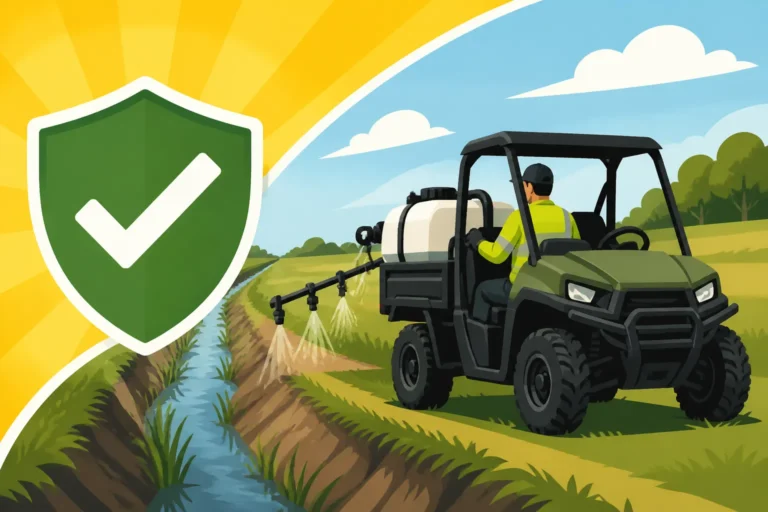
For example, if you're a farmer operating your UTV for legitimate agricultural purposes, such as checking fences, spraying weeds, or accessing fields, you might be allowed to use portions of the right-of-way, including ditches, to get to your destination. However, this exception is not a blanket permission for recreational riding. Simply cruising down a ditch for fun is usually not covered. Furthermore, these agricultural exceptions often come with conditions, such as having proper lighting if operating after dark, and typically only apply to certain types of roads. It's wise to review [Kansas Agricultural Trips on a 65 mph Road] to understand the nuances of these specific allowances. Without a valid exception, riding your machine in a roadside ditch can easily be considered the same as riding it illegally on the road itself, opening you up to citations.
Crossing Ditches vs. Riding In Ditches
There's a significant legal difference between merely crossing a ditch and riding in a ditch. Most often, if you are legally crossing a public road at a designated crossing point, or utilizing an agricultural exception to cross a road to access private property, you will naturally need to cross the ditch as well. This incidental crossing, as part of a legitimate maneuver, is generally understood to be permissible. You aren't riding in the ditch for an extended period; you are simply traversing it as a necessary part of crossing the road or right-of-way.
However, using the ditch as a travel lane, as a shortcut to avoid the road, or for recreational purposes parallel to the road, is an entirely different matter. This is where the "road use" prohibition typically kicks in. Picture a long, straight ditch running alongside a gravel road. If you're using your side-by-side to travel down that ditch for a mile to get to a friend's house, even if you stay off the actual gravel, you're likely violating the spirit and letter of the law that prohibits ATV/UTV use on the public right-of-way. The ditch, in this scenario, is functionally being used as an extension of the road, and thus the same rules apply. This is an area where specific enforcement can vary, but the legal basis for a citation is usually quite solid. When you are considering crossing a road, remember that [Kansas Rules for Crossing a Highway] lays out specific expectations, which would include crossing any accompanying ditches.
Local Ordinances and Ditch Use
Adding another layer of complexity, local cities and counties in Kansas have the authority to enact their own ordinances regarding ATV and UTV use, which can affect ditches within their jurisdiction. While state law provides the baseline, a city, for example, might have an ordinance that specifically addresses ditch riding within city limits, either prohibiting it or, in rare cases, perhaps creating specific zones where it's allowed. This is much more common for cities that have enacted broader ordinances allowing UTVs on city streets, but even then, ditches are usually not included in such permissions.
For instance, if a city has opted in to allowing UTVs on certain streets, that permission typically applies to the street surface itself, not the adjacent ditches or shoulders. It's crucial not to assume that a city's UTV-friendly street ordinance automatically extends to ditch riding. You would need to meticulously check the specific wording of that local ordinance. The best practice is always to consult with the local city or county clerk's office to understand any specific rules in a particular area, especially if you intend to ride somewhere other than designated off-road parks. Never assume silence from local law means permission. This localized variation highlights why a thorough understanding of [Kansas UTV Street Legal Rules by City] is so vital for riders.
Practical Advice for Riders Regarding Ditches
Given the complexities, what’s a Kansas ATV or UTV rider to do when faced with a ditch? The most important thing is to prioritize safety and legality. Making assumptions or relying on anecdotal evidence can lead to fines, confrontations with landowners, or even accidents. Being informed and prepared is your best defense.
When Is It Generally Okay to Be in a Ditch?
There are a few scenarios where encountering a ditch with your ATV or UTV is generally accepted under Kansas law or common practice:
- Crossing to Access Private Property: If you are on your machine on private property and need to cross a public road and its associated ditch to access another piece of private property, this is typically permissible as a necessary part of your travel. This assumes you are crossing safely and directly, not riding down the ditch. The key here is incidental crossing, not prolonged travel.
- Agricultural Operations: For those using their ATVs or UTVs for legitimate farm work, such as moving between fields, inspecting crops or livestock, or performing land maintenance, using the ditch might be a necessary part of navigating the property and its boundaries. This falls under the agricultural exemption to road use. Just remember, this is for work, not recreation.
- Designated Off-Road Trails: In rare instances, an established, legal off-road trail might incorporate ditches as part of its varied terrain. However, these would be clearly marked and maintained trails within a private park or designated riding area, not random roadside ditches. You will typically be within areas like those detailed in [Tuttle Creek ORV Area in Kansas] or [Kansas Rocks Recreation Park], where the rules are clearly laid out.
- Emergency Situations: In an unavoidable emergency, deviation from the rules to ensure safety or assist someone in distress would generally be understood. However, this is an exception, not a routine.
When Should You Absolutely Avoid Riding in a Ditch?
Conversely, there are clear situations where riding in a ditch is a bad idea, legally and practically:
- Recreational Travel Parallel to a Public Road: If your intent is simply to ride down the ditch for fun, to avoid the main road, or as a shortcut for any significant distance, you are almost certainly operating illegally. This is the most common scenario for citations.
- Within City Limits Without Specific Ordinance: Unless a specific city ordinance explicitly permits ditch riding (which is highly unlikely), assume it's prohibited. City rights-of-way are often more confined and heavily regulated.
- On Private Property Without Permission: Even if a ditch is on land adjacent to a public right-of-way and appears to be private, if you don't have explicit permission from the landowner, you could be trespassing. Always get [Getting Written Permission From a Landowner Before You Ride] if you're venturing off public land.
- Ditches With Hidden Hazards: Beyond legality, ditches can be incredibly dangerous. They can hide deep ruts, rocks, debris, culverts, sudden drop-offs, or water pipes. Riding in them risks severe damage to your machine or serious injury. Investing in robust skid plates and A-arm guards, perhaps from a reputable brand like SuperATV, can provide some protection against unseen obstacles, but prevention is always better than repair.
Staying on the Right Side of the Law and Landowners
The best way to avoid issues with ditch riding is to simply avoid it unless you are absolutely certain it's legal and safe. Here are some actionable tips:
- Know Your Machine's Legal Class: Understand if your machine is an ATV, UTV, or Work-Site Utility Vehicle, as the rules for each can differ slightly, particularly regarding road use. [Why the Definitions Matter for Roads] is a good resource.
- Verify Local Rules: If you have any doubt about a specific ditch in a particular area, call the county sheriff's office or the city clerk's office for clarification. Don't rely on what "everyone else does."
- Respect Private Property: If a ditch borders private land, be extra cautious. Even if you think you're on public right-of-way, a landowner might see it differently. Avoid confrontation by staying on clearly marked public trails or roads.
- Equip Your Machine Wisely: If you anticipate needing to cross ditches as part of legitimate travel (like on a farm), consider equipping your machine for such challenges. Heavy-duty suspension components, higher ground clearance, and durable tires, available through companies like SuperATV, can make crossings safer and reduce the risk of damage. Always inspect your machine for [Kansas Equipment Checks by Deputies] to ensure you're up to snuff.
- Carry Your Paperwork: Always have proof of ownership and any necessary permits (like an unconventional vehicle permit for state park roads, if applicable) with you. A county deputy may ask to see them during a stop. [What a County Sheriff Can Ask a Rider to Show] provides details on what to expect.
| Scenario | Generally Legal? (within public ROW) | Considerations |
|---|---|---|
| Crossing a Ditch Directly | Yes | Incidental to legitimate road crossing or property access. |
| Riding In Ditch (Recreation) | No | Generally treated as illegal road use, subject to traffic laws and penalties. |
| Riding In Ditch (Farm Work) | Yes (with exceptions) | Must be for legitimate agricultural purposes, not recreational. |
| Riding In Ditch (Designated Trail) | Yes | Only within official, marked off-road parks or trails. |
| Riding In Ditch (City Limits) | Highly Unlikely | Check specific city ordinances; assume no unless explicitly stated. |
| Riding In Ditch (Private Land) | Only with Permission | If on private land, obtain explicit permission from the landowner to avoid trespass. |
Ultimately, Kansas law generally intends for ATVs and UTVs to be used off public roads, in designated areas, or for specific agricultural purposes. Roadside ditches, being part of the public right-of-way, fall under the purview of road use laws. While it might seem like an open, tempting path, exercising caution and adhering to the spirit of the law will save you a lot of potential headaches and ensure you can continue to enjoy your machine legally and safely for years to come.
Disclaimer
This article is for general informational purposes only and does not constitute professional advice. Laws, prices and regulations vary by location and change over time. Consult a qualified professional for guidance on your specific situation.