Do You Need a License for an ATV in Kansas?
The world of ATVs and UTVs in Kansas can feel like a tangled web of rules, especially when it comes to what you need to simply ride. Many folks assume that because these machines aren't cars, the same driver's license rules don't apply. But this couldn't be further from the truth in certain situations. This guide aims to clear up the confusion around driver's licenses for ATVs and UTVs in the Sunflower State, helping you understand when you need one and when you don't.
The Basic Truth: No Special ATV License Required in Kansas
Let's cut right to the chase because this is one of the most common questions new and experienced riders ask: no, Kansas does not issue a specific "ATV license" or "off-road vehicle license." You won't find a special endorsement on your driver's license just for operating a quad or side-by-side. This is often a relief to many riders who imagine another layer of bureaucracy, but it doesn't mean you're entirely off the hook when it comes to having a license.
The distinction here is crucial and often misunderstood. While there isn't a special license for an ATV, the requirement for a standard driver's license can certainly come into play depending on where and how you're operating your machine. Think of it this way: the state doesn't require a special "golf cart license" either, but if you're driving a golf cart on a public street where it's authorized, you're usually expected to have a valid driver's license. The same logic applies to ATVs and UTVs in Kansas. For most off-road riding on private land or designated trail systems like Tuttle Creek or Syracuse Sand Dunes, the question of a driver's license for an adult operator usually isn't a primary concern. The focus shifts to landowner permission, safety gear, and the general rules of the riding area.
However, the moment your machine touches a public road, even briefly, the rules change dramatically. It's on public roadways where your standard driver's license, or lack thereof, becomes a significant factor. This distinction is vital for every Kansas rider to grasp, as operating a motor vehicle on public roads without the proper licensure can lead to serious legal consequences, regardless of whether that vehicle is a pickup truck or a UTV.
Off-Road Riding: Generally No Driver's License Needed for Adults
For the vast majority of ATV and UTV use in Kansas, which happens off the pavement, you generally don't need a driver's license if you're an adult. This covers riding on your own property, a friend's farm with permission, or within designated off-road parks. These are considered private or controlled environments where state highway regulations regarding driver's licenses don't typically apply to the operator.
Imagine you're out at a private hunting lease near Dodge City, navigating your side-by-side through muddy trails to check trail cameras. As long as you're on private land and not accessing any public roads, a driver's license isn't a prerequisite for operating that machine. The same goes for spending a weekend at Kansas Rocks Recreation Park, tackling challenging rock crawling sections. The park might have its own rules about age minimums for operators, but they won't ask to see your Kansas driver's license at the gate. This freedom of off-road operation is one of the main appeals for enthusiasts, allowing them to enjoy their machines without the constant worry of traffic laws.
However, even in these off-road scenarios, safety is paramount. While a license might not be legally required, knowing how to safely operate your machine is. Consider taking a safety course, even if it's not mandated by the state. Many organizations offer hands-on training that can significantly improve your skills and awareness, reducing the risk of accidents. Just because you don't need a license doesn't mean you shouldn't be a skilled and responsible operator. Remember, even off-road, accidents can happen, and responsible riding practices are always expected.
Youth Riders and Off-Road Rules
When it comes to younger riders, Kansas law does address age requirements for operating ATVs, though still not tied to a driver's license. Generally, Kansas law states that a person under 16 years of age cannot operate an ATV on public lands or property. This rule primarily applies to designated riding areas, but it also reflects a general safety guideline for off-road use. On private land, the decision often falls to the landowner or parent, but liability and safety should always be the top considerations.
For instance, a parent might allow their 12-year-old to ride a youth quad on their own farm property in rural Butler County, under close supervision. This is generally permissible, assuming the parent has taken all necessary safety precautions and understands the risks. However, that same 12-year-old could not legally operate that ATV at a public riding park like School Creek ORV Area. There, the rules would align with the state's age limitations. It's a balance between parental discretion on private land and stricter regulations on public access areas designed for greater safety. [Kansas ATV Age Requirements] covers this in more detail.
When a Driver's License IS Required for Your ATV or UTV
Now, let's talk about the situations where a valid driver's license becomes absolutely essential. If you plan on operating your ATV or UTV on public roads in Kansas, you almost certainly need a valid driver's license. This isn't about an "ATV license" but about the fundamental requirement to operate any motor vehicle on a public road.
Kansas law generally prohibits ATVs and UTVs from public roads. However, there are exceptions. These exceptions are where your driver's license comes into play. If your machine falls into one of these specific categories or if you're riding in a city that has opted to allow them, a driver's license will be a non-negotiable requirement. Ignoring this could lead to a ticket for operating a motor vehicle without a license, just like if you were driving a car.
City Ordinances and Street Legal UTVs
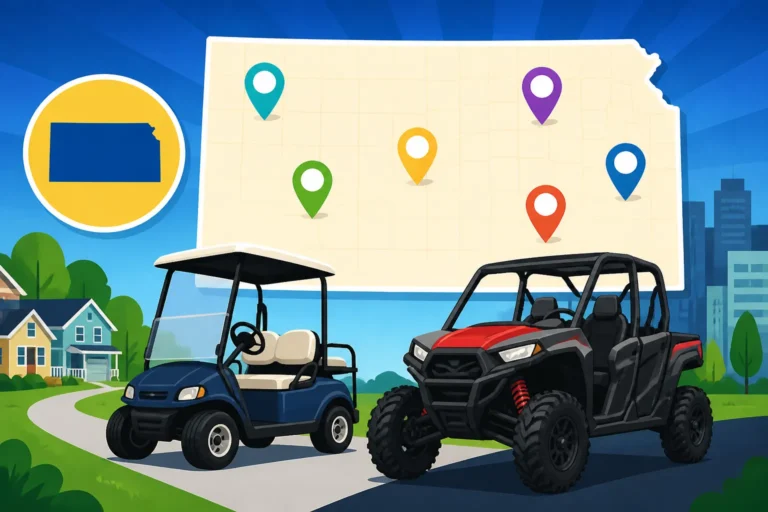
The most common scenario where a driver's license is needed for a UTV is when a city has passed an ordinance allowing them on specific public streets. Kansas law gives individual cities the authority to create their own rules for UTVs, golf carts, and micro utility trucks. When a city "opts in" and allows these machines on their streets, they almost universally require the operator to possess a valid driver's license.
Consider communities like Louisburg, Scott City, or Andover, which have enacted ordinances to permit UTVs on some of their public roads. If you're riding your side-by-side on the streets of Louisburg, you'll not only need to meet their equipment requirements (like turn signals, mirrors, and maybe a windshield from a brand like SuperATV) but also have a current driver's license. The city is treating your UTV as a legitimate, albeit specialized, street-legal vehicle, and operating any street-legal vehicle requires a licensed driver. This is also where you might be required to carry proof of insurance. [Kansas Cities That Authorize ATV Street Use] provides a deeper dive into this topic.
It's critical to check the specific ordinances of any city you plan to ride in. What's allowed in one town might be strictly forbidden in the next. A valid driver's license is practically a universal requirement in these "opt-in" cities, so don't assume your off-road machine magically grants you a pass on basic traffic laws just because it's a UTV.
Work-Site Utility Vehicles (WSUVs) on Public Roads
Kansas has a specific classification called "Work-Site Utility Vehicles" (WSUVs). These are UTVs that meet certain criteria, including being at least 48 inches wide, weighing over 800 pounds, and having bench or bucket seating designed for side-by-side use. While generally intended for work applications, WSUVs have limited allowances for road use, particularly for agricultural or construction purposes.
If you are operating a WSUV on a public road under these specific exemptions, you absolutely must possess a valid driver's license. For example, a farmer driving their WSUV to check irrigation pivots across a county road in rural Finney County, or a construction worker moving equipment between job sites, would need a driver's license to do so legally. This is not casual recreational riding; it's operation for specific work purposes on public thoroughfares. Even for short distances or agricultural use, the driver's license rule remains. [Kansas Work-Site Utility Vehicle Road Rules] explains these nuances in detail.
The intent of the WSUV classification is to facilitate legitimate work, not to open up public roads for general UTV use. Therefore, the requirements for operating a motor vehicle on a public road, including a valid driver's license, are strictly enforced.
Agricultural Exemptions and Driving on Highways
Kansas law also provides limited exceptions for ATVs and UTVs used for agricultural purposes on public roads, particularly state highways. These exceptions are usually for crossing highways or traveling short distances along them when moving between fields or parts of a farm operation.
If you're making an agricultural trip on a highway, whether crossing it or traveling along the shoulder, the operator must have a valid driver's license. For instance, a rancher moving their quad with a fence repair kit from one pasture to another, crossing a state highway, would need to be a licensed driver. While the law permits such limited use, it still treats the machine as a vehicle on a public road, subjecting the operator to standard licensing requirements. [Kansas Agricultural Trips on a 65 mph Road] dives into this specific scenario.
This exemption is not a free pass for joyriding on state roads. It's very specific to agricultural operations. Law enforcement will often look closely at the intent and nature of the trip if they see an ATV or UTV on a highway. A valid driver's license is just one of several requirements to meet these exemptions.
Table: Driver's License Requirements by Machine & Location
To help visualize these distinctions, here's a quick overview of when a driver's license is typically needed in Kansas for different off-road machines.
| Machine Type | Location/Scenario | Driver's License Required? | Notes |
|---|---|---|---|
| ATV (Quad) | Private Land/Designated ORV Area | No | For adult operators. Youth age restrictions apply on public ORV areas. Landowner permission always needed for private property. |
| Public Road/Highway | Yes (Generally Illegal) | ATVs are generally banned from public roads. Exceptions exist for agricultural crossings/use, in which case a license is required. No city ordinances currently allow street-legal ATVs. | |
| UTV (Side-by-Side) | Private Land/Designated ORV Area | No | For adult operators. Youth age restrictions may apply on public ORV areas. Landowner permission always needed for private property. |
| Public Roads (Opt-in City) | Yes | If the city has passed an ordinance allowing UTVs on specific streets, a valid driver's license is required, along with other equipment and insurance. | |
| Work-Site Utility Vehicle (WSUV) | Agricultural/Construction Road Use | Yes | For specific work-related travel on public roads, operator must have a valid driver's license. WSUVs have specific legal definitions. |
| Private Land/Work Site | No | For adult operators, generally no license needed on private property or within a defined work site. | |
| Golf Cart | Private Property/Course | No | For adult operators. |
| Public Roads (Opt-in City) | Yes | If the city has passed an ordinance allowing golf carts on specific streets, a valid driver's license is required, along with other equipment. [Kansas Golf Cart Road Rules] | |
| Micro Utility Truck | Public Roads (Opt-in City) | Yes | Similar to UTVs and golf carts, if a city allows these, a valid driver's license is required. [Kansas Micro Utility Truck Road Rules] |
Penalties for Operating Without a License Where One Is Required
Operating any motor vehicle on a public road in Kansas without a valid driver's license, when one is required, carries significant penalties. This isn't a minor infraction; it's a serious traffic offense that can result in fines, court costs, and potentially even impoundment of your machine. The consequences are the same whether you're in a car or a UTV that's legally on the street.
Imagine you've bought a shiny new side-by-side, maybe even kitted it out with some great accessories like a windshield and turn signals from SuperATV, thinking you're all set to cruise through a town that allows them. But if you forget to get your standard driver's license in order, or if it's suspended, that leisurely ride can quickly turn into a costly headache. A county sheriff or municipal police officer seeing you operate that UTV on a public street will likely issue a citation for driving without a license. This can mean a mandatory court appearance, a hefty fine, and potentially even having your machine towed and impounded, leaving you with storage fees on top of everything else. [Kansas Penalties for Illegal Road Riding] gives more context to these legal repercussions.
Beyond the immediate legal and financial pain, there are insurance implications. If you're involved in an accident while driving without a valid license, your insurance company could deny coverage, leaving you personally responsible for damages and injuries. This could lead to a financial disaster that far outweighs the cost of simply getting or renewing your driver's license. The bottom line is, if you're venturing onto public roads with your ATV or UTV, make sure your driver's license is current and valid. It's not just a technicality; it's a fundamental requirement for safe and legal operation.
What to Do If You're Unsure About Licensing
The rules for ATVs and UTVs in Kansas can be confusing, especially with the patchwork of city ordinances and specific state exemptions. If you're ever in doubt about whether you need a driver's license for a particular riding scenario, here are some actionable steps you can take:
- Check Local Ordinances: If you plan to ride your UTV on city streets, contact the city clerk's office or police department in that specific town. Ask for their local ordinance regarding UTVs or off-road vehicles. They can tell you definitively what's allowed, what equipment is required, and yes, if a driver's license is necessary. Many cities post these ordinances on their official websites, so a quick search for " [City Name] UTV ordinance" might yield results.
- Consult the County Treasurer: For questions related to titles and general machine classification, your county treasurer's office can be a valuable resource. While they primarily handle titling, they often have a good understanding of the different vehicle classifications and what that implies for road use and licensing. They can clarify the distinctions between an ATV, UTV, and a Work-Site Utility Vehicle, which directly impacts road rules. [Kansas County Treasurers Handle Titles] and [Kansas Title Questions Treasurers Hear] are good starting points for understanding their role.
- Review Kansas Statutes: If you're really determined to get to the source, you can look up Kansas statutes related to motor vehicles, ATVs, and UTVs (often in Chapter 8). While this can be dry reading, it provides the legal framework for all the rules. Keywords like "all-terrain vehicle," "utility vehicle," and "work-site utility vehicle" will help you find relevant sections.
- Err on the Side of Caution: When in doubt, assume you need a driver's license if you're on a public road. It's always better to be overprepared than to risk a citation. The inconvenience of confirming a rule far outweighs the hassle and expense of a traffic ticket.
Remember, the goal is to enjoy your machine safely and legally. Taking a few minutes to confirm the rules can save you a lot of trouble down the road, literally.
Disclaimer
This article is for general informational purposes only and does not constitute professional advice. Laws, prices and regulations vary by location and change over time. Consult a qualified professional for guidance on your specific situation.