Crossing a State Highway Is Always Legal
It's a common frustration for Kansas ATV and UTV owners: you're out enjoying the vast expanses of our beautiful state, perhaps moving from one section of your property to another, or accessing a new hunting spot, only to be confronted by a paved state highway. The law around off-road vehicles and public roads can feel like a tangled web of "can" and "can't," leaving many riders scratching their heads and fearing a ticket. This guide is here to untangle that specific knot, focusing on the legalities of crossing a state highway in Kansas, so you can ride with confidence and clarity.
Understanding Kansas's Default Road Ban for ATVs and UTVs
Let's get one thing straight from the start: for the most part, Kansas law prohibits the operation of ATVs and UTVs on public roads, including state highways. This isn't unique to Kansas; many states implement similar restrictions. The primary reasoning behind this blanket ban comes down to safety and the fundamental design differences between off-road vehicles and those intended for highway speeds and conditions. Off-road machines typically lack features like turn signals, rearview mirrors, proper lighting for road use, and the suspension systems necessary to handle sustained pavement travel safely alongside cars and trucks. They simply aren't engineered for that environment.
This general prohibition means you can't just hop on your quad and cruise down a state highway for pleasure or even to reach a destination a few miles away. The law is quite clear on keeping these machines off the main arteries of traffic. While it might seem inconvenient, especially if you have a short distance to cover, these rules are in place to prevent serious accidents involving vehicles that perform very differently. It's an important distinction to make, as understanding this default ban helps you appreciate the very specific exception we're about to dive into. [Kansas Bans ATVs on Federal Highways] and [Kansas Bans ATVs on Interstates] are good examples of how serious the state is about keeping off-road machines off high-speed public thoroughfares.
Many owners face the challenge of needing to move their machine a short distance between fields or properties, and the idea of loading it onto a trailer just to go a quarter-mile can be incredibly frustrating and time-consuming. You might look at a quiet stretch of road and think, "What's the harm?" But the law looks at the inherent design limitations and the potential for a dangerous interaction with street-legal traffic. Even within city limits, unless a specific ordinance allows it, your ATV or UTV is generally unwelcome on the pavement. [Kansas Bans ATVs Inside City Limits by Default] is the rule, not the exception, underlining the importance of knowing where you can and cannot ride.
The Specific Exception: Crossing a State Highway
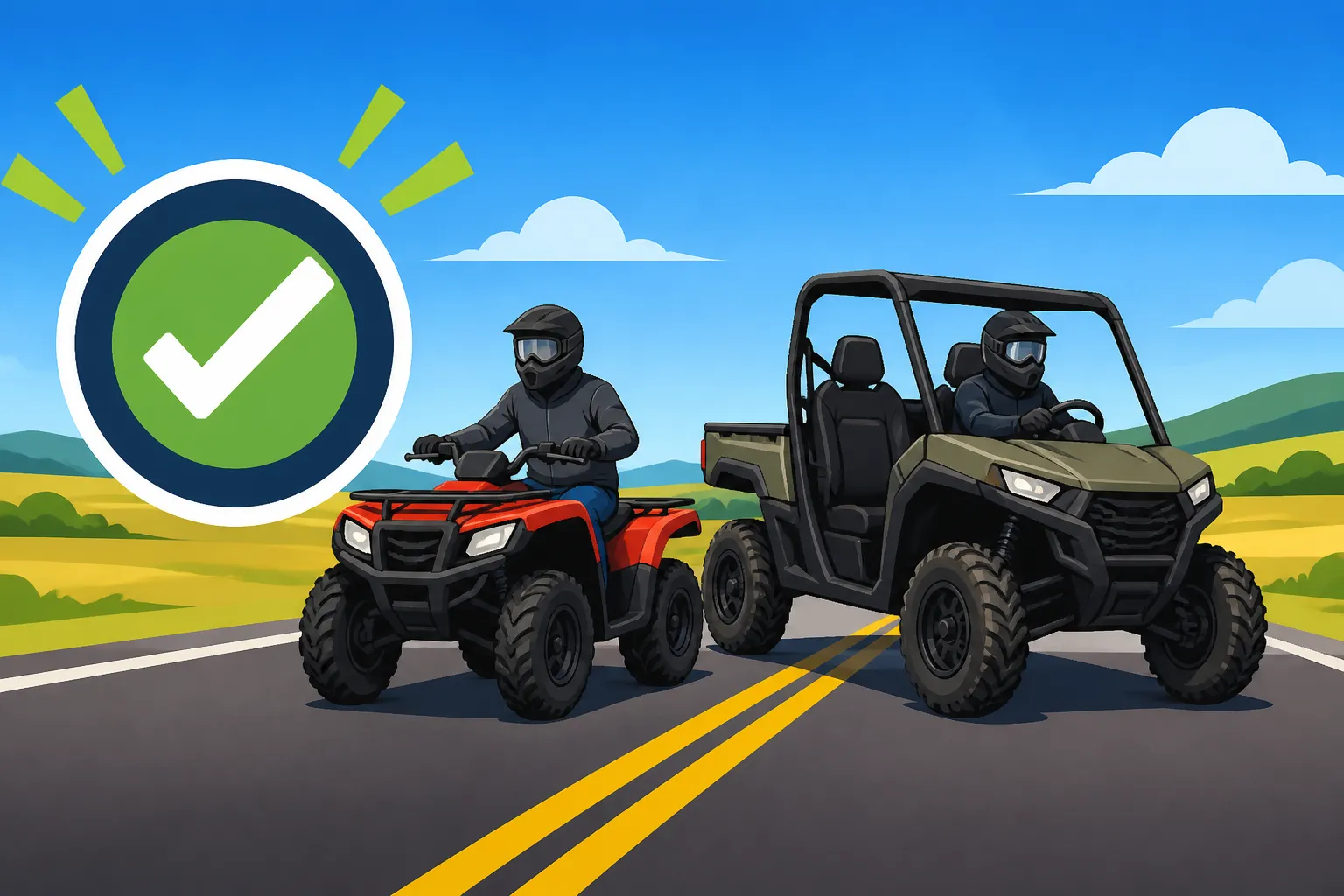
Now for the good news that directly addresses our topic: Kansas law does provide a specific exception that allows ATVs and UTVs to cross a state highway. This is a critical distinction from riding along a state highway. The statute recognizes that in many rural areas, farms, and properties are bisected by these roads, and requiring owners to trailer their machines for a simple perpendicular movement would be impractical and burdensome.
The key here is the word "cross." This exception permits you to travel from one side of a state highway directly to the other side. It's meant for situations where you need to move your machine across the pavement to continue your journey on private land, a county road, or another permissible off-road area. You cannot use this exception as a loophole to travel down the highway for any distance, even if it's just a short stretch to the next turn-off. The intent is to allow for necessary, brief, and direct movements across the traffic flow. [Kansas Rules for Crossing a Highway] lays out the framework for this specific allowance, giving riders a pathway through what might otherwise be an impassable barrier.
To legally execute a crossing, you must do so in the most direct and safest manner possible. This means choosing a spot with good visibility, proceeding straight across the road, and minimizing your time spent in the flow of traffic. It's not a license to dawdle or meander. Think of it as a quick, decisive maneuver, much like a pedestrian crossing a street. The law understands that these machines are integral to rural life and work, and this specific exception helps bridge the gap (quite literally) between land parcels without forcing unnecessary loading and unloading.
What Defines a "Crossing" and Its Limitations
Understanding the nuances of what constitutes a legal "crossing" versus what quickly becomes an illegal act is paramount for Kansas riders. It's not just semantics; it's the difference between following the law and facing potential fines or, worse, a dangerous situation.
Distinguishing Crossing from Riding Along
The most vital distinction you need to internalize is the difference between crossing a state highway and riding along it. A "crossing" means you are traveling perpendicular to the flow of traffic, moving directly from one side of the road to the other. Imagine drawing a straight line from one shoulder of the highway to the opposite shoulder. That's a crossing. You should enter the roadway, proceed straight across, and exit the roadway as quickly and safely as possible. This action is generally permissible under Kansas law.
However, "riding along" the highway means traveling parallel to the flow of traffic, whether on the paved surface, the shoulder, or even in the ditch alongside it for any appreciable distance. This is generally not allowed on state highways for ATVs and UTVs. The law makes this clear because the risks associated with an off-road vehicle traveling at slower speeds, with less visibility, and without the proper safety features alongside high-speed highway traffic are significantly higher than a momentary crossing. Even a short jaunt down the shoulder to avoid a muddy patch on a county road is usually considered riding along, not crossing, and could land you in hot water.
Safety Precautions for Highway Crossings
Just because an action is legal doesn't mean it's without risk or doesn't require extreme caution. When performing a highway crossing with your ATV or UTV, safety must be your absolute top priority. These machines are not designed for road speeds, and you'll be sharing the space, however briefly, with vehicles traveling much faster. Always approach the crossing point with a clear view of oncoming traffic from both directions. It’s imperative to judge the speed and distance of approaching vehicles accurately.
Before you even attempt to cross, stop completely at the edge of the pavement, look left, right, and then left again, ensuring the path is clear. Accelerate smoothly and directly across the road without any sudden swerving or hesitation. It's also wise to make yourself as visible as possible. Consider wearing bright clothing and ensuring your machine's headlights and taillights are on, even in broad daylight. Many riders install aftermarket lighting, like those available from SuperATV, to maximize their visibility, which can be a literal lifesaver during a crossing. Remember, cars might not expect an off-road vehicle to suddenly appear, so you need to do everything you can to be seen and understood.
Legal vs. Practical Considerations
While the law grants you the right to cross, it's crucial to weigh the practical considerations of such a maneuver. Some state highways are extremely busy, with multiple lanes of high-speed traffic, blind curves, or limited sight lines. In such situations, even a legal crossing can be incredibly dangerous. Just because you can cross doesn't always mean you should. Use your best judgment. If you feel unsafe or the traffic volume is too high, it might be safer to find an alternative route, even if it means loading your machine onto a trailer for a short haul.
Furthermore, ensure your machine is in good working order, especially the brakes and throttle, before attempting any road interaction. A stall or mechanical issue mid-crossing could have catastrophic consequences. While Kansas may not require specific road-legal equipment for a simple crossing, having well-maintained tires, functional lights, and responsive steering is non-negotiable for your safety and the safety of others. Equip your machine with accessories that enhance visibility and control, like wide-view mirrors or powerful LED light bars from SuperATV, to further mitigate risks.
Other Road Use Exceptions in Kansas
While the ability to cross a state highway is a specific and important exception, it's not the only instance where an ATV or UTV might legally find itself on a public road in Kansas. Understanding these other exceptions can help paint a more complete picture of permissible use.
Agricultural Use
One of the most common and widely recognized exceptions for off-road vehicles on public roads in Kansas is for agricultural purposes. Farmers and ranchers often rely heavily on ATVs and UTVs to manage their operations, moving between fields, checking livestock, or hauling equipment. Recognizing this necessity, Kansas law allows these machines to be operated on public roads when directly related to agricultural work. [Kansas's Agricultural Exception for Road Use] is a cornerstone for many rural residents.
This exception is not a free pass to joyride on county roads. It applies specifically when the machine is being used for legitimate agricultural purposes, such as planting, harvesting, tilling, spraying, or moving materials for farming or ranching. For example, moving a quad from one side of a field to another by using a gravel road, or taking a side-by-side to check fence lines that parallel a public road, would generally fall under this exception. However, driving your UTV to the local diner for breakfast, even if you’re a farmer, would likely not qualify. [Kansas Rules for Farm Machines on Highways] emphasize that the intent and purpose of the trip must be agricultural. It’s about utility, not recreation, when it comes to this particular exception.
Work-Site Utility Vehicles WSUVs
Kansas law has a specific classification for "Work-Site Utility Vehicles" (WSUVs), which includes many side-by-sides. These vehicles have their own set of rules regarding road use, which can differ from standard ATVs. WSUVs are typically defined by characteristics such as weight (over 800 pounds unladen), width (no more than 48 inches), and seating arrangements (side-by-side bench or bucket seats), and are often designed for tasks like hauling and utility work.
WSUVs may be allowed on certain public roads, particularly county and township roads, and sometimes city streets, under specific conditions. These conditions often relate to the nature of the work being performed and may require the vehicle to be properly titled as a nonhighway vehicle and sometimes equipped with additional safety features like a slow-moving vehicle emblem. [Kansas Work-Site Utility Vehicle Road Rules] are distinct and often less restrictive than those for traditional ATVs, reflecting their intended use. However, these rules still generally do not permit high-speed, long-distance travel on state highways unless specific local ordinances allow it for a limited purpose.
City Ordinances for UTVs
While Kansas state law largely restricts ATVs and UTVs from public roads, it does grant individual cities the authority to create their own ordinances allowing UTVs (and sometimes ATVs) on city streets. This means that rules can vary significantly from one town to the next. What's legal in Louisburg might be prohibited in Topeka. [Kansas UTV Street Legal Rules by City] is a crucial topic for anyone wanting to ride within town limits.
If a city has an ordinance, it will typically outline specific requirements for road-legal UTVs, such as minimum age for operators, driver's license requirements, insurance, specific safety equipment (headlights, taillights, turn signals, mirrors), and sometimes even a city-issued permit or tag. These local ordinances are usually limited to the city's own streets and do not extend to state highways that pass through the city, unless explicitly stated and coordinated with state highway authorities. So, while you might be able to drive your UTV down Main Street in De Soto, that doesn't automatically mean you can drive it for miles on the state highway running through town. [Kansas Cities That Authorize ATV Street Use] are the exceptions, not the rule, and always require research into the specific local regulations.
Important Gear and Practices for Any Road Interaction
Anytime your ATV or UTV interacts with a public road, even for a brief, legal crossing, it’s imperative to have your machine properly equipped and to operate it responsibly. This isn't just about avoiding a ticket; it's about ensuring your safety and the safety of other road users.
Lighting and Visibility
Visibility is your best friend when operating an off-road vehicle near or on public roads. Even if a specific piece of equipment isn't legally mandated for a quick crossing, it's always wise to err on the side of caution. Ensure your machine's headlights, taillights, and brake lights are fully functional and clean. Turn them on, even during daylight hours, to make yourself more noticeable to approaching vehicles. Many riders invest in upgraded LED lighting or auxiliary lights, which can significantly increase your presence on the road.
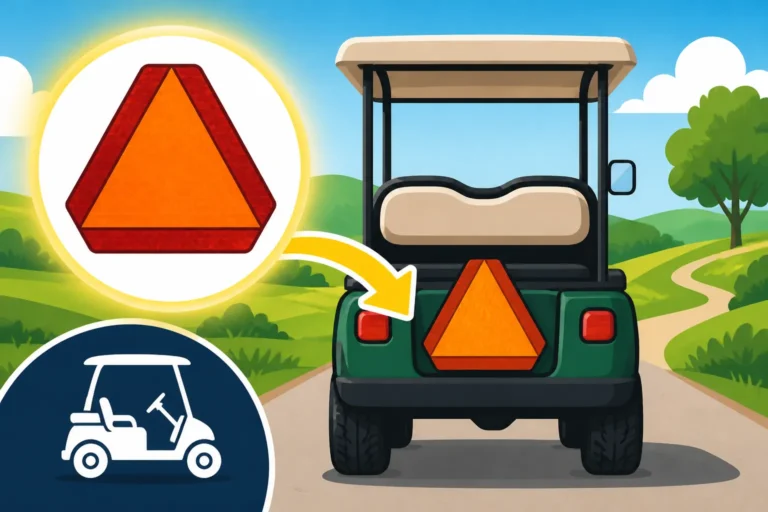
For UTVs that might be used under agricultural exceptions or in cities with permissive ordinances, additional lighting like turn signals and hazard lights become critical. Consider adding a bright, reflective slow-moving vehicle emblem to the rear of your machine if you plan any extended (even if legal) travel on roads, as this visually warns drivers behind you of your slower speed. Products from SuperATV like LED light bars, upgraded headlights, and rear cargo lights can be incredibly effective at increasing your visibility. [Kansas Lighting Rules After Sunset] are particularly important, as inadequate lighting after dark dramatically increases the risk of an accident. Always ensure your lights meet or exceed minimum standards, especially when performing a highway crossing or engaging in other road-legal activities. [Lights Your Quad Needs to Ride After Sunset] go beyond basic functionality and aim for maximum conspicuity.
Carrying Documentation
While you won't need a registration tag for your ATV in Kansas, as [Kansas Has No OHV Registration], it's still a good idea to carry important documentation with you whenever you're riding. This includes proof of ownership, such as your nonhighway title. If you're utilizing an agricultural exception, having some form of identification that links you to the farm or property can be helpful in explaining your presence to law enforcement.
For UTVs operating under city ordinances, you will almost certainly be required to carry proof of insurance, a valid driver's license, and any city-issued permits or tags. It's best practice to keep these documents in a waterproof bag or compartment on your machine to protect them from the elements. Being able to readily provide documentation can simplify any interaction with law enforcement and prevent misunderstandings about your legal right to be in a particular area or perform a crossing.
Driver Licensing and Age Requirements
Generally, if you are operating an ATV or UTV on a public road in Kansas, even for a brief crossing, you must possess a valid driver's license. The state considers operation on public roadways as requiring the same basic competency and licensing as driving a car. This is a common point of confusion, as operating an ATV off-road doesn't always require a driver's license. [Do You Need a License for an ATV in Kansas?] clarifies this crucial distinction.
Furthermore, age requirements apply. While there might be different age restrictions for off-road operation, any time the machine touches a public road, standard driving age and licensing rules tend to come into play. This means a minor who is legally old enough to ride an ATV off-road might not be old enough or licensed to make a legal highway crossing. Always check the specific age requirements, as outlined in [Kansas ATV Age Requirements], to ensure that the operator is legally qualified to be on the road, even momentarily.
Here’s a quick summary of various road uses for ATVs and UTVs in Kansas:
| Type of Use | ATVs (Generally) | WSUVs (Generally) | UTVs (City Ordinance) | State Highways (Crossing) | State Highways (Riding Along) |
|---|---|---|---|---|---|
| Agricultural Purposes | Permitted on local roads | Permitted on local roads | N/A (specific to agriculture) | Permitted for direct crossing | Generally NOT permitted |
| Recreational Riding | NOT Permitted on public roads | NOT Permitted on public roads | Permitted by local ordinance | Permitted for direct crossing | NOT Permitted |
| Work/Utility (Non-Ag) | NOT Permitted on public roads | Permitted on local roads | Permitted by local ordinance | Permitted for direct crossing | Generally NOT permitted |
| Accessing Trails/Land | Permitted for direct crossing | Permitted for direct crossing | Permitted by local ordinance | Permitted for direct crossing | NOT Permitted |
| Required Equipment | Basic functionality, visibility | Basic functionality, emblem, etc. | Varies by ordinance, often full street legal | Basic functionality, visibility | N/A (not permitted) |
| Driver's License | Required on public roads | Required on public roads | Required by ordinance | Required on public roads | Required (but use is restricted) |
Disclaimer
This article is for general informational purposes only and does not constitute professional advice. Laws, prices and regulations vary by location and change over time. Consult a qualified professional for guidance on your specific situation.