A Kansas Statute That Starts With a Ban
If you own an ATV or UTV in Kansas, you've likely felt the frustration of wondering where you can and cannot ride it, especially when it comes to paved roads. Many folks assume their off-road machine is just that – for off-road use only – and while that's largely true, the reality in the Sunflower State is a bit more nuanced than a simple "yes" or "no." This guide is here to untangle the complexities of Kansas laws, clarifying the state's default ban and the specific exceptions that might allow your machine to legally touch asphalt.
The Blanket Ban: Understanding Kansas's Default Stance on Off-Road Machines
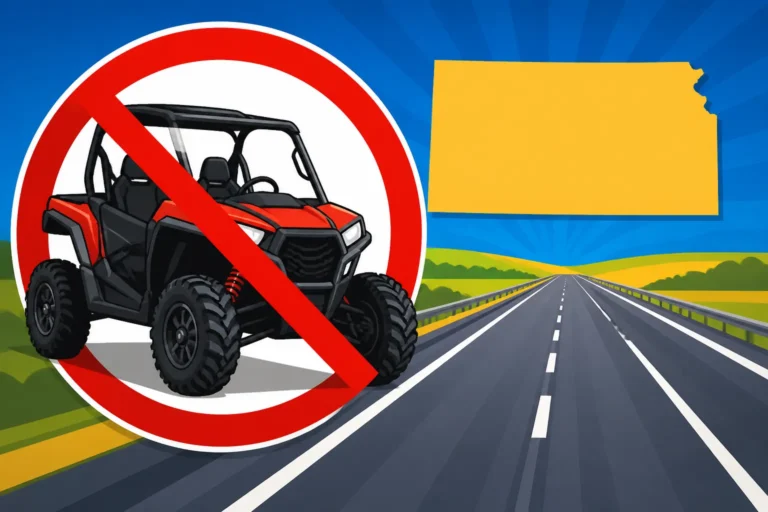
Let's cut right to the chase: Kansas law generally prohibits the operation of off-road vehicles like ATVs and UTVs on public roads and highways. This isn't a minor suggestion; it's the foundational rule that everything else builds upon. For many years, this blanket ban has been a source of confusion and even tickets for riders who mistakenly believed certain roads were fair game. It's a critical starting point to understand, because every allowance you hear about is, in fact, an exception to this primary prohibition.
The Core Statute: Why Most Off-Roading on Paved Surfaces is Illegal
The reason for this widespread restriction lies deep within Kansas statutes. The law categorizes ATVs and many UTVs as "nonhighway vehicles," a classification that immediately sets them apart from cars, trucks, and motorcycles designed for and licensed to operate on public roads. This designation isn't arbitrary; it's based on factors like their design for off-road terrain, often lacking the safety features or equipment required for street vehicles. You can find the specifics of this overarching restriction in [Kansas ATV Road Rules Under 8-15,100], which lays out the general prohibition.
This means that, by default, if you roll your quad or side-by-side off your trailer and onto a public road in Kansas, you're likely breaking the law. This applies to state highways, county roads, and even city streets unless a specific exception or local ordinance is in place. It's a tough pill for some to swallow, especially those who just want to get from their farm to a nearby field, but the law's intent is to keep vehicles not designed for road speeds or safety features off shared public thoroughfares. Understanding this core prohibition is the first step to truly navigating the rules.
What "Nonhighway Vehicle" Means for Road Use
The term "nonhighway vehicle" is key here. It explicitly means a vehicle not intended or designed for use on public highways. This broad definition encompasses most ATVs, side-by-sides, and even dirt bikes that aren't specifically titled and equipped for street legality. Because these machines are titled as nonhighway vehicles – or in the case of ATVs, often have no state registration at all – they lack the standard markers of a road-legal vehicle, such as a license plate. For context, [Kansas Has No OHV Registration] outlines this further.
The implications for road use are significant. A nonhighway vehicle typically isn't held to the same standards as a passenger car when it comes to things like brake lights, turn signals, headlights, and mirrors. While many UTVs come equipped with some of these, they often don't meet the full suite of requirements for typical highway travel. This classification is why simply having a title doesn't automatically grant you road access; a [Kansas Nonhighway Title Explained] is mainly for proving ownership and paying sales tax, not for street legality. It’s a crucial distinction that often trips up new owners or those moving to the state.
Consequences of Ignoring the Default Ban
The consequences of operating an off-road machine on public roads without a legal exception can range from a warning to a hefty fine, and potentially even impoundment of your machine. Law enforcement officers, particularly in rural areas, are often well-versed in these regulations. They know that while these machines are popular for recreation and work, their presence on public roads is generally restricted.
Imagine you're taking a shortcut down a county road to get to a different section of your property, thinking it's just a short hop. If a deputy spots you, even that short ride could result in a citation. Beyond the direct penalties, there's the significant liability risk. If you're involved in an accident on a public road while illegally operating your ATV or UTV, your insurance might not cover damages, leaving you personally responsible for medical bills and property damage. This is a very real, and often expensive, consequence that far outweighs the convenience of a quick road trip.
State-Level Exceptions: When You Can Legally Touch Kansas Pavement
While the general rule is a ban, Kansas law does provide specific, narrowly defined exceptions where ATVs and UTVs can legally be operated on public roads. These aren't loopholes for joyriding; they are practical allowances designed for specific scenarios, primarily agricultural work and crossing divided highways. Understanding these exceptions is crucial for responsible and legal operation.
The Agricultural Exemption: Farm-to-Field Journeys
One of the most common and vital exceptions applies to agricultural use. If you're using your ATV or UTV for farming, ranching, or other legitimate agricultural purposes, Kansas law allows you to operate it on public roads and highways for specific tasks. This includes traveling between fields, transporting equipment, or tending to livestock. However, this isn't a blanket pass to cruise around town. The statute specifies that the machine must be used in connection with "agricultural purposes." [Kansas Agricultural Trips on a 65 mph Road] delves into the specifics of this allowance.
For instance, driving your side-by-side down a gravel county road to check fence lines on an adjacent pasture would likely fall under this exemption. Hauling a small sprayer to treat a section of field across the road would also qualify. However, taking your UTV into the nearest town for groceries, even if you just came from your farm, would likely not be covered. The intent of your journey matters greatly here. Riders should be prepared to explain their purpose if stopped, as it's a conditional exemption, not a free pass.
Crossing the Divide: Legally Navigating State Highways
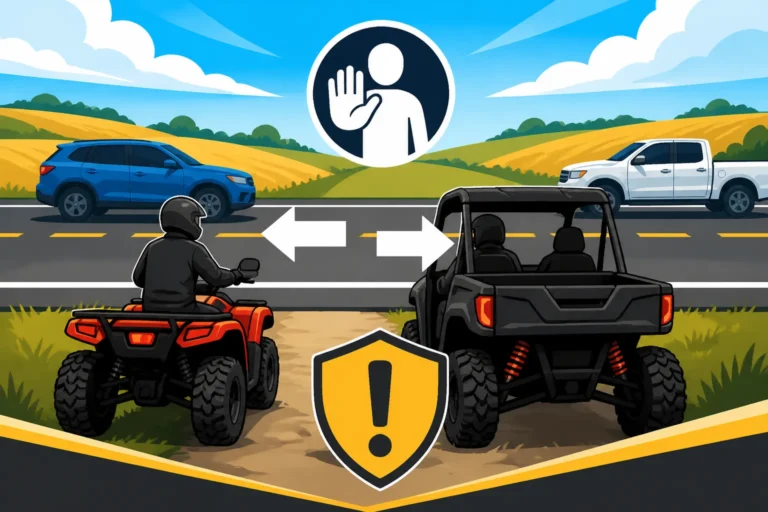
Another important exception allows ATVs and UTVs to cross state highways and county roads. This is a crucial provision for connecting properties or accessing different parts of a large tract of land that might be bisected by a public road. The key here is "crossing." You cannot drive along the highway; you must cross it at approximately a 90-degree angle to proceed from one side to the other. [Kansas Crossing a State Highway is Always Legal] explains this right of passage.
This means you can pull out from your property, cross the pavement directly, and enter your land on the other side. You cannot, however, turn onto the highway and drive down it for a mile before turning off. The law is very specific about this. When crossing, riders should exercise extreme caution, yielding to all oncoming traffic and making the crossing as quickly and safely as possible. Visibility is paramount, and wearing bright colors or adding visible flags to your machine, especially if you have aftermarket accessories from companies like SuperATV, can greatly enhance safety.
Work-Site Utility Vehicles: A Unique Kansas Class
Kansas has a specific classification for "Work-Site Utility Vehicles" (WSUVs) that carves out some unique road use allowances. This class is designed for utility-focused machines, often side-by-sides, that meet certain criteria regarding width, weight, and seating. If your UTV qualifies as a WSUV, it has expanded privileges on public roads, though still not full street legality like a car. [Kansas Work-Site Utility Vehicle Road Rules] provides extensive detail on this often misunderstood class.
Generally, WSUVs can be operated on public roads during daylight hours, but there are restrictions on speed and the types of roads they can use. They are typically allowed on roads with speed limits of 65 mph or less, and certain equipment, like headlights, taillights, brake lights, and turn signals, are usually required. This class is primarily intended for machines used for work, maintenance, or other utility functions, and it requires a specific title. This is a significant distinction from a recreational UTV and often requires ensuring your machine is equipped to meet these standards, perhaps with compliant lighting kits or mirrors.
The Local Option: How Kansas Cities Open Their Streets to UTVs
While state law generally bans off-road machines from public roads, it grants cities and counties the authority to create their own ordinances to allow the use of certain machines, primarily UTVs, on their streets. This "local option" has led to a patchwork of rules across Kansas, where riding legally can depend entirely on which city limits you're in. This is why you might see UTVs cruising down main streets in one town, but not in a neighboring community.
The Power of Local Ordinances: Opting In to Street Use
Kansas state law provides a framework that allows local municipalities to "opt in" to allowing UTVs on their streets. This means that if a city council or county commission passes an ordinance specifically permitting UTVs, then within those defined jurisdictional boundaries, it becomes legal to operate them under the conditions set forth in that local law. This is a critical point: without such an ordinance, the state's default ban remains in effect. [How a City Council Opens Its Streets to UTVs] offers more insight into this process.
These ordinances are not uniform. Each city or county can set its own rules regarding permitted roads, operating hours, required equipment, and licensing. This is why researching the specific rules for the area you plan to ride in is absolutely essential. What's legal in Louisburg might be illegal just a few miles down the road in another town. This local control means that riders cannot assume general permission; they must verify it for each specific location.
Common Requirements for City-Approved UTVs
When cities do opt in to allowing UTVs on their streets, they almost always attach a list of requirements designed to enhance safety and integrate these machines into traffic. While details vary, common requirements often include:
- Safety Equipment: Headlights, taillights, brake lights, turn signals, mirrors (rearview and sometimes side mirrors), a horn, and a safety triangle or slow-moving vehicle emblem. Many riders find high-quality, durable lights and mirrors from a brand like SuperATV to be essential for meeting these local requirements.
- Proof of Insurance: Liability insurance is almost universally required, just as it is for cars.
- Driver's License: The operator must hold a valid driver's license.
- Speed Restrictions: UTVs are typically restricted to roads with lower speed limits, often 35 mph or 45 mph, and sometimes have their own maximum speed.
- Permit/Tag: Many cities require UTV owners to obtain a special city-issued tag or permit, often with an associated fee, which must be displayed on the machine.
- Daylight Operation: Some ordinances restrict operation to daylight hours, or require specific lighting after dark.
These requirements aim to ensure that UTVs, while on public roads, can safely share the space with traditional vehicles and pedestrians. Ignoring these can lead to fines even in areas where UTVs are generally permitted.
Navigating Different City Ordinances (e.g., Louisburg, Scott City)
Because each city can set its own rules, riding a UTV on city streets in Kansas requires diligent research. You cannot assume that because you saw UTVs in one town, your machine is welcome everywhere. For example, [Kansas Cities That Authorize ATV Street Use] provides an overview of which cities have adopted such ordinances.
Let's consider Louisburg as a prime example. This city is well-known for its UTV-friendly ordinance. They require a city tag, which comes with a fee, and have specific insurance and equipment stipulations. [Louisburg's UTV Tag Fees in Kansas] gives you an idea of the costs involved. The UTV must pass an inspection, have proper lighting, mirrors, and be operated by a licensed driver. Contrast this with other cities, like Scott City, which might have different age restrictions, speed limits, or even different hours of operation. It's not uncommon for these ordinances to be complex, so obtaining a copy of the specific city ordinance from the city clerk's office is always the safest bet before you plan to ride. Never rely on hearsay; confirm the rules yourself.
Equipment and Licensing: What Your Machine Needs for Legal Road Travel
Even with the agricultural exceptions or local city ordinances, operating an off-road machine on a public road in Kansas is never as simple as just hitting the ignition. There are specific equipment requirements and licensing considerations that must be met to ensure you're riding legally and safely. These elements are designed to bring off-road machines closer to the safety standards of traditional road vehicles, where permitted.
Essential Gear for Street-Legal UTVs in Opt-In Cities
If you're riding in a city that has an ordinance allowing UTVs on its streets, your machine will almost certainly need specific equipment beyond its factory configuration. These requirements are put in place for safety, ensuring your UTV can be seen, heard, and controlled like other vehicles on the road. Common requirements often include:
- Headlights and Taillights: Operational headlights (often required to be on even in daylight) and taillights are a must, as are brake lights that illuminate when the brakes are applied. [Kansas Lighting Rules After Sunset] outlines the general expectations for vehicles operating on public roads after dark.
- Turn Signals: Both front and rear turn signals are usually required for indicating lane changes or turns. Many UTVs do not come with these from the factory, making aftermarket kits from companies like SuperATV a popular purchase for those looking to make their machine compliant.
- Mirrors: A rearview mirror is almost always required, and often side mirrors are also stipulated to provide adequate visibility of surrounding traffic.
- Horn: A working horn is necessary for alerting other drivers or pedestrians.
- Windshield: While not universal, some ordinances may require a windshield to protect the driver and passengers from road debris.
- Seatbelts: Factory-installed seatbelts for all occupants are typically expected.
It's not enough to just have these items; they must be fully functional and meet any specific intensity or visibility standards outlined in the local ordinance. An inspection by city officials is often part of the permit process to ensure compliance.
Driver Licensing and Insurance Realities
Beyond the machine itself, the operator must meet certain qualifications. In any scenario where a UTV or ATV is legally on a public road, the operator is almost always required to possess a valid driver's license. This means a standard Class C driver's license, not a learner's permit or simply being "old enough" to ride off-road. The rationale is that if you're sharing the road with cars and trucks, you need to demonstrate the same level of driving competence.
Insurance is another critical component. While Kansas does not require specific ATV or UTV insurance for off-road use, any local ordinance allowing street use will almost certainly mandate liability insurance. This protects you and others in case of an accident. Proof of insurance, often in the form of an insurance card, will be required when applying for a city permit and should always be carried while riding. If your machine is primarily used on a farm, your farm insurance policy might cover some road use, but it's crucial to verify the specifics with your insurance provider.
Why an ATV Never Gets a City Tag
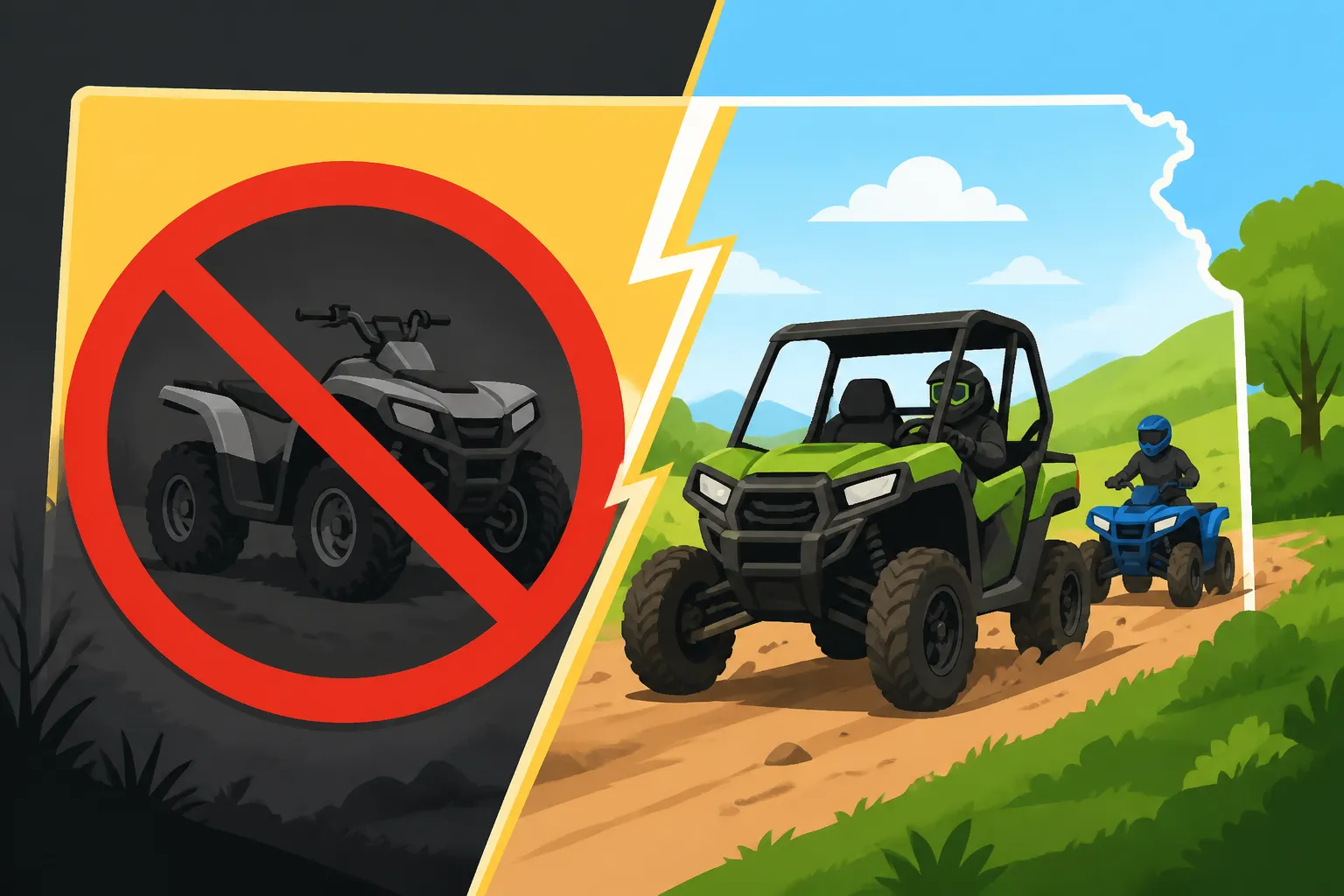
This is a point of significant confusion for many riders: while many cities allow UTVs on their streets with a special permit or tag, ATVs (all-terrain vehicles, typically single-rider quads) are almost universally excluded from these local ordinances. The reason is rooted in design and safety. ATVs are generally considered less stable on paved surfaces due to their high center of gravity and single-rider design, making them more prone to rollovers on hard, uneven surfaces or during sharp turns compared to a wider, lower UTV.
Therefore, if a city in Kansas has an ordinance allowing "UTVs" on its streets, that typically refers to side-by-sides and explicitly excludes ATVs. This means if you own a quad, even if it has some aftermarket lights or mirrors, it's highly unlikely to ever qualify for a city street-legal permit in Kansas. Riders should understand this distinction clearly to avoid disappointment and potential legal issues.
Specific Machine Classes and Their Unique Road Rules
Kansas law doesn't treat all "off-road" machines the same. There are distinct classifications, each with its own set of rules and limitations regarding road use. Understanding these nuances is crucial, as what's permissible for a golf cart might be strictly prohibited for a standard ATV, and a Work-Site Utility Vehicle has different privileges altogether. These distinctions are not just bureaucratic; they reflect differences in design, speed capabilities, and intended use.
Golf Carts: Their Niche on Kansas Roads
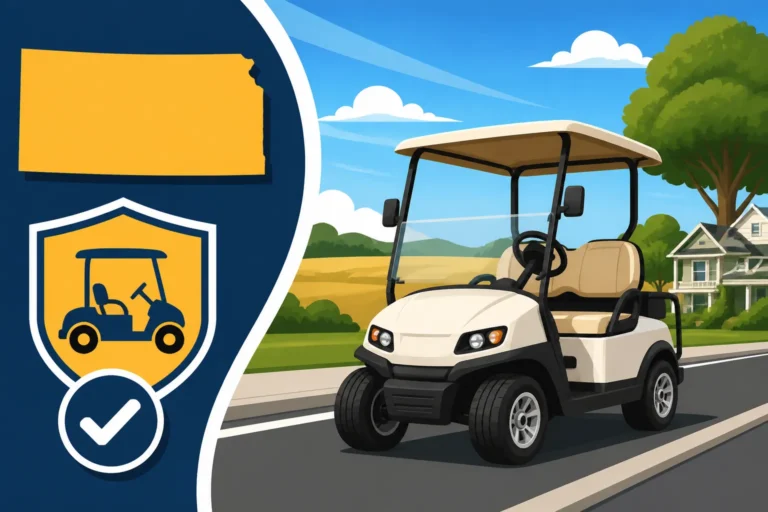
Golf carts occupy a unique and often more permissive space in Kansas road law compared to ATVs and UTVs. State law allows cities and counties to permit golf carts on public roads with speed limits of 35 mph or less, provided they meet certain equipment requirements. This is why you frequently see golf carts cruising around residential areas or small towns. [Kansas Golf Cart Road Rules] provides a detailed breakdown of these regulations.
However, even with golf carts, there are stipulations. They typically must be equipped with headlights, taillights, brake lights, a rearview mirror, and a slow-moving vehicle emblem. Operators usually need a valid driver's license, and proof of insurance is often required. Furthermore, golf carts are generally restricted from crossing state highways unless specifically allowed by local ordinance and done safely. The goal is to allow their use in specific low-speed environments without compromising the safety of faster-moving traffic. It's a localized permission, so checking with your specific city is always paramount.
Micro Utility Trucks: A Different Set of Rules
Kansas law also recognizes "Micro Utility Trucks" as a distinct category, and they have different road rules than other off-road machines. These are generally small, low-speed, commercial-style vehicles often imported from Japan, characterized by a small truck bed and a top speed typically below 40 mph. Because they resemble miniature pickup trucks, they are viewed differently than recreational ATVs or UTVs. [Kansas Micro Utility Truck Equipment Rules] lays out what these machines need.
Micro Utility Trucks can be titled and registered for street use, but they are generally limited to roads with speed limits of 65 mph or less. They must be equipped with all standard road-legal features like headlights, taillights, brake lights, turn signals, mirrors, a horn, and often a windshield with wipers. Operators need a valid driver's license and insurance. While they offer more road flexibility than most UTVs, they are still considered low-speed vehicles and require specific compliance to be legal on public streets. These are distinct from typical UTVs, even utility-focused ones, due to their specific design and often enclosed cab.
Dirt Bikes and Street Legality in Kansas
Dirt bikes, while certainly off-road machines, also have a specific place in Kansas road law. Unlike ATVs, dirt bikes can be made street legal in Kansas, but it's a process that requires significant modification and compliance. To be street legal, a dirt bike must meet all the requirements of a motorcycle under Kansas law. This typically means having:
- Headlights: High and low beam.
- Taillights and Brake Lights: Operational and visible from a certain distance.
- Turn Signals: Both front and rear.
- Mirrors: At least one rearview mirror.
- Horn: A working horn.
- DOT-Approved Tires: Tires designed and rated for street use.
- License Plate Mount: A proper mount for a state-issued license plate.
- Muffler: A functional muffler to meet noise requirements.
If a dirt bike can be equipped with all these features, pass an inspection, and be titled as a motorcycle, it can then be registered and operated on public roads. However, this is a far cry from simply riding your trail bike on the street. It often involves extensive aftermarket kits and modifications, ensuring every component meets road standards. Most dirt bikes found on trails are not street legal and operating them on public roads carries the same penalties as an ATV.
Staying Safe and Legal: Avoiding Common Mistakes
Navigating the complexities of Kansas ATV and UTV road rules can feel like a maze. Because the rules vary so much by location and machine type, it’s easy to make mistakes that could lead to fines, accidents, or even legal trouble. Being proactive, informed, and responsible is your best defense against unintended consequences.
Understanding Enforcement and Penalties
Law enforcement officers in Kansas, especially in rural counties, are generally quite familiar with the regulations surrounding off-road machines. They understand the differences between ATVs, UTVs, WSUVs, and golf carts, and they know the local ordinances that might permit road use. When they pull you over on a public road, they'll be looking for proof of a valid exception or city permit, along with the required equipment and driver's license. [Kansas Penalties for Illegal Road Riding] can give you an idea of what you might face if caught breaking the rules.
Penalties for illegal road riding can include:
- Fines: These vary, but a citation for illegal operation can quickly add up, especially if combined with other violations like no insurance or an unequipped vehicle.
- Court Costs: Beyond the fine, you'll often face additional court costs, even for a minor infraction.
- Vehicle Impoundment: In more severe or repeated cases, your machine could be impounded, leading to towing and storage fees on top of fines.
- Liability: As mentioned earlier, illegal operation can invalidate your insurance coverage in case of an accident, leaving you financially vulnerable.
It's far better to spend time researching the rules than to face these consequences. A deputy might be lenient with a warning for a first-time, minor offense, but they are well within their rights to issue a citation.
Researching Before You Ride: The Importance of Due Diligence
Given the patchwork of rules across Kansas, the most crucial step for any ATV or UTV owner considering road use is thorough research. Do not rely on what your buddy told you, or what you saw someone else doing. Laws change, and what's true for one county or city might be entirely different for another.
Here’s how to do your due diligence:
- Identify Your Machine: Clearly understand if your machine is an ATV, a standard UTV, a Work-Site Utility Vehicle, a golf cart, or a micro utility truck. Each has different state-level allowances.
- Check State Exceptions: If you're on a county or state road outside city limits, confirm your use falls squarely within the agricultural or crossing exemptions.
- Contact City/County Officials: If you plan to ride within city limits, call the city clerk's office or the local police department. Ask for a copy of their ordinance regarding UTVs, golf carts, or other off-road vehicles. Don't just ask, "Can I ride my UTV on the street?"; ask about specific requirements, speed limits, and permit processes.
- Inspect Your Machine: Ensure your machine has all the required safety equipment—lights, signals, mirrors, horn, etc.—and that it's all in working order. Brands like SuperATV offer excellent aftermarket options that can help you meet these specifications.
- Verify Licensing and Insurance: Make sure you have a valid driver's license and appropriate insurance coverage that explicitly covers street use where permitted.
Taking these steps before you put tires to pavement will save you a lot of headache and potential legal trouble.
Rider Responsibility Beyond the Law
Even when legally permitted to operate your off-road machine on a public road, personal responsibility goes beyond simply following the letter of the law. These machines handle differently than cars, often have higher centers of gravity, and might not be as visible to other drivers.
Consider these aspects of rider responsibility:
- Visibility: Always make yourself as visible as possible. Wear bright clothing, use your headlights (even during the day if required), and consider adding flags, especially if you're crossing a highway or using a rural road with poor sightlines.
- Awareness: Be hyper-aware of your surroundings. Other drivers might not expect to see an off-road machine on the road and may misjudge your speed or intentions.
- Speed: Even if allowed on a 45 mph road, consider if that speed is truly safe for your machine and the conditions. Often, slower is safer.
- Passengers: Only carry the number of passengers your machine is designed for and equipped with seatbelts. Children should be properly secured and meet any age or size requirements. [Kansas Rules for a Child Passenger] highlights the importance of safety for younger riders.
- Safe Operation: Avoid aggressive driving, stunt riding, or reckless behavior. Remember, you're sharing the road, and your actions reflect on all off-road enthusiasts.
By understanding the nuanced laws, preparing your machine, and riding responsibly, you can safely and legally enjoy your ATV or UTV in the specific scenarios allowed on Kansas's public roads.
Disclaimer
This article is for general informational purposes only and does not constitute professional advice. Laws, prices and regulations vary by location and change over time. Consult a qualified professional for guidance on your specific situation.