Crossing a State Highway in Kansas
It's a common dilemma for Kansas ATV and UTV owners: you're out enjoying a ride on a county road or heading to a nearby field, and suddenly, a state highway looms ahead. The thought of crossing it can be really confusing and even a little intimidating. Many riders fret over whether it's legal, what equipment they need, and if they'll accidentally break a law. This guide is here to untangle all that uncertainty, providing clear, practical advice on safely and legally navigating state highway crossings in the Sunflower State.
Understanding Kansas's General Road Rules for Off-Road Machines
Let's be honest, figuring out what you can and can't do with your ATV or UTV on Kansas roads feels like trying to solve a puzzle with half the pieces missing. The rules aren't always intuitive, and it's easy to get conflicting information. But before we dive into the specifics of state highways, it helps to understand the foundational principles that govern off-road machine use on public roadways in Kansas.
The Blanket Ban and Key Exceptions
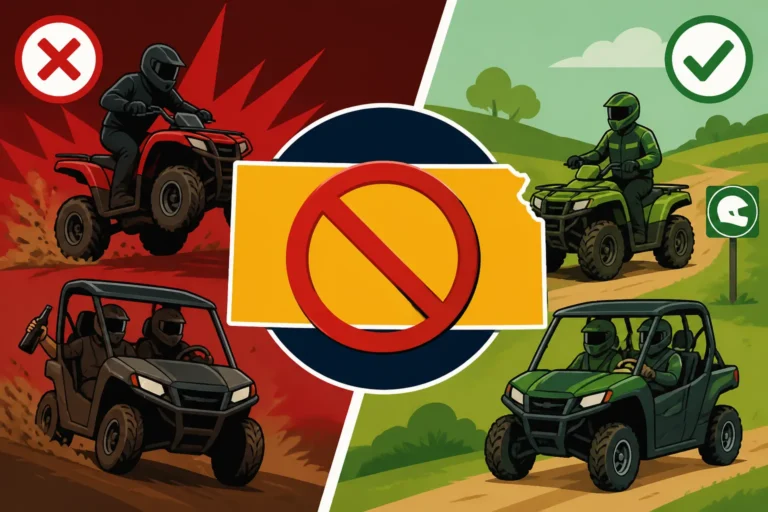
The baseline rule in Kansas is pretty straightforward: ATVs and UTVs are generally not allowed on public roads and highways. This can be a real source of frustration for folks who just want to get from one section of their property to another, or access a trail that happens to be on the other side of a paved road. It feels like the law is designed to keep you penned up. However, like most rules, there are some very important exceptions that can make all the difference for riders.
One of the most significant exceptions is for agricultural purposes. If you're using your machine for legitimate farm work, such as moving between fields, hauling feed, or checking fences, Kansas law provides a bit more leeway. This isn't a free pass to cruise down the highway, but it does allow for necessary travel on public roads, including limited use on state highways, as long as it's directly tied to an agricultural operation. Understanding the nuances of this agricultural exception is vital, as it often provides the legal basis for many riders to use roads. For a deeper dive into what counts, check out [Kansas Agricultural Trips on a 65 mph Road].
Another exception arises when individual cities or counties pass specific ordinances that permit UTVs (and sometimes ATVs) on their local streets. These are localized rules, not statewide ones, which means what's legal in one town might get you a ticket in the next. It’s crucial to distinguish between these local permissions and the broader state laws governing major highways.
Distinguishing Between ATVs, UTVs, and WSUVs
One of the biggest sources of confusion for riders, and often for law enforcement, is the subtle differences in how Kansas law categorizes off-road machines. An ATV isn't always treated the same as a UTV, and then there's the unique "Work-Site Utility Vehicle" (WSUV) classification, which almost no other state has. These distinctions are critical because they dictate which rules apply to your specific machine. If you're not sure which category your vehicle falls into, you could be unknowingly violating a rule that simply doesn't apply to a different type of machine. This feels unfair, especially when many owners just see them all as "off-roaders."
An All-Terrain Vehicle (ATV) is generally a straddle-seat, handlebar-steered machine. They are typically smaller, built for single riders or a rider and a passenger, but the passenger usually sits behind the operator, not side-by-side. Utility Terrain Vehicles (UTVs), or side-by-sides, are usually larger, have a steering wheel, foot pedals, and side-by-side seating. They often come with a cargo bed and are designed for utility work and recreational riding. The Work-Site Utility Vehicle (WSUV) is a specific sub-category of UTVs in Kansas that meets certain criteria (like width, weight, and specific use) and sometimes enjoys expanded road use privileges in certain circumstances, though generally not for extended highway travel. These definitions matter immensely when it comes to road legality. For more on these definitions, consider reading [Why the Definitions Matter for Roads].
Why Registration (or Lack Thereof) Matters
Many new owners wonder if they need to "register" their ATV or UTV in Kansas. The simple answer is no, not in the way you would a car or truck. Kansas titles ATVs and UTVs as "nonhighway vehicles," but it doesn't require them to be registered or to display an annual tag. This can be a huge relief for owners, as it saves on annual fees and paperwork, but it also contributes to the confusion when it comes to road use. Without a traditional "tag," it's easy to assume these machines have no business on any public road, even for a quick crossing.
However, the lack of registration doesn't mean a free pass. While you won't get a tag from the state, if your city does have an ordinance allowing UTVs on its streets, you will likely have to get a specific city-issued plate or sticker and potentially pay a fee for that. This city-level "registration" is entirely separate from state rules and only applies within that municipality's borders. The key takeaway here is that while [Kansas Has No OHV Registration] at the state level, this doesn't automatically grant or deny road privileges; it just means the state isn't tracking them in the same way it tracks passenger vehicles. The nonhighway title simply establishes ownership.
The Specifics of Crossing a State Highway
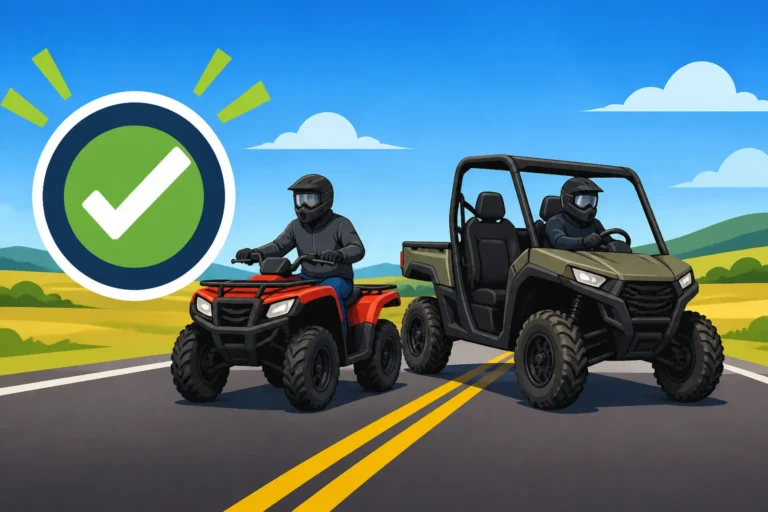
Now, let's get down to the brass tacks of the original question: can you actually cross a state highway in Kansas with your ATV or UTV? The good news is, generally, yes, you can. This is a huge relief for many rural Kansans who live on one side of a highway and have land, family, or necessities on the other. The key is understanding the precise conditions under which such a crossing is legal and, more importantly, safe.
The Explicit Legal Authorization
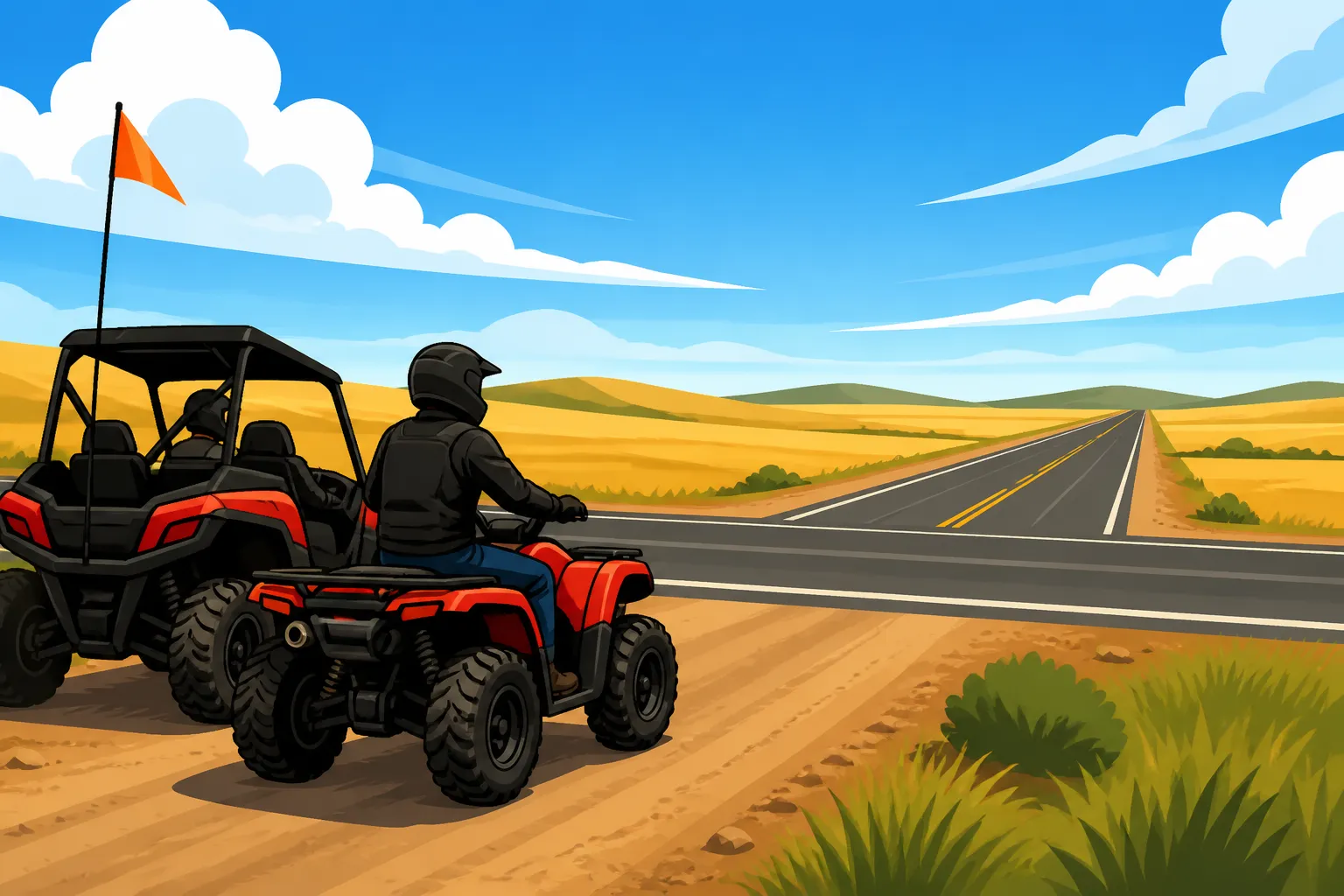
Kansas state law explicitly allows for the crossing of a state highway by an ATV or UTV under specific circumstances. This isn't just a loophole; it's a direct provision in the statutes. This means you won't be breaking the law simply by traversing a paved state route, which is a major point of clarification for many riders. However, it's not a blanket permission to drive on the highway, only to cross it. The law recognizes that sometimes, an off-road machine needs to get from point A to point B, and a state highway might be the only barrier.
The important distinction here is between "crossing" and "operating on" or "traveling along" a state highway. The law is very clear: you cannot just take your ATV or UTV out for a ride down a state highway for pleasure or convenience. That's a definite no. But if your destination is on the opposite side of a highway, and there's no other practical route, the law allows you to make that necessary crossing. This distinction can be a bit subtle, and it's where many riders get confused. For confirmation that [Crossing a State Highway Is Always Legal] under certain conditions, it helps to know the legal basis.
Conditions and Limitations on Highway Crossings
While crossing is permitted, it's not without strict rules designed to ensure safety for everyone on the road. These aren't suggestions; they are legal requirements you must adhere to every time you make a crossing. Failing to follow these conditions can quickly turn a legal crossing into an illegal operation, potentially leading to tickets or, worse, an accident.
Here are the critical conditions you must follow:
- Perpendicular Path: You must cross the highway at approximately a ninety-degree angle to the flow of traffic. You can't meander diagonally or travel along the shoulder for any significant distance. The goal is to get off the highway as quickly and directly as possible.
- Shortest Practical Distance: The crossing must be made over the shortest practical distance. This means you can't drive down the highway for a quarter-mile before turning to cross. You should approach the highway, make your crossing, and immediately exit onto the other side.
- Yield to All Traffic: This is perhaps the most important rule for safety. You must yield the right-of-way to all vehicles lawfully using the highway. This means you wait until the road is clear, or until you are absolutely certain you can cross without impeding or endangering any oncoming or existing traffic. State highways, by their nature, often have higher speed limits and greater traffic volumes, so judging traffic is paramount.
- Immediate Exit: Once you've crossed, you must immediately exit the highway onto a county road, private property, or whatever your intended destination is. You cannot linger or continue on the highway itself.
These rules are in place not just for your safety, but for the safety of other motorists. A fast-moving vehicle might not expect an ATV or UTV to be crossing, so making your intentions clear and executing the crossing efficiently and safely is critical.
The "Agricultural Exception" for Limited Highway Travel
Beyond simple perpendicular crossings, Kansas law offers a specific "agricultural exception" that allows for limited travel on highways, including state highways, for farming operations. This is a game-changer for farmers who often need to move equipment, including ATVs and UTVs, between fields or farmsteads separated by public roads. It acknowledges the practical realities of farming in Kansas.
Under this exception, an ATV or UTV may be operated on a public highway, including state highways, if it is being used for agricultural purposes, such as planting, cultivating, harvesting, or feeding livestock. However, this exception comes with its own set of important constraints. You can't just take your UTV to town under the guise of "agricultural use" if you're not actually doing farm work. The use must be directly related to the farming operation.
Furthermore, if you are using your machine on a highway under the agricultural exception, the operator is generally required to possess a valid driver's license. This is a point often missed by riders, especially younger ones or those who only operate their machines on private land. Just because you're on farm equipment doesn't mean you're exempt from basic driver licensing requirements when on public roads. For the specifics on this, especially for longer trips, refer to [The Farm Exception Still Requires a Driver's License]. It's about balancing the needs of agriculture with public safety.
What Constitutes a "State Highway" in Kansas?
Before you even think about crossing a state highway, you need to know what one looks like. It sounds obvious, right? But sometimes, a heavily traveled county road can feel like a state highway, and a less-traveled state route might feel like a county road. Mistaking one for the other can lead to legal trouble or, worse, dangerous situations. Kansas has a vast network of roads, and correctly identifying the type of road you're on is crucial for staying within the law.
Identifying State vs. County Roads
The easiest way to identify a state highway in Kansas is by its signage. State highways are typically designated with a shield-shaped sign, often indicating "US" for U.S. routes (like US-54 or US-83) or a simple "K" for Kansas state routes (like K-96 or K-10). These signs are usually prominently displayed at intersections and periodically along the route. County roads, on the other hand, usually have different signage, often a rectangular sign with the county name and a road number or letter designation.
Beyond signs, there are other clues. State highways are almost universally paved and generally maintained by the Kansas Department of Transportation (KDOT). They typically have higher speed limits and are designed for faster, higher-volume traffic. County roads can be paved or gravel, and their maintenance is handled by the local county road department. If you're on a gravel road, chances are extremely high you're on a county road, not a state highway. The frustration often comes when a county road suddenly intersects with a state highway, requiring riders to quickly understand the transition in rules.
Another important point: while most state highways are paved, not every paved road is a state highway. Many counties pave their main arteries, which can sometimes lead to confusion. When in doubt, look for the official highway shield signs. Knowing if you're on a route like K-156 or a rural county road like 100th Street can make all the difference in understanding your legal obligations.
Understanding Different Highway Classifications
It's also important to understand that not all "highways" are created equal, especially when it comes to off-road machines. While the general rule allows for crossing state highways, there are absolute prohibitions on certain types of major roadways, no exceptions. The most critical distinction here is with interstates.
Interstates (I-70, I-35, I-135, etc.) are strictly off-limits. You cannot operate an ATV or UTV on an interstate highway in Kansas, not even to cross it. This is a federal standard, not just a state one, and it's enforced rigorously. Attempting to ride on or even cross an interstate with an off-road machine is incredibly dangerous due to the high speeds and traffic volume, and it will almost certainly result in a ticket and potential impoundment of your machine. This is one instance where the law is unequivocally clear: [Kansas Bans ATVs on Interstates].
State highways (US routes and K routes) are the roads where the "crossing" rule applies. These are primary and secondary arterial roads connecting towns and regions within Kansas. While they often have higher speed limits than county roads, they are distinct from the limited-access, high-speed design of interstates. Understanding these classifications isn't just about avoiding a ticket; it's about making safe and responsible decisions on public roads. Always assume a road is a state highway until you can confirm otherwise, and if it's an interstate, avoid it entirely.
Equipment Requirements for Highway Crossings
Even though you're only crossing a state highway, your ATV or UTV isn't exempt from certain basic safety equipment requirements. Think of it this way: you're briefly entering a traffic environment designed for much larger, faster, and more visible vehicles. Anything you can do to make your machine more noticeable and safer during that short crossing is not only a good idea but often legally mandated. Getting caught without the right lights or equipment can negate the legality of your crossing and open you up to fines.
Essential Lighting for Visibility
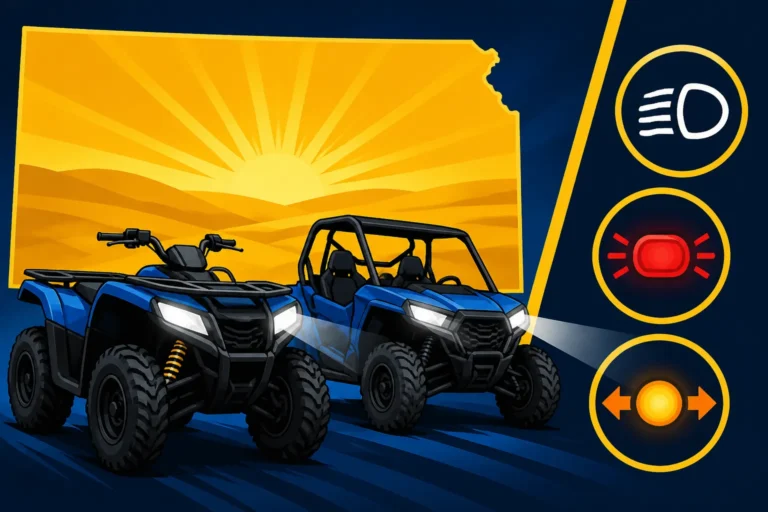
Visibility is paramount when crossing any public road, especially a state highway where vehicles are moving quickly. Kansas law, while not requiring a full "street legal kit" for simply crossing, does mandate certain lighting equipment, particularly if you're crossing during hours of darkness, or even at dawn or dusk when visibility is reduced.
Your ATV or UTV must have functioning headlights, taillights, and brake lights. These lights must be visible from appropriate distances to warn other drivers of your presence and your intentions. Many standard factory-installed lights on ATVs and UTVs meet these requirements. However, if you've got an older machine, or if your lights are dim or damaged, it's critical to repair or upgrade them. Kansas law often refers to [Kansas Motorcycle Lighting Standards] for similar types of machines, meaning your lights should be bright and reliable.
For enhanced safety, especially if you anticipate crossings at times of reduced light, consider aftermarket lighting. Products from brands like SuperATV offer robust and bright LED light bars, auxiliary headlights, and taillight kits that significantly improve your machine's visibility. These aren't just for looking cool; they genuinely make you safer by making it harder for other motorists to miss you. Ensure all lights are clean and fully functional before approaching a highway.
Other Critical Safety Equipment
Beyond lighting, there are a few other pieces of equipment that are either legally required or highly recommended for any highway crossing. These elements contribute to both your safety and your ability to control your machine effectively in a potentially high-stress situation.
- Rearview Mirrors: While not always explicitly stated for mere crossings, having at least one rearview mirror is an extremely smart safety measure. It allows you to monitor traffic approaching from behind without having to constantly turn your head, which can be difficult and dangerous on an off-road machine, especially when focused on crossing. Many UTVs come with side mirrors, and for ATVs, handlebar-mounted mirrors are a simple addition.
- Adequate Tires: Ensure your tires are in good condition and properly inflated. While knobby off-road tires are great in the mud, they can handle pavement for a quick crossing. The key is that they are not bald or damaged, which could compromise your control or cause a blowout at a critical moment.
- Operational Brakes and Steering: This might seem obvious, but your brakes must be fully functional and your steering tight and responsive. You need to be able to stop quickly and steer precisely if an unexpected situation arises on the highway. Regular maintenance of these critical systems is non-negotiable.
- Slow-Moving Vehicle Emblem (SMV): If your machine, by its nature or speed, is significantly slower than typical highway traffic (which an ATV/UTV almost certainly will be), displaying a triangular slow-moving vehicle emblem (the orange triangle with a red border) is a smart, and often legally required, safety measure for any road travel. It signals to other drivers that you will be moving slower than they expect.
What's NOT Required (But Often Confused)
It's just as important to know what isn't required for a simple highway crossing, so you don't overcomplicate things or get sold unnecessary equipment. Many riders confuse the requirements for a full "street legal" conversion (which only applies in specific cities or for WSUVs) with what's needed for a quick crossing.
For a perpendicular state highway crossing, you typically do not need:
- An Annual Tag or Registration: As mentioned, Kansas does not require state registration or tags for ATVs and UTVs. [Kansas Has No Annual Tag Fee].
- Turn Signals (Unless Operating Under WSUV or City Ordinance): For a simple perpendicular crossing, dedicated turn signals are not typically mandated by state law, though hand signals are always a good idea. If you modify your UTV to be street legal in a city that allows it, then turn signals would be required.
- Horn: While a horn can be a good safety feature, it's not universally required by state law for basic highway crossings.
- Windshield Wipers, Seatbelts (beyond factory), etc.: These are generally for machines operating as full-fledged vehicles on roads or specific classes like WSUVs. Your factory seatbelts, if equipped, should always be worn.
Focus on the essentials: visibility, control, and basic safety. Don't worry about converting your machine into a car just to cross a road.
Safety Considerations and Best Practices for Highway Crossings
Knowing the legalities is one thing; executing a safe crossing is another. A state highway is not a place to be complacent. Even though the law allows for crossings, the inherent dangers of mixing off-road machines with high-speed traffic cannot be overstated. Your safety, and the safety of others, hinges on your diligence, awareness, and judgment.
Pre-Crossing Assessment and Awareness
Before you even approach the edge of a state highway, a thorough assessment of your surroundings and the traffic situation is critical. This isn't a moment for rushing or distraction.
- Scan for Traffic, Both Ways: This is the absolute first step. Look far down the road in both directions. Remember that vehicles on a state highway will be traveling much faster than you anticipate. Their speed can close distances incredibly quickly.
- Choose a Safe Crossing Point: Avoid crossing where your sightlines are obstructed, such as over the crest of a hill, around a sharp curve, or immediately after an intersection with cross-traffic. Look for flat, straight sections of highway where you can see clearly for a significant distance in both directions, and where other drivers can see you.
- Avoid Blind Spots and Intersections: Intersections often have turning traffic, which adds another layer of complexity. If you must cross at an intersection, be extra vigilant for turning vehicles. Always be aware of other vehicles' potential blind spots, especially large trucks.
- Patience is a Virtue: If traffic is heavy, or if you're unsure about an opening, wait. It's far better to delay your crossing for a few minutes than to attempt a risky maneuver. No trip is so urgent that it's worth risking an accident. Sometimes, the safest decision is to find an alternative route, even if it adds a few miles.
Executing the Crossing Safely
Once you've assessed the situation and determined it's safe to proceed, the actual crossing needs to be performed with precision and confidence. Hesitation or a jerky movement can be just as dangerous as rushing.
- Move Decisively and Directly: Once you commit to crossing, do so in a straight, perpendicular line. Don't waver or change your mind mid-crossing. Move quickly but maintain control of your machine.
- Signal Your Intentions: While turn signals may not be legally required for a simple crossing, using clear hand signals to indicate your intention to cross is an excellent safety practice. Make eye contact with any approaching drivers if possible, even if from a distance, to ensure they see you.
- Stay Predictable: Avoid any sudden acceleration, braking, or swerving. Other drivers expect you to be predictable. If you're on a multi-lane highway (even if only two lanes in total, one each way), ensure you're crossing both lanes in one fluid movement, not stopping in the middle.
- Maintain Awareness: Even while crossing, continue to scan your surroundings. Things can change quickly on a highway. Be ready to react if another vehicle makes an unexpected move. This is where those SuperATV mirrors can really pay off, giving you constant awareness.
Rider Responsibility and Due Diligence
Ultimately, the responsibility for a safe and legal crossing rests squarely on the rider. This isn't just about following the letter of the law; it's about exercising good judgment and common sense.
- Possess a Valid Driver's License: As mentioned, if you're operating an ATV or UTV on a public road, even for a crossing or under the agricultural exception, you generally need a valid driver's license. This applies regardless of whether the machine itself is registered or tagged. For most riders, [The Farm Exception Still Requires a Driver's License] is a crucial piece of information.
- Know Your Machine's Limits: Understand how your ATV or UTV handles on pavement, especially if you have aggressive off-road tires. Be aware of its acceleration and braking capabilities. Don't push your machine beyond its or your own capabilities.
- Carry Necessary Documentation: Always have your driver's license, proof of ownership (your nonhighway title or a bill of sale), and proof of insurance (if you have it, which is highly recommended) with you. While [Do You Need ATV Insurance in Kansas?] doesn't universally mandate it for non-highway use, having liability coverage is smart for any situation where you might interact with public roads. If stopped by law enforcement, being able to quickly provide these documents can help de-escalate the situation.
- Wear Appropriate Safety Gear: A helmet, eye protection, sturdy footwear, and long clothing are always a good idea when riding, and even more so when near public roads. While Kansas may not have a universal helmet law for ATVs, wearing one dramatically increases your safety in the event of an accident.
Penalties and Consequences of Illegal Highway Use
Mistakes happen, but when they happen on a state highway with an ATV or UTV, the consequences can range from a minor annoyance to a life-altering tragedy. It's not just about avoiding a ticket; it's about protecting yourself, your machine, and other motorists. Understanding the potential repercussions can reinforce the importance of following the rules.
Common Violations and Associated Fines
If you operate your ATV or UTV on a state highway in Kansas outside of the legal exceptions (like perpendicular crossing or approved agricultural use), you're likely committing a traffic infraction. The most common violations include:
- Operating on a Prohibited Roadway: This is the big one. If you're caught riding along a state highway for any distance, rather than just crossing it, you'll likely receive a citation. This also applies to interstates, where the penalties are usually more severe.
- Failing to Yield Right-of-Way: If you attempt a crossing and fail to yield to highway traffic, causing another vehicle to brake or swerve, you could be cited for a moving violation. This is not only illegal but extremely dangerous.
- Lack of Required Equipment: Getting caught without functioning headlights, taillights, or an SMV emblem (if required for your specific use) can also lead to fines. While these might seem minor, they stack up.
- Operating Without a Valid Driver's License: If you're caught operating your machine on a public road (even for a legal crossing or agricultural use) without a valid driver's license, you'll face penalties associated with driving without a license, which can include significant fines and even potential license suspension.
Fines for these violations can vary, but they generally involve monetary penalties, and sometimes court costs. These can quickly become a costly lesson. For a general overview of what kind of penalties you might face, [Kansas Penalties for Illegal Road Riding] might be a useful resource.
The Risk of Accidents and Liability
Beyond legal penalties, the most severe consequences of illegal or unsafe highway use are accidents and the resulting liability. ATVs and UTVs are not designed for highway speeds or conditions, and they offer far less protection than a passenger vehicle in a collision.
- Injuries and Fatalities: Collisions between off-road machines and highway vehicles often result in severe injuries or fatalities for the ATV/UTV operator and passengers. The speed differential and lack of vehicle protection are a deadly combination.
- Property Damage: Your machine could be totaled, and you could be liable for significant damage to the other vehicle involved, not to mention any damage to public property (like guardrails or signs).
- Civil Lawsuits: If you cause an accident, you could face substantial civil lawsuits for medical expenses, lost wages, and pain and suffering from anyone you injure. This financial burden can be crushing. Even if you have liability insurance on your ATV/UTV (which many owners opt for voluntarily), an accident on a prohibited roadway could potentially complicate or even void your coverage depending on the policy's terms.
This is why safety is paramount. No amount of convenience is worth risking your life, your machine, or your financial future. Always err on the side of caution.
Avoiding Trouble with Law Enforcement
Encountering law enforcement while on a public road with your ATV or UTV can be a tense experience, but how you handle it can make a big difference.
- Be Polite and Respectful: Always comply with an officer's instructions. Pull over safely if signaled, turn off your engine, and keep your hands visible. A polite and cooperative attitude can often lead to a more positive outcome, even if you've made a mistake.
- Know the Law (and State It Calmly): If you are confident you were making a legal crossing or operating under an exception, calmly and respectfully explain your understanding of the law. For example, you could state, "Officer, I was making a direct, perpendicular crossing of the state highway, which is permitted under Kansas law," or "I am operating this machine for agricultural purposes, moving between my fields, which is allowed under the agricultural exception."
- Provide Documentation Promptly: Have your driver's license, proof of ownership (title or bill of sale), and any insurance information readily accessible. This shows you're prepared and responsible.
- Don't Argue: If an officer still decides to issue a citation, accept it without arguing. You can always present your case in court. Arguing by the roadside rarely changes the outcome and can sometimes lead to additional charges.
Understanding these points can help you navigate these situations effectively, ensuring you mitigate potential trouble and stay safe on Kansas roads.
Comparing Highway Rules to Other Road Types
The rules for ATVs and UTVs in Kansas are not a one-size-fits-all situation. The laws change significantly depending on whether you're on a state highway, a county road, or a city street. This patchwork of regulations can be incredibly confusing, especially for riders who travel across different jurisdictions. Let's break down how state highway rules compare to these other common road types.
County Roads and Section Lines
County roads and section lines (the unpaved roads that often divide sections of land) generally offer the most flexibility for ATV and UTV use in Kansas. This is where many rural riders spend the majority of their time, and for good reason.
- More Permissive Use: In many Kansas counties, ATVs and UTVs are permitted on county roads, especially for agricultural or utility purposes. These are often the main arteries connecting farms, ranches, and rural homes, and it's understood that these machines are a vital part of rural life. However, "permitted" doesn't mean "anything goes." You still need to operate safely, adhere to speed limits (if applicable), and yield to other traffic. Many riders enjoy the relative freedom here. For specific information, check out [Kansas Rules for Riding a County Road].
- Still Mindful of Traffic: Even on less-traveled county roads, you must always be aware of other vehicles. Dust from gravel roads can significantly reduce visibility, and farm equipment, trucks, and other vehicles can appear quickly. Slow down on blind curves and be prepared to pull over to let faster traffic pass.
- Private Property Access: County roads often provide access to private property, and riders often use them to transition from their land to other fields or hunting grounds. This is a common and generally accepted use in rural areas.
City Streets and Local Ordinances
City streets are where things get really localized and, often, the most confusing. Unlike state highways or county roads, the rules for ATVs and UTVs on city streets are primarily determined by individual city councils.
- No Statewide Allowance: Kansas state law does not automatically permit ATVs or UTVs on city streets. The default position is that they are prohibited. This means that if you're riding in a town without a specific ordinance, you're likely breaking the law.
- City-Specific Ordinances are Key: Many Kansas cities, particularly smaller ones or those with a strong agricultural base, have recognized the utility of UTVs and have passed ordinances to allow them on their streets. These ordinances come with their own set of rules, which can include:
- Specific Operating Hours: Some cities might only allow UTVs during daylight hours.
- Speed Limits: UTVs might be restricted to streets with speed limits of 30 mph or 35 mph, for instance.
- Equipment Requirements: Cities often require additional equipment beyond basic lights, such as turn signals, a horn, a rearview mirror, and sometimes a windshield, to be considered "street legal" within their limits.
- City-Issued Tags/Permits: You'll likely need to purchase a special tag or permit from the city clerk's office and often pay an annual fee.
- Insurance Requirements: Many cities that allow UTVs on their streets will require proof of liability insurance.
- Inspections: Some cities may require a police inspection to ensure your UTV meets all safety and equipment requirements before issuing a tag.
- Check Before You Ride: It is absolutely critical to check the specific ordinances of any city you plan to ride in. What's legal in Louisburg, Kansas (which has a well-known UTV ordinance), may be illegal in a neighboring town. Ignoring this could lead to a fine, or your machine being impounded. For a sense of which cities might be doing this, see [Kansas Cities That Authorize ATV Street Use]. If you're looking to modify your UTV to meet these more stringent city requirements, SuperATV offers a range of accessories like turn signal kits, mirrors, and windshields that can help get your machine compliant.
Private Property and Designated Trails
The easiest and often safest place to ride your ATV or UTV, free from most public road regulations, is on private property or at designated off-road riding parks.
- No Road Rules Apply: On private land where you have permission to ride, or at a dedicated off-road park, you don't have to worry about state highway crossing rules, county road regulations, or city ordinances. You're free to enjoy your machine as intended, within the limits of the property owner's rules or the park's regulations.
- Focus on Safety and Landowner Permission: Even on private land, common sense safety rules still apply. Wear your gear, ride responsibly, and never trespass. Always get explicit permission from the landowner before riding on private property.
- Designated Riding Areas: Kansas may not have a vast network of state-run ATV trails, but there are several excellent private parks and Corps of Engineers areas that provide legal and safe places to ride. These include places like Tuttle Creek ORV Area, School Creek ORV Area, and Kansas Rocks Recreation Park. These locations offer diverse terrain and a community of riders. For more options, explore [Kansas ATV Trails: Where You Can Actually Ride].
In summary, while crossing a state highway in Kansas is generally permissible under strict conditions, the rules for other road types are quite different. Always be informed about the specific type of road you're on and the local regulations that apply.
Disclaimer
This article is for general informational purposes only and does not constitute professional advice. Laws, prices and regulations vary by location and change over time. Consult a qualified professional for guidance on your specific situation.