Finding the Serial Number on an Older Kansas Quad
It can be incredibly frustrating to acquire an older ATV, especially through a private sale or if it's been in the family for ages, only to realize you can't easily find its crucial serial number. Without this unique identifier, you can hit a wall when trying to title it, get insurance, or even order the right parts for repair. This guide is here to walk you through the process of tracking down that elusive serial number on your vintage Kansas quad, helping you navigate potential pitfalls and ensure your machine is properly documented.
Why Your Quad's Serial Number Is So Important in Kansas
When you own an ATV, especially an older one that might have changed hands a few times, it’s easy to overlook the Vehicle Identification Number (VIN) or serial number until you absolutely need it. But here in Kansas, that string of digits is far more than just a manufacturer’s code; it’s the bedrock of your ownership. Without it, you're essentially in a legal gray area, and that can lead to all sorts of headaches down the line.
The Legalities of Titling and Ownership
Let's face it, nobody wants to get caught in a bind with their off-road pride and joy. In Kansas, most ATVs are considered nonhighway vehicles, which means they don't get a traditional license plate for road use, but they absolutely still need a title. This title is your official proof that you own the machine, and it's tied directly to that unique serial number. Trying to get a [Kansas Nonhighway Title Explained] without a clearly identifiable VIN is like trying to build a house without a foundation – it’s just not going to happen smoothly. The county treasurer's office, where you'll be handling the titling process, relies on that number to record your ownership and ensure everything is above board. If you've just bought a machine, you've got [Sixty Days From the Assignment Date] to get that title sorted, so finding the VIN quickly is paramount.
Deterring Theft and Proving Legitimate Possession
Imagine the heartbreak of having your quad stolen. It’s a terrible thought, but it happens. If your ATV has a clear, recorded serial number, law enforcement has a solid way to track it. Without that number, or if it's undocumented, recovering a stolen machine becomes significantly harder, often impossible. Furthermore, having the serial number readily available also helps you prove legitimate possession. If you're ever stopped by a sheriff's deputy while hauling your machine to a riding spot, or even just working on your property, and they ask for proof of ownership, a clear serial number linked to your title is your best friend. This is especially true if you are [Buying From a Private Seller in Kansas] and want to make sure the machine isn't stolen property in the first place.
Essential for Insurance and Repair Parts
Beyond the legal necessities, your ATV's serial number is practical gold. When you try to get insurance, whether it's liability coverage for riding in a city that allows UTVs, or comprehensive coverage to protect your investment, the insurance company will ask for the VIN. It's how they identify the specific make, model, and year of your machine to accurately quote your policy. Trying to insure a machine without a VIN is a non-starter. And when it comes to repairs, especially for older models, that serial number helps parts departments at dealerships or online retailers pinpoint the exact components you need. It ensures you don't order a carburetor for a '98 model when you actually have a '99, saving you time, money, and a lot of frustration. It also helps when checking against manufacturers' recalls or service bulletins, ensuring your machine stays safe and reliable.
Common Places to Find the VIN on Older ATVs
Older ATVs, especially those from the 80s, 90s, and early 2000s, often had their VINs stamped in less obvious places than modern machines. Over years of hard riding, mud, rust, and even amateur paint jobs, these crucial numbers can become incredibly difficult to spot. But don't despair! There are a few prime locations where manufacturers typically placed them. Remember, patience and a good cleaning rag are your best tools here.
The Frame: Main Stamping Locations
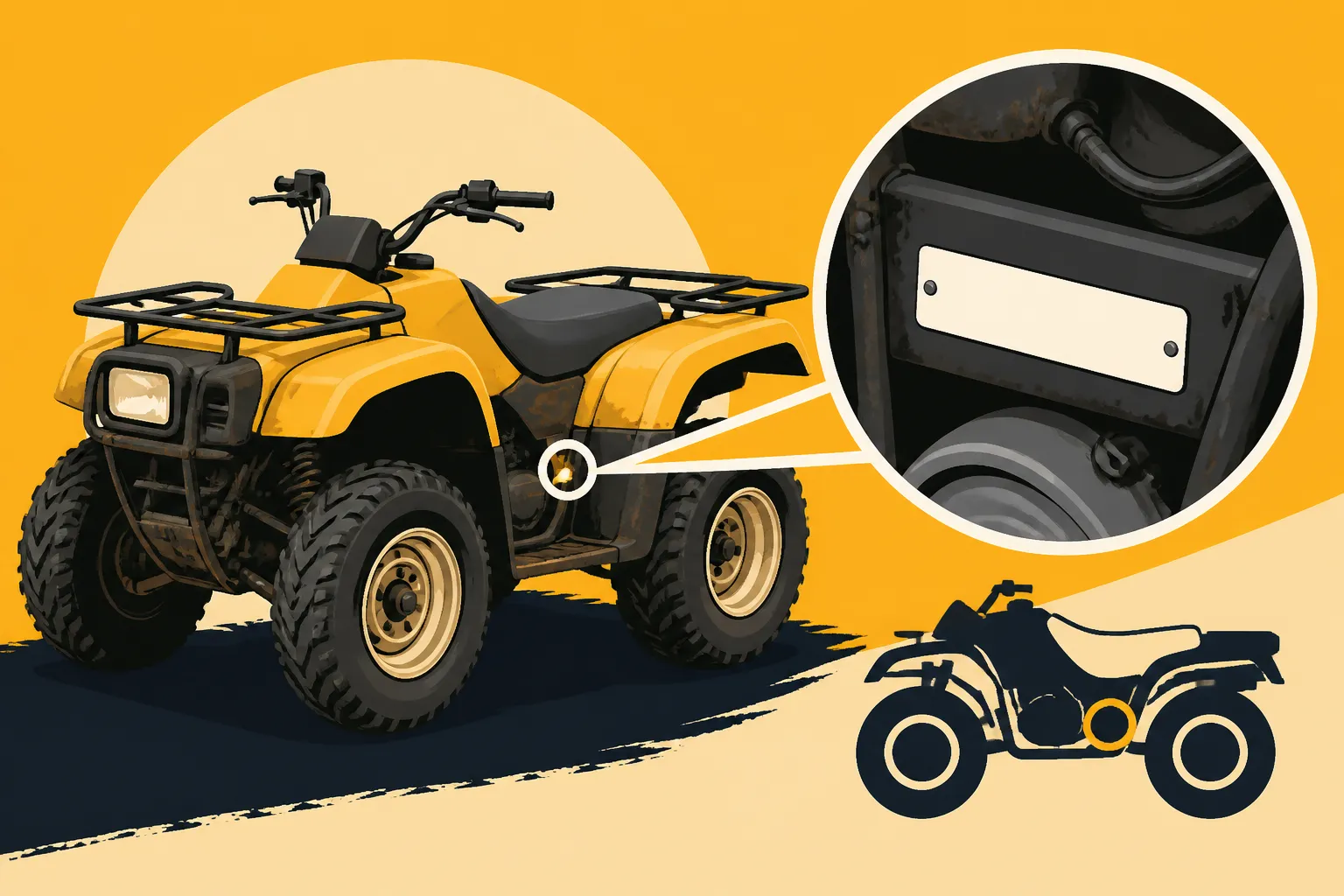
The frame is almost always the first place you should look, as it's the primary structural component and the most common place for the VIN to be permanently stamped. On most ATVs, especially older models, you'll want to check the left-hand side of the frame. This usually means looking near the front wheel, often on the frame tube running down from the steering stem, or near where the left front A-arm attaches to the frame. Sometimes it's tucked away just behind the left front wheel well, above the footpeg, or even further back near the swingarm pivot. It could be stamped directly into the metal tubing or on a small, welded-on plate. Grab a flashlight and carefully inspect every accessible part of the frame on that left side. Think about where a production line worker would have had easy access to stamp it during assembly. If the machine has been repainted, the numbers might be filled with paint, making them even harder to see. Many older Honda and Yamaha models, for example, often have their VIN on the front downtube, just below the handlebars, or on the frame rail extending to the left front wheel.
Engine Case and Other Component Tags
While the frame is the primary location for the VIN, some manufacturers also stamped a partial VIN or an engine serial number directly onto the engine case. This isn't the complete VIN you'll need for titling, but it can be a valuable cross-reference or a starting point if the frame number is completely gone. Look for raised or stamped numbers on the engine block itself, often near where the cylinder meets the crankcase, or on the lower engine casing. Additionally, sometimes there might be small metal tags or stickers affixed to other major components, like the transmission or differential housing, though these are even less likely to hold the full VIN and are often more susceptible to being lost or damaged over time. The key here is to look for something that seems deliberately placed and is not just a part number.
Decals and Manufacturer Plates (If They Still Exist)
In a perfect world, your older quad would still have its original manufacturer's decal or plate, often located prominently near the handlebars, on the front cowl, or even under the seat. These typically list the VIN, model number, gross vehicle weight rating, and sometimes even the original manufacturing date. Unfortunately, on older machines that have seen a lot of action, these decals often peel off, fade, or get scraped away. However, it's still worth a thorough check. Look under the seat, on the underside of the plastic fenders, or on the steering column. Sometimes a small, riveted metal plate might be found in these areas. If you find one, it's like striking gold! However, if you don't find it, don't worry too much – the stamped numbers are usually the more reliable, permanent identifier anyway. Just remember that finding a clean, readable decal on an old quad is a rare treat.
Tips and Tricks for a Successful Search
Finding a serial number on an older, well-used ATV can feel like a scavenger hunt, but with the right approach and a bit of perseverance, you can usually uncover those vital digits. Don't rush the process; take your time, and you'll increase your chances of success. It's often the small details that make all the difference.
Cleaning and Lighting for Better Visibility
Mud, grime, rust, and even old paint can easily obscure a stamped serial number. Your first step should always be a thorough cleaning of the areas where the VIN is likely to be found. Use a wire brush, sandpaper (fine-grit, don't scratch the numbers!), or even a Dremel tool with a wire brush attachment to gently remove rust and paint build-up. A good degreaser can cut through years of grease and oil. After cleaning, proper lighting is absolutely crucial. A bright flashlight, preferably an LED one, held at different angles can make stamped numbers pop out, even if they're faint. Sometimes, a raking light (held almost parallel to the surface) will cast shadows that highlight the depressions of the numbers. Take your time, get down low, and look from various angles. What looks like a blank piece of metal from one perspective might reveal a faint stamping from another.
What to Do If the Number is Worn or Obscured
If, despite your best cleaning and lighting efforts, the numbers are still too worn or obscured to read clearly, don't give up hope. Try rubbing a piece of chalk or a crayon over the area, then gently wipe away the excess. The chalk dust or crayon wax can settle into the indentations of the numbers, making them much more visible. Another trick is to use a piece of paper and a pencil to create a "rubbing" – place the paper over the area and gently rub the side of the pencil lead over it. The numbers should appear on the paper. If only a few digits are unreadable, try to decipher as much as you can. Even a partial VIN can sometimes be enough for a county treasurer's office to initiate a search, especially if you have other supporting documentation like an old bill of sale or ownership history. This might also be where a resource like LawDepot can come in handy for creating a sworn affidavit describing the condition of your VIN if you need to explain the situation to the authorities or a potential buyer.
Documenting Your Findings
Once you've found the serial number, the job isn't quite done. You need to document it thoroughly. First, write down the full VIN accurately. Double-check every single digit. It's easy to mistake an '8' for a 'B' or a '0' for an 'O'. Next, take clear, well-lit photographs of the VIN. Get close-up shots that clearly show the numbers, as well as wider shots that show the numbers in context on the machine. Take multiple photos from different angles. You might also consider taking a short video of you pointing out the VIN on the quad. This photographic evidence will be invaluable when you go to [Titling an ATV in Kansas From Out of State] or if you ever need to sell the machine. It serves as concrete proof of the VIN's location and readability at the time you documented it. Make sure to keep these photos and your written record in a safe place, both physically and digitally.
When to Seek Professional Help
Sometimes, even with the most diligent search, the serial number on an older ATV remains stubbornly hidden, or worse, completely absent. This can be a disheartening experience, but it doesn't necessarily mean your quad is destined for the scrap heap or relegated to private land use only. There are still avenues you can explore, and knowing when to ask for professional assistance can save you a lot of grief and ensure you're following the correct legal channels in Kansas.
Dealing with No Visible VIN
If you've cleaned, scraped, shined lights, and rubbed chalk until your fingers ache, and still cannot find any legible VIN, you're in a tough spot, but not an impossible one. In Kansas, attempting to title a machine without a VIN, or with a severely defaced VIN, will require special steps. You'll likely need to fill out a specific affidavit explaining the situation. This document will detail your diligent search and the reasons why the VIN is unreadable or absent. You might be asked to have a law enforcement officer inspect the machine to confirm the absence or defacement of the VIN. Sometimes, the Kansas Highway Patrol or a county sheriff's office can assist with this, although their availability for such inspections can vary. It’s critical to be honest and provide as much historical information about the machine as you can. This is also where a properly drafted bill of sale or other ownership records, even if informal, can support your claim of ownership. If you don't have a traditional bill of sale, services like LawDepot can help you generate a generic one to fill in what information you do have, though the lack of a VIN will still be a primary hurdle.
Working with the County Treasurer's Office
The county treasurer's office is your primary point of contact for titling any vehicle in Kansas, including your ATV. They deal with these types of situations more often than you might think, so don't be afraid to reach out to them. Call or visit your local [Kansas County Treasurers Handle Titles] office and explain your situation. They can guide you through the specific forms and procedures required for a machine with a missing or unreadable VIN. They might ask for an affidavit of ownership, a law enforcement inspection report, or other supporting documents. Be prepared to provide any and all paperwork you have, no matter how informal – old registration papers, a handwritten bill of sale, or even sworn statements from previous owners. The process might involve applying for a special VIN assignment from the state, which is essentially a new, state-issued VIN that will be affixed to your ATV. This ensures your machine can finally be titled and legally recognized. Remember, the clerks at the treasurer's office are there to help, but they need accurate information and proper documentation to do so. Be patient and follow their instructions carefully. This is a common question they hear, so they're well-versed in the steps needed for [Kansas Titles Without a Bill of Sale] or a clear VIN.
VIN Location Checklist for Older ATVs
| Location Category | Specific Area to Check | What to Look For | Notes |
|---|---|---|---|
| Frame (Left Side) | Steering Head / Downtube | Stamped digits directly into metal | Common for many brands. May be covered by plastic/wires. |
| Main Frame Rail (above front wheel well) | Stamped digits or small welded plate | Can be obscured by mud or exhaust. | |
| Frame Cross-Member (under seat/footpeg) | Stamped numbers | Often well-protected but hard to see without removing components. | |
| Swingarm Pivot Area | Stamped numbers | Less common, but worth checking. | |
| Engine Case | Engine Block (near cylinder head or crankcase) | Raised or stamped numbers (often partial VIN or engine serial) | May require cleaning heavy grease/oil. Not full VIN for titling. |
| Manufacturer Plates | Steering Column / Handlebar Area | Riveted metal plate with VIN, model, date | Prone to damage/loss on older machines. |
| Under Seat or on Plastic Fender (underside) | Sticker or small riveted plate | Decals can fade or peel; plates can be painted over. |
This article is for general informational purposes only and does not constitute professional advice. Laws, prices and regulations vary by location and change over time. Consult a qualified professional for guidance on your specific situation.