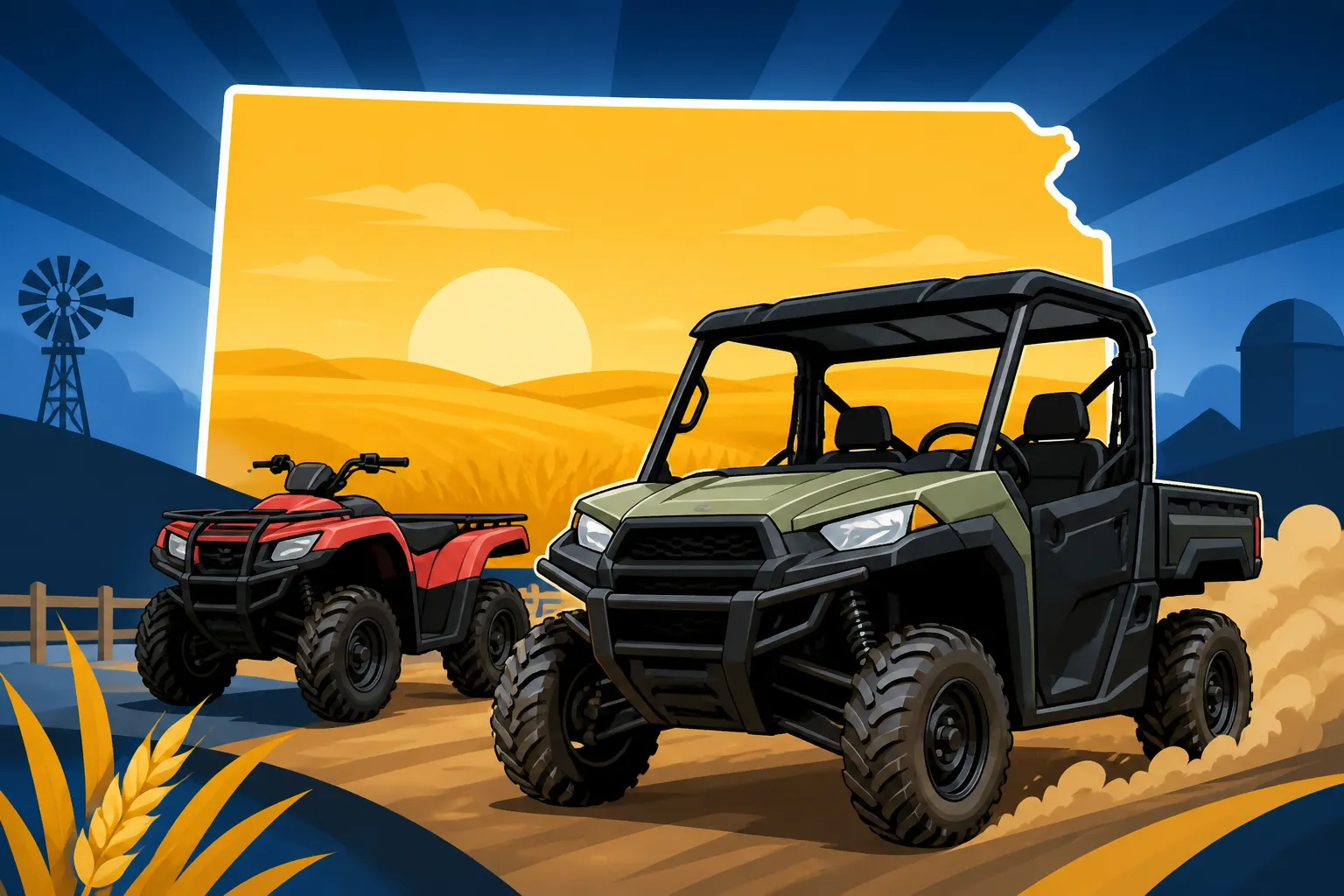
The Work-Site Utility Vehicle Class No Neighbor State Has
For Kansans who own or are considering buying a utility vehicle, understanding the state's specific classification system can be incredibly frustrating, especially when you hear about a "Work-Site Utility Vehicle" class that seems unique to our state. This guide will walk you through what exactly a WSUV is in Kansas, why it stands apart from other off-road machines, and what you need to know to title and use one legally.
What Exactly is a Work-Site Utility Vehicle (WSUV) in Kansas?
Kansas has a knack for doing things a little differently, and its classification of off-road machines is a prime example. While many states lump all side-by-sides into a generic "UTV" category, Kansas carved out a distinct niche for what it calls a Work-Site Utility Vehicle (WSUV). This isn't just a fancy name; it carries specific implications for how you title your machine and, more importantly, where you can legally operate it. Many owners discover this distinction only when they head to the county treasurer's office, confused about why their UTV is being categorized in a way their neighbor's isn't.
Kansas's Specific Definition
The Kansas statute defines a WSUV with a set of very precise criteria, setting it apart from standard ATVs, golf carts, or even other types of UTVs. It’s crucial to understand these measurements and characteristics because they directly impact your machine's classification. If your side-by-side doesn't meet all of these points, it won't be titled as a WSUV. The law really hones in on the physical characteristics to dictate its legal standing.
First, the machine must be "primarily designed by the manufacturer for off-highway use and not for traversing any highway." This is the foundational idea: it's not made for the asphalt. Second, it must have "four or more wheels." This immediately rules out dirt bikes and conventional ATVs, which typically have three or four. Third, it needs "a width of not less than 48 inches nor more than 60 inches." This 48-inch minimum and 60-inch maximum is a key measurement, meaning some smaller utility vehicles or much wider sport UTVs might not qualify. You can learn more about this specific requirement in [Kansas WSUV Width of 48 Inches]. Fourth, the weight is critical: "an unladen dry weight of more than 800 pounds but not more than 2,000 pounds." This weight floor of 800 pounds effectively excludes many smaller, lighter utility machines often used around a yard. Fifth, it must have "a cargo box or bed, either integrated into the vehicle or attached thereto." This points directly to its utility purpose, distinguishing it from pure sport machines. Sixth, and this is a big one for many owners, it needs "a steering wheel." This immediately separates it from traditional ATVs, which use handlebars. Finally, it must have "bench or bucket seating for at least two people, side-by-side." This is where the term "side-by-side" comes from, emphasizing its multi-passenger capability in a utility context. Understanding [What Makes a Side-by-Side a Work-Site Utility Vehicle] is key to navigating these regulations.
Why It's Not Just a Generic UTV
The WSUV classification exists because Kansas lawmakers recognized a specific type of utility vehicle that was heavier and more purpose-built for tasks like those found on farms, construction sites, or large properties, but didn't quite fit the mold of an ATV, a golf cart, or a micro utility truck. It's a pragmatic approach to machine classification, trying to match the legal definition to the real-world application. For example, a two-seat Polaris Ranger with a cargo bed, weighing 1,200 pounds, 58 inches wide, and with a steering wheel and side-by-side seating, perfectly fits the WSUV definition. This machine is fundamentally different in its design and intended use compared to a sport-oriented Can-Am Maverick X3, which might be wider, heavier, or lack a cargo bed, thus falling into a different category entirely, usually just a generic "nonhighway vehicle."
This distinction affects how you interact with law enforcement and how you discuss your machine with your insurance provider. If you tell a deputy you have a "UTV" and they interpret it as an ATV, you might run into issues if you're on a county road. However, if you accurately describe it as a WSUV, and your county or city has an ordinance allowing WSUVs, the conversation changes entirely. The fact that it has a steering wheel and side-by-side seating is a strong indicator of its WSUV status, as explored in [Why a Steering Wheel Changes Your Title Class].
The "No Neighbor State" Angle
It's absolutely true: Kansas's Work-Site Utility Vehicle class is pretty much unique among its neighbors like Missouri, Nebraska, Oklahoma, and Colorado. These states tend to have broader, less granular definitions for off-road vehicles, often lumping what Kansas calls a WSUV into a general "UTV" or "off-highway vehicle" category without the specific width, weight, and seating mandates that Kansas employs. This is where the confusion often stems from, especially for folks moving into Kansas or those who frequently cross state lines for riding. You might have bought your side-by-side in Missouri, where it was just called a UTV, only to find Kansas wants to title it specifically as a WSUV based on its dimensions and features.
This uniqueness isn't necessarily a bad thing; it reflects Kansas's attempt to be precise in regulating these machines, particularly concerning their limited road use. However, it does place an extra burden on owners to understand and comply with these local nuances. When you're talking to a friend from Oklahoma about your "UTV," be aware that their understanding of the term and its legal implications might not align with Kansas's detailed WSUV classification. This specificity means that while your UTV might be road-legal in an Oklahoma town under a general UTV ordinance, it might face different challenges and requirements back home in Kansas.
Key Requirements for a WSUV Title in Kansas
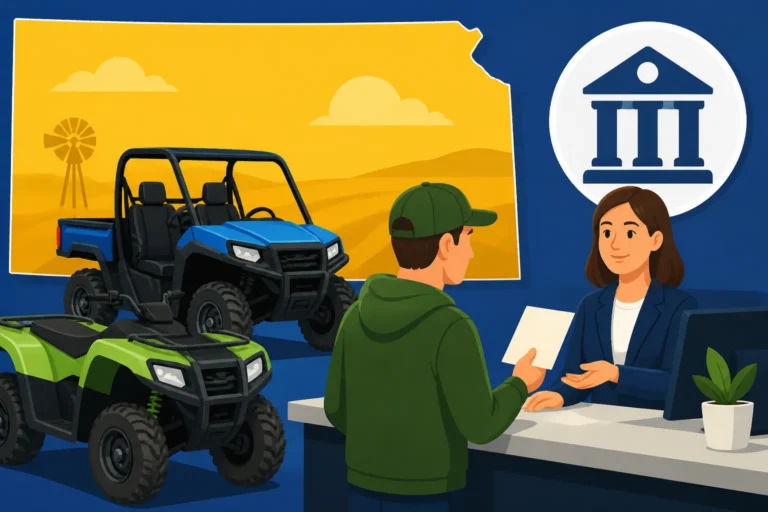
Getting your Work-Site Utility Vehicle properly titled in Kansas is not just a formality; it's a legal necessity that establishes ownership and allows you to potentially register it for limited road use if your local municipality permits. The process might seem daunting if you're unfamiliar with Kansas's specific nonhighway vehicle laws, but breaking it down into steps makes it much clearer. The county treasurer's office is your primary destination for this, and they have specific forms and requirements.
Proof of Ownership and Purchase
The first, and arguably most important, step in titling any vehicle in Kansas, including a WSUV, is proving that you are the rightful owner. This means having the correct paperwork from when you acquired the machine. If you bought your WSUV new from a dealer, you'll need the Manufacturer's Certificate of Origin (MCO), which is like the birth certificate for your machine. This document lists the VIN, make, model, and certifies it as a new vehicle.
If you bought your WSUV used from a private seller, you'll need the previously issued Kansas title, properly signed over to you by the seller. The seller should have filled out the assignment of title section on the back, including the purchase price and their signature. Sometimes, people lose titles or buy machines without them, which can complicate things significantly. In such cases, you might need a bill of sale, and possibly an affidavit to establish ownership, especially if the title is missing. Companies like LawDepot offer templates for legally sound bills of sale or affidavits that can be helpful in these situations, ensuring all necessary details are captured. Always make sure the VIN on your paperwork matches the VIN on your machine exactly. Any discrepancy can cause significant delays at the treasurer's office. Remember, Kansas titles [Kansas Titles ATVs as Nonhighway Vehicles], so your WSUV will follow a similar, albeit distinct, process.
Meeting the Physical Criteria
Before you even step foot in the treasurer's office, you need to ensure your machine actually fits the WSUV definition. This means getting out your tape measure and possibly looking up your machine's dry weight specifications. As mentioned earlier, your WSUV must have a width between 48 and 60 inches, an unladen dry weight between 800 and 2,000 pounds, a cargo box or bed, a steering wheel, and side-by-side seating for at least two people.
Taking a few minutes to confirm these measurements can save you a wasted trip. For example, if your machine is only 46 inches wide, it simply won't qualify as a WSUV, and will likely be titled as a standard nonhighway vehicle. The same goes if it weighs under 800 pounds or over 2,000 pounds. While you won't typically need to bring your WSUV to the treasurer's office for inspection, having these numbers handy is important in case they ask or if there's any ambiguity. They may also ask for a photograph of the VIN plate to verify, so it's good to have that accessible. Knowing your machine meets the [Kansas WSUV Weight Over 800 Pounds] requirement is crucial.
Titling Process and Paperwork
Once you have your proof of ownership and have confirmed your WSUV meets the physical criteria, it's time to head to your local [Kansas County Treasurers Handle Titles]. This is where the magic happens (or at least, the paperwork). You’ll need to bring:
- The MCO (for new machines) or the properly assigned title (for used machines).
- A bill of sale, especially for used machines, even if you have the title. This helps establish the purchase price for sales tax calculations.
- Proof of identity, such as a driver's license.
- Proof of address.
- Funds for the titling fee and sales tax. The Kansas title fee for a nonhighway vehicle, including a WSUV, is relatively modest. You'll also pay Kansas sales tax on the purchase price, which is collected at the time of titling. Learn more about [What the $10 Nonhighway Title Fee Covers].
At the treasurer's office, you will fill out a Title and Registration Application (Form TR-212A). On this form, you'll indicate that you are applying for a "Nonhighway Certificate of Title" and select the appropriate vehicle type, which in this case would be WSUV. Make sure to accurately fill in all vehicle information, including the VIN, make, model, and year. The clerk will verify your paperwork, calculate the sales tax owed, and collect the fees. You can expect to pay the state sales tax and any applicable local sales tax at this point. For more details on this, see [Kansas Sales Tax Collected at Titling]. After processing, you'll typically receive a receipt and your new title will be mailed to you within a few weeks. Don't leave the office without understanding the next steps, especially regarding road use or potential city registration.
Understanding WSUV Road Use in Kansas
This is often the most confusing part for WSUV owners in Kansas. While your machine has a specific title, that doesn't automatically mean you can cruise down Main Street with it. Unlike fully street-legal vehicles, WSUVs in Kansas are inherently designed for off-highway use, and their road privileges are highly conditional. This is a critical point that many new owners overlook, leading to potential fines or even impoundment.
Permitted Uses and Restrictions
Generally speaking, a Work-Site Utility Vehicle, by its very definition, is intended for specific work-related tasks and agricultural purposes. Kansas law provides some statewide allowances for WSUVs on public roads, but these are often limited in scope:
- Agricultural Purposes: WSUVs can often be operated on public roads when used for agricultural purposes, such as moving between fields, accessing feedlots, or tending to livestock. This is a common exception for many types of farm equipment, including ATVs and other utility vehicles. This allowance usually comes with stipulations, such as operating during daylight hours, having appropriate lighting for dusk/dawn, and following standard traffic laws.
- Work-Site Operations: Given the "Work-Site" in its name, these vehicles are generally permitted on roads adjacent to or connecting to a bona fide work site, such as a construction zone, a utility corridor, or a large industrial complex. The intent is for the vehicle to facilitate operations at or between these sites, not for general transportation.
- Crossing a Highway: A WSUV, like other nonhighway vehicles, is generally permitted to cross a highway at a right angle, provided it's done safely and does not impede traffic. This is a quick movement, not sustained travel down the road.
Beyond these specific, limited scenarios, operating a WSUV on public roads or streets is typically prohibited unless a local ordinance explicitly allows it. This means you can't just drive your WSUV to the convenience store or take it for a joyride down a county blacktop just because it has a title. Understanding [Kansas Work-Site Utility Vehicle Road Rules] is essential to avoid legal trouble.
Comparing WSUV Road Rules to Other Machine Classes
It's helpful to compare WSUV road rules to other common off-road machine classes in Kansas to highlight its unique position.
- ATVs: Traditional ATVs are generally banned from public roads in Kansas, with very few exceptions outside of agricultural use or crossing a highway. They are primarily defined as recreational machines, and even with a title, they are not registered for road use.
- Golf Carts: Golf carts have perhaps the most varied road legality, almost entirely dependent on city or county ordinances. If a municipality passes an ordinance, golf carts can often be used on roads with speed limits typically 30 mph or less, but they must meet certain equipment requirements (lights, turn signals, mirrors).
- Micro Utility Trucks: This is another specific Kansas classification. Micro utility trucks, often imported mini-trucks, can be made street-legal in Kansas if they meet all federal safety standards, are inspected, and receive a special title and license plate. They have a much broader ability to travel on public roads than WSUVs.
The WSUV sits in a middle ground. It's more capable and often heavier than a golf cart, but less inherently street-legal than a micro utility truck. Its road access is more akin to an ATV in its limited nature, but the WSUV's utility focus often grants it more specific, work-related allowances. This makes it crucial to know the rules of the specific area you're riding in.
Local Ordinances and City Tags
This is where the landscape of WSUV road use becomes truly localized and complex. While statewide law limits WSUV road use, individual cities and counties in Kansas have the authority to pass their own ordinances allowing WSUVs (and sometimes other off-road vehicles) on their public streets. This is often done to accommodate local residents, farmers, or businesses.
If your city or county has passed such an ordinance, it will typically outline specific requirements for road use, which might include:
- Registration/City Tag: You'll likely need to register your WSUV with the city hall and obtain a city-issued tag or sticker. This usually involves an annual fee.
- Equipment Requirements: The ordinance will stipulate necessary equipment, such as headlights, tail lights, turn signals, brake lights, a horn, and mirrors. Many stock WSUVs do not come with all these features, so modifications might be necessary.
- Insurance: Most ordinances require proof of liability insurance. This is a crucial step for protecting yourself and others in case of an accident. While LawDepot focuses on legal forms, your local insurance agent is the expert for this type of coverage.
- Driver's License: A valid driver's license is almost always required to operate a WSUV on city streets.
- Speed Limits and Road Restrictions: Ordinances will specify which roads or areas are permissible for WSUVs, often limiting them to roads with certain speed limits (e.g., 35 mph or less) and prohibiting use on state highways or interstates.
Before you ever consider driving your WSUV on a city street or county road for general travel, you must check with your local city hall or county clerk's office. Do not assume; verify. What's legal in one town, like Louisburg or Scott City, might be strictly illegal just a few miles down the road in another. Many [Kansas Cities That Authorize ATV Street Use] have detailed ordinances you'll need to review.
Common Questions and Misconceptions About WSUVs
The unique nature of Kansas's Work-Site Utility Vehicle class often leads to confusion and many questions from owners. It’s easy to misunderstand the nuances, especially when talking with friends from other states or when comparing WSUVs to other off-road machines. Let's tackle some of the most frequent points of confusion.
WSUV vs. Standard UTV: What's the Difference for the Owner?
For an owner in Kansas, the biggest difference between a WSUV and a "standard" utility terrain vehicle (UTV) that doesn't meet the WSUV definition primarily boils down to legal classification and potential for limited road use. A "standard" UTV that doesn't fit the WSUV criteria (perhaps it's too wide, too heavy, or lacks a cargo bed) will typically be titled simply as a "Nonhighway Vehicle" in Kansas, just like an ATV. This means its road access will be extremely limited, almost exclusively to agricultural purposes or crossing highways.
A WSUV, on the other hand, because it meets those specific criteria of width, weight, seating, and steering, gains the potential for broader, though still restricted, road use if a local ordinance is in place. It's the key to unlocking those city-specific street access possibilities. So, for the owner, the WSUV classification offers a pathway to increased utility and local travel options that a generic nonhighway UTV might not have. It's a subtle but significant distinction that can impact how and where you use your machine.
Why Some UTVs Don't Qualify
It can be baffling for someone to buy a perfectly capable side-by-side, only to be told at the treasurer's office that it doesn't qualify as a WSUV. The reasons usually come down to those specific statutory requirements we discussed earlier.
- Too Wide or Too Narrow: Many sport-oriented UTVs are designed for maximum stability and aggressive trail riding, often exceeding the 60-inch width limit. Conversely, some compact utility vehicles might fall below the 48-inch minimum.
- Too Light or Too Heavy: Smaller, lighter "mini UTVs" or electric utility carts might weigh less than the 800-pound minimum. On the other end, heavily outfitted or specialized commercial utility vehicles can easily exceed the 2,000-pound maximum unladen dry weight. You can consult [48 Inches and 800 Pounds] for more detail.
- No Cargo Bed: Some UTVs are primarily designed for passengers and might only have a small storage compartment, not a dedicated cargo box or bed, which is a specific WSUV requirement.
- No Steering Wheel: While rare for modern UTVs, some older or more specialized utility machines might use handlebars, instantly disqualifying them as WSUVs.
- Seating Configuration: While most UTVs have side-by-side seating, specific industrial or recreational designs might deviate, again causing an issue for WSUV classification.
These details might seem minor, but in the eyes of Kansas law and the county treasurer's office, they are absolute deal-breakers for obtaining a WSUV title. Always check the manufacturer's specifications against the Kansas WSUV definition before purchasing, especially if limited road use is a priority for you.
Dealing with Out-of-State Machines
Bringing an off-road machine into Kansas from another state, especially if it was previously titled as a generic UTV, can add another layer of complexity. When you move to Kansas or purchase a UTV from an out-of-state seller, Kansas law requires you to title it within 60 days of establishing residency or purchase. For more on this timeline, check out [Kansas Gives You 60 Days to Apply].
The process will involve presenting your out-of-state title (or MCO if new) to the [Kansas County Treasurer Offices]. They will then evaluate your machine against the Kansas WSUV criteria. If your UTV meets the width, weight, seating, steering, and cargo bed requirements, it will be titled as a WSUV, regardless of what it was called in your previous state. If it doesn't meet those criteria, it will simply be titled as a "Nonhighway Vehicle."
This means you might have considered your machine a "UTV" in Missouri, but once you bring it to Kansas, it becomes a "WSUV" on your title, opening up those specific local ordinance possibilities. Or, conversely, a UTV you bought in Colorado might not fit the Kansas WSUV mold at all and will just be a general nonhighway vehicle here. Don't assume your out-of-state classification carries over; Kansas has its own rules. If you're buying from an out-of-state dealer, make sure you get all the paperwork you'd expect from a local dealer, including an MCO and a clear bill of sale, to ensure a smooth titling process in Kansas.
WSUV Classification Overview
To summarize the key differences and characteristics of Kansas's unique WSUV class, here's a quick comparison:
| Feature | Kansas WSUV | Generic Nonhighway UTV (Kansas) | Traditional ATV (Kansas) |
|---|---|---|---|
| Legal Definition | Specific statutory criteria (width, weight, etc.) | Broad "nonhighway vehicle" definition | Specific "all-terrain vehicle" definition |
| Primary Use | Work-site, agricultural, utility | Recreational, general utility | Recreational, sport, light utility |
| Steering | Steering wheel required | Typically steering wheel | Handlebars |
| Seating | Side-by-side for 2+ people | Side-by-side for 2+ people | Straddle seating (usually 1, sometimes 2) |
| Cargo Bed | Required | May or may not have | No dedicated cargo bed (racks only) |
| Width (unladen) | 48-60 inches | Varies widely, can be outside WSUV limits | Generally under 48 inches |
| Weight (unladen dry) | 800-2,000 pounds | Varies widely, can be outside WSUV limits | Typically under 800 pounds |
| Road Use (State Law) | Limited agricultural, work-site, crossing | Limited agricultural, crossing | Limited agricultural, crossing |
| Road Use (Local Ord.) | Potential for city/county street legality | Highly unlikely, generally not specifically allowed | Highly unlikely, generally not specifically allowed (unless generic UTV is permitted) |
| Titling Cost | $10 (Nonhighway Certificate of Title) | $10 (Nonhighway Certificate of Title) | $10 (Nonhighway Certificate of Title) |
Disclaimer
This article is for general informational purposes only and does not constitute professional advice. Laws, prices and regulations vary by location and change over time. Consult a qualified professional for guidance on your specific situation.