Kansas Title Compared to Missouri
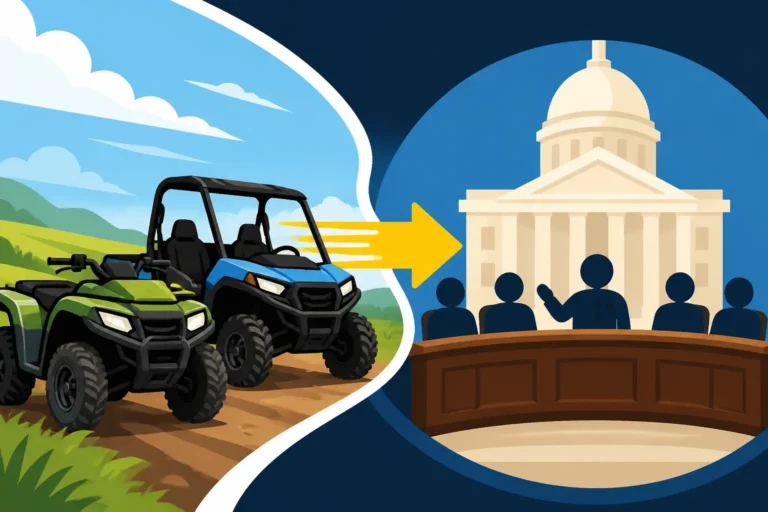
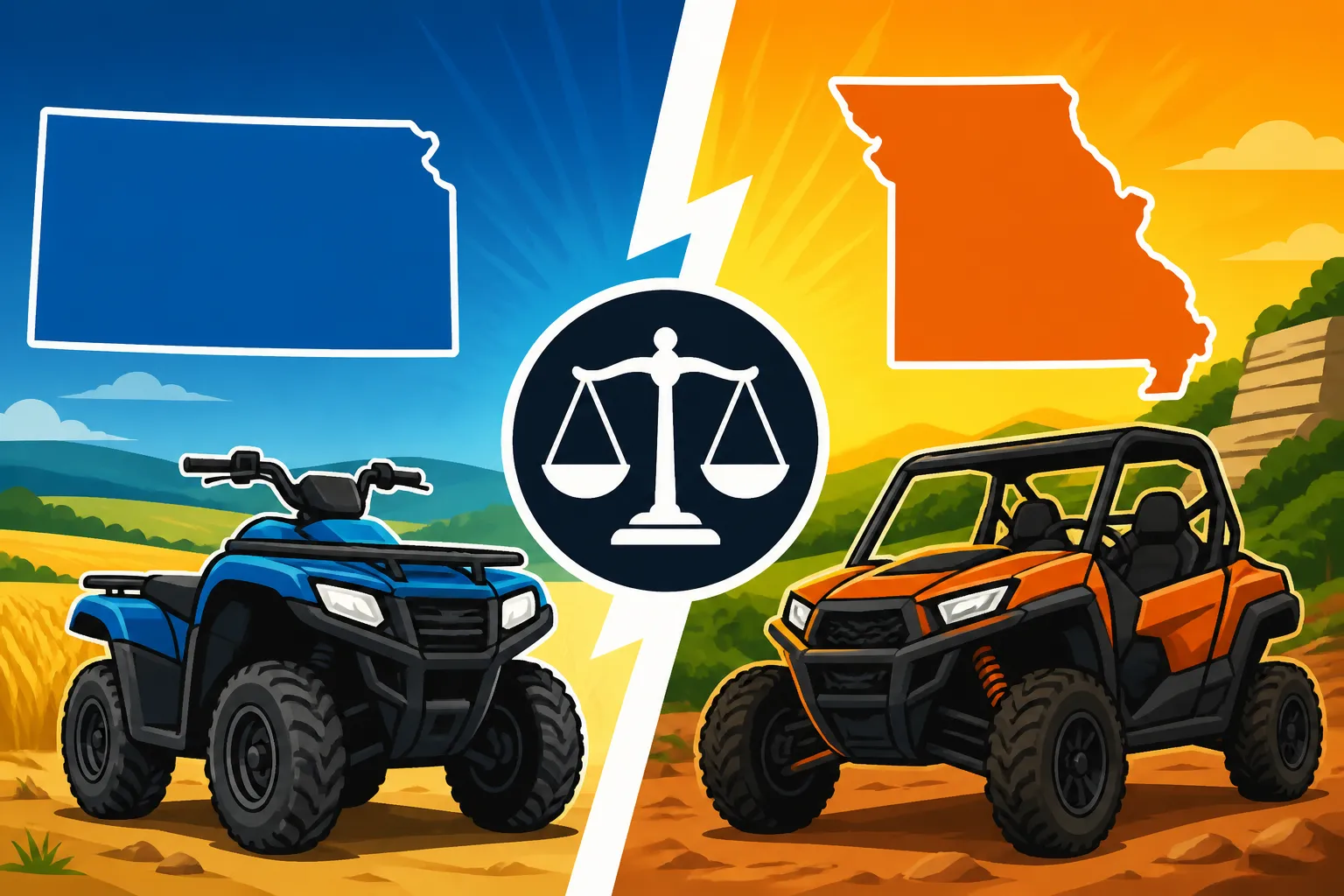
Navigating the world of ATV and UTV ownership can be a real head-scratcher, especially when you live in a border state like Kansas and find yourself looking at machines or trails across the Missouri line. You've heard whispers of different rules, and it’s enough to make anyone nervous about making a mistake. This guide will cut through the confusion, offering a detailed comparison of how Kansas and Missouri handle ATV and UTV titling and registration, so you can confidently buy, sell, or ride on either side of the border.
The Fundamental Differences in Titling Philosophy
When you start digging into the paperwork for your off-road machine, you quickly realize that not all states see ATVs and UTVs through the same lens. Kansas and Missouri, despite being neighbors, have distinctly different philosophies on how these vehicles fit into their legal frameworks. This isn't just bureaucratic jargon; it directly impacts what kind of paper you need in your glove box or saddlebag.
Kansas: The Nonhighway Vehicle Approach
In Kansas, your ATV or UTV is primarily considered a "nonhighway vehicle." This designation is crucial because it dictates the entire process. Essentially, Kansas recognizes these machines as valuable assets that require a clear chain of ownership, much like a car, but they are generally not intended for public road use. The state is concerned with who legally owns the machine, not so much with regulating its annual use through a registration system.
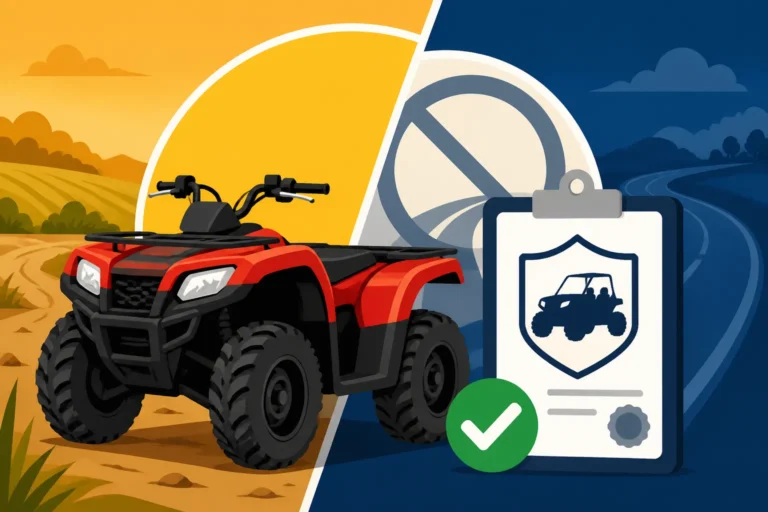
What this means for you, the owner, is that you must title your ATV or UTV. This title serves as your official proof of ownership, a vital document for buying, selling, or recovering a stolen machine. However, unlike a car or even a motorcycle, you won't be issued a license plate or an annual tag for your nonhighway vehicle. This can be confusing for new residents or those accustomed to other states' systems. The title confirms you own it, but it doesn't give you permission to ride it on public roads. It's a fundamental distinction: ownership is tracked, but ongoing operational permission (via registration) is not. For a deeper dive, check out [Why an ATV Is Titled as a Nonhighway Vehicle].
This Kansas approach often leads to fewer ongoing fees beyond the initial titling cost, which can be a relief for many owners. You get your title, you keep it safe, and that's generally the extent of the state's involvement in tracking your machine annually. However, this also means that if you plan to transport or ride your Kansas-titled machine in other states, you need to be acutely aware of their specific requirements. Your Kansas title is rock-solid proof of ownership, but it doesn't automatically grant you the privileges or legal standing that a full title and registration might in another jurisdiction.
Missouri: Titled and Registered as Off-Road Vehicles
Across the state line in Missouri, the approach shifts significantly. While Missouri also requires you to title your ATV or UTV, they add an extra layer: annual registration. This means your off-road machine is not just tracked for ownership, but also for its ongoing use, particularly if you plan to ride it on designated trails or in areas that require it. Missouri views these vehicles as requiring both official ownership documentation and a system to track their active use within the state.
When you title your ATV or UTV in Missouri, you'll go through a similar initial process to establish ownership. However, once that's done, you'll also need to register it. This registration typically involves an annual fee and results in a decal or sticker that you must display on your machine. This decal signals that your ATV or UTV is legally allowed to operate on Missouri's trails and in other specified areas. For example, if you own a side-by-side in Missouri, you'll need both a valid title and current registration stickers to hit the trails at St. Joe State Park.
This dual system means a bit more paperwork and recurring costs for Missouri owners, but it also means that their machines are more easily identified and authorized for use in sanctioned riding areas within the state. The different classes of off-road vehicles—ATV, UTV, dirt bike—all fall under this titling and registration umbrella, with specific rules and requirements for each. Understanding this distinction is vital, especially if you're buying a machine from Missouri or planning to ride there with your Kansas-titled quad. It’s not just about proving you own it; it's about proving you have permission to use it.
The Titling Process: A Step-by-Step Contrast
Understanding the underlying philosophies is one thing, but knowing the actual steps you need to take is where the rubber meets the dirt. The processes in Kansas and Missouri, while sharing some common elements, diverge in significant ways, particularly in where you go, what you need, and what you walk away with. This can be a major source of confusion if you're trying to figure out which state's rules apply to your situation.
Titling Your ATV/UTV in Kansas
If you're making Kansas your home for your off-road machine, the process is relatively straightforward, but it requires attention to detail. Your primary point of contact will be your local County Treasurer's office. This is where all the magic happens for titling vehicles in Kansas, not a state-level DMV equivalent. It’s a very localized process, which can be convenient but also means hours and specific requirements might vary slightly from county to county.
When you head to the treasurer's office, you'll need a few key documents. For a new machine, you'll need the Manufacturer's Certificate of Origin (MCO). For a used machine, you'll need the previous owner's properly assigned title. In both cases, you'll also need a bill of sale, especially for private sales, and your government-issued identification. Don't forget proof of sales tax payment if you bought it from a dealer, or be prepared to pay sales tax at the counter if it was a private sale or out-of-state purchase. There's a strict 60-day deadline from the date of purchase or assignment to apply for your new title, so don't procrastinate! Many owners miss this deadline, leading to potential penalties. For more guidance on the required documents, see [Kansas Title Paperwork Explained]. You can also learn about the timeline at [Sixty Days From the Assignment Date].
Once your paperwork is in order and fees are paid, you'll receive your Kansas Nonhighway Vehicle Title. Remember, this title does not come with a license plate or any form of annual tag. The treasurer's office issues the title, and that's it for annual requirements. This can feel a little odd if you're used to other states where a tag is synonymous with vehicle ownership. Your title is your proof of ownership, and that's its sole function in this context. If you have questions about specific county requirements, your best bet is to reach out directly to the treasurer’s office where you plan to title your machine. You can find more information at [Kansas County Treasurers Handle Titles].
Titling and Registering Your ATV/UTV in Missouri
Missouri's process, while also initiating at a local office, adds the layer of registration. You'll typically visit a Missouri Department of Revenue (DOR) fee office. These offices handle both titling and registration for vehicles, so you can often complete both steps in one visit, which is a definite plus. However, be prepared for a potentially longer visit, as there are more pieces to the puzzle.
For titling and registration, you'll need the MCO for new machines or the previous owner's properly assigned title for used ones. A bill of sale is crucial, detailing the sale price and date, which will be used to calculate sales tax. You'll also need your valid driver's license or state ID. Here's where Missouri diverges significantly: for registration, you'll often need proof of insurance and, for some machines, a safety inspection. These are not required for titling in Kansas but are standard for Missouri vehicle registration. You will then pay sales tax, title fees, and registration fees. If you're buying from a private seller, having a solid bill of sale is paramount, and resources like LawDepot can help you create one that meets state requirements.
After successfully navigating the process, you'll receive your Missouri Certificate of Title and, upon registration, your annual registration decal. This decal must be prominently displayed on your ATV or UTV. Unlike Kansas, this registration is annual, meaning you'll need to renew it each year to keep your machine legally operable on Missouri's public trails and in other areas where registration is required. This system provides a clear, annually renewed authorization for your machine's use. If you're moving a machine from out of state or buying from a private seller, make sure all the necessary documentation is present and correctly filled out to avoid any delays. If you're considering buying from a private seller, you might find this useful: [Buying From a Seller Across the State Line].
Implications for Owners and Cross-State Riding
The differing approaches in Kansas and Missouri create a unique set of challenges and considerations for ATV and UTV owners, especially those who live near the border or enjoy riding in both states. It’s not just about what paperwork you need; it's about what that paperwork allows you to do, or not do, in each jurisdiction. Ignoring these implications can lead to fines, confusion, or even impoundment of your beloved machine.
Riding a Kansas-Titled Machine in Missouri
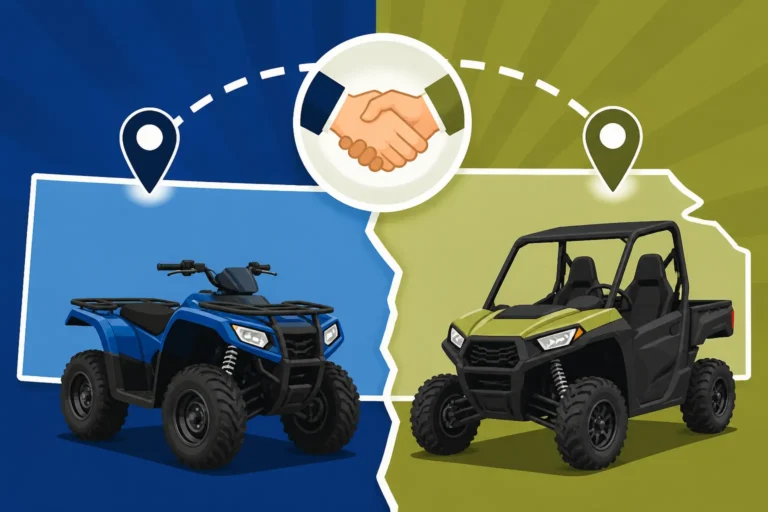
So, you’ve got your shiny, clear Kansas Nonhighway Vehicle Title, and you're itching to explore the trails at St. Joe State Park or some other fantastic Missouri riding spot. Here’s the critical point: your Kansas title proves you own the machine, but it does not grant you automatic permission to ride on Missouri's designated trails or public lands that require registration. Missouri has its own system for authorizing off-road vehicle use, and it hinges on registration and displaying that annual decal.
Bringing a Kansas-titled machine into Missouri for trail riding means you will likely need to comply with Missouri's registration requirements. Some private parks might have their own permit systems that bypass state registration for visitors, but for state-managed trails, you'll usually need either a valid Missouri OHV registration or a specific temporary permit if available. This can be a frustrating hurdle for Kansas riders who are used to simply owning their machine without annual state oversight for use. It’s easy to assume that because Kansas doesn’t require registration, no other state will, but that’s a dangerous assumption.
Imagine you've driven two hours to a popular Missouri trail system, unloaded your quad, and are ready for a fantastic day of riding. Then, a ranger stops you and asks for your registration. Presenting your Kansas title, while proving ownership, won't cut it for trail access. You could be facing a fine or being asked to leave the park. Always check the specific rules of the Missouri riding area before you load up your machine. Some parks might offer a special short-term permit for out-of-state visitors, but you cannot count on it. A good practice is to call the park office ahead of time to confirm what is needed for your Kansas-titled machine.
Riding a Missouri-Registered Machine in Kansas
On the flip side, if you're a Missouri resident with a fully titled and registered ATV or UTV, and you want to bring it into Kansas for some riding – perhaps on private land, at a private park like Kansas Rocks, or even for an agricultural purpose – you’ll find the situation quite different. Because Kansas does not have a state-wide OHV registration program, your Missouri registration is generally not a factor for trail use or off-road riding within Kansas. [Kansas Has No OHV Registration] is a key point to remember.
Your Missouri title and registration decal serve as excellent proof of ownership and compliance with your home state's laws. If, for instance, a Kansas law enforcement officer were to stop you on private property (for a potential trespass issue, for example) and inquire about your machine, showing your valid Missouri title and registration would more than satisfy any questions about legitimate ownership. Kansas authorities are primarily concerned with whether the machine is stolen or if it's being operated legally on Kansas roads, which are a separate and very strict matter.
However, a crucial caveat for Missouri owners is Kansas's incredibly restrictive public road use laws for ATVs and UTVs. While your Missouri registration makes your machine street-legal in some parts of Missouri (where local ordinances allow), it does not transfer that street legality to Kansas. In Kansas, most ATVs and UTVs are banned from public roads by default, with only very specific, narrow exceptions (like certain agricultural uses, work-site utility vehicles, or city-by-city ordinances for UTVs, not ATVs). So, while your Missouri registration means you’re good to go on a Missouri trail, it offers no special privileges for riding on a Kansas county road or city street. Always consult [Kansas Rules for an Out-of-State Machine] to ensure you're in compliance.
Key Documentation and Common Pitfalls
Regardless of which side of the state line you're operating on, the importance of proper documentation cannot be overstated. A missing paper, a poorly filled-out form, or a simple misunderstanding of requirements can turn an exciting purchase or a fun ride into a bureaucratic nightmare. Taking the time to get your paperwork in order upfront will save you countless headaches down the road.
Essential Paperwork for Cross-Border Transactions
When buying or selling an ATV or UTV, especially across state lines, the core documents remain the Manufacturer's Certificate of Origin (MCO) for new machines, and a properly assigned title for used ones. The MCO is the birth certificate of your machine, and it's absolutely essential for the first titling. If you're buying a used machine, ensure the seller's title is clearly signed over to you and all lien releases are present if applicable. If you're buying from a private seller, you’ll likely encounter a handwritten bill of sale.
This is where a little extra effort can go a long way. A comprehensive bill of sale should include the full names and addresses of both buyer and seller, the date of sale, the purchase price, a clear description of the ATV or UTV (make, model, year, and especially the Vehicle Identification Number or VIN), and a statement that the machine is sold "as-is" or with any agreed-upon conditions. While a handwritten note might suffice, using a template from a reputable service like LawDepot can ensure all necessary fields are covered, reducing the chance of rejection by the titling office. This can be especially important if you're dealing with [Kansas Title Without a Bill of Sale] as a potential issue, or if you simply want a professional approach, then [Using a Handwritten Bill of Sale to Title a Quad] is a good read.
Beyond the MCO and bill of sale, always have your government-issued photo identification ready. If you're making payments, ensure you know what methods are accepted by the county treasurer or DOR office (cash, check, card, etc.). Don’t forget about sales tax; whether paid at the dealer or at the titling office, it’s a non-negotiable part of the purchase process. Keeping all these documents, and copies of them, in a safe place is paramount. It’s always a good idea to create a folder specifically for your ATV or UTV papers.
Avoiding Headaches: Tips for Owners
The best defense against titling and registration woes is proactive preparation. First and foremost, always double-check the specific rules for your county in Kansas or your local DOR office in Missouri before you go. Websites are great, but sometimes a quick phone call can clear up specific nuances or holiday hours. Staff at these offices handle these questions daily and can be a fantastic resource. If you have questions about titling your machine, check out [Kansas Title Questions Treasurers Hear].
Secondly, never assume that rules from one state automatically apply to another. Just because your Kansas-titled ATV doesn't need an annual tag doesn't mean you can bypass Missouri's registration requirements for their public trails. Conversely, a Missouri registration won't magically make your UTV street-legal on a Kansas county road unless a local ordinance specifically allows it. Always err on the side of caution and verify the rules for where you plan to ride.
Finally, consider insurance. While Kansas doesn't mandate state-level insurance for nonhighway vehicles, and Missouri only requires it for registration, having appropriate coverage is just smart. Accidents happen, and theft is a reality. A good insurance policy can protect your investment and provide liability coverage if you cause damage or injury. Even if not legally required, the peace of mind is invaluable. Keep copies of your title, registration (if applicable), and insurance card with your machine when you ride, perhaps in a waterproof bag. It's much easier to present those documents than to try and explain why you don't have them.
Here's a quick comparison of the key differences:
| Feature | Kansas (Nonhighway Vehicle) | Missouri (Off-Road Vehicle) |
|---|---|---|
| Primary Office | County Treasurer's Office | Department of Revenue (DOR) Fee Office |
| Titling Required | Yes | Yes |
| Registration Required | No (State Level) | Yes (Annual) |
| Annual Tag/Decal | No | Yes (Displayed on machine) |
| Proof of Ownership | Kansas Nonhighway Vehicle Title | Missouri Certificate of Title |
| Primary Purpose of Title | Proves Ownership | Proves Ownership |
| Primary Purpose of Reg. | N/A | Authorizes Public Trail Use, etc. |
| Insurance Requirement | No (State Level) | Yes (For Registration) |
| Safety Inspection | No | Yes (For Registration, for some machines) |
| Road Use | Generally Banned, specific exceptions only | Generally Banned, specific local exceptions possible |
| Cross-State Trail Riding | May require MO registration/permit for MO trails | MO registration honored in MO, subject to KS road rules in KS |
| Titling Deadline | 60 Days from Assignment | Varies, generally 30 days for new residents |
Disclaimer
This article is for general informational purposes only and does not constitute professional advice. Laws, prices and regulations vary by location and change over time. Consult a qualified professional for guidance on your specific situation.