800 Pounds Unladen for a Work-Site Vehicle
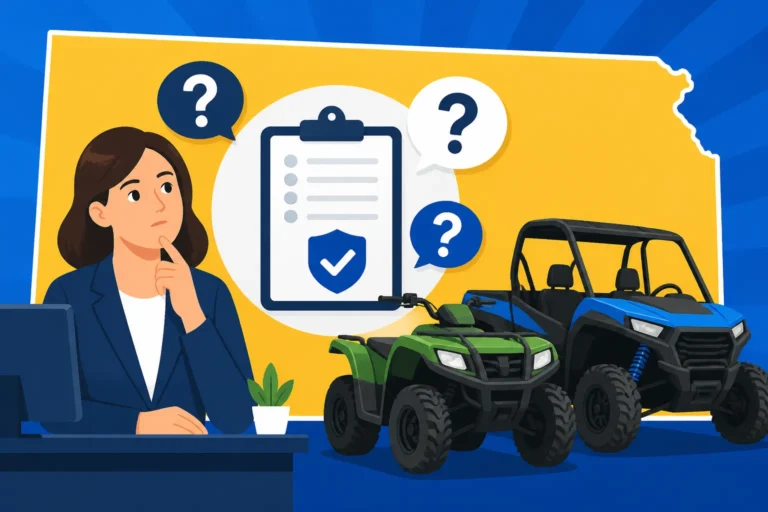
It can be incredibly frustrating trying to figure out the maze of rules and classifications for your off-road machine here in Kansas. You bought your side-by-side or utility vehicle thinking it would be perfect for the ranch, the farm, or just hauling gear around your property, only to discover there's a specific, somewhat obscure, category called a "Work-Site Utility Vehicle" (WSUV) that dictates everything from titling to where you can legally drive it. This guide is going to clear up the confusion, especially around that often-misunderstood 800-pound unladen weight requirement, so you can title and operate your machine with confidence.
Understanding the Kansas Work-Site Utility Vehicle (WSUV) Definition
When you're trying to make sense of Kansas law for your UTV or side-by-side, one of the most common stumbling blocks is understanding what exactly constitutes a "Work-Site Utility Vehicle." It’s not just a generic term for any UTV; it's a very specific classification with legal ramifications for how your machine is titled and used. Many folks assume all side-by-sides are the same in the eyes of the law, but that couldn't be further from the truth. This distinction is crucial because it influences whether you need to meet certain equipment standards and what kind of paperwork you'll need at the County Treasurer's office.
What is a Work-Site Utility Vehicle?
In Kansas, a Work-Site Utility Vehicle, or WSUV, is defined by a set of very particular characteristics, not just its general appearance or whether it has a bed in the back. Unlike an All-Terrain Vehicle (ATV) which is primarily designed for recreational use and off-highway terrain, a WSUV is specifically geared towards utility and work-related tasks. Think of the machines you see on construction sites, large agricultural operations, or campus maintenance crews. These aren't typically the high-speed, long-travel sport side-by-sides you might take to a recreational riding park. They are built for purpose, often with features like a bed to haul materials, a hitch for towing, and a more robust frame designed for heavy lifting or consistent use.
The Kansas statutes go into detail about what sets these vehicles apart, often surprising owners who didn't realize their machine might fall into this specific niche. It’s not simply a matter of having four wheels and a steering wheel; the law delves into dimensions, weight, and seating. If you're scratching your head wondering if your machine qualifies, you're not alone. The nuances of [Kansas Work-Site Utility Vehicles Explained] can be complex, and getting it right from the start saves a lot of headaches later on when you're trying to get it titled or use it on approved roads.
Why Kansas Created This Specific Category
You might wonder why Kansas needed a whole separate category for these "Work-Site Utility Vehicles" when other states just lump everything under "UTV" or "Off-Highway Vehicle." The reality is, Kansas recognized a growing need for specific regulations for machines that operate in a gray area between traditional off-road recreational vehicles and actual road-legal vehicles like cars or trucks. Farmers, ranchers, and various businesses increasingly rely on these utility machines for tasks that might briefly take them onto county roads or across public thoroughfares. Without a specific classification, these machines would either be completely banned from any public road use or subject to full street-legal vehicle requirements, which they simply aren't designed to meet.
This category acknowledges the practical realities of how these vehicles are used for commerce and agriculture. It provides a framework for limited, controlled road use under specific conditions, without requiring the full registration, plating, and extensive equipment modifications that would be needed for a standard car or truck. It's a pragmatic approach to facilitate legitimate work activities while still ensuring some level of public safety. Understanding this underlying philosophy helps to make sense of the seemingly arbitrary rules, like the 800-pound unladen weight, which we'll dive into next.
The Critical Role of the 800-Pound Unladen Weight Limit
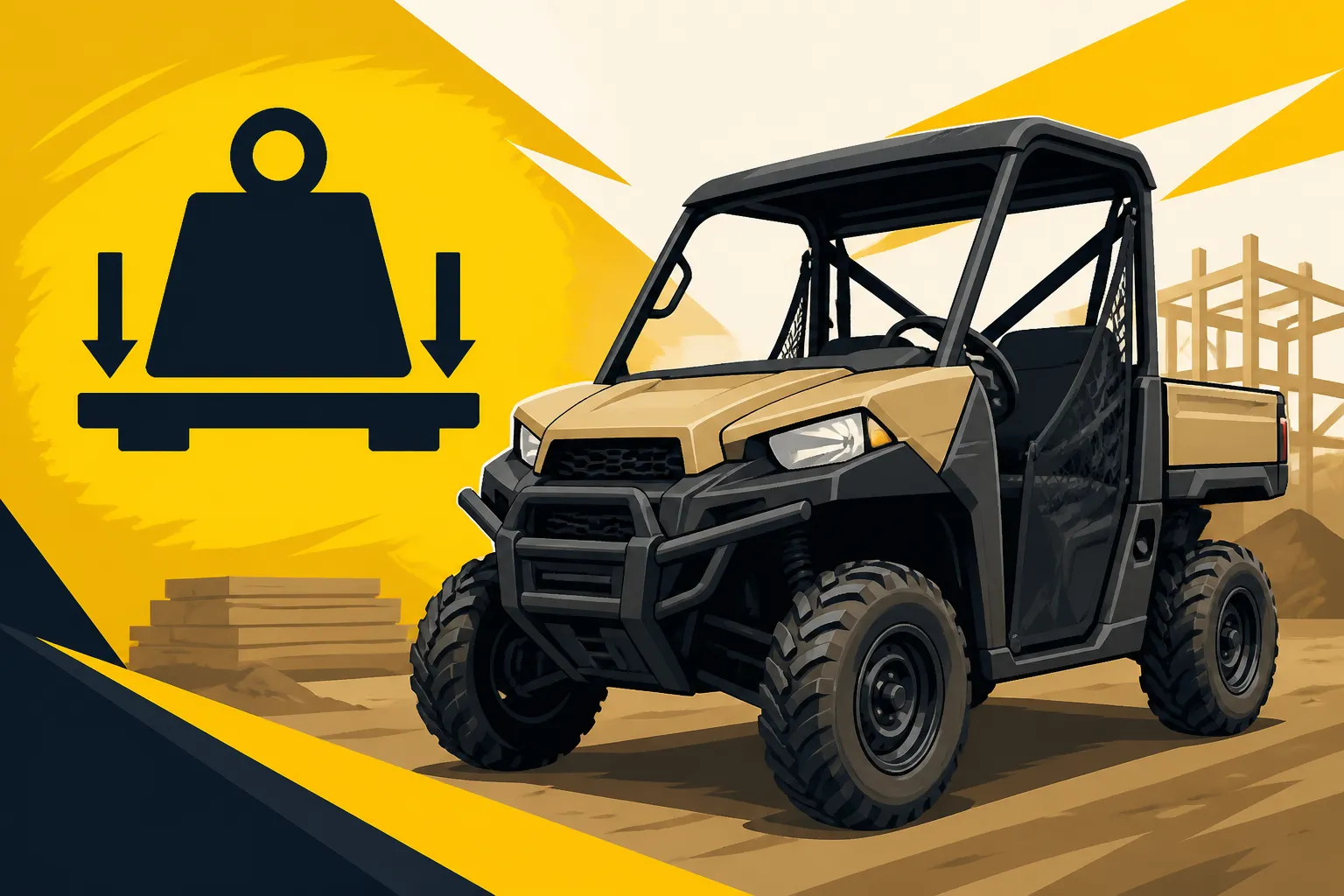
Among all the specific requirements for a Work-Site Utility Vehicle in Kansas, the 800-pound unladen weight limit often causes the most confusion and can be the make-or-break factor for classification. It's one of those details that seems minor until you're at the County Treasurer's office trying to title your machine, and suddenly it's a huge deal. This isn't just an arbitrary number; it's a key differentiator that the state uses to categorize lighter, more recreational machines from the heavier, more robust utility-focused vehicles that are intended for work.
Defining "Unladen Weight" for Your Machine
So, what exactly does "unladen weight" mean in the context of your UTV? Simply put, it's the weight of the vehicle itself, empty, without any passengers, cargo, or additional accessories that aren't factory-installed. Think of it as the weight of the machine as it rolls off the assembly line, or at least how it would be weighed before you add your tools, a full tank of gas, or a custom light bar. This is a crucial distinction because many owners confuse "dry weight" (which might not include fluids) or even gross vehicle weight (which includes maximum cargo and passengers) with unladen weight. The manufacturer's specifications are usually the best place to find this information, often listed in the owner's manual or on a sticker affixed to the machine itself.
If you can't find the exact unladen weight, you might need to do some detective work. Checking the manufacturer's website for your specific make, model, and year is often fruitful. Remember, any modifications you've made after purchase, like heavy-duty winches, plows, or elaborate cages, will add to the actual weight of the machine, but for the purpose of initial WSUV classification, the factory unladen weight is generally what the state is looking for. This can be particularly frustrating for owners of older machines where documentation might be scarce, but it's a necessary step to ensure you're in compliance.
The Impact of Falling Above or Below the 800-Pound Threshold
This 800-pound mark is more than just a number; it's a gateway. If your machine's unladen weight is under 800 pounds, it generally won't qualify as a Work-Site Utility Vehicle, regardless of its other characteristics like width or seating. It would likely fall into the general category of an "all-terrain vehicle" or simply an "off-highway vehicle," which comes with different titling and road-use rules. This can be a huge disappointment if you were hoping for the limited road privileges a WSUV might offer. Conversely, if your machine is over 800 pounds unladen and meets the other criteria (which we'll cover shortly), then it's on track to be classified as a WSUV.
This threshold exists to differentiate lighter, often more recreational machines from the heavier, more robust utility vehicles. Many of the smaller, entry-level side-by-sides might fall under this weight, leading to confusion for new owners. For instance, a compact utility vehicle designed primarily for yard work might sneak under the 800-pound limit, even though it looks like a "utility vehicle." It's essential to understand that [Kansas WSUV Weight Over 800 Pounds] is actually a requirement, not a maximum. If your machine is lighter, it's a different beast in the eyes of Kansas law.
Common Misconceptions About Weight and Classification
One of the biggest misconceptions owners have is that if their machine is "heavy-duty" or "utility-focused," it automatically meets the WSUV weight requirement. This isn't always true. While many utility-oriented side-by-sides do exceed 800 pounds unladen, not all do, especially older models or those from manufacturers who prioritize lighter frames. Another common error is adding aftermarket accessories and thinking that the added weight now qualifies them. Remember, the law is looking for the unladen factory weight. You can't just bolt on a heavy plow and suddenly declare your previously-too-light machine a WSUV.
Another point of confusion stems from how dealers market machines. A dealer might refer to a vehicle as a "utility side-by-side," which is a general descriptive term for its intended use, but it doesn't automatically mean it qualifies as a Kansas Work-Site Utility Vehicle under the specific legal definition. Always check the specs yourself, rather than relying solely on marketing terms. This is where a careful review of your machine's documentation comes in handy, ensuring you’re not caught off guard when you head to the County Treasurer's office.
Beyond Weight: Other Key WSUV Requirements in Kansas
While the 800-pound unladen weight is a major hurdle, it's far from the only requirement for a Work-Site Utility Vehicle in Kansas. The state has a comprehensive definition that looks at several other physical characteristics of the machine. It's a package deal, and your machine needs to check all the boxes to be properly classified. Missing even one of these details can mean your vehicle falls into a different category, impacting its titling and legal use.
The 48-Inch Width Requirement Explained
Beyond weight, another critical dimension for WSUV classification in Kansas is its width. The law states that a Work-Site Utility Vehicle must have a total width of not more than 48 inches, as measured from the widest points excluding mirrors. This is a crucial distinction, especially for many modern side-by-sides that are designed with wider stances for increased stability and performance. Many popular utility models and nearly all sport models easily exceed this 48-inch limit. It's another example of how Kansas law specifically targets a certain type of utility vehicle – one that is more compact and less likely to pose an obstacle on narrow farm roads or work sites.
This 48-inch rule often trips up owners of wider UTVs who bought them for their stability, only to find they don't meet the WSUV definition. If your machine is wider than 48 inches, even if it meets the weight requirement and other criteria, it simply will not be classified as a WSUV. It's important to physically measure your vehicle, from the outermost part of the tire on one side to the outermost part of the tire on the other, ensuring you're within the legal bounds. For more details on this specific measurement, you might want to look into [Kansas WSUV Width of 48 Inches].
Seating and Steering: What Makes a WSUV Unique
The way your machine is designed for seating and steering also plays a significant role in its WSUV classification. A Work-Site Utility Vehicle must be designed to carry at least two, but not more than four, persons and must be equipped with a steering wheel. This is a clear distinction from traditional ATVs, which typically have handlebar steering and are often designed for a single rider, or at most a passenger behind the driver. The steering wheel requirement points to a more car-like operation, which is consistent with its intended use in work environments where precise control and familiar ergonomics are preferred.
The seating arrangement is equally important. [Bench or Bucket Seating Side by Side] for at least two people is typical for WSUVs, allowing occupants to sit next to each other, similar to a car or truck. This differs from the straddle seating found on ATVs. If your machine has a steering wheel and side-by-side seating for the correct number of people, it's another point in its favor for WSUV classification. If it has handlebars, it's definitely not a WSUV, no matter how many other boxes it checks. This nuance highlights [Why a Steering Wheel Changes Your Title Class] and how these seemingly small details make a big difference in how your machine is legally defined.
The "Work-Site" Aspect: Intended Use and Practicality
While the Kansas statutes focus on specific physical characteristics like weight, width, seating, and steering, the very name "Work-Site Utility Vehicle" implies an intended purpose. These machines are fundamentally designed for utility and work-related tasks, rather than high-speed recreation. Think about the types of tasks you'd perform with such a vehicle: hauling feed, carrying tools to a remote part of the property, transporting personnel around a large facility, or accessing difficult terrain for maintenance. Their robust construction, cargo capacity, and often lower top speeds reflect this practical orientation.
This focus on utility over pure recreation is important because it underpins the limited road-use exceptions that WSUVs might qualify for. While you won't find a statutory definition for "work-site use" itself, the combination of physical characteristics strongly suggests that these machines are not meant for joyriding on public roads. Rather, they are meant to facilitate operations on private property, construction sites, or in agricultural settings, with brief, regulated forays onto public roads when necessary to connect parts of a work site or farm. If your machine meets the [What Makes a Side-by-Side a Work-Site Utility Vehicle] criteria, it's likely aligned with this utility-first mindset.
| WSUV Requirement | Description | Why it Matters |
|---|---|---|
| Unladen Weight | Must be over 800 pounds. (Empty, no passengers/cargo/non-factory accessories) | Differentiates heavier utility vehicles from lighter recreational ones. |
| Total Width | Must not exceed 48 inches (excluding mirrors). | Ensures compact size for specific work environments and limited road use. |
| Seating Capacity | Designed to carry at least 2, but not more than 4, persons, sitting side-by-side. | Reflects multi-person utility and car-like design, unlike single-rider ATVs. |
| Steering Mechanism | Equipped with a steering wheel. | Emphasizes car-like operation and control for work tasks, not handlebars. |
| Nonhighway Tires | Equipped with four or more nonhighway tires. | Confirms off-road capability and distinction from street-legal vehicles. |
Why Proper WSUV Classification Matters for Owners
Getting your machine correctly classified as a Work-Site Utility Vehicle isn't just a bureaucratic hurdle; it has real, tangible consequences for how you can legally own and operate your machine in Kansas. Misunderstanding these rules can lead to frustrating delays at the County Treasurer's office, unexpected fines, or even worse, legal trouble if you're caught using your machine improperly on public roads. It really does pay to understand these distinctions from the outset.
Titling and Paperwork for Your WSUV
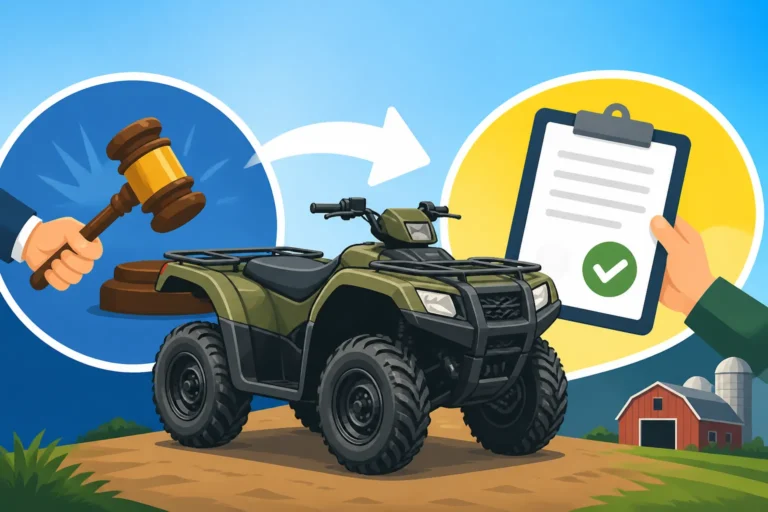
If your machine meets the specific criteria for a Work-Site Utility Vehicle, you will need to apply for a title. In Kansas, like other non-highway vehicles, WSUVs are titled but not registered with an annual tag for general use. This can be a point of confusion because many owners associate "title" with "tag" and "road legal," which is not the case here. The title establishes ownership and is crucial for buying, selling, or proving you own the machine. You'll generally do this at your local [Kansas County Treasurer Offices], bringing proof of ownership like a manufacturer's certificate of origin (MCO) if new, or a properly assigned title and bill of sale if purchased used. For private sales, having a solid bill of sale is critical, and resources like LawDepot can provide templates that ensure all the necessary information is included, which can prevent issues down the line.
The process involves submitting the correct paperwork and paying the title fee. Be prepared with all your documentation, including proof of purchase and identification. If you're coming from a private sale, make sure the seller has properly signed over their title, and that you have a comprehensive bill of sale. [Kansas Titles After a Private Sale] can be a little tricky without all your ducks in a row, so having a good, detailed bill of sale prepared, perhaps using a template from a service like LawDepot, can be a lifesaver. This title essentially acts as the legal record of your ownership, and without it, selling your machine or proving ownership can become a nightmare. For a full rundown on what to bring, check out [Kansas Title Paperwork Explained].
Road Use Privileges and Restrictions for WSUVs
This is where the WSUV classification truly impacts daily operations. Unlike most ATVs, which are generally prohibited from public roads, Work-Site Utility Vehicles in Kansas can have limited road-use privileges under specific circumstances. These privileges are usually tied to their utility purpose. For example, a WSUV might be permitted to cross a public highway to access different parts of a farm, or to travel short distances on a county road for a work-related task. However, these are not blanket permissions to drive freely on any road. There are often speed limits, daylight restrictions, and requirements to operate as far to the right as practicable.
It's crucial to understand that these limited privileges do NOT make your WSUV street-legal like a car or truck. You cannot generally cruise into town for groceries or drive it on state highways for pleasure. The specific rules for [Kansas Work-Site Utility Vehicle Road Rules] vary and are strictly enforced. The intention is to allow necessary movement for work, not general transportation. Always check local ordinances in addition to state law, as some cities or counties might have their own specific regulations or even outright bans on WSUV road use.
Avoiding Penalties and Confusion
The best way to avoid fines, impoundment, or other legal headaches is to ensure your machine is correctly classified and that you understand the rules that apply to it. If your vehicle is misclassified, or if you're operating a WSUV on roads where it's not permitted, you could face penalties. A common mistake is assuming that because a dealer called your side-by-side a "utility vehicle," it automatically meets the WSUV criteria for Kansas law. This is why digging into the specifics of [48 Inches and 800 Pounds] is so important.
Taking the time to verify the unladen weight, width, and other physical characteristics against the Kansas statutes before you even buy a machine, or certainly before you try to title it, will save you a world of trouble. If you’re ever in doubt about proper classification or specific road-use rules, contacting your local County Treasurer’s office or a law enforcement agency for clarification is always a good idea. Having a clear understanding, and having all your paperwork in order (perhaps even using legally sound documents from LawDepot for private sales), means you can enjoy your machine without the constant worry of breaking the law.
Disclaimer
This article is for general informational purposes only and does not constitute professional advice. Laws, prices and regulations vary by location and change over time. Consult a qualified professional for guidance on your specific situation.