What Makes a Side-by-Side a Work-Site Utility Vehicle
It's easy to feel lost in the jargon and ever-changing rules when you're trying to figure out where your side-by-side fits into Kansas law. Many owners just assume all UTVs are treated the same, but the truth is, Kansas has a distinct classification for what it calls a "Work-Site Utility Vehicle," or WSUV. This designation profoundly impacts how you title, insure, and even where you can legally drive your machine. This guide will help you understand the specific criteria that define a WSUV in the Sunflower State, so you can navigate the rules with confidence and avoid unexpected headaches.
Navigating Kansas's Unique Off-Road Landscape
Kansas has a fascinating, sometimes confusing, landscape of laws when it comes to off-road machines. Unlike some states that might lump all utility terrain vehicles (UTVs) into one broad category, Kansas takes a more granular approach. This detailed classification system, while designed to create clarity, can often lead to more questions than answers for the average owner. You might have bought your side-by-side for farm work, hunting, or just recreation, only to find out that its exact dimensions and features slot it into a very particular legal box.
The primary reason for these specific definitions is to manage how these machines interact with public lands, roadways, and taxation. Without clear definitions, it would be a free-for-all, leading to safety issues and enforcement nightmares. For example, a machine designed for pure recreational trail riding might have different safety considerations and roadworthiness than one built for heavy-duty ranch work. Because of this, what might seem like arbitrary measurements or features are actually the bedrock of how your machine is legally perceived in Kansas. Understanding these nuances from the start can save you a lot of time, money, and potential legal trouble down the road.
This is particularly true for side-by-sides, which are often mistakenly grouped with ATVs or assumed to be street legal everywhere. However, Kansas law draws a clear distinction, especially with the WSUV class. This means that a side-by-side you bought in a neighboring state or inherited might not be treated the same way once you bring it into Kansas, leading to frustrating surprises at the county treasurer's office. It’s crucial to delve into these details to ensure you’re always on the right side of the law.
Defining the Kansas Work-Site Utility Vehicle (WSUV)
When we talk about a Work-Site Utility Vehicle (WSUV) in Kansas, we're not just throwing around a generic term for any UTV. The state has a very specific legal definition that sets these machines apart. It's not about what you call your side-by-side; it's about what it is, according to a precise checklist of physical characteristics. This definition is laid out in Kansas statutes, and it's what the folks at the county treasurer's office will be looking at when you go to title your machine. Ignore these details at your peril, because the wrong classification can lead to a lot of red tape.
The definition is often a source of confusion because many UTVs look similar, but slight variations in size, weight, or features can change their legal standing dramatically. It’s not just about having four wheels and a steering wheel; it's about a combination of factors that all must be met. This specificity is unique to Kansas and designed to ensure that vehicles designated for particular "work-site" functions are properly categorized. Let's break down these critical components, one by one, so you know exactly what qualifies your side-by-side as a WSUV.
The "Not Less Than 48 Inches" Rule
One of the foundational aspects of a Kansas WSUV is its width. The law states that a Work-Site Utility Vehicle must be "not less than 48 inches in width." This isn't just a random number; it's a critical measurement that helps differentiate these machines from narrower ATVs or even some golf carts. To measure this, you'll typically be looking at the widest part of the machine, usually from the outside edge of one tire to the outside edge of the opposite tire, or the widest point of the machine's body, whichever is greater. You can learn more in [48 Inches Measured How].
This minimum width ensures that WSUVs generally have a more stable footprint than, say, a standard single-rider ATV. It speaks to their design intent for stability and utility rather than agile, high-speed maneuvering on tight trails. If your side-by-side measures less than 48 inches wide, it simply cannot be classified as a WSUV in Kansas, regardless of its other features. This is a common stumbling block for owners who might assume their compact UTV fits the bill, only to find it falls short on this key metric.
When you're considering purchasing a used side-by-side, especially from a private seller, always bring a tape measure with you. Don't rely solely on the manufacturer's stated specifications, as modifications or different tire/wheel setups can subtly change the actual width. A slight difference could mean your machine is classified as a different type of nonhighway vehicle, which can then affect everything from titling requirements to where you can legally operate it.
The Weight Range: More Than 800, Not More Than 2,000 Pounds
Another crucial defining characteristic for a Kansas WSUV is its unladen weight. The statute specifies that the machine must have an unladen weight, "including fluids and accessories, of more than 800 pounds and not more than 2,000 pounds." This weight range is very deliberate. The "more than 800 pounds" threshold helps to distinguish WSUVs from lighter machines like golf carts or some smaller, recreational-focused UTVs, emphasizing their more robust construction.
On the flip side, the "not more than 2,000 pounds" limit prevents larger, heavier machines, like full-sized utility trucks or even some specialized commercial UTVs, from being categorized as WSUVs. These heavier machines might fall into different legal classifications entirely, such as a micro utility truck, which has its own set of rules. This careful weight balancing act ensures that the WSUV category is reserved for a specific type of mid-range utility vehicle. You can read more about this in [800 Pounds Unladen for a Work-Site Vehicle].
Just like with width, checking the weight of a machine you're considering buying is paramount. While manufacturer specifications are a good starting point, remember that aftermarket accessories like winches, roofs, larger tires, or toolboxes can add significant weight. It's often best to get an actual weigh-in if there's any doubt, or consult the original manufacturer's documentation carefully, considering its unladen weight. This attention to detail will help you correctly classify your machine and prepare for the titling process at the county treasurer's office.
Transmission, Tires, and Steering: What's Required
Beyond size and weight, the Kansas WSUV definition dives into specific mechanical components. A Work-Site Utility Vehicle must be "equipped with an automatically continuously variable transmission, four or more nonhighway tires, and a steering wheel." Each of these elements plays a distinct role in defining the machine's utility and operational characteristics.
The "automatically continuously variable transmission" (CVT) is a common feature in many UTVs, allowing for smooth, automatic power delivery without manual shifting. This type of transmission is often preferred for utility tasks where consistent power and ease of operation are key. The requirement for "four or more nonhighway tires" reinforces the machine's off-road design, signaling that it's not intended for sustained high-speed highway travel. These tires are built for traction on varied terrain, not for typical asphalt roads. You can find more information about this in [Four or More Nonhighway Tires].
Finally, the "steering wheel" is a clear differentiator from traditional ATVs, which typically use handlebars. A steering wheel indicates a more car-like operation, often associated with side-by-side seating and a design focused on utility and easier control over rough terrain. This combination of transmission, tires, and steering wheel creates a profile for a robust, user-friendly utility vehicle. Understanding [Why a Steering Wheel Changes Your Title Class] can be quite enlightening for new owners.
Seating Configuration and Engine Size
The final pieces of the WSUV puzzle involve its seating and engine. The Kansas statute requires a WSUV to have "a bench or bucket seat, and an engine displacement of more than 200 cubic centimeters." These criteria further solidify the WSUV's identity as a practical, work-oriented machine.
The "bench or bucket seat" requirement directly addresses the passenger capacity and style. Unlike ATVs, which might have a straddle seat, WSUVs are designed for side-by-side seating, offering a more comfortable and secure ride for operators and passengers alike. This often means two or more individuals can ride abreast, which is convenient for work crews or transporting supplies. [Bench or Bucket Seating Side by Side] dives deeper into this. The "engine displacement of more than 200 cubic centimeters" ensures the vehicle has sufficient power for utility tasks, such as hauling or towing, and for navigating challenging terrain on work sites. This generally excludes smaller, less powerful recreational vehicles or children's quads.
Together, all these characteristics—width, weight, transmission, tires, steering, seating, and engine size—form a comprehensive legal definition for a Work-Site Utility Vehicle in Kansas. If a side-by-side meets every single one of these points, then it falls into this specific classification, which then dictates how it must be titled and what its operational limits are within the state. Ignoring even one of these details could mean your machine is classified differently, leading to unexpected legal requirements.
Why the WSUV Classification Matters to You
So, why does all this detailed classification matter? It's not just about knowing what to call your machine at the next family gathering. The WSUV designation in Kansas carries significant legal and practical implications for owners, affecting everything from your wallet to where you can actually take your side-by-side. If you misunderstand or misclassify your machine, you could face penalties, unexpected costs, or even have your vehicle impounded.
For many Kansas residents who use their side-by-sides for farm work, ranching, or other rural activities, the WSUV classification directly impacts daily operations. It’s not just an administrative detail; it influences whether you need specific documentation, how much you’ll pay in taxes, and the rules of the road (or lack thereof) for your machine. This is why paying close attention to these distinctions can save you a world of trouble and ensure you're a responsible, law-abiding off-road enthusiast.
Titling and Registration Differences
Perhaps the most immediate impact of the WSUV classification is on how your machine is titled and whether it needs to be registered. In Kansas, Work-Site Utility Vehicles are considered a type of nonhighway vehicle. This means that while they absolutely must be titled, they are generally exempt from annual registration and the associated tag fees. This is a significant difference from road-legal vehicles like cars or trucks, which require both a title and annual registration tags. You'll find more information in [Kansas Titles ATVs as Nonhighway Vehicles] and [Kansas Has No OHV Registration].
When you purchase a WSUV, whether new from a dealer or used from a private party, you are required to apply for a title at your local county treasurer's office. This process typically involves presenting a manufacturer's certificate of origin (MCO) for new machines, or a properly assigned title and bill of sale for used ones. The title fee in Kansas is relatively low, but you also have to pay sales tax at the time of titling. If you’re ever unsure about which forms to use for a private sale, especially if the original title is missing or incomplete, resources like LawDepot can provide customizable bill of sale templates that can help ensure your paperwork is in order for the treasurer’s office.
Failing to title your WSUV within the [Kansas Gives You 60 Days to Apply] from the date of purchase can result in late filing penalties. While there's no annual tag to renew, having a clear, accurate title in your name is crucial for proving ownership, selling the machine in the future, or dealing with insurance claims. It’s the foundational legal document for your vehicle in Kansas.
Road Use Limitations and Exceptions
This is where many WSUV owners encounter the most confusion and frustration. Despite being titled, Work-Site Utility Vehicles are generally not street legal by default on Kansas public roads. Kansas statutes have a broad prohibition against operating nonhighway vehicles, including WSUVs, on public highways, streets, or alleys. This means you can't just hop on your WSUV and drive it to the local store or across town. It's a key distinction from machines like micro utility trucks or even golf carts, which have different (though still restricted) road use rules.
However, Kansas law does provide some limited exceptions, primarily for agricultural purposes or for specific types of work. For instance, a WSUV might be allowed to cross a public highway at an intersection, or operate on a highway for agricultural purposes between fields, within a short distance. Some local jurisdictions, particularly smaller towns or counties, may also pass ordinances that allow for restricted use of WSUVs on certain streets. It's vital to check with your specific city or county government to see if such ordinances exist, as they are not uniform across the state. Without a local ordinance, the default is no public road use. This can be frustrating for owners who live in rural areas and just want to get from their home to a neighbor's field. You can learn more about this in [Kansas Work-Site Utility Vehicle Road Rules].
It’s important to understand that having a title does not grant you permission to drive on public roads. The title simply proves ownership. The rules for road use are separate and much stricter. If you are caught operating your WSUV illegally on a public road, you could face fines, penalties, and potentially have your machine impounded. Always assume your WSUV is not street legal unless you have verified a specific legal exception or a local ordinance that applies directly to your situation.
Insurance Considerations
While Kansas does not mandate statewide insurance for nonhighway vehicles like WSUVs, it's a topic you absolutely should not overlook. Just because the state doesn't require it doesn't mean you shouldn't have it. If you're involved in an accident, whether on private property or if you're operating under one of the narrow road use exceptions, the financial liability could be devastating. Many landowners, riding parks, or even some city ordinances that permit limited road use, will require proof of insurance anyway. [Do You Need ATV Insurance in Kansas?] covers this more broadly.
Most homeowner's or farm insurance policies might offer some limited liability coverage for machines operated on your own property. However, this coverage is often very basic and might not extend to off-property incidents, or cover damage to your own machine. For comprehensive protection, many owners opt for a dedicated off-road vehicle insurance policy. These policies can cover liability, collision, comprehensive (theft, fire, vandalism), and even uninsured motorist coverage, giving you peace of mind whether you're working on the ranch or enjoying a trail ride.
When shopping for insurance, be very clear with your agent about your machine's classification as a WSUV and how you intend to use it. If you plan to use it for agricultural purposes that might occasionally involve crossing a road, discuss this with your insurer to ensure proper coverage. This due diligence ensures that if something unexpected happens, you're not left to shoulder the financial burden alone. Always consider liability, property damage, and physical damage coverage, even if not legally mandated.
WSUVs vs. Other Kansas Off-Road Machines
Kansas's approach to off-road vehicles isn't a one-size-fits-all situation. While many people use the terms "ATV" and "UTV" interchangeably, the state legislature has created distinct categories, and understanding the differences is key to staying compliant. The Work-Site Utility Vehicle (WSUV) is just one piece of this puzzle, existing alongside traditional ATVs, standard UTVs (that don't meet WSUV criteria), micro utility trucks, and even golf carts. Each class has its own specific definition and, critically, its own set of rules regarding titling, registration, and operation. This can be a source of constant frustration for owners trying to make sense of it all.
The nuances in these definitions are often based on those seemingly minor details we discussed earlier: width, weight, seating, and even the type of steering. These distinctions are not arbitrary; they are the legal framework that determines how your machine is treated under Kansas law. Let's delve into how WSUVs stand apart from other popular off-road machines in the state.
Distinguishing from ATVs and Standard UTVs
The most common comparison is often between WSUVs and All-Terrain Vehicles (ATVs). While both are designed for off-road use, their characteristics and legal definitions in Kansas are quite different. ATVs are typically defined as machines designed for a single operator (though some are designed for a passenger), with a straddle seat, handlebars for steering, and three or more low-pressure tires. They often have an engine displacement of more than 50 cubic centimeters, but are not designed for highway use. The key here is the straddle seat and handlebars, which immediately set them apart from WSUVs. You can read more about [An ATV Defined in Chapter 8].
A "standard UTV" (or side-by-side that isn't a WSUV) is a bit trickier. If a side-by-side doesn't meet all the specific criteria for a WSUV (e.g., it's under 48 inches wide, or outside the 800-2,000 pound weight range), it still falls into the broader category of a nonhighway vehicle but simply isn't a WSUV. This means it would still need a [Kansas Nonhighway Title Explained] but would not be subject to the specific rules or potential exceptions that apply only to WSUVs. The subtle differences in definition mean that what appears to be a minor variation can lead to a different legal classification. For example, if your UTV is exceptionally wide or heavy, it might exceed the WSUV limits.
The biggest takeaway is that while both ATVs and most UTVs require a Kansas nonhighway title and are generally not street legal, the WSUV classification offers specific advantages or disadvantages based on its distinct characteristics and the limited exceptions tailored to its "work-site" purpose. Knowing precisely which category your machine falls into is the first step to understanding its legal standing.
Comparing to Micro Utility Trucks and Golf Carts
The distinctions become even finer when comparing WSUVs to Micro Utility Trucks (MUVs) and Golf Carts, both of which also fall under different nonhighway vehicle classifications in Kansas. A [What Counts as a Micro Utility Truck] is generally a larger, often enclosed, vehicle designed for commercial or municipal use, typically with a top speed of no more than 40 mph and a gross vehicle weight rating of 3,000 pounds or less. They usually have an enclosed cab, a steering wheel, and safety features similar to a conventional automobile. MUVs often have more explicit provisions for limited road use, particularly within city limits or for specific work applications, often requiring city tags.
Golf carts, on the other hand, are designed specifically for golf courses and usually have a top speed of 25 mph. [What the Law Counts as a Golf Cart] specifies that they are generally lower-powered, lighter vehicles. While some cities might have ordinances allowing golf carts on certain low-speed streets, their capabilities and intended use are vastly different from a WSUV. The lower power, lighter build, and specific purpose immediately set them apart.
The table below summarizes the key differentiators between these classes:
| Feature | ATV | Work-Site Utility Vehicle (WSUV) | Micro Utility Truck (MUV) | Golf Cart |
|---|---|---|---|---|
| Steering | Handlebars | Steering Wheel | Steering Wheel | Steering Wheel |
| Seating | Straddle seat (1 or 2 riders) | Bench or bucket seat | Enclosed cab, bench/bucket | Bench seat |
| Width | Typically < 48 inches | Not less than 48 inches | Varies, often wider than WSUV | Varies, often < 48 inches |
| Unladen Weight | Varies, often < 800 lbs | > 800 lbs, < 2,000 lbs | Up to 3,000 lbs (GVWR) | Varies, often < 800 lbs |
| Transmission | Manual or Automatic | Automatic CVT | Automatic | Automatic |
| Road Use (Default) | No | No (limited exceptions) | Limited (often by city ordinance) | Limited (often by city ordinance) |
| Titling Required | Yes (Nonhighway) | Yes (Nonhighway) | Yes (Nonhighway) | Yes (Nonhighway, if new or transferred) |
| Annual Registration | No | No | No (unless city tagged) | No (unless city tagged) |
This table clearly illustrates that while all are "off-road" in spirit, their legal categorization in Kansas is quite distinct. Your side-by-side isn't just a UTV; it's either a WSUV, an MUV, a Golf Cart, or a standard non-WSUV UTV, and understanding which one it is dictates your responsibilities as an owner.
Practical Steps for Identifying and Titling Your WSUV
So, you've got a side-by-side, and now you're wondering if it truly qualifies as a Work-Site Utility Vehicle in Kansas. Or maybe you're in the market for a new or used machine and want to be sure you're getting what you expect, legally speaking. This section is all about turning those legal definitions into actionable steps you can take to verify your machine and navigate the titling process smoothly. Nobody wants to drive all the way to the county treasurer's office only to be told they have the wrong paperwork or that their machine isn't what they thought it was.
It’s about being proactive and prepared. The more information you have upfront, the easier the process will be. Whether you’re dealing with a brand-new machine straight from a dealership or a well-loved side-by-side from a private seller, the principles of verification and proper documentation remain the same. Let’s walk through what you need to do to ensure your WSUV journey in Kansas is as straightforward as possible.
Verifying Your Machine's Specifications
Before you even think about visiting the county treasurer's office, you need to confirm that your side-by-side meets all the WSUV criteria. This means getting hands-on with your machine and checking those specific measurements and features we discussed.
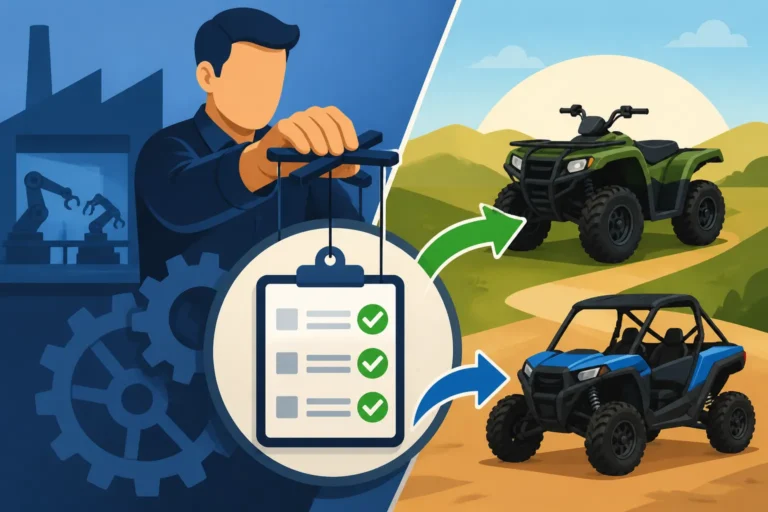
Here’s a practical checklist:
- Width: Grab a tape measure and carefully measure the widest point of your side-by-side, typically from the outside edge of the tires. Make sure it's "not less than 48 inches." Remember that [48 Inches Measured How] is usually at the widest point, including tires.
- Unladen Weight: Check the manufacturer's specifications. This can usually be found in the owner's manual or on a data plate on the machine itself. Ensure the unladen weight, including fluids and standard accessories, is "more than 800 pounds and not more than 2,000 pounds." If you're buying a used machine and the weight isn't clear, you might need to find a public scale (like at a local grain elevator or truck stop) to get an accurate reading.
- Transmission: Does it have an "automatically continuously variable transmission" (CVT)? Most modern utility side-by-sides do, but it's worth confirming if you're unsure.
- Tires: Does it have "four or more nonhighway tires"? This simply means it has tires designed for off-road traction, not street legal tires with a DOT rating.
- Steering: Does it have a "steering wheel"? This is usually obvious for a side-by-side.
- Seating: Does it have a "bench or bucket seat"? Again, a clear indicator for side-by-sides.
- Engine Displacement: Check the owner's manual or the engine itself for the cubic centimeter (cc) rating. It must be "more than 200 cubic centimeters."
If your machine fails to meet even one of these criteria, it is not a WSUV in the eyes of Kansas law. It would likely still be titled as a general nonhighway vehicle, but without the specific WSUV designation. Being meticulous here will prevent surprises later.
The Titling Process for WSUVs
Once you've confirmed your side-by-side is indeed a Kansas WSUV, the next step is to title it. The process is handled at your local [Kansas County Treasurers Handle Titles] office. You'll need to gather specific documents, and it's best to call ahead or check their website to confirm exact requirements and office hours.
Generally, you'll need:
- For New Machines: The Manufacturer's Certificate of Origin (MCO). This is a crucial document that proves the vehicle's origin.
- For Used Machines: The original, properly assigned title from the previous owner. Ensure the seller has signed off on the title in the correct spots and that all lien releases are present if applicable. A detailed bill of sale is also highly recommended, even if not strictly required by law in all cases, as it provides proof of purchase price for sales tax calculations. If you're drafting a bill of sale, especially for a private transaction, online platforms like LawDepot can provide state-specific templates to ensure all necessary information is included.
- Proof of Purchase Price: A bill of sale or dealer invoice is necessary for calculating Kansas sales tax, which is collected at the time of titling. You can learn more in [Kansas Sales Tax Collected at Titling].
- Proof of Identity: A valid driver's license or state ID.
- Payment for Fees: Be prepared to pay the title fee (which is fairly low; see [Kansas Charges $10 for a Title]) and the sales tax. Payment methods vary by county, so check beforehand.
- Nonhighway Vehicle Affidavit (Form TR-13): You might need to fill out a [Kansas Nonhighway Affidavits] form, which declares the vehicle as a nonhighway machine.
- Lien Holder Information: If you financed your WSUV, bring the lien holder's name and address.
Remember, you have [Kansas Gives You 60 Days to Apply] from the date of purchase to title your machine. Missing this deadline can result in penalties. While this might seem like a lot of paperwork, the county treasurer's office is usually well-versed in handling these transactions. Showing up prepared with all your documents in order will make the process much smoother.
What to Do If Your Machine Doesn't Fit
What if you go through the verification process and realize your side-by-side doesn't quite meet the WSUV definition? Don't panic. It simply means your machine will be classified differently under Kansas law, likely as a generic "nonhighway vehicle" or potentially as a Micro Utility Truck or Golf Cart if it meets those specific criteria.
If it's just a non-WSUV side-by-side, the main difference is that it won't benefit from any specific WSUV-only road use exceptions that might exist. It will still require a nonhighway title, and the general rules against public road use will still apply. The titling process itself will be very similar, as all nonhighway vehicles follow a comparable procedure at the county treasurer's office.
The key is to accurately classify your machine and proceed with titling under the correct designation. If you are unsure, the best course of action is to contact your local [Kansas County Treasurer Offices] directly. They are the experts on local regulations and will be able to guide you based on your machine's specific details. Provide them with your machine's measurements and features, and they can tell you exactly how it will be titled. This proactive approach ensures you avoid any future legal complications or misunderstandings about your vehicle's status in Kansas. Always aim for clarity over assumptions when it comes to state laws and vehicle titles.
Common Misconceptions About WSUVs
Even with all the clear definitions and guidelines, there are still a lot of misunderstandings floating around about Work-Site Utility Vehicles in Kansas. It's easy to fall prey to common myths, especially when you hear snippets of information from friends, online forums, or even well-meaning but misinformed sales associates. These misconceptions can lead to real problems, from operating your machine illegally to unexpected financial burdens. My goal here is to debunk some of the most prevalent myths so you can operate your WSUV with complete clarity and confidence.
These aren't just minor details; they often touch on crucial aspects of vehicle ownership and operation that can impact your safety, your wallet, and your legal standing. Understanding these points correctly is just as important as knowing the definitions themselves. Let's tackle some of the biggest misconceptions head-on.
"If It Has a Title, It's Road Legal"
This is perhaps the biggest and most dangerous misconception for WSUV owners in Kansas. Many people mistakenly believe that because the state requires a [Kansas Nonhighway Title Explained] for their side-by-side, it automatically grants them permission to drive on public roads. This couldn't be further from the truth. In Kansas, the title primarily serves as proof of ownership and a means for collecting sales tax. It has absolutely no bearing on whether a vehicle is street legal.
The law regarding road use for WSUVs is very clear: they are generally prohibited from operating on public highways, streets, or alleys, with only very limited exceptions. Having a title does not magically transform your off-road machine into a street-legal vehicle. You could have a perfectly titled WSUV, but if you drive it down a public road without meeting a specific, narrow exception or a local ordinance, you are breaking the law. This is why [Why a Kansas Nonhighway Title Never Comes With a Tag] because it's not meant for road use.
This misconception is a common source of tickets and impoundments for unsuspecting owners. Always remember that titling and road legality are two entirely separate considerations in Kansas. You can learn more about this crucial distinction in [Having a Title Does Not Make an ATV Street Legal].
"All UTVs Are WSUVs"
Another widespread misconception is that any side-by-side, or Utility Terrain Vehicle (UTV), automatically qualifies as a Work-Site Utility Vehicle (WSUV) in Kansas. As we've thoroughly covered, this is simply not true. The WSUV classification is a very specific legal definition with a strict set of criteria regarding width, weight, transmission, tires, steering, seating, and engine size. If a side-by-side doesn't meet all of those points, it's not a WSUV.
Many UTVs sold on the market might be too wide, too heavy, too light, or too narrow to fit the WSUV definition. For example, some compact "sport-utility" UTVs might fall below the 48-inch width minimum or the 800-pound weight minimum. Conversely, some heavy-duty, large capacity utility vehicles might exceed the 2,000-pound maximum weight. These machines would still be titled as nonhighway vehicles but would not be classified as WSUVs and would not be eligible for any of the specific, limited exceptions that apply only to WSUVs.
Therefore, never assume your side-by-side is a WSUV just because it looks like one or because the manufacturer calls it a "utility vehicle." Always go back to the precise Kansas legal definition and verify your machine's specifications against each criterion. This diligence will ensure you correctly classify your machine and avoid any misunderstandings about its legal status.
"Kansas Has State-Wide ATV/UTV Trails"
This misconception, while not directly about the WSUV definition, often frustrates owners trying to find legal places to ride their machines, including WSUVs. Many new owners, especially those moving from other states, expect Kansas to have a robust network of state-managed ATV or UTV trails, similar to what you might find in states with more public lands. Unfortunately, this is largely untrue. [Kansas State Parks Have No OHV Trails].
Kansas does not have a comprehensive state-managed trail system specifically for ATVs or UTVs. While there are some excellent private off-road parks like [Kansas Rocks Recreation Park] and [Syracuse Sand Dunes Park in Kansas], and a few U.S. Army Corps of Engineers areas like [Tuttle Creek ORV Area in Kansas] and [School Creek ORV Area in Kansas], these are limited. The idea of vast, interconnected state trails is a myth in Kansas.
This means WSUV owners must be very intentional about where they ride. If you're not on your own private property, or property where you have explicit permission, you need to be riding in a designated ORV park or area. This makes understanding your machine's classification even more critical, as some parks might have size or width restrictions that could impact your WSUV. Always verify riding opportunities before you load up and head out.
Disclaimer
This article is for general informational purposes only and does not constitute professional advice. Laws, prices and regulations vary by location and change over time. Consult a qualified professional for guidance on your specific situation.