Replacing a Lost Kansas Nonhighway Title
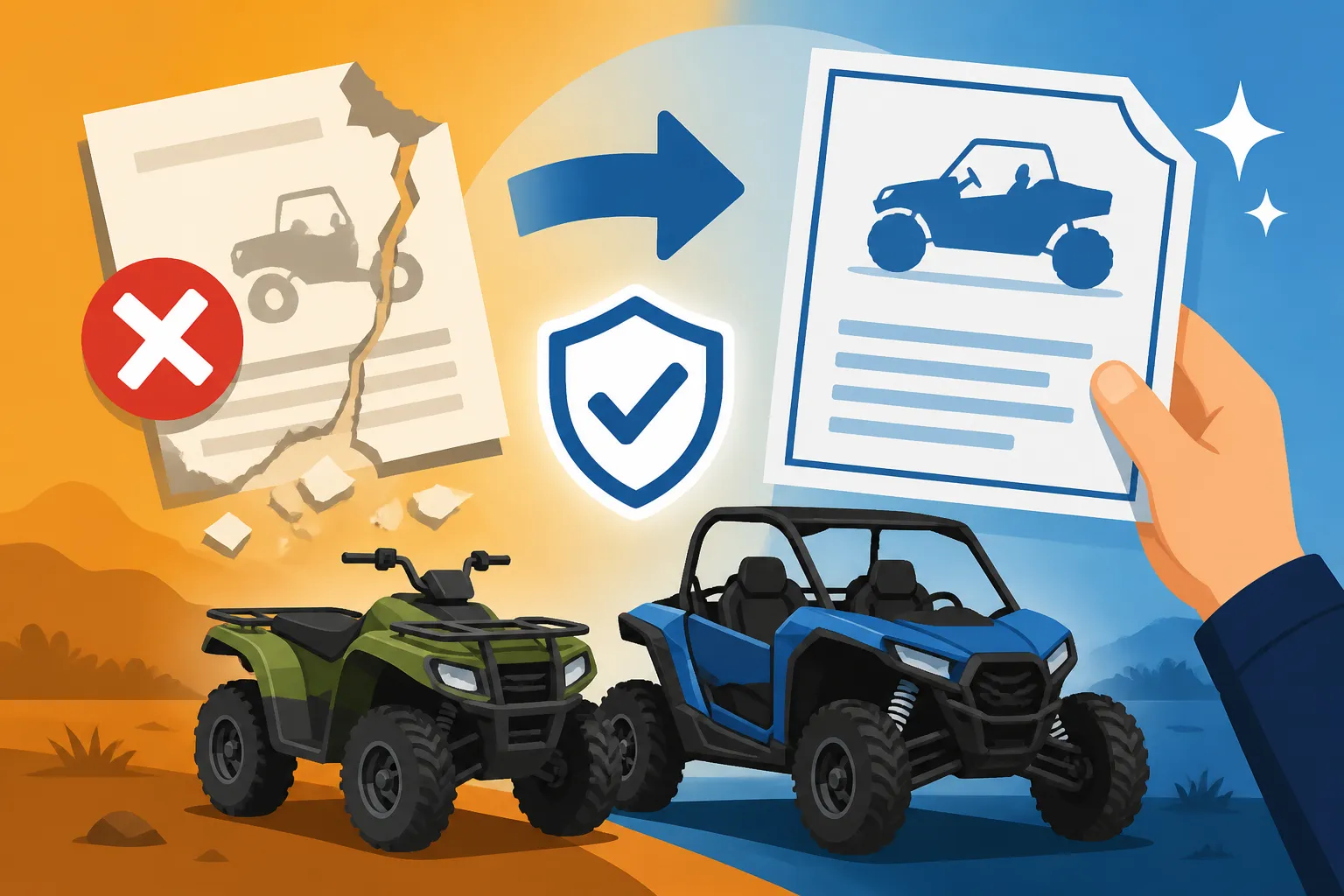
Losing important paperwork is always a stressful situation, but when it’s something as critical as the title for your beloved ATV or UTV in Kansas, it can feel like a real wrench in your plans. Whether it’s been misplaced during a move, accidentally shredded, or simply vanished into the ether, a lost nonhighway title can bring a lot of frustration and uncertainty. This guide is here to walk you through every step of replacing that lost Kansas nonhighway title, so you can breathe easier and ensure your machine’s ownership is properly documented.
The Initial Panic: Realizing Your Kansas Nonhighway Title Is Gone
That moment when you finally dig through all the folders, check under every pile of mail, and even re-trace your steps from last spring cleaning, only to confirm your ATV or UTV title is officially, unequivocally gone. It’s a gut punch, especially when you know how important that piece of paper is. You might even wonder if it's really that big of a deal since, unlike a car, your ATV doesn't get annual tags in Kansas. Trust me, it absolutely is a big deal.
Why a Nonhighway Title Matters in Kansas
Even though Kansas is pretty laid-back about off-road vehicles in some ways – like not requiring annual registration or tags for ATVs and UTVs classified as nonhighway vehicles – the title remains a cornerstone of ownership. Think of it as your machine's birth certificate and deed rolled into one. Without it, proving you actually own that quad or side-by-side can become incredibly difficult. This can throw a huge wrench into plans if you ever decide to sell your machine, gift it to a family member, or even if you need to prove ownership for insurance purposes after an accident or theft. It's the ultimate proof that the machine belongs to you, free and clear, or at least shows who the lienholder might be. For a deeper dive into what this title means, you can check out [Kansas's Nonhighway Title Explained].
Imagine this scenario: you've finally saved up for that dream upgrade, and you want to sell your current UTV to put towards the new one. A buyer comes along, excited, ready to pay cash, and then asks to see the title. If you can't produce it, that sale is likely to fall through, or you'll have to accept a significantly lower price. It's a common hurdle many private sellers face when the paperwork isn't in order.
Common Ways a Title Goes Missing
Titles seem to have a mischievous habit of disappearing, often at the most inconvenient times. One of the most common culprits is a move. You pack everything up, label boxes, and swear you put all the important documents in a specific "safe" box, only to find that box vanished into the Bermuda Triangle of moving cartons. Another frequent scenario involves accidental disposal. Maybe it was tucked into an old tax return folder that got shredded, or perhaps it was in a stack of papers that ended up in the recycling bin during a zealous spring cleaning spree.
I've heard stories from friends who had their titles damaged by water leaks in their basement storage, or even worse, lost in house fires. Sometimes, it’s simply misfiled with other vehicle documents, and you don’t realize it until you desperately need it. The important thing is not to beat yourself up over it. It happens to the best of us. The good news is, replacing it isn't nearly as complicated as it might seem at first glance.
Understanding the Application Process for a Duplicate Title
Once the initial panic subsides, it’s time to get down to business. The process for replacing a lost Kansas nonhighway title is surprisingly straightforward, mostly involving one key form and a trip to your local county treasurer's office. It's not as scary as it sounds, especially once you know what to expect.
The Key Form: Application for Secured or Non-Secured Certificate of Title
The primary document you'll need is the "Application for Secured or Non-Secured Certificate of Title," sometimes referred to as a Form TR-212. You can usually find this form on the Kansas Department of Revenue's official website, or you can pick one up directly from any Kansas county treasurer's office. This form isn't just for duplicates; it's the same one you'd use for an original title, so don't be alarmed by the generic name.
When filling out this form, precision is your best friend. You'll need to provide accurate information about yourself, the current owner(s), including your full legal name, current address, and driver's license number. Crucially, you'll also need all the identifying information for your ATV or UTV: the Vehicle Identification Number (VIN), make, model, and year. If you don't have this information readily available because your title is missing, check your insurance policy documents, prior sales receipts, or even look directly on the machine itself – the VIN is typically stamped on the frame. If you're a little fuzzy on all the paperwork involved in titling, you might find [Kansas Title Paperwork Explained] helpful.
It's vital to clearly indicate on the form that you are applying for a duplicate title. There's usually a checkbox or a specific section for this purpose. Double-check every field before you submit it; a small error can cause delays.
Who Can Apply for a Duplicate Title?
Generally, only the legal owner(s) of record or their authorized representative can apply for a duplicate title. If you're the sole owner listed on the original title, it's a pretty clear-cut process for you. However, things can get a little more complex in certain situations:
- Multiple Owners: If your ATV or UTV has two owners, both names would typically be on the original title. In many cases, either owner can apply for the duplicate, but it's always best practice (and sometimes required) for both to sign the application or for the applying party to have a power of attorney from the other. This ensures all parties are aware and agree to the process. For more information on this, refer to [Kansas Title With Two Owners].
- Inherited Machines: If you inherited the machine and the original title was never transferred to your name, you'll need additional documentation, such as the will, letters of administration, or an affidavit of heirship, along with the duplicate title application. This ensures legal succession of ownership. It can be a bit more involved, so reading [Kansas Titles for an Inherited Machine] could save you some headaches.
- Lienholders: If there's an active lien on your machine (meaning you still owe money to a bank or credit union), the lienholder might actually be the one holding the original title. If they lost it, they would be the ones to apply for the duplicate. If the lien has been paid off but never formally released on the title record, that's a different scenario we'll cover shortly.
Always ensure the person applying has the legal authority to do so. This protects against fraud and ensures the correct owner is issued the replacement document.
Gathering Supporting Documentation
While the application form is the star of the show, you'll need a few supporting documents to back up your claim and prove your identity. This is standard procedure to prevent fraudulent title applications.
- Photo Identification: Bring a valid government-issued photo ID, such as your Kansas driver's license or state ID card. This is essential for confirming your identity as the owner listed on the title.
- Proof of Address: The county treasurer's office will want to verify your current Kansas residential address. A utility bill, lease agreement, or other official mail in your name and at your current address will usually suffice. This ensures the duplicate title is mailed to the correct location. You can learn more about this requirement in [Kansas Title and Proof of Address].
- Lien Release (if applicable): This is a critical one. If the original title showed a lien that has since been paid off, but you never received a formal lien release from the financial institution, you'll need to obtain one. The county treasurer cannot issue a clean duplicate title without proof that any outstanding liens have been satisfied. Contact your bank or credit union and request a signed and notarized lien release document. This is common when people pay off a loan but forget to get the physical proof. Understanding [Kansas Title and Lien Records] can help you navigate this. If you show up without it, you'll likely be sent home to get it, delaying the entire process.
It’s always a good idea to make photocopies of all your documents before you head to the treasurer's office. That way, you have backups and don't risk losing anything important during your trip.
Navigating the County Treasurer's Office
Once you have your completed application and all your supporting documents in hand, your next stop is the Kansas County Treasurer's office in the county where you reside or where the machine is primarily kept. This is the only place you can apply for and receive your duplicate nonhighway title. Don't waste your time going to a state office or trying to do it all online – it doesn't work that way in Kansas for these machines.
Your Local Stop for All Things Title
It's common for folks to think they need to go to a state DMV or some other big government office, but for ATVs and UTVs in Kansas, it’s all handled at the local level. The county treasurer's office serves as the central hub for all vehicle titling and registration matters within its jurisdiction. This means you’ll be dealing with local staff who are often familiar with the nuances of off-road vehicle titles specific to your area. For more details on where to go, check out [Title an ATV at the County Treasurer, Not the State].
Before you make the trip, especially if you have an unusual situation or want to minimize your wait time, it's a smart move to call your county treasurer's office. Ask about their hours, what specific documents they require for a duplicate nonhighway title, and if there are particular days or times that are less busy. This simple step can save you a lot of frustration. They might even have a dedicated phone line or website section for common questions, as outlined in [Kansas County Treasurers Handle Titles]. Some counties even offer appointments, which can be a real time-saver.
When you arrive, be prepared to present your application, ID, proof of address, and any other necessary documents to a clerk. They will review everything, ensure accuracy, and process your request. Be polite and patient; they deal with a lot of people every day, and a little kindness goes a long way.
Fees and Payment for a Duplicate Title
Good news! Obtaining a duplicate nonhighway title in Kansas is a relatively inexpensive process. The state charges a small, fixed fee for issuing a duplicate title. This isn't one of those situations where you're hit with a massive penalty for a lost document. While I can't give you the exact current figure, you can expect it to be a very nominal charge, consistent with the fee for an original title. The good news is, [Kansas Charges $10 for a Title] covers this basic fee.
When it comes to payment, county treasurer's offices typically accept various forms. This often includes cash, personal checks, cashier's checks, and sometimes debit or credit cards. However, payment methods can vary by county, and some might charge a small processing fee for card transactions. It's always wise to confirm acceptable payment methods when you call ahead or to bring a couple of options with you. You can usually find a list of [Kansas Title Payment Methods] on your county's website.
What happens if you accidentally pay the wrong amount? Usually, the clerk will catch it before processing. If you underpay, they'll ask for the difference. If you overpay (which is less common with fixed fees), they'll typically correct it or provide a small refund. The key is to be prepared with the correct amount to ensure a smooth transaction.
Special Circumstances and Troubleshooting
While the process is generally straightforward, life—and titles—can throw a few curveballs. Knowing how to handle these special situations can save you from a major headache and keep your machine’s ownership status clear.
When the VIN is Missing or Unreadable
This is perhaps one of the most challenging situations you can face. The Vehicle Identification Number (VIN) is the unique identifier for your ATV or UTV, like its fingerprint. Without it, verifying ownership and issuing a new title becomes incredibly difficult. If you don't have the VIN from old paperwork and it's corroded, painted over, or simply gone from the machine itself, you're looking at a few extra steps. This is exactly why we wrote about [Kansas Title When the VIN Is Gone].
In such cases, you will likely need to involve law enforcement. A sheriff or highway patrol officer might need to inspect your machine to try and locate any hidden VINs or to verify that the existing, unreadable VIN matches records. They might complete a specific inspection form (sometimes an MVE-1) that verifies the machine's identity. This form would then be submitted with your duplicate title application. In extreme cases, if the VIN cannot be determined, you might even need to apply for a new VIN, which is a much more involved process, though rare for nonhighway vehicles.
My best advice here is to reach out to your county treasurer's office as soon as you realize the VIN is an issue. They can provide specific guidance on the exact steps and forms required in your county, as the process can sometimes have minor variations depending on local procedures.
Dealing with Liens on Your Title
As mentioned earlier, if there was an active lien on your original title, and that lien is still outstanding, the process for obtaining a duplicate title often falls to the lienholder. They are typically the ones holding the original title until the debt is paid off. So, if you're still making payments, your first call should be to your bank or credit union.
However, a more common scenario is when you’ve paid off your loan, but for whatever reason, you never received the physical lien release document, or the lien was never officially removed from the state's title records. You might think, "I paid it off, so it's fine!" But if the county treasurer's system still shows a lien, they cannot issue a clean title in your name.
In this situation, you must contact the financial institution that held the lien and request a formal lien release. This document, signed and often notarized, is proof that the debt has been satisfied. Once you have this in hand, you can submit it along with your duplicate title application. The treasurer's office will then process the lien release and issue a duplicate title showing you as the sole owner. Understanding [How a Lien Appears on a Nonhighway Title] can help clarify this process even further. Don't skip this step; it's a critical piece of the puzzle for a clear title.
Selling a Machine Before the Duplicate Arrives
You're eager to sell your ATV or UTV, but your duplicate title hasn't arrived yet. Is it possible to sell it? Technically, yes, but it's generally not advisable and can lead to significant complications for both you and the buyer. Most savvy buyers will, rightly so, demand a clear title at the time of sale to ensure they are getting legitimate ownership.
Selling without a title means you'll have to rely on a bill of sale as proof of transaction, with a promise to mail the title once it arrives. While a bill of sale is important, it doesn't transfer legal ownership in the same way a signed-over title does. This creates a risk for the buyer, who won't be able to title the machine in their name until they receive the document from you. This uncertainty can significantly reduce the pool of potential buyers and often forces you to accept a lower price. If you need to create a formal bill of sale, resources like LawDepot can provide templates that protect both parties involved in a private transaction, clearly stating that the title is pending.
My strong recommendation is to wait until you have the duplicate title in your hand before you complete any sale. This protects you from potential disputes and ensures a smooth transfer of ownership for the buyer. For more information on what to do when selling, take a look at [Selling a Titled Machine in Kansas].
What Happens After You Submit Your Application
You’ve gathered all your documents, filled out the form, visited the county treasurer’s office, and paid the fee. Now what? The waiting game begins. It's important to set realistic expectations for when you’ll actually receive your new duplicate title.
Processing Times and Expectations
Unlike some quick transactions, duplicate titles for nonhighway vehicles are not typically printed on the spot at the county treasurer's office. Once your application is submitted and approved by the local office, it usually needs to be sent to a central processing facility, often at the state level, to be officially printed and mailed out.
The processing time can vary. It largely depends on the current workload of the state's titling department and the efficiency of the postal service. You might wait anywhere from a few weeks to over a month. While I can't give you an exact current timeframe, it's generally not an instantaneous process. For a general idea of what to expect, refer to [Kansas Title Processing Time].
It's a good idea to ask the clerk at the county treasurer's office for an estimated timeframe when you submit your application. They often have the most up-to-date information on current processing delays. Be patient, but if an exceptionally long time passes (say, two months or more) without receiving your title, it's appropriate to follow up with the county treasurer's office to inquire about its status. Make sure you keep any receipts or tracking numbers they provide.
What to Do if Your Original Title Suddenly Appears
Ah, the classic "find it after you've replaced it" scenario! It happens more often than you'd think. You've gone through all the trouble of getting a duplicate, and then, while cleaning out that junk drawer one last time, your original title miraculously reappears.
Here's the critical point: once a duplicate title has been issued, the original title becomes null and void. It no longer holds legal standing as proof of ownership. Even if it looks perfectly fine, it's essentially a worthless piece of paper in terms of legal documentation.
So, what should you do with it? The best course of action is to destroy the original title to prevent any confusion or potential misuse. You can shred it, cut it into pieces, or dispose of it in a way that makes it clear it's no longer valid. Do not try to use it for a sale or any other transaction, as it could lead to legal complications for you and the unsuspecting buyer. The duplicate title you receive is now the official and only valid document of ownership.
Preventing Future Title Loss
Going through the process of replacing a lost title is a hassle you definitely don't want to repeat. A little foresight and organization can save you a world of trouble down the road. It’s all about creating secure systems for your important documents, much like you would for any other valuable asset.
Secure Storage for Important Documents
Think of your ATV or UTV title as important as your house deed or vehicle registration. It deserves a secure, consistent home.
- Fireproof Safe or Safety Deposit Box: The absolute best option for physical documents is a fireproof and waterproof safe in your home or a safety deposit box at a bank. These provide protection against theft, fire, and water damage, which are common reasons titles are permanently lost. If you keep it at home, make sure it's in a location only you (and perhaps a trusted spouse) know about.
- Dedicated Document Folder: If a safe isn't feasible, designate one specific, brightly colored folder for all your vehicle titles (car, truck, ATV, UTV, trailer, etc.). Keep this folder in a known, secure place, away from general clutter or areas where it could be accidentally thrown out.
- Digital Copies: Scan or take clear photos of your title (front and back) and save them to a secure cloud storage service or an encrypted flash drive. While a digital copy isn't a legal substitute for the original, it's invaluable for having the VIN and other key information readily available if the physical title is lost again. This can speed up the duplicate application process significantly.
Whatever method you choose, consistency is key. Always return the title to its designated spot immediately after you've needed it.
Creating a Title Record for Your Files
Beyond simply storing the physical title, it's incredibly helpful to create a separate, simplified record of its essential information. This "title record" can be a lifesaver if the actual title goes missing.
- Information to Record: At a minimum, jot down the full Vehicle Identification Number (VIN), the make, model, and year of your ATV/UTV, the title number (if provided on the title itself), and the date the title was issued.
- Where to Keep It: Keep this record separate from the actual title. For instance, if your title is in a fireproof safe, keep this record in a binder with other important household documents, or even in a secure digital note.
- Utilizing Document Management Tools: For those who like to be super organized, consider using document management software or online platforms. Services like LawDepot can be useful not just for generating legal documents but also for organizing an inventory of your important papers. You could create a simple checklist or record sheet within such a platform, listing all your titled assets with their key identification numbers. This way, if you ever lose the physical title, you have all the necessary information at your fingertips to apply for a duplicate, making the process much less stressful.
By taking these proactive steps, you can avoid the frustration and wasted time of replacing a lost Kansas nonhighway title in the future, allowing you to focus on what really matters: enjoying your ATV or UTV on the trails and pastures of the Sunflower State.
Disclaimer
This article is for general informational purposes only and does not constitute professional advice. Laws, prices and regulations vary by location and change over time. Consult a qualified professional for guidance on your specific situation.