Refunds When Rain Shuts a Riding Park
Rain can turn a planned riding day into a muddy drive home, but a park closure does not automatically mean a refund. In Kansas, the answer usually depends on who operates the riding area, what you paid for, and the park’s posted policy. Here’s how to check your options, ask for a fair remedy, and avoid confusion between a closed park and trails that are simply too wet to ride.
First, find out what “closed because of rain” means
A park may stop riding for several different reasons: the entrance is closed, particular trails are temporarily off-limits, or the facility is open but conditions make riding unsafe or damaging. Those situations can lead to different outcomes, so confirm what the operator has actually decided before asking for money back.
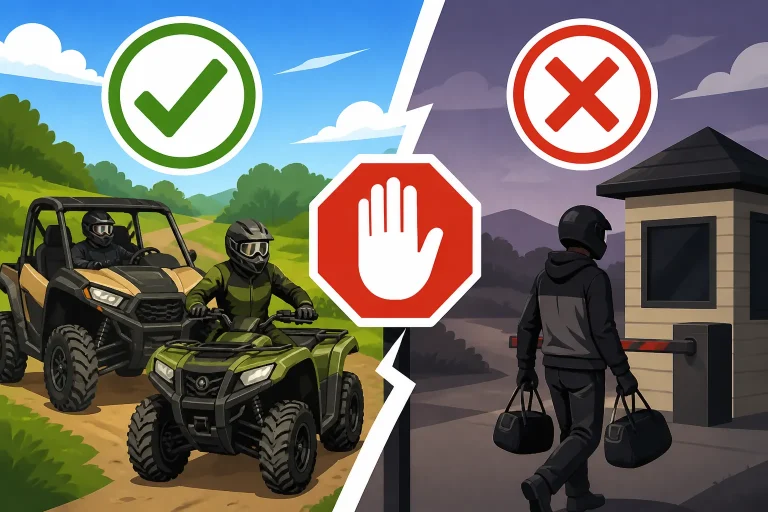
A full closure means the park is not allowing visitors to enter or ride. A partial closure may leave some routes, camping areas, or other facilities available. And if the park remains open but you choose not to ride because the trails are muddy, that may be treated differently from an operator-ordered closure.
Rain alone does not tell you which situation applies. Ask whether the closure applies to the entire park, your planned riding area, or only certain trails. Also ask whether the park expects to reopen later that day. Conditions can change, but do not assume a posted closure has been lifted unless the operator confirms it.
| Situation | What to clarify | Why it matters |
|---|---|---|
| The entire park is closed | Whether your admission is eligible for a refund, credit, or date change | You may be unable to use the service you paid for |
| Some trails are closed | Which areas remain open and whether riding is still permitted | A partial closure may not cancel the whole visit |
| The park is open but muddy | Whether the operator has restricted riding or left the decision to visitors | Choosing not to ride may be treated differently from a park closure |
| A campground is open while riding is closed | Whether your camping reservation and riding admission are handled separately | One part of a trip may remain available even if another does not |
| The park is closing after you arrive | Whether staff will offer a partial credit or another remedy | The time you were able to use the facility may affect the discussion |
Rain closures also relate to safety and trail protection. Riding on saturated ground can cause ruts, erosion, and damage that takes time to repair. Some operators may close routes to prevent damage or keep riders away from hazardous conditions. Check Kansas Trail Closures After Rain for more about why wet-weather restrictions can happen.
Public areas and private riding parks are not the same
Do not assume that every Kansas riding area has one refund policy. A private park sets its own admission, closure, and reservation terms. Public land may have different access rules, and there may not be a daily riding ticket to refund in the first place.
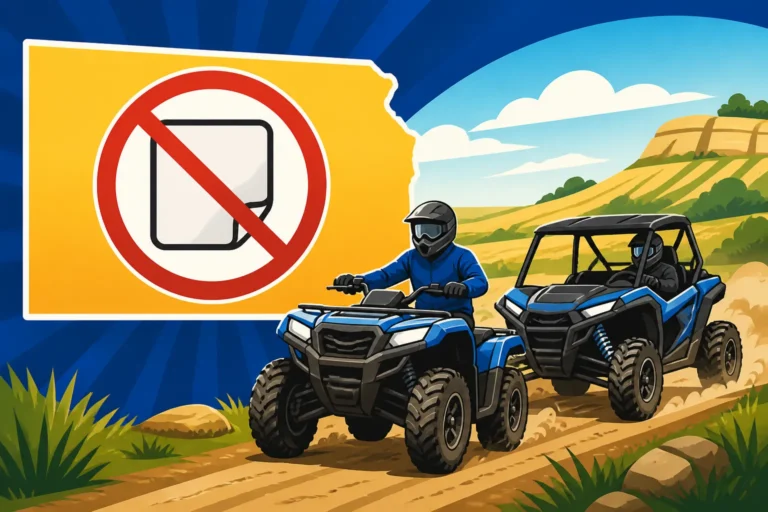
Kansas does not have a statewide OHV trail pass that functions as admission to every riding area. A state park permit, where required for a particular use, is not automatically a riding-park admission. Read Kansas Has No State OHV Permit and Kansas Park Permit vs Trail Permit if you are sorting out which payment or permit applies to your outing.
For a privately operated facility, review its current terms before you leave home. Kansas Private Off-Road Parks can help you identify the kind of places where operator-specific rules matter. If your destination is a particular facility, check its own current notices and policies rather than relying on another park’s approach.
What refund or credit might be available
There is no single refund outcome that applies to every rain closure. A park might offer a refund, a credit toward a future visit, a rescheduled date, or no remedy under its posted terms. The result can depend on the admission type, the wording of the policy, how much of the visit was available, and whether the park or the visitor chose to cancel.
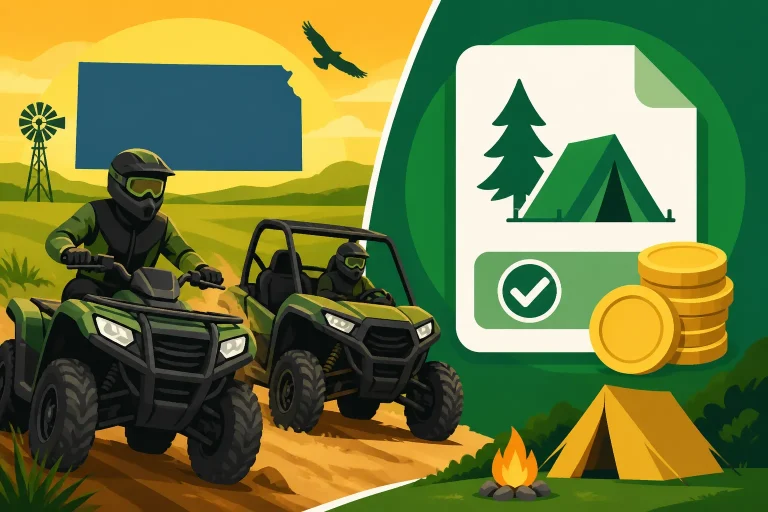
A day pass, annual pass, camping reservation, and event entry are different purchases. A day pass may be tied to a single date. An annual pass may remain usable on another day, even if one trip is disrupted. A campsite may still be available when riding trails are closed. Event entry may have separate terms from ordinary admission.
Before you decide what to request, separate the items in your booking:
- Admission or riding pass: Ask whether it remains valid for another date or whether a refund is offered for a full closure.
- Camping: Confirm whether the campground is open and whether your reservation can be changed independently of riding admission.
- Event registration: Ask for the event-specific cancellation policy; an event may not follow the general day-pass rule.
- Add-ons or rentals: Check whether they are refundable if the park closes or if you cannot use them.
- Fees and taxes: Ask whether any amount is refundable and how the park handles it. Do not assume every line on a receipt is treated the same way.
A credit can be useful if you expect to return, but make sure you understand its conditions. Ask when it expires, whether it can be transferred, whether it applies to the same type of admission, and whether you need to reserve a date. If the park offers a new date instead, confirm whether you must accept a specific date or can choose from available dates.
A park may also distinguish between a closure announced before arrival and one that happens after you have entered. If you were able to ride for part of the day, the operator might offer a different remedy than it would for a full-day closure. Ask what policy applies to your specific circumstances instead of assuming that a full refund is automatic.
Check written terms before relying on a verbal answer
Look at the confirmation email, receipt, reservation page, waiver, and posted park rules. Search for terms such as “weather,” “closure,” “rain,” “refund,” “credit,” and “reschedule.” A waiver may address risk or responsibility without explaining how admission payments are handled, so check the payment and reservation terms too.
If the policy is unclear, ask the park to point you to the specific rule it is applying. Keep the response in writing if possible. Kansas Private Park Waivers and Rules explains why it is worth reviewing a park’s documents before riding, while Kansas Riding Areas That Take Reservations is useful when your plans involve a booking rather than walk-up admission.
For a park with camping, read its camping terms separately. A riding closure does not necessarily cancel a campsite reservation, and a campground closure does not automatically tell you what happens to a riding pass. The park’s current reservation policy is the best place to start; Kansas Private Park Camping Rules covers the separate questions that can arise when camping is part of the trip.
How to request a refund or another remedy
Contact the park promptly once you know it is closed or your plans are affected. Use the contact method the operator identifies for closure updates or reservations. A brief, specific request is usually easier to resolve than a long complaint that leaves out the booking details.
- Confirm the closure. Ask whether the park is fully closed, partly closed, or open with wet-trail restrictions. Note the date and the staff member or official notice that confirmed it.
- Gather your records. Have your receipt, reservation number, pass details, and any closure notice available. Keep copies of emails, texts, and screenshots.
- Explain what you could not use. State whether you had a day admission, campground reservation, event entry, or more than one purchase. Be clear about whether you had already arrived or entered the park.
- Ask what the policy offers. Request the relevant written terms and ask whether a refund, credit, or date change is available.
- Get the outcome in writing. If the park agrees to a credit or rescheduling, confirm the amount or admission covered, any deadline, and how to redeem it.
- Follow up calmly if needed. If the answer does not address your purchase, reply with the receipt and the specific policy language you believe applies. Ask the operator to explain any difference.
A practical message might say: “The park was closed for rain on my reserved date. My confirmation number is number. Could you tell me whether the admission and campsite are eligible for a refund, credit, or date change under your current policy?” Replace the bracketed detail with your actual booking information; do not send payment-card details in an ordinary email.
If the park says it is open but trails are too wet for your comfort, describe that accurately. Do not state that the operator closed the facility if it did not. You can still ask whether a date change is possible, but the park may apply its normal cancellation policy when visitors decide not to attend.
If you paid by card and cannot resolve a dispute with the operator, review your card issuer’s dispute process and deadlines. A payment dispute is not a guaranteed substitute for following the park’s policy, and the issuer may ask for evidence of the purchase and your attempt to resolve it directly. Keep your communications factual and provide the documents requested.
Plan ahead to reduce the chance of a lost trip
A little checking before departure can save a long haul to a closed gate. Look for the park’s official weather updates on the day of your ride, and contact staff if the status is uncertain. A general weather forecast cannot confirm that a park is open; conditions can differ between the forecast area and the riding property.
Before paying, ask a few direct questions:
- What happens to admission if the park closes for rain?
- Does a credit have an expiration date or other restrictions?
- Are camping and riding admissions handled separately?
- How does the park notify visitors of a closure?
- If only some trails are closed, does the normal admission still apply?
- Are event entries, rentals, or other add-ons covered by a different policy?
Save the answers with your booking confirmation. If the park changes its policy or posts a closure notice, keep a copy of the information that applied to your visit. Policies can change, so an old social media post or a friend’s experience may not reflect the terms for your date.
You can also reduce the risk of misunderstanding by choosing flexible travel arrangements. If you are booking a campsite or planning a group outing, check whether the reservation can be moved before arranging travel for everyone. For a group, designate one person to contact the park and share the confirmed status and policy with the rest of the riders.
Do not ride trails that the park has closed, even if other parts of the property remain open. Follow staff directions and posted signs. If your plans include a specific park, its own rules matter: Kansas Rocks Park Rules for Riders and Kansas Syracuse Dunes Park Rules are useful starting points for checking facility-specific expectations.
The simplest rule is to ask before you assume: confirm whether the park is actually closed, identify each purchase affected, and request the remedy described in the current policy. That approach gives you the clearest chance of resolving a rain-disrupted visit without confusing a private park admission, a campsite, and a state permit.
Disclaimer
This article is for general informational purposes only and does not constitute professional advice. Laws, prices and regulations vary by location and change over time. Consult a qualified professional for guidance on your specific situation.