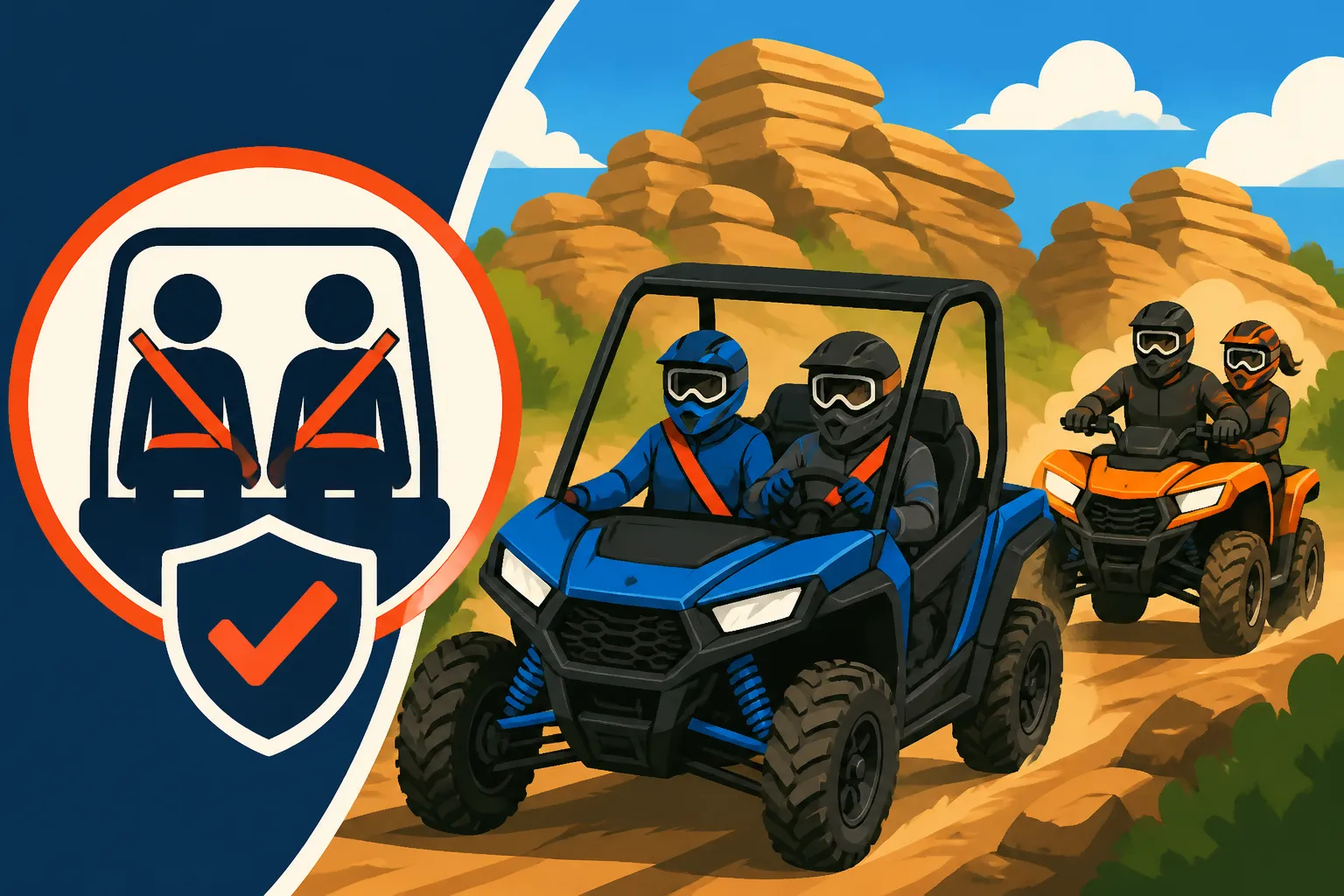
Passenger Rules at Kansas Rocks Recreation Park
A passenger can turn a planned ride at Kansas Rocks Recreation Park into a gate-side problem if the machine, passenger, or park rules do not match. The safest approach is to confirm the park’s current requirements before loading up, then check that the vehicle is designed for the number of people riding and that each passenger can ride securely.
Start With the Park’s Current Passenger Policy
Kansas Rocks Recreation Park is a private riding area, so its entry and riding rules matter alongside general safety and legal requirements. Do not assume that a passenger is allowed just because a machine has room to sit another person, or because passengers are permitted on a similar machine elsewhere. Park rules can be more specific than a broad description of what a vehicle can carry.
Before you leave, contact the park or check its current posted rules. Ask plainly whether passengers are allowed on the type of machine you plan to bring, and whether the answer changes for children, youth machines, or particular trail areas. Ask whether there are requirements for helmets, waivers, minimum ages, or adult supervision. These details can change, and a quick confirmation is more useful than relying on an old post or a rule remembered from a previous visit.
The park’s general rider requirements are also worth reviewing. Kansas Rocks Park Rules for Riders can help you make a checklist, while Kansas Private Park Waivers and Rules explains why a private park’s conditions of entry deserve attention. Treat a waiver and posted rules as part of trip planning, not paperwork to skim after arriving.
| Before the ride | What to confirm |
|---|---|
| Passenger permission | Whether the park allows passengers on your machine and in the areas you plan to ride |
| Vehicle seating | Whether the manufacturer designed the machine for the number of occupants |
| Passenger eligibility | Any current age, supervision, or size requirements set by the park |
| Safety gear | Helmet and other protective equipment required by the park |
| Check-in process | Whether each rider must complete a waiver or meet another entry condition |
A park employee’s answer should be specific to your machine and passenger. Instead of asking, “Can I bring a passenger?” give the make and model, explain how many people will ride, and mention the passenger’s age if relevant. If you have a side-by-side, say whether it is a two-seat or four-seat model. If you have an ATV, explain whether it has a designated passenger seat and passenger handholds or footrests.
That level of detail reduces the chance of misunderstanding. “UTV” and “ATV” describe broad categories, not the seating arrangement of every model. A two-seat machine and a four-seat machine may be treated differently by the park, and a machine that has been modified may raise additional questions.
Match the Passenger to the Machine
The basic safety test is whether the vehicle was designed to carry that passenger in that seat. An extra cushion, a cargo box, or a makeshift perch does not turn a one-person ATV into a passenger vehicle. A rider should not carry someone on a rack, fender, or other spot that is not an intended passenger seat.
For an ATV, check the manufacturer’s owner’s manual and the labels on the machine. If it is a single-rider model, do not add a passenger for a short trail segment or because the route looks easy. The passenger can shift the machine’s balance, interfere with the operator’s movement, and make steering or braking less predictable. A passenger seat, where present, does not remove the need to follow the manufacturer’s stated capacity and instructions.
For a side-by-side, use only the seats the manufacturer built into the vehicle. Each passenger should sit in a designated seat and use the available restraint system as directed. Do not carry more people than the model is designed for, even if everyone appears to fit. A crowded cab can make it harder for occupants to stay seated and secured when the machine bounces, turns, or crosses uneven ground.
Kansas passenger requirements can depend on the machine and the circumstances. For a broader look at passengers on utility vehicles, see Kansas Rules for Passengers on a UTV. For children riding with an operator, Kansas Rules for a Child Passenger is a useful companion. Those topics do not replace Kansas Rocks’ own policy: a private park can apply its own conditions for riding on its property.
A passenger also needs to fit the seat and safety equipment. The rider should be able to sit in the intended position, reach or use the equipment designed for passengers, and remain stable without leaning unpredictably. A child who is too small to sit securely may not be a safe passenger even if the machine has an open seat. If a passenger cannot use a seat belt, footrest, handhold, or other built-in safety feature as intended, choose a different riding arrangement.
Do not judge fit only by age. Two children of the same age may differ in height, coordination, and ability to follow instructions. Conversely, a park may set a specific age rule that applies regardless of an individual child’s size or experience. Check both the park’s stated requirement and the practical fit of the passenger.
Children, Teens, and Passenger Preparation
Riding with a child takes more preparation than simply providing a spare helmet. First, verify that Kansas Rocks permits the child to ride as a passenger on your exact machine. Then check whether the park has a minimum age or supervision requirement, and whether the child needs a separate waiver or must be accompanied by a parent or guardian. Private parks can set age and participation conditions; do not assume that a rule at another park applies here. Kansas Private Park Age Minimums offers more background on how private riding areas may set their own age limits.
Before starting, explain what the passenger should do and what to avoid. A passenger should stay seated, keep hands and feet in the intended positions, use the restraints or handholds provided, and follow the operator’s directions. They should not lean suddenly, reach toward a trail obstacle, or try to get off while the machine is moving. If the passenger becomes frightened, tired, cold, or uncomfortable, stop somewhere safe rather than trying to finish the trail quickly.
Choose a route and pace that suit the least experienced person on the machine. A familiar operator may be comfortable with rough terrain, but a passenger may not be prepared for sharp turns, loose rock, steep sections, or sudden drops. Kansas Rocks is known for off-road terrain, so a beginner passenger should not be treated as extra cargo. Start conservatively, communicate before obstacles, and turn around if the passenger is no longer comfortable.
A helmet is essential protective equipment even where a particular rule is unclear. Confirm the park’s helmet requirements before the trip, and use a properly fitting helmet intended for off-road riding. A helmet should sit securely, be fastened as directed, and not move freely when the rider turns their head. If you shop online, including through Amazon, check the helmet’s size guidance and fit requirements rather than choosing by appearance alone. A helmet that is too large or cannot be secured correctly is not a useful substitute for a proper fit.
Other protective gear can make a ride more comfortable and reduce exposure to common trail hazards. Consider eye protection, gloves, long sleeves, long pants, and sturdy footwear. These items do not make an unsuitable passenger safe to carry, but they can help protect both operator and passenger from dust, debris, and contact with the vehicle or trail.
Teens who are old enough to ride independently still need to follow park requirements and the machine’s limits. A teen passenger should not be placed on a vehicle that is not built for two, and a teen operator should not assume that being an experienced rider makes passenger transport safe. For a related look at youth riding considerations, see Kansas Rules for a Teen Rider.
A Practical Check Before You Load the Machine
Confirm the rules before loading, then do a final check at the vehicle. This is especially helpful when a group is bringing more than one machine or when a passenger is joining the trip at the last minute.
- Identify the exact machine. Note the make, model, seating configuration, and number of occupants it is designed to carry.
- Ask Kansas Rocks about passenger permission. Confirm the policy for that machine, the passenger’s age if applicable, and the trail or riding area you expect to use.
- Check the manual and vehicle labels. Follow the manufacturer’s occupancy limit and instructions for passengers. Do not rely on a modification or an informal workaround.
- Review park requirements for each rider. Ask about helmets, waivers, age rules, supervision, and any other required equipment or check-in steps.
- Check passenger fit. Make sure the passenger can use the intended seat and safety features and can remain seated securely.
- Set expectations before moving. Explain how to sit, when to hold on, how to signal discomfort, and why nobody should climb on or off while the machine is moving.
If the answer from the park is unclear, pause the plan and ask again with the machine’s details. A general “yes, passengers are allowed” may not answer whether a particular ATV, UTV, child passenger, or seat arrangement is acceptable. If you cannot confirm that the passenger and vehicle meet the requirements, ride without that passenger or bring a machine designed for the number of people in your group.
Remember that a park’s permission is not the same as permission to ride on public roads. A passenger-approved machine at a private park does not automatically qualify for road use, and a title or other document does not establish that the vehicle is street legal. For that distinction, see Having a Title Does Not Make an ATV Street Legal. Also review Kansas Private Park Helmet Rules for the separate question of park-specific protective gear requirements.
Disclaimer
This article is for general informational purposes only and does not constitute professional advice. Laws, prices and regulations vary by location and change over time. Consult a qualified professional for guidance on your specific situation.