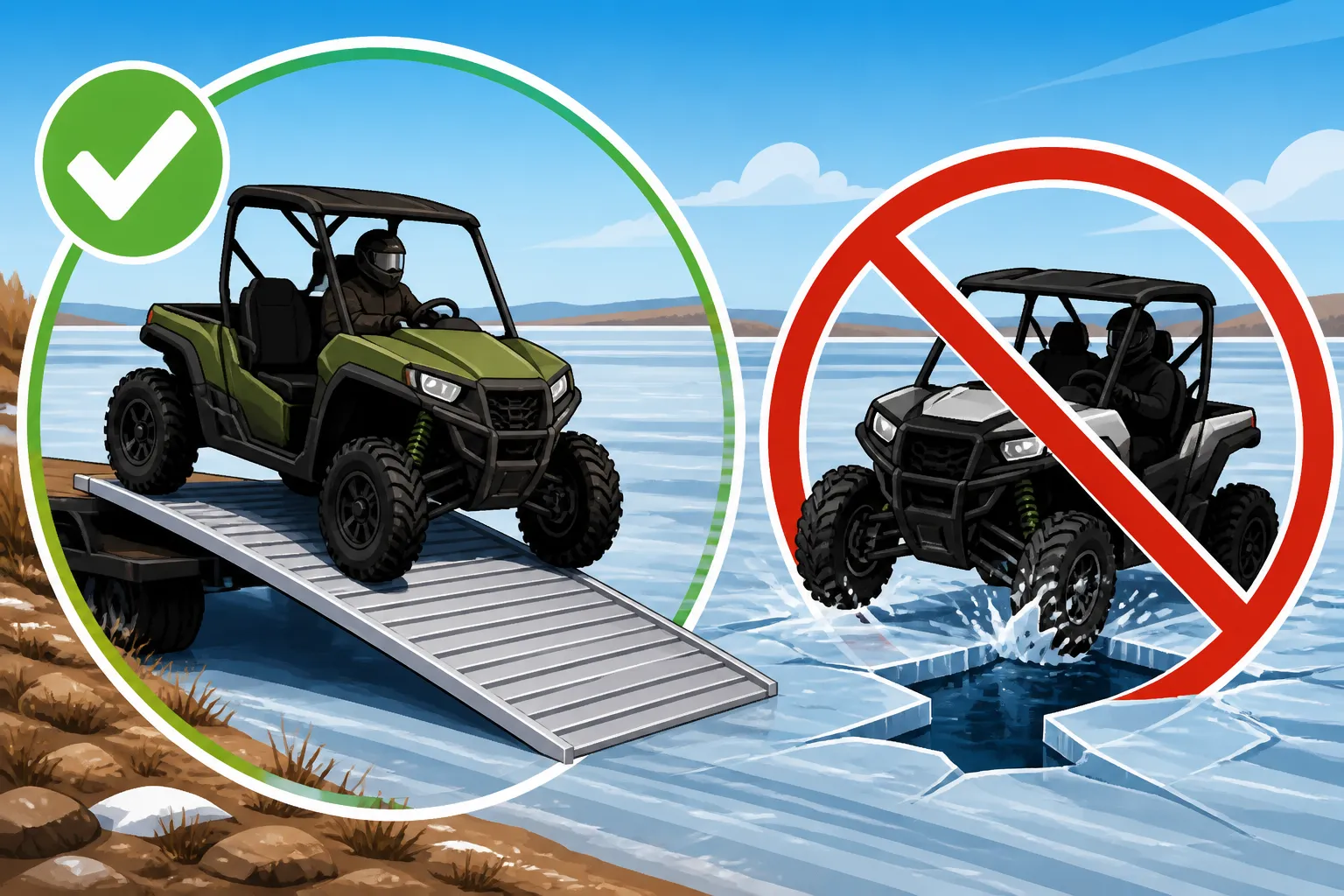
Designated Ramps Are the Only Way Onto the Ice
Ice fishing access by ATV or UTV can be confusing: a frozen shoreline may look like an easy place to drive onto the lake, but that does not make it an authorized entry. In Kansas, use only a designated ice-entry ramp where one is provided, and confirm the park’s current rules before unloading. Knowing where to enter—and what a permit does and does not allow—helps prevent a costly mistake.
Why designated ramps matter
A frozen lake can look uniform from shore, but ice conditions and shoreline access are not uniform. A designated entry ramp identifies an access point approved for vehicles under the park’s rules. Driving onto the ice from another beach, boat ramp, shoreline, or parking area may damage the property, create a hazard, or violate access restrictions.
The rule is not simply “drive wherever the ice looks solid.” Ice thickness can vary over a short distance because of currents, inflows, springs, changing water levels, snow cover, and other conditions. A familiar route from a previous winter may not be safe—or open—on a later visit. A designated ramp tells you where access is allowed; it does not guarantee that the ice is safe to travel.
For Kansas state park ice fishing, the important distinction is between a permitted access point and general shoreline. If park staff identify a ramp or entry point for vehicles going onto the ice, use that route and follow any signs or directions at the site. Do not treat a boat ramp as an ice-entry ramp unless the park has designated it for that purpose. A boat ramp that is open in summer may be closed, unsuitable, or not approved for vehicle access onto frozen water.
This also differs from riding on ordinary park roads or trails. A park permit or vehicle permit may address some kinds of access, but it does not override a closed area, authorize a route that is not designated, or make an unsafe lake safe. The distinction is covered in The Park Permit That Covers Roads, Not Trails and Kansas Park Permit for a UTV. For rules specifically related to driving on frozen water, see Kansas Ice Fishing Machine Rules.
| Situation | What to do |
|---|---|
| The park identifies a designated ice-entry ramp | Use that entry point and follow posted directions |
| A boat ramp is visible, but its ice-use status is unclear | Ask park staff before driving onto it |
| Other visitors are driving onto the lake from an undesignated area | Do not assume their route is allowed |
| The lake is frozen but no approved entry point is open | Keep the machine off the ice |
| Signs, staff directions, or current conditions conflict with an old map or past visit | Follow current directions and confirm with the park |
The main takeaway is practical: the ice being frozen does not create permission to drive onto it. Access depends on the designated entry point and the park’s current instructions.
Check the park, entry point, and permit before you go
Conditions and operating details can vary by park and may change during the season. Before loading an ATV or UTV, contact the park where you intend to fish. Ask whether vehicles may currently enter the ice, which ramp is designated, whether the ramp is open, and what permit or other requirements apply to your machine.
A quick call can clear up questions that a general map or an old social media post cannot answer. It is especially useful after a thaw, heavy snowfall, a change in lake level, or a period of extreme cold. Check Calling a State Park Office Before You Load Up if you want a short list of useful questions to ask.
Confirm these points before leaving home:
- The exact entry point. Ask for the name or location of the designated ice ramp. If there is more than one access area, confirm which one is approved for vehicles.
- Whether vehicle access is open now. A ramp may be designated but closed temporarily, or ice conditions may prevent access.
- What kinds of machines are allowed. Do not assume that permission for one type of machine applies to every ATV, UTV, golf cart, or other vehicle.
- Permit requirements. Ask whether your vehicle needs a Kansas permit for the planned use and where that permit can be obtained. The general permit process is explained in Buying an Unconventional Vehicle Permit at a Park Office.
- Hours and additional restrictions. Verify any time limits, temporary closures, parking instructions, or other rules that apply to the park or access point.
- What happens if conditions change. Ask where the park posts closures or updated access information so you can check again before driving onto the lake.
A permit and an authorized route are separate parts of the decision. A permit does not automatically allow access from any shoreline. In the same way, finding a designated ramp does not automatically settle every permit question for your machine. Confirm both.
This is particularly important if you are visiting from outside Kansas. Do not assume that an out-of-state trail sticker, registration, or permit is accepted as a substitute for a Kansas requirement. Check the rules for the specific park and machine. The state’s general permit approach is described in Kansas Unconventional Vehicle Permit, but the park should confirm how it applies to your planned trip.
If you are unsure whether your machine fits the park’s definition of an unconventional vehicle, ask before arrival. Labels such as ATV and UTV can cover machines with different designs and uses. Staff can tell you which requirements apply to the vehicle you actually plan to bring. A machine’s title or registration status alone does not establish that it may travel onto frozen water from a particular location.
Use the ramp without treating it as a safety guarantee
Once you arrive, look for posted signs and current directions at the access point. Follow the marked route and do not create a new track around a gate, barrier, or closed area. If the ramp is blocked, the lake appears unsafe, or the posted directions are unclear, stop and contact park staff rather than choosing another place along the shore.
A designated ramp answers an access question, not an ice-safety question. It identifies where the park allows entry; it does not certify the lake’s thickness across the route to your fishing spot. Ice can be thinner near shore, at an inlet, near moving water, around vegetation, or anywhere conditions differ from the surrounding lake. Snow can conceal weak areas and make cracks or surface changes difficult to see.
Before approaching the ramp, make a plan for the machine and the people riding in it:
- Check current conditions. Review park updates and ask staff if the weather or lake conditions have changed since your last check.
- Inspect the entry area from shore. Watch for open water, pressure cracks, slush, standing water, or other warning signs. If conditions are questionable, do not proceed.
- Carry appropriate safety equipment. Consider ice picks, flotation gear, a throw rope, and a communication device, and make sure everyone knows how to use them.
- Keep passengers within the machine’s design and capacity. Do not add riders simply because the trip across the ice seems short.
- Travel cautiously and avoid unnecessary stops or sharp maneuvers. Keep a conservative distance from other machines and people, and do not follow a track just because someone else has used it.
- Turn back when conditions or directions are uncertain. A fishing spot is not worth taking a risk or ignoring a closure.
Safety equipment is useful only if it is accessible and the group knows how to use it. For example, a throw rope should not be buried beneath fishing gear, and ice picks should be within reach rather than packed away in a storage box. You can find basic items through local outfitters or Amazon, but check that the equipment is suitable for cold-water emergencies and that it is ready to use.
Do not use another person’s tracks as proof that your route is safe or authorized. A track may have been made before a change in weather, may lead from an unapproved access point, or may cross ice that has weakened. Likewise, a vehicle that has already reached the fishing area does not establish that the route is open to everyone.
If you encounter a barrier, closure notice, or direct instruction from park staff, do not bypass it. The closure may be temporary and specific to ice, shoreline damage, or access conditions. A designated ramp is not an invitation to keep going when the park has closed it.
What to do when no designated entry is open
If the park has not designated an ice-entry ramp, the designated ramp is closed, or staff say vehicle access is not allowed, keep the ATV or UTV off the ice. Do not substitute a nearby shoreline, an unmarked boat ramp, or a route used by other visitors. Walk-in access may have different rules, but it does not make vehicle access permissible.
You can still adapt the outing:
- Ask whether there is another designated entry point at the same park.
- Check whether another nearby park has an approved access point open.
- Park in an authorized area and carry equipment to the fishing location if walking access is allowed and conditions are safe.
- Choose an open-water or shore-fishing location instead.
- Reschedule if the access route or ice conditions are uncertain.
If you are bringing an ATV or UTV onto park property but will not drive it on the ice, ask where it may be parked or operated. A permit for one type of park use should not be interpreted as blanket permission to ride throughout the property. For broader information about what to bring and how access requirements work at a gate, see What to Show at a Kansas State Park Gate.
Keep the day’s plan flexible. A closure can occur after you have already made the drive, and a designated access point can be unavailable even when the rest of the park remains open. The safest response is to follow the updated directions rather than improvising an alternate route.
A simple final check before unloading can prevent confusion: confirm that you are at the correct park, at the designated entry point, with the right permission for your machine, and that access is open under current conditions. If any of those details is unclear, pause and ask. The designated ramp is the starting point for authorized vehicle access onto the ice—not proof that every route beyond it is open or safe.
Disclaimer
This article is for general informational purposes only and does not constitute professional advice. Laws, prices and regulations vary by location and change over time. Consult a qualified professional for guidance on your specific situation.