Why an ATV Is Exempt From Registration Entirely
Many ATV owners in Kansas find themselves in a bit of a head-scratching situation. You buy a new quad or a used side-by-side, and you hear all sorts of talk about paperwork: sales tax, maybe a title, and then the word "registration" pops up, and suddenly everyone has a different idea of what that means. It's totally understandable to feel confused, especially when dealing with something as fun and freeing as an off-road machine. You want to make sure you're doing everything by the book, but the "rules" seem to shift depending on who you ask. This guide is here to clear the air, explaining exactly why ATVs in Kansas are exempt from traditional annual registration and what that really means for you as a responsible owner and rider.
Understanding Kansas's Unique Definition of an ATV
The core of why ATVs aren't "registered" in the traditional sense in Kansas comes down to how the state legally defines them and, more importantly, where they are primarily intended to be used. Unlike your family car or daily commuter truck, an ATV isn't built for public roads. Kansas law recognizes this fundamental difference, creating a separate category for these machines. This distinction is crucial for understanding your responsibilities as an owner.
The Core Distinction: Nonhighway Vehicles
In Kansas, an All-Terrain Vehicle (ATV) is classified as a "nonhighway vehicle." This isn't just a casual term; it's a specific legal designation under Kansas statutes. A nonhighway vehicle is, quite simply, a vehicle that's not designed or intended for use on public roads. Think about it: an ATV typically lacks many of the safety features required for street-legal vehicles, like turn signals, specific lighting configurations, or even seatbelts in the same way cars have them. Because of this, the state doesn't subject them to the same annual road-use registration and tagging requirements that apply to vehicles meant for asphalt.
This classification means that from a legal standpoint, your ATV isn't expected to share the highway with cars, trucks, and motorcycles. It's built for dirt, trails, fields, and pastures. This distinction is a huge relief for many owners who just want to enjoy their machines off-road without the hassle and expense of annual tags and inspections designed for street vehicles. It simplifies things considerably, focusing the legal requirements on ownership and origin rather than continuous road-readiness.
No Need for a Tag, No Annual Fee
Perhaps the biggest takeaway from the "nonhighway vehicle" classification is that your ATV will not receive a traditional license plate or tag from the state of Kansas. This is a common point of confusion because most people associate vehicle ownership with an annual tag renewal sticker. With an ATV, that simply doesn't happen. You won't be visiting the county treasurer's office every year to renew a tag for your quad or UTV, because there isn't one to renew.
This also means you won't be paying an annual registration fee to the state for your ATV. For cars and trucks, these fees contribute to road maintenance and other state services. Since ATVs aren't generally on those public roads (with very specific exceptions we'll touch on later), those fees aren't levied. It can feel like a financial break compared to owning other vehicles, as that recurring annual cost is simply absent. It simplifies your budget and cuts down on one more piece of paperwork to remember each year.
The Nonhighway Title: What It Is and Isn't
While traditional registration is off the table for ATVs in Kansas, that doesn't mean there's no paperwork at all. In fact, getting a title is a crucial step in proving legal ownership. This "nonhighway title" serves a very specific purpose, and understanding its function is key to being a responsible ATV owner in the Sunflower State.
Proving Ownership, Not Road Legality
The nonhighway title for your ATV is primarily a document of ownership. It proves that you are the rightful owner of the machine, just like a title for a car or truck. If you ever sell your ATV, you'll transfer this title to the new owner. If your ATV is stolen, having a title is absolutely essential for reporting it to the authorities and potentially recovering it. It's your official proof that the machine belongs to you, and without it, selling or even insuring your ATV can become a real headache.
However, and this is where many people get confused, possessing a nonhighway title does not make your ATV street legal. It doesn't grant you permission to ride on public roads, highways, or city streets by default. The title simply establishes legal ownership for a machine that is not intended for highway use. Many owners mistakenly believe that once they have a title, their ATV is somehow "registered" for all purposes, including road use, but that's a dangerous misconception. The title is purely about who owns the machine, not where it can be ridden. To learn more about this, you can check out [Kansas's Nonhighway Title Explained].
The Titling Process vs. Registration
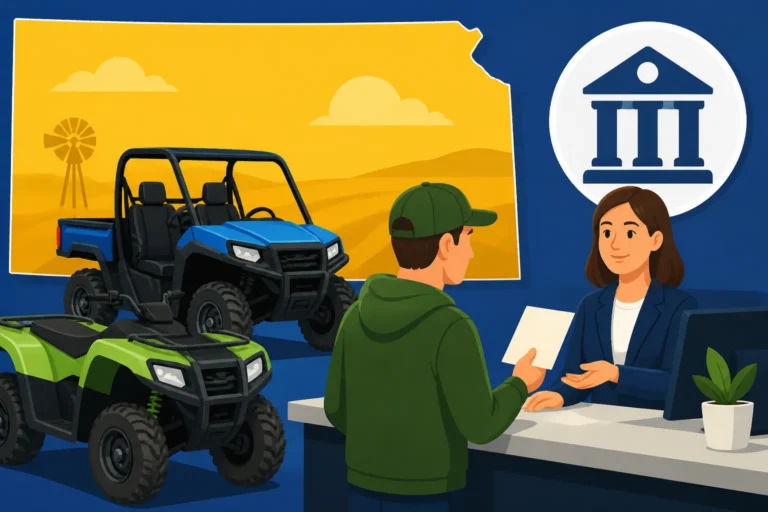
So, if an ATV isn't registered, what exactly is involved in the "titling process"? When you purchase an ATV, whether new from a dealer or used from a private seller, you'll need to apply for a nonhighway title at your local [Kansas County Treasurers Handle Titles] office. This is a one-time process for each owner. You'll typically need to bring a manufacturer's certificate of origin (MCO) for a new machine, or the existing title from the previous owner for a used one. A bill of sale, especially for private sales, is also incredibly important. Documents like those available through LawDepot can help ensure you have a solid bill of sale, protecting both buyer and seller.
This titling process is distinct from annual registration. You go to the county treasurer, pay a one-time fee (currently quite modest, often around $10 for a title), and you receive your title in the mail. There are no annual renewal dates for this title. You don't get a sticker, a license plate, or anything else that suggests ongoing registration. It's a foundational step to establish ownership, and once it's done, you generally won't have to think about it again until you sell the machine or if you need a [Replacing a Lost Kansas Nonhighway Title]. It's a fixed event, not a recurring annual obligation, which really helps simplify things for off-road enthusiasts.
Common Misconceptions About ATV "Registration"
The lack of traditional registration for ATVs in Kansas often leads to a lot of misunderstandings. People naturally try to apply the rules they know for cars to off-road machines, and that's where the confusion brews. Let's tackle some of the most common myths and clarify what truly applies to your ATV.
Confusing Titling with Tagging
One of the most persistent myths is that "titling" your ATV is the same as "registering" it and getting a "tag." As we've discussed, these are two very different concepts in Kansas. When you title your ATV, you're merely establishing legal ownership. You receive a paper document that says you own the machine. It's a certificate of title, not a registration card or a license plate. This distinction is vital for understanding what you can and cannot do with your ATV.
The term "tagging" typically refers to the process of obtaining a license plate and paying annual fees for road-legal vehicles. Since ATVs are nonhighway vehicles, they don't get a state-issued tag for road use. The only exception to this might be if you live in a specific Kansas city that has passed an ordinance allowing UTVs (and sometimes ATVs, though less common) on city streets and requires a special local city permit or tag. In such cases, this local tag is issued by the city, not the state, and it comes with very specific restrictions on where and how you can ride. This local "tagging" is entirely separate from state titling requirements and does not make your machine street legal statewide. You might want to check [Kansas Cities That Authorize ATV Street Use] for more local details.
The Myth of State Trail Permits
Another common misconception revolves around "state trail permits" functioning like registration. Many states with extensive public trail systems require an annual OHV sticker or permit that acts somewhat like a registration to fund trail maintenance and enforcement. Kansas, however, doesn't have a widespread state-managed OHV trail system that requires such a permit for ATVs.
While there are some excellent riding areas in Kansas, like those managed by the Army Corps of Engineers or private parks, none of them typically require a statewide "registration" or annual permit from the state itself. Some private parks, like Kansas Rocks Recreation Park or Syracuse Sand Dunes Park, will have their own entry fees or annual passes, but these are specific to their property and not a state-mandated registration. Don't confuse these park-specific fees with a state-issued annual registration sticker. Knowing this can save you a lot of searching for a permit that simply doesn't exist at the state level. If you're looking for places to ride, you'll find information in [Kansas ATV Trails: Where You Can Actually Ride].
Practical Implications for Kansas ATV Owners
So, you understand that ATVs are titled, not registered, in Kansas. What does this mean for your everyday experience as an ATV owner? It impacts everything from what paperwork you need to carry to where you can legally ride your machine.
What You Do Need to Do
While you're off the hook for annual registration fees and state-issued tags, there are still crucial responsibilities that come with ATV ownership in Kansas. First and foremost, you must title your ATV. This happens at the county treasurer's office and involves a one-time fee. Ensure you have a valid bill of sale, especially for private transactions. LawDepot can provide customizable bill of sale templates that ensure all necessary information is captured, preventing headaches down the line. This title is your proof of ownership, and it's essential. For a new machine, you'll present the Manufacturer's Certificate of Origin (MCO). If you bought used, you'll need the previous owner's properly assigned title. [Kansas Titles After a Private Sale] goes into more detail on this.
Secondly, Kansas sales tax will be collected at the time of titling. This isn't an annual tax, but a one-time tax based on the purchase price of your ATV. This is typically collected by the county treasurer when you apply for your title, even if you bought the machine from an out-of-state dealer. For a clearer picture, check out [Kansas Sales Tax Collected at Titling].
Lastly, consider insurance. While Kansas law doesn't generally require insurance for nonhighway vehicles unless mandated by a specific city ordinance for road use, it's a smart idea to carry it. Comprehensive coverage can protect your investment against theft or damage, and liability coverage can be a lifesaver if you're involved in an accident. Many farm policies might cover ATVs used for agricultural purposes, but it's always best to verify with your insurance provider. You don't want to find yourself in a bind after an unforeseen incident.
Riding Responsibly Without Registration
Because your ATV isn't road-registered, its legal operating zones are primarily off-road. This means private property (with permission, of course!), designated off-road parks, and specific areas where ATV use is permitted. Always get written permission if you're riding on private land that isn't your own. It's a simple step that can prevent major legal troubles. When visiting public riding areas, always check their specific rules regarding helmets, age restrictions, and machine requirements.
Some Kansas cities have passed ordinances that allow UTVs (and sometimes ATVs) on their public streets under strict conditions. These conditions often include specific equipment requirements (like lights, mirrors, and seatbelts), a city-issued permit or tag, and speed limits. If you plan to ride within city limits, you absolutely must research that specific city's ordinances, as they vary widely. Do not assume that because your ATV is titled, it's free to roam anywhere. The general rule in Kansas is that ATVs are banned from public roads and highways unless a specific exception or local ordinance applies. Understanding this helps you ride legally and avoid potential fines. For clarity on what's allowed, refer to [Kansas ATV Road Rules Under 8-15,100].
Disclaimer
This article is for general informational purposes only and does not constitute professional advice. Laws, prices and regulations vary by location and change over time. Consult a qualified professional for guidance on your specific situation.