Tuttle Creek ORV Hours, 9 a.m. to Sunset
Tuttle Creek ORV riding hours run from 9 a.m. until sunset, so planning a ride means thinking beyond the time you want to start. A late arrival can leave little room to unload, check the machine, and enjoy the area before riding ends. This guide explains how to plan around the schedule, prepare for a day near Randolph, and avoid common timing and trail-day frustrations.
Tuttle Creek ORV hours and what sunset means
The riding window starts at 9 a.m.
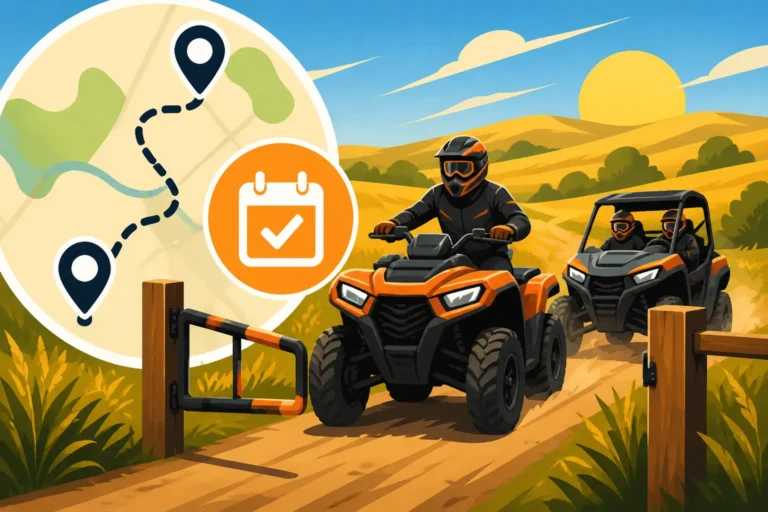
The stated riding window at Tuttle Creek ORV Area begins at 9 a.m. That gives you a clear target for planning your drive, but it does not mean you should pull in at nine and expect to be riding immediately. If you need to unload a quad or side-by-side, check your gear, and get everyone organized, build that time into your morning.
For example, a group driving from Manhattan might want to arrive with enough time to park and prepare before heading onto the riding area. A family coming from farther away may need to account for breakfast, a fuel stop, and the inevitable last-minute search for a helmet or pair of gloves. Starting early on the road helps protect the actual riding time.
The 9 a.m. opening is also a useful reference when planning a group meetup. Agree on a meeting point and a realistic arrival time, rather than telling everyone simply to “be there at nine.” A delayed trailer, a missed turn, or a machine that needs attention can otherwise leave the group scrambling at the start of the day. For an overview of the location and riding area, see [Tuttle Creek ORV Area in Kansas].
Sunset is the end of the riding day
The other part of the schedule is just as important: riding ends at sunset. This is not a promise that you can finish one more loop after the sun drops below the horizon. Plan to be wrapping up and heading out while there is still enough daylight to ride back, load safely, and leave the area without rushing.
Sunset changes throughout the year, so the amount of available riding time is not the same every day. A ride that feels comfortable in the long evenings of summer may require a much earlier finish in fall or winter. Before setting out, check the day’s sunset time and work backward. Leave a practical buffer for returning to your vehicle and handling anything unexpected, such as a slow-moving group or a minor machine issue.
Do not treat headlights as a way to extend your ride beyond the posted schedule. Lights can help you be seen and may help during the drive out, but the stated riding hours still set the boundary. If your group is spread out, choose a turnaround time that gives everyone a chance to return before sunset rather than waiting until the last light to regroup.
Check for local notices before you travel
Posted hours are a starting point, but access can sometimes be affected by closures, maintenance, weather, or other site conditions. Before loading up, check the official information for Tuttle Creek and pay attention to signs and notices at the entrance. If you are driving from outside the area, that small check can save a long trip that ends with a closed gate or a changed plan.
| Planning detail | What to keep in mind |
|---|---|
| Opening time | The riding window begins at 9 a.m. |
| Closing time | Riding ends at sunset |
| Arrival | Allow time to park, unload, gear up, and review the plan |
| Seasonal daylight | Sunset shifts, so available riding time varies |
| Site conditions | Check for current closures or access notices before leaving |
| Final ride | Turn back early enough to return and load in daylight |
For a closer look at the schedule, [Tuttle Creek's Day-Use Hours in Kansas] is a related reference. Keep in mind that the day’s sunset—not a fixed clock time—is the part you need to check when planning your return.
How to plan a ride around the schedule
Choose a start time that fits your group
A good ride plan starts with an honest estimate of how long it takes your group to get ready. Experienced riders traveling with one machine may be able to unload and set off quickly. A family with several machines, young riders, or first-time passengers may need extra time to adjust helmets, review boundaries, and explain basic hand signals.
Try separating the day into three parts: arrival and setup, riding, and return and loading. If your group wants several hours on the riding area, avoid using most of the morning on stops and setup. At the same time, do not rush through safety checks just to get moving. A tire that needs attention or a loose strap is easier to fix in the parking area than after you have started riding.
Groups can make the day smoother by choosing one person to keep an eye on the time and another to confirm that everyone is accounted for. This is especially helpful when riders have different levels of experience. A confident rider may be ready to keep going, while a newer rider may need a slower pace and more frequent breaks.
Set a turnaround time before you ride
It is easy to lose track of time once you are out on the trails. Set a turnaround time before the group starts, and make sure everyone understands that it is earlier than sunset. The exact buffer depends on your group, the route you choose, and how long it takes to get back to your vehicle. The point is to avoid making the return decision when daylight is already fading.
A practical plan also accounts for small delays. Someone may need a water break, a child may want to stop, or a machine may need a quick check. If your group has riders who travel at different speeds, use the pace of the slowest rider when estimating the return—not the pace of the person leading.
If you use onX Offroad or another mapping tool to help organize a ride, check the map before heading out and make sure everyone knows the agreed route and meeting point. Keep your phone charged, but do not rely on a screen alone for navigation or site information. Follow the signs on the ground and any official instructions, and avoid assuming that a digital line guarantees a route is open.
Leave a weather and equipment cushion
Kansas weather can make an otherwise simple ride feel different from the forecast. Wind, rain, heat, and changing ground conditions can affect how quickly your group moves and how comfortable riders feel. If the day is hot, schedule water breaks before anyone is worn out. If rain is possible, think about how wet or muddy conditions may affect traction and the time needed to get back.
Before you leave home, check the machine and trailer rather than waiting until arrival. Confirm that tie-downs are secure, tires look ready for the trip, and essential gear is packed. A quick pre-trip checklist is especially useful when several people are sharing the towing and unloading tasks. For broader planning ideas, [Kansas Trail Conditions Before You Tow] can help you think through the day before the trailer is hitched.
Getting to the riding area and preparing to unload
Plan your route to the Tuttle Creek area
Tuttle Creek ORV Area is near Randolph, north of Manhattan. That makes it a possible day trip for riders in the Manhattan area and a longer outing for people coming from places such as Topeka or Kansas City. Give yourself enough travel time to reach the area without turning the first part of the day into a race against the 9 a.m. opening.
Use a reliable route plan, then pay attention to local signs as you approach. Roads around reservoirs and recreation areas may not feel like a direct trip from a highway exit, and a towing vehicle can take longer to maneuver than a car. If you are unfamiliar with the area, download or save useful navigation information before leaving a place with dependable cell service.
onX Offroad can be useful as a supplementary planning tool for reviewing an off-road outing and keeping a group oriented. Still, do not treat an app map as permission to ride anywhere it displays. Follow the riding area’s posted access rules and stay within the designated area. If you are comparing nearby destinations, [Kansas Corps of Engineers Riding Areas] offers a useful starting point for considering other public recreation areas.
Make unloading calm and predictable
A cramped or hurried unload can create avoidable stress before the ride even begins. Park where you can work safely, keep children clear of moving vehicles and trailers, and agree on who is responsible for ramps and tie-downs. If you are traveling with several machines, unload in a sequence so riders are not walking through the path of a backing vehicle.
Before starting the ride, check that helmets fit properly, passengers have suitable equipment, and each machine is appropriate for its rider. Make sure everyone knows where the group will stop if someone gets separated. A simple plan—such as stopping at a safe meeting point and not riding off alone—can prevent a small mix-up from becoming a bigger problem.
Keep the parking and staging area orderly. Put loose gear away, secure the trailer, and keep keys and personal items where the group can find them later. If you are traveling with children, explain that the schedule is not a reason to hurry through safety steps. Arriving with a little extra time is far less stressful than trying to load and launch at the same moment.
Pick a ride that suits the machines and riders
Tuttle Creek’s available time is only one part of choosing a good outing. Make sure the riding area is suitable for the machines in your group and that riders understand the site’s rules. If you are bringing a side-by-side, verify that the area accommodates it before you tow it there. [Kansas Trails That Allow Side-by-Sides] can help with that kind of planning across the state.
For a first visit, keep the plan flexible. Rather than setting an ambitious distance goal, let the group’s experience, pace, and conditions shape the ride. New riders may appreciate a shorter outing with time to learn the controls and get comfortable. Families can also review [Kansas Trails for Kids] when choosing a ride that feels manageable for younger riders.
Making the day safer and less stressful
Keep the group together without rushing
A group ride works best when everyone understands the pace and basic expectations before setting off. Decide who leads and who rides at the back, and agree that the group will pause if someone needs help. Make sure newer riders know how to signal a stop and what to do if they lose sight of the group.
Do not let the sunset deadline turn into pressure to ride faster. If the group is running behind, shorten the outing and return calmly. A missed loop is frustrating; a preventable collision or a rider stranded after dark is much worse. For local etiquette and shared-use considerations, [Kansas Trail Etiquette Locals Expect] is a helpful related read.
onX Offroad may help riders share a route plan or keep track of where they intend to go, but agree on a backup plan in case a phone battery dies or reception is limited. Choose a clear regrouping point and make sure each person knows how to get back to the parking area or contact the group. Simple communication matters more than relying on every rider to have the same device or app.
Respect signs, conditions, and other visitors
Follow posted signs and stay within the designated riding area. Do not assume that an adjacent road, shoreline, or open-looking piece of ground is part of the ORV area. If a sign or site notice is unclear, stop and resolve the question before proceeding rather than relying on what another rider appears to be doing.
Give other riders space, especially when visibility is limited or the trail surface is uneven. Slow down where people are gathering, near the parking area, and anywhere riders may be approaching from another direction. If dust reduces visibility, leave enough room to avoid riding into the machine ahead of you.
Conditions can change during the day. A route that felt easy in the morning may become more difficult after rain or repeated traffic. If the ground is slick, rutted, or otherwise uncomfortable for your group, adjust the plan. An enjoyable ride does not require covering every part of the area.
Use the last part of the day for a safe return
Start heading back while you still have comfortable daylight. Give yourself time to check that no one is missing, inspect machines for obvious problems, and load without rushing. If something goes wrong—a flat tire, a stalled machine, or a delayed rider—having a buffer can keep the problem from turning into a last-minute scramble.
Before leaving, make sure gear is accounted for and the trailer is secured. Take a moment to look over the parking area for bottles, tools, straps, or other items left behind. If you plan to return, make a note of what worked well and what you would change next time, such as arriving earlier or packing water in a more accessible place.
onX Offroad can remain part of your planning routine for future trips, but use it alongside official site information and what you see on the ground. For a more detailed location overview, including nearby context, see [Tuttle Creek ORV Area Sits 2 Miles From Randolph]. The simplest way to enjoy the 9 a.m.-to-sunset schedule is to arrive prepared, set a sensible turnaround time, and leave enough daylight for an unhurried return.
Disclaimer
This article is for general informational purposes only and does not constitute professional advice. Laws, prices and regulations vary by location and change over time. Consult a qualified professional for guidance on your specific situation.