Kansas Dealer Paperwork at Delivery
Bringing home a new (or new-to-you) ATV or UTV from a Kansas dealership is an incredibly exciting experience. The anticipation of hitting the trails, tackling farm chores, or just cruising around your property can be almost overwhelming. However, before you can truly enjoy your new machine, there's a stack of paperwork that lands in front of you. Navigating these documents, understanding what each one means, and knowing what you need for the next steps can feel like a mini-adventure in itself. This guide will help demystify the various forms, agreements, and certificates you'll receive from a Kansas dealer at delivery, ensuring you leave confident and prepared.
The Initial Dealer Purchase Agreement: Your First Key Document
When you commit to buying an ATV or UTV from a Kansas dealer, the first major document you'll encounter is the purchase agreement or buyer's order. This isn't just a receipt; it's a legally binding contract that outlines the terms of your purchase. It's crucial to review this document thoroughly before signing, as it sets the stage for all subsequent paperwork and obligations.
Understanding the Price Breakdown and Fees
The purchase agreement will detail the "out-the-door" price of your machine, but it’s essential to look beyond that single number. Dealers in Kansas, like anywhere else, will itemize various charges that contribute to the total. You'll typically see the base price of the ATV or UTV, any accessories you've added, and then a series of fees. These can include a documentary fee, which covers the dealer's costs for processing paperwork, and potentially freight or setup charges. [Kansas Dealer Documentary Fees] are quite common, as are charges for transporting the machine from the factory to the dealership, known as [Kansas Dealer Freight Charges]. You might also see a line item for preparing the machine for sale, often called [Kansas Dealer Setup Charges], which involves assembling components and performing initial inspections.
It's vital to scrutinize each line item and ask questions if something isn't clear. The state sales tax for Kansas, which is 6.5 percent, along with any applicable local sales taxes, will often be calculated on this document. While some dealers might collect sales tax upfront, in Kansas, it’s most common for the sales tax to be collected when you title the machine at your county treasurer's office. This is a critical distinction, as it means you'll need to budget for that tax payment shortly after purchase. Understanding these individual charges can help you compare prices between dealers and ensure there are no surprises when it's time to pay.
Always remember that the purchase agreement is where the final negotiated price is set, along with all the various add-ons and fees. Don't be shy about asking for clarification on anything that doesn't make sense. You want to feel completely comfortable with the financial commitment you're making before you put your signature down. Think of it as your primary financial roadmap for this new acquisition.
Reading the Fine Print: Warranties and Return Policies
Beyond the numbers, the purchase agreement or accompanying documents will outline important details about warranties and any return policies. For new machines, you'll receive a manufacturer's warranty, which covers defects for a specified period or mileage. It's important to understand what components are covered, the duration of the coverage, and any conditions that might void the warranty. Many dealers will also offer extended warranties, which provide additional coverage beyond the factory warranty. [Kansas Extended Warranty Costs] can vary significantly depending on the coverage and duration, so weigh whether the extra peace of mind is worth the additional investment.
When it comes to return policies, Kansas dealers generally operate under the "as-is" principle, especially for used ATVs and UTVs, unless explicitly stated otherwise in writing. Unlike some other purchases, there isn't typically a cooling-off period or a right to return an off-road vehicle after a few days. Therefore, ensure you've thoroughly inspected the machine and are satisfied with its condition before you complete the purchase. Any specific return or exchange agreements, even for a short period, must be documented in your paperwork to be legally enforceable.
Taking the time to read through these sections can save you a lot of headaches down the road. Knowing the limits of your warranty means you can address issues promptly, and understanding the lack of a return policy reinforces the importance of your pre-purchase inspection. It’s also wise to inquire about the dealer's service department policies for warranty work or general maintenance, as this can be a significant factor in your overall ownership experience.
Essential Paperwork for Titling Your New Machine
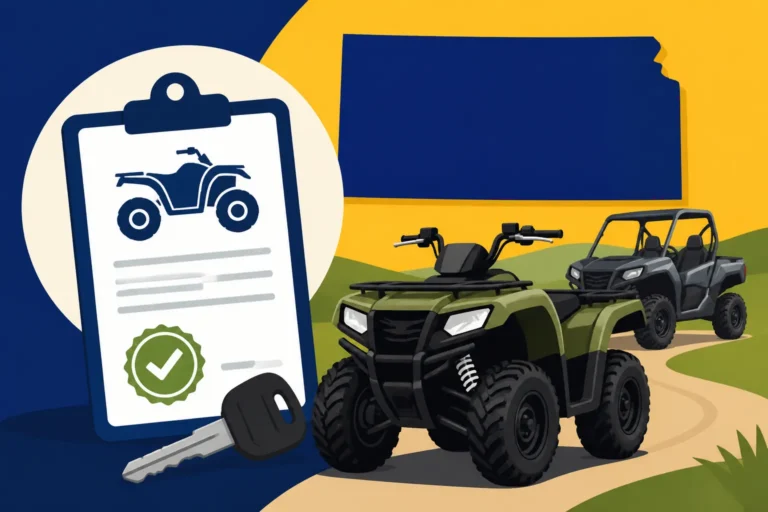
Once the purchase agreement is signed and the payment is handled, your attention will turn to the documents needed to officially title your ATV or UTV in Kansas. This is a critical step, as having a proper title ensures you are the legal owner and can address any future sale or transfer of the machine. The county treasurer's office is where this happens, and they are quite particular about the paperwork they accept.
The Manufacturer's Certificate of Origin (MCO)
For any brand-new ATV or UTV purchased from a dealer, the most important document you’ll receive for titling is the Manufacturer’s Certificate of Origin, or MCO. Think of the MCO as the birth certificate for your off-road machine. It’s issued by the manufacturer and certifies that the vehicle meets all federal safety standards. This document is absolutely essential because it's the first step in establishing the chain of ownership. Without a valid MCO, you won’t be able to get a title for a new machine in Kansas. [Taking an MCO to the County Treasurer's Window] is a non-negotiable step in the titling process.
The dealer will fill out their portion of the MCO, assigning it to you, the first retail purchaser. Make sure all the information on the MCO is accurate: the VIN (Vehicle Identification Number), make, model, year, and your full legal name and address should be precisely correct. Any discrepancies can cause delays and frustration at the county treasurer's office. While the dealer prepares the MCO, it's a good practice to double-check their work before you leave. This document proves the machine hasn't been previously titled, making you the first registered owner. This is part of the comprehensive [Kansas Title Paperwork Explained] that you'll need to submit.
Bills of Sale and Dealer Invoices
Whether you're buying a new or used machine, a bill of sale or a detailed dealer invoice will be provided. For new machines, the dealer invoice often serves as the bill of sale, detailing the purchase price, trade-in value if applicable, and any sales tax collected (though as mentioned, sales tax is usually collected at the county treasurer's office in Kansas). For used machines, a formal bill of sale is typically given. These documents are crucial for several reasons, primarily for proving ownership and for the calculation of sales tax. [Showing a Dealer Invoice at the Treasurer's Window] is generally required to complete the titling process.
These documents must clearly state the full names and addresses of both the buyer and seller (the dealership), the date of the sale, the purchase price, and most importantly, the VIN of the ATV or UTV. The VIN is the unique identifier for your machine, and it must match across all documents. If you have a trade-in, the bill of sale or invoice should also clearly show the trade-in allowance, as this can reduce the amount of sales tax you owe on the net difference. [Kansas Sales Tax Collected at Titling] is calculated based on this sales price, so an accurate and complete document is vital for the county treasurer to determine the correct tax amount. While dealers typically have their own official forms, understanding the standard components of such agreements can be helpful. Resources like LawDepot provide templates for generic bills of sale that demonstrate what essential information should always be included.
Odometer Disclosure and Lien Statements
For off-road vehicles like ATVs and UTVs in Kansas, odometer disclosure statements are generally not required at the time of sale, unlike for cars and trucks that are driven on public roads. This simplifies a small part of the paperwork process. However, if you financed your purchase through the dealer or a third-party lender, you will absolutely encounter paperwork related to a lien. A lien signifies that the lender has a legal interest in your ATV or UTV until the loan is paid in full. The dealer will send a lien statement, along with the MCO or previous title, to the county treasurer.
When your title is issued, it will reflect this lien, showing the name of your financial institution. This is a standard procedure and is documented under [Kansas Title and Lien Records]. It means that until the loan is satisfied, the title will not be considered "clear" and the lienholder will be listed. If you were [Financing a Side-by-Side Through a Kansas Dealer], the loan agreement itself is a separate, comprehensive document that outlines your payment schedule, interest rates, and all terms of the financing. Make sure you receive and keep a copy of this agreement. When you eventually pay off the loan, the lender will send you a lien release, which you'll need to submit to the county treasurer to get a clear title issued.
Other Important Documents and What to Keep
Beyond the critical titling paperwork, dealers will also provide other documents related to the machine's operation, safety, and any additional services you might have purchased. These documents, while perhaps not immediately needed by the county treasurer, are nonetheless important for safe and responsible ownership.
Registration, Permits, and Owner's Manuals
One piece of paperwork you generally won't receive for your ATV or UTV in Kansas is a road registration form. This is because [Kansas Has No OHV Registration] system for ATVs and UTVs for general off-road use. If you plan to ride exclusively on private land, you won't need a state-issued tag or registration. However, this rule changes if you live in a specific city that has passed an ordinance allowing UTVs on city streets. In such cases, the city itself will issue a local permit or tag, not the state. The dealer won't typically handle this local city-specific paperwork.
You might also receive information about various off-road parks or areas. While [Kansas State Parks Have No OHV Trails] and [Kansas Has No State OHV Permit] for trail riding, private parks like Kansas Rocks Recreation Park or Syracuse Sand Dunes Park will have their own permit requirements and rules. The dealer might give you brochures or point you to websites for these riding areas. Finally, and crucially, you'll receive the owner's manual for your ATV or UTV. Do not overlook this document! It contains vital information on operating the machine safely, recommended maintenance schedules, troubleshooting tips, and specific features. Keep it in a safe, accessible place, as it's an invaluable resource throughout your ownership.
Proof of Insurance and Financial Agreements
While Kansas doesn't universally require insurance for ATVs and UTVs for off-road use, it's an important consideration. If you plan to ride your UTV on public streets in a city that has an enabling ordinance, that city will almost certainly require proof of insurance to obtain a local street tag. [Kansas City Insurance Requirements] typically mandate at least liability coverage. Even if not legally required, securing insurance is a wise decision to protect your investment and yourself. [Do You Need ATV Insurance in Kansas?] is a question best answered by considering your riding habits and local ordinances.
If you financed your purchase, you will have signed a comprehensive financial agreement with the lender. This document details the entire loan, including the principal amount, interest rate, term length, and monthly payment schedule. Ensure you have a complete copy of this contract for your records. It's critical for understanding your financial obligations and for making accurate payments. Always keep all your signed documents—the purchase agreement, MCO, bill of sale, and any financial contracts—in a secure location. Many owners use a fireproof safe or scan copies to cloud storage for backup. This comprehensive documentation will be invaluable for future reference, maintenance, and especially if you decide to sell your machine down the line.
What to Verify Before You Drive Away
The excitement of finally getting your hands on your new ATV or UTV is palpable, but this isn't the time to rush. Before you even think about loading your machine onto a trailer or driving it away, there are a few crucial checks you need to perform to ensure everything is in order. Taking these final minutes can save you significant hassle and potential disappointment later on.
Checking the VIN and Machine Condition
First and foremost, you need to physically locate the Vehicle Identification Number (VIN) on your ATV or UTV and compare it to every single piece of paperwork you’ve been given. This includes the purchase agreement, the MCO, and the bill of sale. The VIN is typically stamped on the frame in an easily visible location, though its exact position can vary by manufacturer and model. Any discrepancy, even a single digit, needs to be resolved with the dealer immediately. A mismatched VIN can lead to serious headaches when you attempt to title your machine at the county treasurer’s office and can even raise questions about ownership, especially if you ever have to [Checking a Used Quad Against Stolen Vehicle Records]. [Finding the Serial Number on an Older Kansas Quad] can sometimes be tricky, so make sure you know where it is on your specific model.
Once the VIN is confirmed, take a few minutes for a pre-delivery inspection of the machine itself. Even a new machine can have minor dings from transport, or perhaps a part wasn’t fully tightened during assembly. Check the fluid levels, tire pressure, and ensure all lights are working (headlights, taillights, brake lights if applicable). If it’s a used machine, your inspection should be even more thorough, looking for any damage, leaks, or signs of excessive wear that weren’t previously discussed. Start the engine to ensure it idles smoothly and operates as expected. Don't be afraid to point out anything that doesn't seem right. It's much easier to address issues while you're still at the dealership.
Confirming All Documents Are Signed and Complete
Before you shake hands and head out, make a final pass through all the paperwork. You’re looking for two main things: completeness and signatures. Is every blank field filled in? Are all prices, dates, and VINs correctly recorded? And most critically, has every required signature been applied? This includes your signature, the dealer's representative's signature, and any notary public's seal if required on certain forms (though most ATV/UTV dealer paperwork doesn't require notarization). Ensure you receive a complete copy of every document you signed, as well as the original MCO (for new machines) or the properly assigned previous title (for used machines).
It’s often helpful to create a mental or physical checklist for yourself. You'll need the MCO or assigned title, the bill of sale/dealer invoice, and your financing contract if applicable. These are the core documents that [What to Bring to the Treasurer's Office to Title] your machine. Remember that in Kansas, you have [Sixty Days From the Assignment Date] on your MCO or title to apply for your new title at the [Kansas County Treasurers Handle Titles] office. Missing this deadline can result in late fees. Getting everything right at the dealership ensures a smooth and stress-free titling process, setting you up for countless hours of enjoyment with your new ATV or UTV.
| Document Type | Purpose | Where You Get It | What to Check For |
|---|---|---|---|
| Purchase Agreement/Buyer's Order | Outlines final price, fees, and terms of sale | Dealer | Accurate pricing, fees, VIN, your name/address. |
| Manufacturer's Certificate of Origin (MCO) | "Birth certificate" for new machines; establishes first ownership | Dealer (for new machines) | Correct VIN, make, model, year, assigned to your name. |
| Bill of Sale/Dealer Invoice | Proof of purchase, sales price; needed for tax calculation | Dealer | Correct VIN, purchase price, date, buyer/seller info. |
| Loan/Financing Contract | Details payment schedule, interest, terms if financed | Lender/Dealer | All terms, rates, payment dates, your signatures. |
| Owner's Manual | Operating instructions, safety info, maintenance schedule | Dealer (typically with machine) | Included and corresponds to your machine. |
Disclaimer
This article is for general informational purposes only and does not constitute professional advice. Laws, prices and regulations vary by location and change over time. Consult a qualified professional for guidance on your specific situation.