Kansas County Treasurers Handle Titles
Navigating the world of ATV and UTV titling in Kansas can feel like trying to solve a puzzle with missing pieces. Many folks assume the state handles all vehicle services, but when it comes to your off-road machine, you'll actually be working directly with your local county treasurer's office. This guide will walk you through everything you need to know to title your ATV or UTV smoothly, ensuring you understand the specific local requirements and avoid common missteps.
The Central Role of Kansas County Treasurers in Titling
When you buy an ATV or UTV in Kansas, whether it's brand new from a dealership or a trusty used machine from a private seller, your first stop for official paperwork won't be a state agency. Instead, you'll be heading to your local county treasurer's office. This local approach is a distinctive feature of Kansas's vehicle titling system, and understanding why it works this way is key to a smooth process.
Why Not the State? Understanding the Local Focus
Unlike some states where a central Department of Motor Vehicles or a similar state-level department handles all vehicle registration and titling, Kansas has a more decentralized system. This means that services related to vehicle titling, registration, and tax collection are managed at the county level by your elected county treasurer. For off-road vehicles like ATVs and UTVs, this local focus is particularly important because it's where all the action happens. The State of Kansas provides the legal framework, but the actual processing of your [Kansas's Nonhighway Title Explained] occurs right in your community.
This local management offers a few benefits. For one, it means you're dealing with an office closer to home, often staffed by people who are familiar with local nuances and can offer more personalized assistance. They are the frontline experts on questions specific to your county. The history behind this decentralized system is rooted in how Kansas structures its government services, aiming to provide accessible points of contact for residents across the vast state. Instead of one massive state office trying to manage millions of vehicle titles, individual county treasurers handle their respective populations, often leading to more efficient service for local residents. So, while it might seem counterintuitive if you're used to state-run DMV systems, rest assured that your county treasurer's office is precisely where you need to be.
Beyond Just Titling: Other Services Offered by Your Local Office
Your county treasurer's office isn't just a place to drop off your title application and hope for the best. These offices are comprehensive hubs for a variety of vehicle-related services. When you walk through their doors, you'll find that they are equipped to do more than just process a [Kansas Charges $10 for a Title]. For instance, they are responsible for collecting all applicable sales tax on your ATV or UTV purchase. This is a critical step, as the sales tax is collected at the time of titling, not necessarily at the point of sale, especially for private transactions.
Beyond titling and tax collection, these offices also handle the issuance of tags for specific types of nonhighway vehicles that do qualify for limited road use, such as Work-Site Utility Vehicles (WSUVs), Micro Utility Trucks, and some golf carts, if your local ordinances permit. They can guide you through the process for these unique classifications, including explaining the specific requirements like the [Kansas WSUV Width of 48 Inches] and [Kansas WSUV Weight Over 800 Pounds]. Should you ever lose your title, they are also the place to go for [Replacing a Lost Kansas Nonhighway Title]. Think of your county treasurer's office as your primary resource for almost any official paperwork concerning your off-road machine in Kansas. They're there to answer your [Kansas Title Questions Treasurers Hear] and ensure you're squared away with the state's requirements.
What Exactly is a "Nonhighway Vehicle" in Kansas?
Before you even think about visiting your county treasurer, it’s crucial to understand how Kansas law classifies your off-road machine. Not all vehicles are created equal in the eyes of the law, and the distinctions directly impact how your machine is titled and what you can legally do with it. This understanding is foundational to navigating the titling process correctly.
Defining ATVs and UTVs in Kansas Law
In Kansas, the law carves out specific definitions for various types of vehicles, and this is where the term "nonhighway vehicle" comes into play for your ATV or UTV. An All-Terrain Vehicle (ATV) is generally defined as any motorized vehicle manufactured and designed for off-highway use, having at least three low-pressure tires, a seat designed to be straddled by the operator, and handlebars for steering control. These are the traditional "quads" or four-wheelers many riders are familiar with. You'll find the full breakdown in [An ATV Defined in Chapter 8] of Kansas statutes.
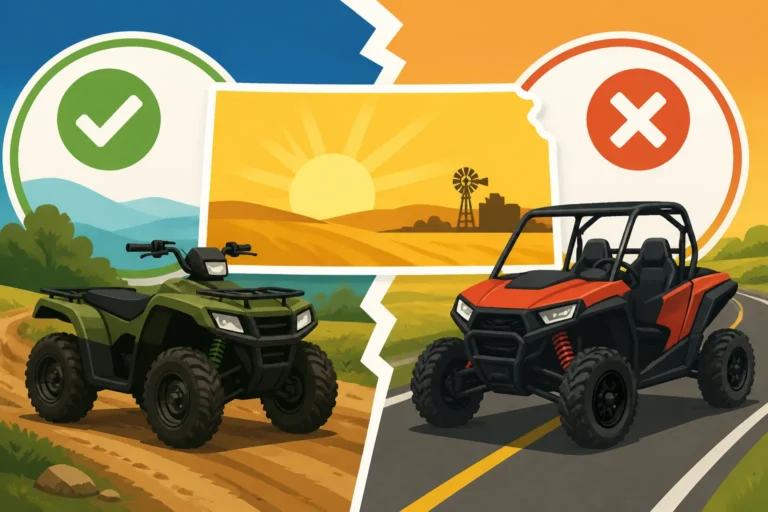
Side-by-Sides, often referred to as UTVs (Utility Task Vehicles) or SxSs, fall under a broader umbrella. While many are simply titled as nonhighway vehicles like ATVs, some might meet the criteria for specialized classifications such as Work-Site Utility Vehicles (WSUVs), Micro Utility Trucks (MUTs), or even golf carts, each with its own set of rules and potential for limited road use. It's critical to know [How Kansas Law Defines a Nonhighway Vehicle] for your specific machine, as these definitions directly influence your titling requirements and any permissions for operating on roads. For example, a standard UTV that doesn't meet the WSUV criteria will still get a nonhighway title and remains strictly for off-road use, whereas a properly equipped WSUV might gain a city-issued tag for specific on-road excursions.
The "Nonhighway Title" Explained
So, what exactly is a "nonhighway title" and why does your ATV or UTV get one? In Kansas, a nonhighway title is simply an official document proving ownership of a vehicle that is not intended for use on public roads. It's a certificate of ownership, similar to a title for your car or truck, but it explicitly designates your machine as a nonhighway vehicle. This is why you'll hear that [Kansas Titles ATVs as Nonhighway Vehicles]. The key difference is that a nonhighway title does not authorize the vehicle for street use.
One of the most common points of confusion for new owners is the expectation of a license plate or tag with their title. However, as the name suggests and as you'll learn from [Why a Kansas Nonhighway Title Never Comes With a Tag], this title is for machines explicitly not for highway use. Therefore, Kansas has [Kansas Has No OHV Registration] system for ATVs and most UTVs, which means no annual tag fees either. The title simply establishes you as the legal owner, which is essential for proving ownership, selling the machine in the future, or in case of theft. It's a critical piece of paperwork for your machine's identity, even if it never sees pavement outside of a farm field or designated trail. Understanding this distinction from the outset will save you a lot of confusion down the road.
Essential Documents to Bring to the Treasurer's Office
Getting your ATV or UTV titled at the county treasurer’s office isn't a complex process, but it absolutely hinges on having the correct paperwork. Missing even one crucial document can lead to frustrating delays and multiple trips back and forth. Being prepared with all the necessary items before you go will make the experience much smoother.
Proving Ownership: The Bill of Sale or MCO
The most vital piece of paperwork you'll need is proof of ownership. This usually comes in one of two forms: a Manufacturer's Certificate of Origin (MCO) for new machines, or a bill of sale for used machines purchased from a private party. If you're buying a brand-new ATV or UTV from a Kansas dealership, they will provide you with the MCO. This document essentially certifies the machine's birth and its first transfer of ownership from the manufacturer. You'll take this MCO, along with your personal identification and any other required forms, to the treasurer's office to apply for your title. It's a straightforward process of [Taking an MCO to the County Treasurer's Window] and letting them handle the rest.
For used machines purchased from a private seller, a detailed and properly executed bill of sale is your golden ticket. This document needs to clearly identify both the buyer and seller, include the vehicle identification number (VIN) of the ATV or UTV, the purchase price, and the date of sale. Both parties should sign and date it. It's also wise to include contact information for both buyer and seller. Sometimes, private sellers might not have a formal bill of sale readily available, or you might prefer a more structured document. This is where resources like LawDepot can be incredibly helpful. You can find customizable bill of sale templates on platforms like LawDepot that ensure all necessary legal information is included, making your transaction secure and your titling process at the county treasurer's office much easier. Having a solid bill of sale is crucial, especially when you consider [Kansas Titles After a Private Sale].
Other Required Identification and Information
Beyond your proof of ownership, the county treasurer's office will require additional documents to verify your identity and ensure you're a Kansas resident. You'll need to bring a valid government-issued photo ID, such as a driver's license or state-issued ID card. This is essential for confirming who you are and linking you to the new title. The address on your ID should ideally match your current residential address, as this is typically used for sending your new title.
Furthermore, you may need to provide proof of residency, especially if your ID has an outdated address or you're a new resident to the state. This could include a utility bill, bank statement, or other official mail showing your current Kansas address. While it might seem like a lot of paperwork, these requirements are in place to prevent fraud and ensure accurate record-keeping. Make sure all your information is current and readily available. You might also be asked to fill out specific application forms at the treasurer's office, though sometimes these can be downloaded and completed in advance from your county's website. Being prepared with all your [Kansas Title Paperwork Explained] will make your visit efficient and stress-free.
The Titling Process: Step-by-Step at the County Treasurer's Office
Once you have all your documents in hand, heading to your county treasurer's office is the next logical step. The process itself is fairly standardized across Kansas counties, but understanding each stage will help you feel more confident and prepared. From the moment you walk in to the point your title is mailed, knowing what to expect can ease any anxieties.
Initiating the Application and Paying Fees
When you arrive at your county treasurer's office, you'll typically be directed to a specific counter or window for vehicle titling. You'll present your proof of ownership—either the MCO from a dealer or the bill of sale for a private transaction—along with your identification and any other required forms. The clerk will review your documents to ensure everything is in order. This is also the point where you'll pay the necessary fees. The state-mandated fee for a Kansas nonhighway title is a modest amount, often around [Kansas Charges $10 for a Title]. This flat fee is a small part of your overall cost, but it's important to have it ready.
Crucially, this is also when Kansas sales tax will be collected. For vehicles purchased from a dealership, the sales tax might have been calculated and added to your purchase price by the dealer, but it's the county treasurer who officially collects it at the time of titling. For private sales, you will almost certainly pay the sales tax directly to the treasurer's office. The tax is based on the purchase price you declared on your bill of sale, and it includes both the state sales tax rate and any applicable local sales taxes for your specific county. Expect to pay this at the same time as your title fee. Be prepared with your [Kansas Title Payment Methods], whether that's cash, check, or a debit/credit card, depending on your county's accepted forms of payment.
What Happens After You Submit Your Paperwork
After you've submitted all your documents and paid the required fees, the county treasurer's office will process your application. You won't walk out with a physical title in hand that day. Instead, your application is sent to the state, which then prints and mails the official title to you. This mailing process typically takes a few weeks. It’s important to understand this delay, as many new owners expect to receive their title immediately. The actual [Kansas Title Processing Time] can vary slightly depending on the volume of applications and the time of year, but generally, you can expect to receive it within two to four weeks.
While you wait for your official title, the county treasurer's office may issue you a temporary receipt or confirmation of your application. This document serves as proof that you have initiated the titling process. Keep this receipt in a safe place, as it validates your ownership while the official title is being generated and mailed. If you haven't received your title after a reasonable amount of time, you can contact your county treasurer's office to inquire about the status of your application. They are the point of contact for tracking your title and addressing any potential issues. They maintain the records and can inform you of any delays or if additional information is needed.
Common Scenarios and Special Titling Cases
Not every ATV or UTV titling situation is as simple as buying new from a dealer with a pristine MCO. Life happens, and you might find yourself needing to title a machine with a less straightforward history. The county treasurer's office is equipped to handle these variations, but knowing the specific requirements for different scenarios can make a world of difference.
Titling a Used Machine from a Private Seller
Buying a used ATV or UTV from a private individual is a common way to get into off-road riding, but it often presents unique titling challenges. The most crucial document here is a valid, properly filled-out title signed over by the previous owner. If the seller has a clean title in their name, they simply need to sign it over to you in the designated area. Make sure all fields, including the sale price and odometer reading (though less common for off-road machines, it's good practice), are completed. It's also a good idea to secure a separate bill of sale, even if the title is signed. As mentioned before, a template from a service like LawDepot can ensure all bases are covered, including the VIN, sale date, and buyer/seller information. This can be your backup and clear proof of purchase.
However, sometimes you might encounter a situation where the private seller doesn't have the physical title, or perhaps the machine is so old it was never formally titled under current laws. In these cases, it gets a bit trickier, but it’s not impossible. Kansas law allows for the use of affidavits, such as [Kansas Nonhighway Affidavits], to establish ownership when a title is missing. You might need to provide additional documentation, like a sworn statement from the seller or multiple forms of proof of prior ownership. It's always best to contact your county treasurer's office before completing such a purchase to understand their specific requirements for a [Kansas Title Without a Bill of Sale] or a missing title scenario. They can guide you on the exact steps and affidavits needed to get your name on the ownership record.
Handling Out-of-State Purchases or Moves
Bringing an ATV or UTV into Kansas from another state, either because you purchased it there or you're a new resident moving to the Sunflower State, involves a few extra considerations. If you're [Titling an ATV in Kansas From Out of State] after purchasing it, you'll still need the previous state's title (if applicable) or an MCO from the dealer. The county treasurer's office will review these documents, check the VIN, and ensure that the machine can be legally titled in Kansas. You'll pay Kansas sales tax on the purchase price, just as if you'd bought it locally, unless you can prove you already paid a comparable sales tax in the originating state (though this often requires specific documentation).
For new residents, the process is largely the same as for a local purchase but with an emphasis on establishing your Kansas residency. You'll bring your out-of-state title, proof of identity, and proof of your new Kansas address to the county treasurer's office. The fees will be the standard title fee, and you typically won't pay Kansas sales tax again if you've already owned the machine and titled it in another state. However, if your out-of-state machine was never titled (some states don't require it for ATVs), you'll proceed as if it were a new purchase with a bill of sale, and you would be subject to Kansas sales tax on the declared value. Always confirm the specific requirements with your local county treasurer's office when dealing with [Kansas Titles for an Out-of-State Machine] to ensure a smooth transition.
Dealer Inventory Titles and SB 97
For those purchasing an ATV or UTV from a Kansas dealership, understanding the recent changes regarding dealer inventory titles can be beneficial. Historically, dealers didn't always title every used machine on their lot. However, [Kansas SB 97 and Dealer Inventory Titles], which became effective in 2025, introduced new rules. This bill requires dealers to title used ATVs and UTVs that are part of their inventory. This change aims to streamline the titling process for consumers and provide a clearer chain of ownership.
What does this mean for you, the buyer? It generally makes the process smoother. When you purchase a used machine from a dealer, they should now be able to provide you with a Kansas title that is already in their name or has been properly assigned to them. This eliminates some of the potential headaches that could arise from prior gaps in titling history. The dealer will then assign that title directly to you. While the dealer might handle some of the initial paperwork and even submit it to the treasurer's office on your behalf (often for a "documentary fee"), you still remain responsible for ensuring the title is properly transferred into your name and that all sales taxes are paid. This legislation was a significant update, and it's something worth being aware of when you're looking at [Kansas Dealers and Used Machine Titles].
Avoiding Pitfalls and Ensuring a Smooth Titling Experience
Even with all the right documents, there are still common mistakes that can trip up new ATV and UTV owners in Kansas. Knowing these potential pitfalls beforehand can save you time, money, and a good deal of frustration. A little preventative knowledge goes a long way in ensuring your titling process is as smooth as possible.
The Critical 60-Day Deadline
One of the most crucial rules in Kansas when it comes to titling any vehicle, including your ATV or UTV, is the strict deadline. You have exactly 60 days from the date of purchase or assignment of the title to apply for a new title in your name. This period is typically measured from the date listed on your bill of sale or the date the previous owner signed over the title to you. It's often referred to as [Sixty Days From the Assignment Date]. Many people underestimate how quickly this deadline approaches, especially if they're busy enjoying their new machine!
Failing to meet this [Kansas Gives You 60 Days to Apply] for a title can result in significant late filing penalties. These penalties can add up quickly, potentially costing you more than the initial title fee. It’s a completely avoidable expense if you prioritize getting to the county treasurer's office promptly. Mark the date on your calendar as soon as you complete the purchase. Don't procrastyinate; gather your documents and make that trip within the two-month window. If you're dealing with an unusual situation, like waiting for an MCO from a manufacturer, keep meticulous records and communicate any potential delays to your county treasurer's office to see if there are any allowances, though generally, the 60-day rule is firm.
Verifying VINs and Avoiding Stolen Machines
When purchasing a used ATV or UTV, especially from a private seller, taking a few extra steps to verify the vehicle's history can protect you from a lot of heartache. The Vehicle Identification Number (VIN) is your machine's unique identifier, usually stamped on the frame. Before you hand over any money, always visually inspect the VIN on the machine itself and ensure it matches the VIN on the title or bill of sale. If the VIN looks tampered with, filed down, or doesn't match the paperwork, walk away from the deal immediately.
Beyond a visual check, it's highly recommended to perform a VIN check. While Kansas doesn't have a state-run database specifically for off-road vehicles, you can use national databases designed to identify stolen vehicles. This can save you from inadvertently purchasing a stolen machine, which would result in you losing both the machine and your money without any legal recourse. For example, the National Insurance Crime Bureau (NICB) offers a free VIN check tool that can identify if a vehicle has been reported stolen or an insurance total loss. Taking the time for [Checking a Used Quad Against Stolen Vehicle Records] is a small investment that offers huge peace of mind. Platforms like LawDepot, while primarily offering document templates, indirectly contribute to secure transactions by promoting clear documentation of ownership, which is crucial for VIN verification.
When Things Go Wrong: Lost Titles or Missing Paperwork
Sometimes, despite best intentions, things go awry. You might discover your original title is lost or misplaced, or perhaps the machine you're trying to title has simply never had official paperwork. Don't panic; there are procedures in place to address these situations, though they might require a little more effort. If you need [Replacing a Lost Kansas Nonhighway Title], you'll typically fill out an application for a duplicate title at your county treasurer's office. There will be a small fee for this service, and you'll need to provide proof of identity and potentially details about the machine. The new title will then be mailed to you, similar to an original title.
If you're dealing with a machine that has truly [Kansas Machines With No Paperwork] at all, perhaps an older quad passed down through generations or bought at an auction without an MCO or prior title, the process becomes more involved. You might need to use a [Kansas Nonhighway Affidavits] to attest to your ownership and how you acquired the machine. This usually involves swearing under oath that you are the rightful owner, detailing the history of the machine as best as you know it, and presenting any supporting evidence like old registration cards, insurance policies, or a handwritten bill of sale. In some cases, a sheriff's inspection of the VIN might be required to ensure the machine isn't stolen. It's best to consult with your specific county treasurer's office immediately in these situations, as they can outline the exact steps and forms necessary to navigate titling a machine with a challenging paper trail.
The Nuance of Work-Site Utility Vehicles (WSUVs) and Other Classes
While most ATVs and UTVs are simply titled as "nonhighway vehicles" in Kansas, there are specific classifications that carry different implications for titling and, critically, for limited on-road use. Understanding these distinctions is vital, especially if your machine is designed for more than just recreational trail riding. Your county treasurer's office is the gateway to navigating these nuances.
Special Rules for Work-Site Utility Vehicles
Kansas law has a special category for what it calls Work-Site Utility Vehicles (WSUVs). These are distinct from standard ATVs and UTVs because they are designed primarily for work applications and meet very specific criteria. To qualify as a WSUV, a machine must be at least [Kansas WSUV Width of 48 Inches], weigh over [Kansas WSUV Weight Over 800 Pounds] unladen, and have a seating arrangement that allows at least two people to sit side-by-side (like a bench or bucket seats). It must also be manufactured for off-highway use. You can delve deeper into [What Makes a Side-by-Side a Work-Site Utility Vehicle] to fully grasp these distinctions.
If your UTV meets these specific physical criteria, it can be titled as a WSUV at your county treasurer's office, and this special title can then open the door to limited on-road use. While a nonhighway title doesn't come with a tag, a titled WSUV can potentially be registered for local street use in cities or counties that have passed ordinances allowing them. This involves obtaining a specific city or county tag from your local county treasurer, which often comes with its own set of fees, insurance requirements, and specific rules about where and when you can operate on public roads. The [Kansas WSUV Title Requirements] are more detailed than a simple nonhighway title, and it's essential to ensure your machine fits the bill before expecting to gain road privileges.
Golf Carts, Micro Utility Trucks, and Other "Unconventional" Vehicles
Beyond ATVs and WSUVs, Kansas law also defines other types of unconventional vehicles that might cross paths with your county treasurer's office for titling or registration. Golf carts, for instance, are generally defined as vehicles designed and manufactured for use on a golf course for sporting or recreational purposes, not for general transportation. [What the Law Counts as a Golf Cart] is often a low-speed vehicle that might, under specific local ordinances, be allowed on certain city streets. If your city has an ordinance allowing golf cart use on streets, you'll work with the city and your county treasurer for any necessary titling or registration, which may include unique local tags.
Similarly, "Micro Utility Trucks" are another class of small, low-speed vehicles that are defined by their specific dimensions and design for utility work, often featuring a small cargo bed. [What Counts as a Micro Utility Truck] often depends on width, weight, and speed capabilities. Like WSUVs and golf carts, these machines might also be eligible for limited road use if local ordinances permit and if you obtain the necessary titling and registration from your county treasurer and local municipality. Each of these categories—ATV, WSUV, Golf Cart, Micro Utility Truck—has its own set of rules regarding titling, potential road use, and the associated paperwork at the county level. It's a testament to the diverse landscape of off-road and low-speed vehicles that county treasurers must manage, providing localized expertise for each.
Here's a quick overview of how different off-road machines are handled for titling in Kansas:
| Machine Type | Kansas Title Type | Annual Registration? | Road Legal (State Level)? | Local City/County Tag Possible? | Primary Titling Location |
|---|---|---|---|---|---|
| ATV (All-Terrain Vehicle) | Nonhighway Title | No | No | No | County Treasurer |
| UTV (Standard Side-by-Side) | Nonhighway Title | No | No | No | County Treasurer |
| WSUV (Work-Site Utility Vehicle) | WSUV Title | No (state) | Limited (by ordinance) | Yes | County Treasurer |
| Golf Cart | Nonhighway (or none) | No (state) | No | Yes | County Treasurer / City Hall |
| Micro Utility Truck | Varies | No (state) | Limited (by ordinance) | Yes | County Treasurer |
Disclaimer
This article is for general informational purposes only and does not constitute professional advice. Laws, prices and regulations vary by location and change over time. Consult a qualified professional for guidance on your specific situation.