Why a Steering Wheel Changes Your Title Class
Kansas off-road vehicle titles change based on steering wheels or handlebars, impacting legal classification and ownership paperwork.
Start here, or nothing else is legal.
Resident registration, titling and renewal, and public-use versus private-land fees — plus the age and safety-course rules that decide who may ride.

Kansas off-road vehicle titles change based on steering wheels or handlebars, impacting legal classification and ownership paperwork.

Kansas nonhighway vehicle laws use tire counts and types to determine ATV and UTV titling and registration rules across the state.

Kansas work-site utility vehicle rules, county treasurer titling requirements, and the 800 pound unladen weight limit explained.

Kansas law for work-site utility vehicles explains how to measure the forty-eight inch width limit for side-by-side machines.

Kansas work-site utility vehicle classification rules explain physical criteria, weight limits, and legal requirements for titling.
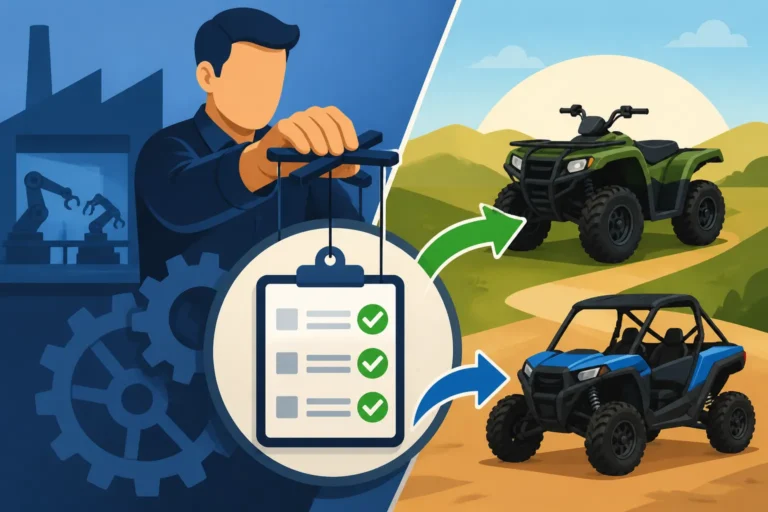
Kansas off-road vehicle title classes depend on manufacturer design specifications like factory seating, handlebars, and weight.
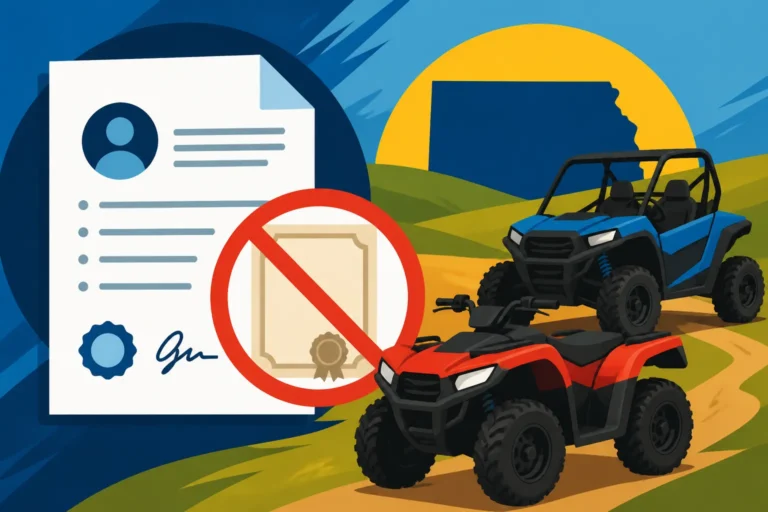
Kansas TR-13 Affidavit procedures explain how owners title untitled ATVs and UTVs lacking proper paperwork in the state.

Kansas law requires titling an ATV or UTV in the specific county where the machine is primarily kept instead of the owners home address.

Kansas ATV and UTV buyers must secure nonhighway vehicle titles within sixty days from the assignment date to avoid late fees.

The Kansas nonhighway vehicle title fee establishes legal ATV and UTV ownership through the county treasurer for ten dollars.