What to Pack for First Aid on a Long Ride
A small first-aid kit can feel adequate in the driveway and suddenly feel woefully incomplete miles from the trailer. Kansas rides may mean dust, heat, rough ground, limited cell service, and a long wait for help to reach you. This guide explains what to pack, how to tailor your kit, and how to make it useful when a ride does not go to plan.
Build a First-Aid Kit for the Ride You Are Taking
A long ride calls for more than a handful of adhesive bandages tossed into a glove box. The right kit should handle common minor problems, help you respond to serious bleeding or injury, and stay organized when you need it with dusty or gloved hands.
Start with the likely problems, not a giant kit
Think about the people, machines, terrain, and time involved. A short loop near your truck with several experienced riders has different needs from an all-day trip with children, unfamiliar trails, or a group spread across a remote area. A cut, blister, scrape, headache, or minor burn is more likely than a dramatic emergency, but a serious injury can happen anywhere.
For a useful baseline, pack supplies for cleaning and covering wounds, controlling bleeding, supporting a sprain, protecting yourself from the elements, and communicating during an emergency. Bring enough of the basics for more than one person. A single gauze pad is not much help if two riders fall or one rider needs several dressings.
| Purpose | Useful items | Why they earn space |
|---|---|---|
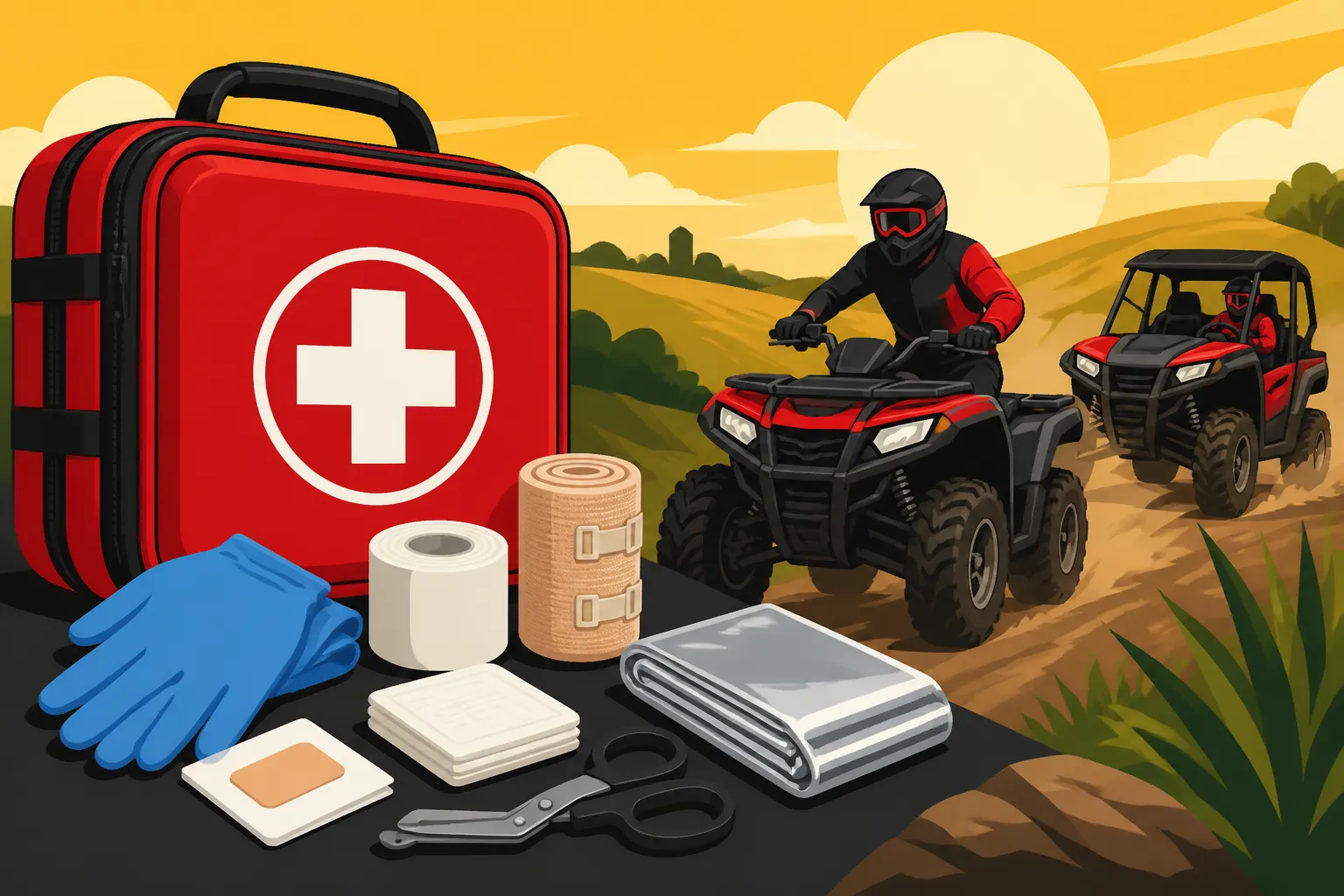
| Small cuts and scrapes | Adhesive bandages in several sizes, sterile gauze pads, medical tape, antiseptic wipes, saline wound wash | Helps clean and cover common trail injuries |
| Bleeding control | Several gauze rolls, pressure dressing, trauma shears, gloves, and a commercial tourniquet if someone in the group knows how to use it | Supports a faster, more organized response to serious bleeding |
| Sprains and strains | Elastic wrap, triangular bandage, and a compact instant cold pack | Helps support an injury while you arrange a safe return or evacuation |
| Blisters and hot spots | Moleskin or blister dressings, small scissors, and clean socks | Can keep a painful foot problem from ending a long ride |
| Personal needs | Each rider’s essential medication, allergy information, and a written emergency contact | A shared kit cannot replace medication that belongs to an individual |
| Heat and weather | Water, oral rehydration supplies if appropriate, sunscreen, and a lightweight emergency blanket | Helps address common exposure concerns on open Kansas terrain |
Do not pack equipment just because it looks impressive. A tourniquet, for instance, is only useful when someone can recognize when it is appropriate and has learned how to apply it. If your group carries one, make sure riders know where it is and have received practical instruction. Training matters more than buying an advanced-looking item and leaving it sealed at the bottom of a pack.
A first-aid kit also cannot make an unsafe situation safe. If someone has a serious head, neck, or back injury, difficulty breathing, heavy bleeding, or becomes confused or unresponsive, focus on getting emergency help and avoid moving them unnecessarily unless the scene presents an immediate danger. Call 911 when needed and follow the dispatcher’s directions.
Choose supplies that hold up to dust, vibration, and weather
An ATV or UTV kit gets bounced around. Loose wrappers tear, small items vanish into the bottom of a cargo box, and dust can make a clean dressing less clean before it is used. Store supplies in a waterproof or water-resistant pouch inside a hard-sided case, and keep the case where an adult can reach it without unloading the whole machine.
Separate items into simple, clearly marked groups: wound care, bleeding control, medications and personal information, and weather supplies. Clear bags can make it easier to see what is inside, but keep sterile dressings sealed until you need them. A quick inventory before the season and after every ride helps catch depleted supplies, damaged packaging, and items that have passed their expiration date.
Consider the likely weather as well. A hot afternoon near Syracuse Sand Dunes or an exposed stretch of trail around western Kansas can make heat a bigger concern than cold. A windy, damp day near Tuttle Creek can bring a different set of challenges. Pack water and clothing for the conditions, and do not assume a small first-aid pouch can compensate for inadequate hydration, poor clothing choices, or riding beyond the group’s ability.
The riding plan matters, too. Before you tow to a destination, check current access information and expected conditions. Kansas Trail Conditions Before You Tow is a useful companion topic when you are deciding whether the route and weather match your group’s experience. For broader planning, Kansas ATV Trails: Where You Can Actually Ride can help you think through where your ride will take place and what support may be nearby.
Pack for Kansas Riding Conditions
Kansas terrain can change the kind of care you may need. On open ground, sun, wind, and heat can take a toll even when the ride feels easy. Around trees, tall grass, and brush, scratches, ticks, and other irritating encounters become more likely. A thoughtful kit is one part of preparation; route planning, protective gear, and knowing when to stop matter just as much.
Prepare for heat, sun, and changing weather
Do not wait until someone feels faint or nauseated to think about heat. Plan water breaks, keep drinking throughout the day, and pay attention to how each rider is acting. Unusual fatigue, dizziness, headache, nausea, weakness, or confusion should not be brushed off as someone simply needing to tough it out. Stop, get the person to a safer and cooler place, and seek emergency help for severe or worsening symptoms.
Bring sun protection you will actually use: sunscreen, sunglasses or appropriate eye protection, and clothing that covers exposed skin without creating a heat problem of its own. A helmet and riding gear reduce other risks, but they can also feel hot during a long day. Schedule breaks in shade when available, especially with children or riders who are new to the activity. If a rider seems unwell, do not leave them behind while the rest of the group finishes the loop.
Kansas weather can shift quickly enough to change a ride from comfortable to miserable. A lightweight rain layer, spare dry clothing, and an emergency blanket take little room compared with the trouble of being wet and chilled far from the vehicle. Check the forecast before leaving and keep an eye on the sky and wind as the day goes on. If storms are approaching or conditions become unsafe, turning back is a sound decision—not a failed ride.
For routes where phone coverage may be unreliable, plan how you will navigate and regroup before leaving. onX Offroad can be one tool for reviewing your route and preparing for a ride, but do not make a phone app your only way to find your way back. Download or save what you need before leaving service, carry a charged phone, and consider a paper map or another backup. The practical advice in Carrying a Paper Map Where Cell Service Drops is especially relevant when the route takes you away from reliable coverage.
Cover cuts, blisters, ticks, and irritated skin
A small cut can become a bigger nuisance when it fills with dust or keeps rubbing against a glove. For a minor wound, clean your hands if possible, use clean water or wound wash to rinse away dirt, and cover it with a suitable dressing. Avoid putting a dirty dressing directly onto a wound. If the cut is deep, will not stop bleeding, or has debris you cannot remove safely, seek medical care rather than treating it as a routine trail scrape.
Blisters are easier to prevent than to manage after they become painful. Wear broken-in boots and clean, dry socks, and stop when you feel a hot spot. Covering the area early with an appropriate blister dressing or moleskin can make the rest of the ride more comfortable. Do not ignore a blister simply because the group is close to the end of the loop; a rider compensating for foot pain may lose balance or control.
Ticks and irritating plants are another reason to check skin and clothing after riding through brush or tall grass. Pack tweezers suitable for removing a tick, and follow public-health guidance for removing and monitoring it. Do not burn a tick or cover it with a household substance. Include a small mirror or ask a partner to check places that are hard to see. A quick post-ride inspection is easier than trying to remember where you rode days later.
Kansas riding areas differ in terrain, machine access, and posted rules, so check before unloading. A route suitable for a narrow quad may not suit a wider side-by-side. Kansas Trails That Allow Side-by-Sides can help you make that distinction, while Kansas Trail Closures After Rain is worth reviewing before heading out after wet weather. Respecting closures and local conditions helps prevent a minor problem from turning into a rescue situation.
Make the Kit Useful When Something Goes Wrong
A first-aid kit is only useful if the group can find it, open it, and decide what to do. Before setting off, agree on where supplies are stored and what the plan is if someone is injured. That conversation need not be dramatic. It can be a simple part of the same pre-ride check as fuel, helmets, and machine condition.
Assign roles and share essential information
Tell everyone where the kit is located. On a UTV, that might be a labeled compartment or a secured bag behind a seat; on an ATV, it may be a compact pack attached safely to the machine or carried by a designated rider. Avoid putting the only kit on the person most likely to ride farthest ahead. If riders separate, a kit that is several minutes away may not help during the first response.
Before leaving, identify who will lead, who will ride at the back, and how the group will handle a separation. Make sure everyone knows the meeting point and understands that the group stops if a rider is missing or hurt. A simple buddy system works well: riders keep track of one another and check in at planned stops. Kansas Trail Etiquette Locals Expect is a helpful reminder that safe group riding includes looking out for others, not just following the person ahead.
Write down emergency contacts and relevant medical information for each rider, especially if children are along. Keep the information protected from weather but accessible to the person helping. If someone has a serious allergy or uses a prescribed emergency medication, make sure the group knows where that medication is and how to get to it. Do not place someone else’s personal medication in a shared kit and assume it is available for anyone to use.
Navigation and communication deserve the same planning. onX Offroad may help you review a route in advance, but confirm that everyone can interpret the plan and identify a meeting location without relying on a live signal. Save a description of the route, note the trailhead or access point, and share the plan with someone who is not riding. Cell dead zones can make even a familiar trip harder to coordinate; Cell Dead Zones in Western Kansas covers why a backup plan matters.
Know when to stop riding and call for help
For a minor issue, a rider may be able to rest, clean a scrape, and return slowly with a partner. But do not pressure someone to keep riding through significant pain, dizziness, confusion, trouble breathing, or a possible serious injury. Stop the machines, move the group out of the way of traffic or other hazards, and decide whether emergency services are needed. In an emergency, call 911 and give the clearest location information you can.
If phone service is weak, try moving to a safer nearby place with better reception only if doing so will not put an injured person at greater risk. Have one capable rider seek help while another stays with the injured person, when the situation and group size allow. Do not send everyone away and leave an injured rider alone. If you are at a managed park or designated riding area, contact park staff as well, but do not delay an emergency call when someone needs urgent care.
A crash can leave a rider shaken even when there is no obvious injury. Check for symptoms and watch for changes rather than relying on “I’m fine” in the first minute after a hard fall. Head impacts deserve particular caution. If a rider is confused, unusually sleepy, vomiting, has worsening pain, or has any concerning symptoms after a head injury, stop the ride and seek urgent medical evaluation. Do not let embarrassment or the effort of loading the machine override someone’s safety.
A useful first-aid kit does not need to be complicated, but it does need to be maintained and paired with a plan. After every ride, replace used supplies, wipe down the case, and note anything the group wished it had. If your route crosses remote ground, revisit your communication and navigation plan before the next trip. onX Offroad can be part of that preparation, alongside a charged phone, a backup map, a shared route, and a realistic decision about when to turn back.
Keep the Kit Ready Between Rides
A kit packed once and forgotten can give a false sense of security. Supplies get used, packaging wears out, and personal needs change. A short routine before and after riding keeps the kit dependable without turning preparation into a chore.
Check the kit before loading the trailer
Before a long ride, open the case and confirm that essential supplies are present, clean, and in usable condition. Check sterile packaging, adhesive dressings, gloves, and any items that may have been exposed to heat or moisture. Replace anything used on the previous trip. If a pouch is hard to open with gloves or the contents have shifted into a jumble, reorganize it before you leave.
Use the route and group to make final adjustments. A ride with children may call for supplies sized for them and a careful review of their personal needs. A remote day trip may require additional water, backup communication, and more deliberate navigation planning. A busy park with staff nearby is not a reason to leave without a kit; you still need to respond during the time between an injury and help arriving.
Tell the group what is in the kit and where it is stored. If a rider has first-aid training, make sure the others know who that is. This is also a good time to review the route, likely regrouping points, and the plan for a rider who cannot continue. Kansas Trails Within an Hour of Topeka and other local route-planning topics can help you think about the distance between your ride and the support you may need.
Refill and review after the ride
When you get home, replace what you used and clean any reusable items according to their instructions. Dry the case before storing it so moisture does not damage supplies. Keep the kit somewhere easy to find when packing, rather than moving it from one machine to another without checking whether it made the trip.
Make a quick note of what went well and what was missing. Maybe the tape was hard to tear, the gloves were too small, or the only light source was a phone with a low battery. Those small observations are useful. They help you make the next kit more practical instead of simply larger.
Finally, treat first aid as one part of a larger ride plan. Check access rules and conditions, carry enough water, protect yourself from dust and weather, and make sure the group knows how to get help. For additional trip preparation, Kansas Riding Areas With Cell Service can help you consider connectivity, while Kansas Trail Etiquette Locals Expect reinforces the shared responsibility that makes a group ride safer for everyone.
Disclaimer
This article is for general informational purposes only and does not constitute professional advice. Laws, prices and regulations vary by location and change over time. Consult a qualified professional for guidance on your specific situation.