Checking Before You Drive to the Gyp Hills
Planning an ATV or UTV trip to Kansas’s Gypsum Hills can get confusing fast: a place described as a trail ride may be for horses, while nearby roads or open-looking ground may be private property. This guide explains what to check before you head to the Gyp Hills, how to confirm motorized access, and what to do if the area you found is not an OHV riding site.
Confirm what “Gyp Hills trail riding” means
Horseback trails are not ATV trails
One common source of confusion is the name. Gypsum Hills Trail Rides refers to horseback riding, not a public ATV or UTV trail system. If you found it while searching for off-road trails, don’t assume that “trail ride” means motorized access. Contact the operator directly if you’re unsure what a listing includes, and don’t unload a quad or side-by-side unless motorized riding is clearly authorized.
That distinction matters in the Gyp Hills, where dramatic red rock, rolling terrain, and dirt roads can make an area look like an obvious place to explore. A visible track is not proof that motor vehicles are allowed on it. It could be a private ranch road, a route intended for horses, or access used by a landowner or manager only.
Before you plan a ride, identify the exact property or riding area you have in mind. A broad search for “Gyp Hills trails” may return horseback operators, scenic routes, hiking information, and private land—not necessarily a place where you can ride an ATV. If a listing doesn’t clearly state that it permits off-highway vehicles, treat that as a reason to ask questions, not as permission.
The region is not the same thing as a designated riding park
“Gypsum Hills” describes a wider landscape and region, not one single public off-road park with a universal entry point. That means access rules can change from one parcel, road, or recreation site to the next. A road that is open to ordinary traffic does not automatically make the land beside it open to ATV riding.
Kansas has relatively limited public OHV riding compared with states that maintain extensive state-run trail networks. Kansas State Parks do not operate OHV trail systems, and access on public land may be restricted to specific roads or designated areas. For a useful overview of where riding is and is not available, see Kansas State Parks Have No OHV Trails and Why Public Riding Is So Thin in Kansas.
If you’re comparing the Gyp Hills with an established riding destination, look for a site that expressly identifies ATV or UTV use, explains its access rules, and provides a way to confirm conditions before you leave. Kansas Private Off-Road Parks is a helpful starting point for understanding the private-park option, while Kansas ATV Trails: Where You Can Actually Ride can help you broaden your search beyond the Gyp Hills.
Verify land access before you load the trailer
Check the exact parcel, not just the general area
Before you drive, pin down the exact place where you plan to unload and ride. Write down the site name, the nearest access road, the property manager or landowner, and the type of vehicle allowed. If the information came from a social post, a map marker, or a friend’s recollection, confirm it with the person or organization responsible for the property.
A mapping app can help you understand the surrounding roads and terrain, but a mapped route does not grant permission to ride. onX Offroad can be useful for reviewing route information and identifying land boundaries as part of your planning. Still, confirm access with the land manager or landowner, and check posted signs when you arrive. A boundary layer or route line is a planning aid—not an access permit.
This is especially important where a public road passes through a patchwork of private holdings. You might be legally using the road while the fields, pastures, or trails beside it are off-limits. If you’re hoping to ride on private ground, get clear permission from the owner before you travel. Kansas Landowner Permission Rules and Getting Written Permission From a Landowner Before You Ride cover why it’s worth settling that question in advance.
Ask specific questions before you set out
A quick call or message can save you a long drive with a loaded trailer. Instead of asking only, “Can we ride there?”, confirm the details that determine whether the trip will work for your group.
Ask whether ATVs, side-by-sides, and dirt bikes are permitted, since an area may allow one type of vehicle but not another. Find out where to enter, whether advance reservations are needed, whether the route is open to day riders, and whether there are restrictions on passengers, age, helmets, sound levels, or vehicle width. Ask if the site has recently closed a route or changed its access rules.
| What to confirm | Why it matters |
|---|---|
| Motorized use is allowed | A horse or hiking trail is not automatically an OHV route |
| Your vehicle type is accepted | Rules may differ for ATVs, UTVs, and dirt bikes |
| Exact entrance and parking area | A general map pin may lead to a closed gate or private drive |
| Current access and closures | Weather, maintenance, events, or land-use changes may affect entry |
| Required permits or fees | Requirements vary by land manager and riding site |
| Passenger and safety rules | A machine’s seating and park rules affect who can ride |
| Trailer and unloading arrangements | Some locations have limited staging or turning space |
If the site cannot give you a clear answer about motorized access, don’t treat silence as approval. Choose a confirmed riding area instead. You can compare locations using Kansas Private Park Rules for Riders and Kansas Trail Conditions Before You Tow, then contact the specific park or land manager about its current requirements.
Plan for access rules, terrain, and changing conditions
Don’t use a road map as permission to ride off-road
A route on a map may be a county road, a private lane, or a trail intended for another use. Even where a road is open to vehicles, that does not necessarily authorize riding into nearby pasture, across a field, or along an unmarked track. Stay on routes you have confirmed are open to your type of machine, and obey gates, signs, and directions from the land manager.
Public-land rules can be particularly easy to misread. Kansas has no general state OHV trail pass that opens all public land to riding. Some state-managed areas may allow machines on designated roads or for specific access purposes, but that is different from permitting recreational trail riding wherever a vehicle can physically go. For more context, see Kansas KDWP Land Rules for Machines and Machines Must Stay on Wildlife Department Roads.
If you’re visiting a riding area with a permit requirement, confirm what the permit actually covers. A permit for roads or parking areas should not be assumed to include trails, private parcels, or neighboring land. Kansas Park Permit vs Trail Permit explains the distinction. When in doubt, ask the managing office where the permitted route begins and ends.
Treat weather and terrain as part of the access check
The Gyp Hills’ scenery can be appealing, but uneven ground, loose surfaces, steep grades, and changing weather can make a route more challenging than it looks from a vehicle or map. Recent rain can turn dirt roads slick, while dry conditions may mean loose dust and reduced visibility. Check with the site about closures or surface conditions, and don’t rely on a route being passable simply because it appeared that way in an older photo or post.
Think through your machine and your group before choosing a route. A wide side-by-side may not fit on a narrow track, and a newer rider may be uncomfortable on uneven or steep terrain. Bring water, basic recovery equipment, a charged phone, and a paper map or saved offline map if coverage is uncertain. Tell someone where you expect to ride and when you plan to return.
onX Offroad can help with trip preparation when you want to review route options before leaving, but use it alongside direct confirmation from the site or landowner. Save the location in advance, note the correct entrance, and have a backup destination in case the route is closed. For broader planning, Kansas Trail Etiquette Locals Expect and Kansas Trail Closures After Rain offer useful reminders for keeping a ride safe and respectful.
Choose a confirmed alternative if the Gyp Hills do not allow OHVs
Compare established riding destinations
If your original destination turns out to be horseback-only, private, or closed to motorized use, you don’t need to abandon the whole trip. Look for an established OHV area that clearly welcomes the kind of machine you plan to bring. Kansas options vary in terrain, vehicle restrictions, amenities, and access arrangements, so compare those details before choosing.
For example, a site may be a better fit for a narrower machine, while another may be more suitable for a side-by-side or a group that wants camping nearby. Don’t assume that a park’s reputation or older trip report tells you everything you need to know. Confirm its present rules, operating schedule, entry process, and vehicle requirements directly before setting out.
A practical comparison can help narrow the choices:
| Trip priority | What to look for |
|---|---|
| Beginner-friendly riding | Clear route information and terrain guidance |
| Side-by-side access | Explicit UTV permission and any width restrictions |
| A family outing | Passenger rules, age requirements, and suitable routes |
| Overnight stay | Camping options and whether riding access connects to the campground |
| A long tow | Reliable directions, confirmed entrance, and trailer parking |
| A weather-sensitive trip | A way to check closures and surface conditions before departure |
You can explore possibilities such as Tuttle Creek ORV Area in Kansas, School Creek ORV Area in Kansas, or Kansas Rocks Recreation Park. These are separate destinations, so check each location’s access details rather than assuming its rules match another park’s.
Keep a simple pre-trip checklist
The best time to sort out access questions is at home, not at a locked gate after a long haul. A short checklist helps prevent the most frustrating problems: arriving at a horseback-only operation, finding that your vehicle type is not allowed, or discovering that the route you planned crosses private property.
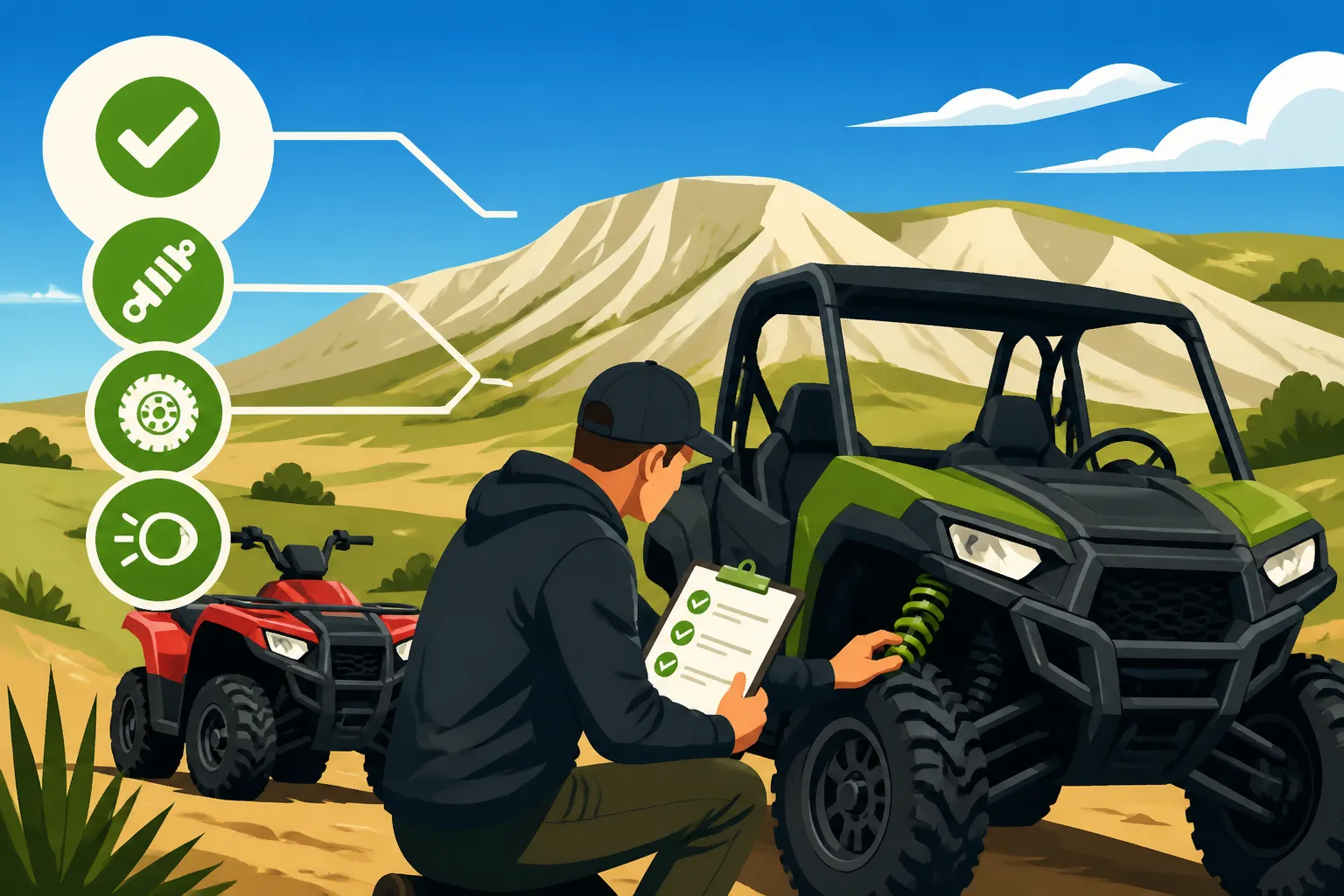
Before leaving, confirm motorized access with the site or landowner; check that your ATV or UTV is permitted; verify the entrance and unloading area; ask about closures, permits, and safety rules; and save directions for offline use. Bring identification and any required ownership or permit documents, and make sure your machine is ready for the terrain and the day’s conditions.
If you’re relying on a third-party map or app, use it to prepare questions and understand the area—not to replace permission. onX Offroad can support route planning, but the managing agency, park, or landowner is the authority on where you may ride. When access is unclear, choose a confirmed destination and save the Gyp Hills visit for a horseback ride or scenic drive instead.
A little checking beforehand may feel tedious, especially when you’re eager to get on the trail. But a clear yes from the person responsible for the land is far better than guessing from a map, unloading in the wrong place, or turning a promising day into a frustrating trip back home.
Disclaimer
This article is for general informational purposes only and does not constitute professional advice. Laws, prices and regulations vary by location and change over time. Consult a qualified professional for guidance on your specific situation.