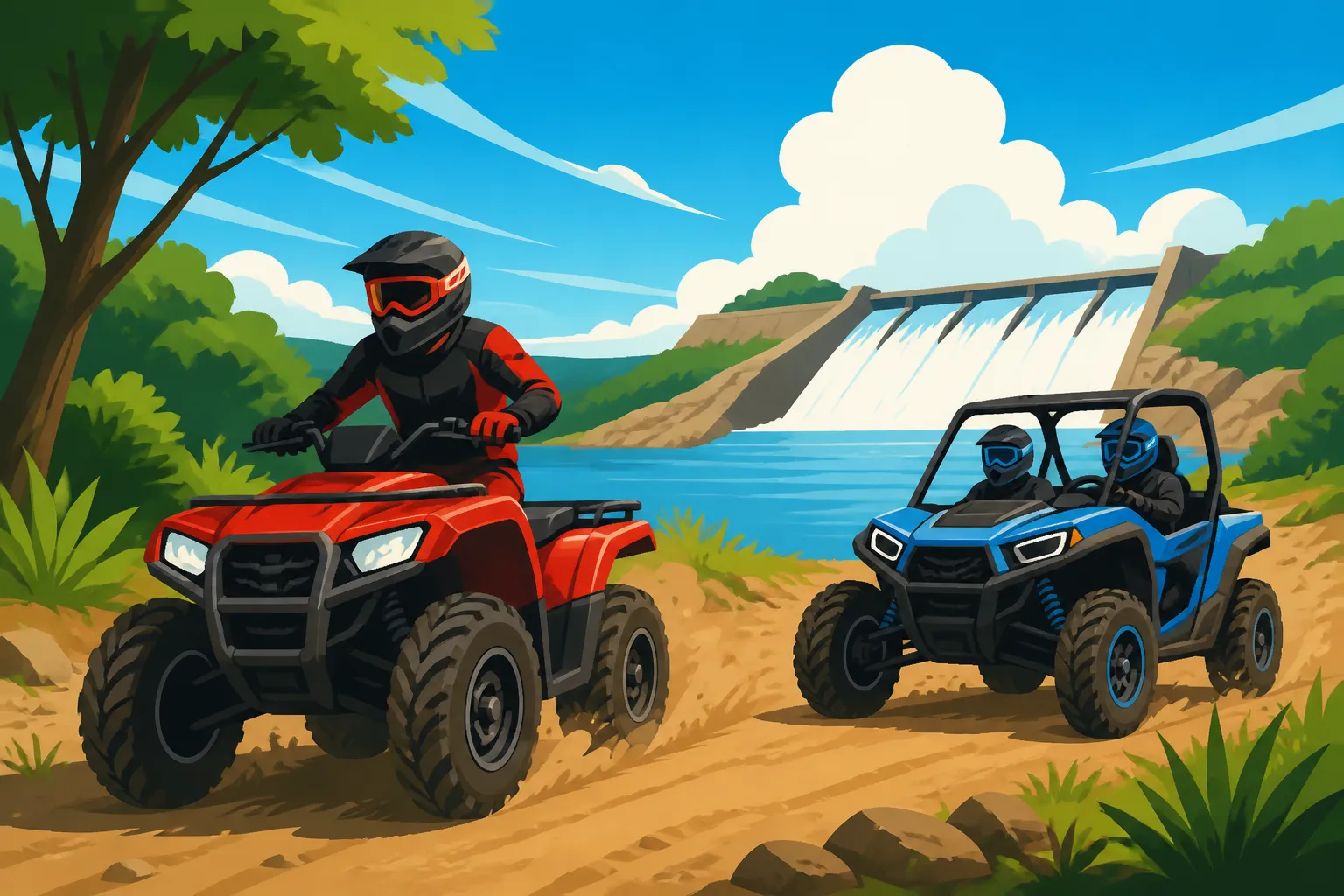
Perry Spillway Suits Experienced Riders and Beginners Both
A ride at Perry Lake Spillway can feel very different depending on your machine, confidence, and the ground conditions that day. Beginners may want a manageable first loop, while experienced riders are often looking for more technical terrain. This guide explains how to plan for both, what to check before unloading, and how to make the trip safer and less stressful.
What to Expect at Perry Lake Spillway
A riding area with room for different skill levels
Perry Lake Spillway is a Corps-area riding destination in northeast Kansas, within reach of communities such as Topeka, Lawrence, and Oskaloosa. Its appeal is that riders with different experience levels can find a way to enjoy the outing without needing to treat the whole area as one uniform challenge. The [Perry Spillway Suits Experienced Riders and Beginners Both] is a useful starting point when you are deciding whether the area fits your group.
That does not mean every section will feel equally easy. A beginner may be comfortable on one stretch and uneasy when the surface changes, while a rider who knows their machine well may be looking for more demanding lines. The practical approach is to ride within your own ability, pause when the terrain changes, and avoid following another machine into a feature simply because its rider made it look effortless.
If you are bringing a mixed group, agree in advance on how you will handle different comfort levels. One rider may want to take things slowly while another is ready to explore. Set a meeting point, keep the group within sight where possible, and make it clear that anyone can turn back without being pressured to continue.
Why the beginner loop matters
A designated beginner loop can help newer riders get comfortable with steering, braking, throttle control, and the feel of the surface before attempting more challenging riding. The [The Beginner Loop at Perry Lake Spillway] is especially relevant if you are introducing a new rider to off-road terrain or bringing someone who has only ridden on a yard or farm.
Treat a loop as a place to build confidence, not as a promise that every rider will find it effortless. A rider who is new to ATVs may still need time to practice stopping smoothly, controlling speed on uneven ground, and looking ahead rather than staring at the front tires. Take breaks before fatigue sets in. A tired rider can make rushed decisions, especially when trying to keep up with friends.
For parents, the first outing is also a chance to learn how a child reacts to noise, bumps, and changing terrain. Keep the pace comfortable, follow the machine’s passenger and age guidance, and stay close enough to offer help without crowding the rider. Kansas-specific age and safety questions are covered in [Kansas Rules for a Ten-Year-Old Rider] and [Kansas Parent Riding With a Child].
Terrain changes can reset your comfort level
Even riders who have spent years on a farm quad or trail machine can be surprised by a new riding area. Soil firmness, ruts, slopes, loose material, and weather can change how a familiar machine handles. A line that seemed straightforward on a dry visit may feel much less predictable after rain or heavy use.
Watch how the ground behaves before committing to a steep or unfamiliar section. If the surface is slick, loose, or deeply rutted, slow down and consider whether there is a safer route. Avoid sharp turns at speed, and leave space between machines so dust or a sudden stop does not create a chain reaction.
A simple rule helps across skill levels: if you cannot see a safe way through, stop somewhere stable and assess the route. Walk a section if it is safe and permitted to do so, or choose another path. There is no benefit in turning a recreational ride into a recovery job.
Planning a Perry Lake Spillway Ride
Check access, hours, and local rules before loading
Perry Lake Spillway riding hours are listed as dawn to dusk in the relevant area information. Before you make the drive, confirm the current access arrangements and any posted restrictions with the managing office. Conditions, closures, and local requirements can change, and a long haul from Wichita or western Kansas makes a quick pre-trip check worthwhile. See [Perry Lake Spillway Riding Hours, Dawn to Dusk] for the hours-focused topic.
Do not assume that a state park permit automatically covers every nearby riding area or that rules for one public property apply to another. Check whether your planned parking and riding locations are within the authorized area, and pay attention to signs at the entrance and along the route. [Why Corps Riding Areas Need No Park Permit] discusses the difference between Corps riding areas and Kansas state park permit requirements.
Bring the details you need to answer a question at the gate or during a stop: machine identification, proof of ownership if required, and any documentation the managing authority specifies. If you are visiting from another state, do not assume your home-state sticker or permit is recognized. [Kansas Requires No Sticker of Visitors] explains the visitor-sticker issue, while the specific rules at your destination should still guide your plans.
Pack for the drive and the ride
For many riders, the first challenge is not the trail; it is getting the machine and gear to the area without forgetting something important. Before leaving home, check the trailer connection, tie-down points, tire condition, lights, and the machine’s fuel level. A loose strap or trailer problem can sour the day before anyone gets a helmet on.
A practical packing checklist includes:
- Properly fitted helmets and eye protection.
- Gloves, sturdy footwear, and clothing suited to dust and changing weather.
- Water, snacks, and basic first-aid supplies.
- A charged phone and a backup navigation plan.
- Tools and basic recovery items suitable for your machine.
- Any paperwork or permits required for your trip.
Use onX Offroad as one navigation aid when planning routes and orienting yourself, but do not treat an app map as permission to ride wherever a line appears. Confirm that the route is within the authorized riding area and follow posted signs and barriers. Download or prepare the information you will need before leaving a reliable service area, and keep a paper backup if you are unfamiliar with the area.
Use a map as a planning tool, not a substitute for judgment
A map can help your group understand where you are, plan a sensible route, and avoid confusion when riders separate. onX Offroad can be useful for checking a route before you travel and keeping track of your position while riding. Still, map detail may not show every temporary closure, surface hazard, or posted restriction.
Before setting off, identify a few clear landmarks and agree on where the group will regroup if someone falls behind. Keep the plan simple, especially when riding with children or first-timers. If a rider is uncomfortable or the group loses visual contact, stop in a safe place rather than continuing in the hope that everyone will reconnect farther ahead.
For a larger group, assign one person to lead and another to stay toward the back. The lead rider should choose a pace that works for the least experienced person, not just the fastest machine. The rear rider can help notice a breakdown or a rider who needs a break. onX Offroad may support orientation, but group communication and conservative decisions matter more than a screen.
Choosing a Ride That Fits Your Group
A simple comparison for beginners and experienced riders
The right plan depends on who is coming, what they have ridden before, and how they respond to changing terrain. Use this table as a starting point, then adjust to the conditions you encounter on arrival.
| Rider or group | A sensible approach | What to watch for |
|---|---|---|
| First-time rider | Begin with the easiest suitable route and practice basic controls | Nervousness, fatigue, and difficulty stopping smoothly |
| Casual recreational rider | Choose a comfortable pace and pause before unfamiliar sections | Dust, changing ground, and pressure to keep up |
| Experienced rider | Explore only within the authorized area and assess each feature first | Overconfidence, hidden hazards, and reduced visibility |
| Mixed-skill group | Agree on a route and regroup points before riding | Faster riders separating from beginners |
| Parent and child | Keep the ride conservative and match the machine to the rider | Passenger limits, supervision, and the child’s comfort |
The table is not a trail rating system. It is a way to start a conversation before the engines are running. Ask each rider what they are comfortable with, and make it easy to change plans. A group that decides on a slower route early is less likely to split up after one person feels overwhelmed.
A first-ride routine that builds confidence
Before entering a route, let a new rider practice starting, stopping, turning, and using the controls in an appropriate open area. Review how to shut the machine off, what to do if it tips or stalls, and how to signal that they need help. Avoid giving a long lecture once everyone is eager to ride; short, clear instructions are easier to remember.
Start slowly enough that the rider can look ahead and make deliberate choices. After a short stretch, stop and ask how the machine feels. Someone who says “fine” may still be tense or overwhelmed, so notice body language too: stiff shoulders, jerky throttle use, or repeatedly looking down can be signs to slow the pace or take a break.
When the beginner is ready to continue, increase the challenge gradually rather than jumping straight to a difficult section. Confidence grows when a rider has time to understand how the machine responds. If they decide they have had enough, turning back is a sound decision, not a failure.
Riding with experienced friends without getting pushed
Experienced riders can help newcomers by modeling smooth, predictable riding. Leave room between machines, avoid sudden acceleration near less confident riders, and do not use a difficult feature as a test of courage. A calm example often teaches more than a shouted instruction from several machines away.
It is also worth agreeing that nobody will ride beyond their comfort level just to stay with the group. If one person wants to continue and another wants to return, split into groups only when everyone understands the meeting plan and the route is appropriate for that arrangement. A group should not separate spontaneously in unfamiliar terrain.
Consider what happens if a machine becomes disabled or a rider is injured. Keep a way to contact the group, know where you last saw one another, and avoid leaving someone alone unless there is a clear safety reason. For broader trip preparation, [Kansas Group Ride Planning] offers additional planning considerations.
Safety, Etiquette, and Getting More From the Visit
Ride with visibility and spacing in mind
Dust can make it difficult to see the machine ahead, especially when riders bunch together. Leave enough room to react if the lead rider slows or stops. If visibility drops, ease off the throttle and increase the gap rather than trying to stay close.
Wear appropriate protective gear and check that it fits properly. A helmet should be secure, eye protection should stay in place, and footwear should protect the feet and ankles. Conditions can change over a day, so bring a layer for wind or a rain shell if the forecast and season call for it. A small amount of preparation is easier than trying to make do once you are already on site.
Do not assume that owning a machine or holding a title makes it street legal. Kansas separates ownership paperwork from road-use permission, and a nonhighway title does not itself authorize street riding. The distinction is explained in [Having a Title Does Not Make an ATV Street Legal]. Keep your riding within the area where it is allowed.
Respect the area and other visitors
A shared riding area works best when riders leave space for one another. Slow down near people who are stopped, avoid crowding other machines, and follow posted directions. Keep noise and dust in mind around parking and gathering areas, where people may be unloading, checking equipment, or taking a break.
Stay on authorized routes and avoid creating new tracks around obstacles. Cutting around a barrier or riding across an unmarked area can damage the land and create access problems for everyone. Pack out trash, secure loose items in your vehicle, and do not leave broken parts or disposable gear behind.
Before you head out, take a moment to make sure your group is together and that the loading area is clear. Check for damage, loose straps, and anything that may have fallen from the trailer. The final few minutes of a ride are when tired people are most likely to rush.
When the conditions are not right
If the ground is slick, visibility is poor, or weather is moving in, reconsider the plan. A day away from the machine can be disappointing, particularly after a long drive, but riding in conditions that exceed your group’s ability can turn a manageable trip into a dangerous one. Check local conditions before departure and be willing to shorten the ride.
A machine that feels unstable, overheats, or develops a control problem should not be pushed through the rest of the outing. Stop in a safe place, assess the issue, and use a suitable recovery plan. Carrying basic tools is helpful, but avoid roadside or trail repairs that put people in the path of other riders.
After the ride, note what worked and what you would change next time: the route, arrival timing, gear, or pace. If you used onX Offroad to help with navigation, save useful planning notes for your own future reference while still checking official access information before each visit. A little reflection makes the next Perry Lake Spillway outing easier to organize, especially when you are bringing a new rider.
Disclaimer
This article is for general informational purposes only and does not constitute professional advice. Laws, prices and regulations vary by location and change over time. Consult a qualified professional for guidance on your specific situation.