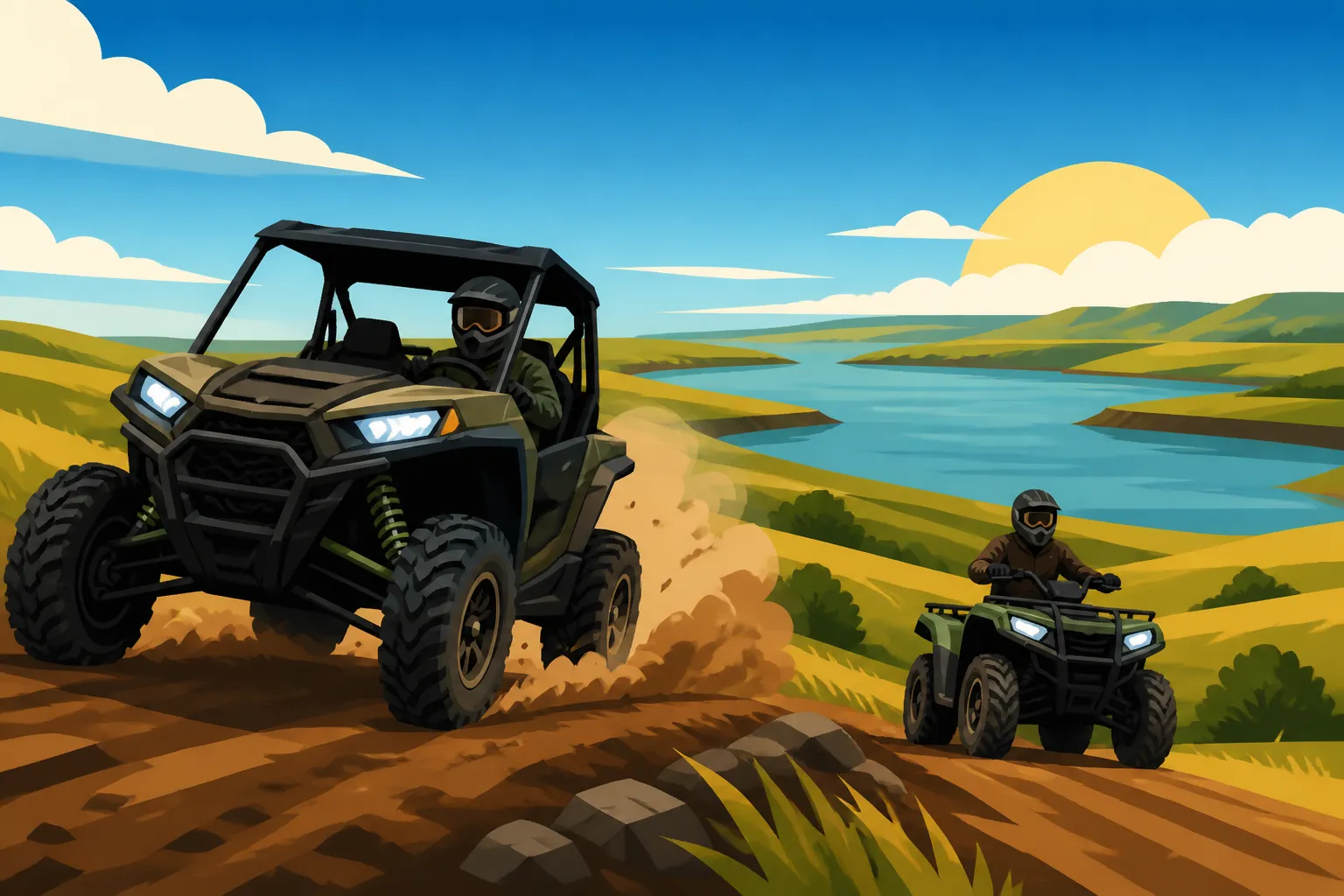
300 Acres by Another Reservoir
A 300-acre riding area can sound roomy until you arrive with a wide side-by-side and find the access rules don’t allow it. School Creek ORV Area sits by Milford Reservoir in Kansas, but the machine you bring, current trail conditions, and posted access rules all shape the visit. This guide explains what to expect and how to plan before you tow.
What to expect at School Creek ORV Area
Where the 300-acre area is
School Creek ORV Area is associated with Milford Reservoir, the large lake near Junction City and Milford in north-central Kansas. The riding area is a different destination from Tuttle Creek ORV Area, which is near Randolph and Tuttle Creek Lake. If you are searching maps, make sure your destination is School Creek by Milford Reservoir, not a general Milford Lake recreation area or a boat-access point.
The roads around the reservoir can feel remote, and a navigation app may take you along rural roads that are unfamiliar if you are coming from farther away. Check your route before loading the trailer, and confirm that the final approach is open and appropriate for your vehicle. A pin dropped at the lake does not necessarily lead to the ORV entrance.
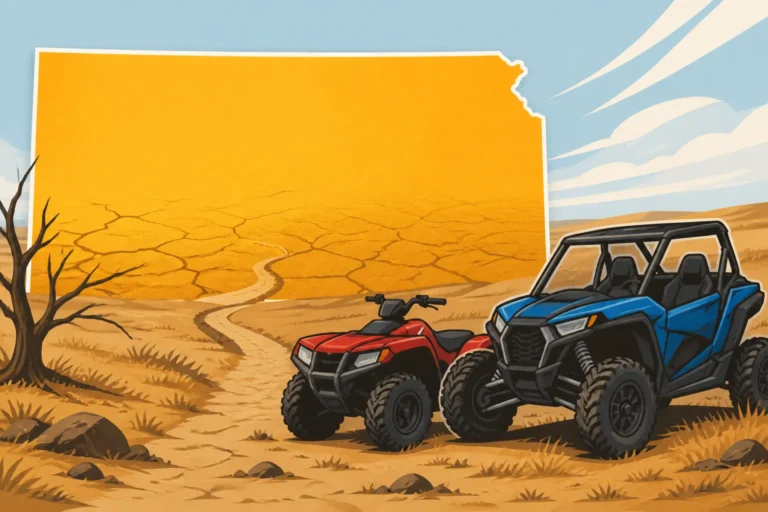
The area is commonly described as roughly 300 acres. That acreage gives you a sense of the scale, but it is not a promise of 300 acres of equally rideable ground. Terrain, designated riding boundaries, temporary closures, and weather can affect how much ground is usable on a particular day. Follow signs at the site and keep your machine within the areas open to riding.
What the acreage means for a ride
A 300-acre riding area can suit a short outing, practice laps, or a family trip, but it is not the same as a long trail network with hours of point-to-point riding. Before you head out, decide what a satisfying day looks like for your group. If everyone wants a full day of varied trails, confirm the riding options and current conditions rather than assuming the acreage alone tells you how much mileage you will cover.
It can help to set expectations with newer riders, too. A smaller area may make it easier to keep the group together and return to the staging area, but riders still need to watch for changing terrain, other users, and posted restrictions. Agree on a meeting point and a simple plan for what to do if someone falls behind or needs to stop.
| Planning question | What to keep in mind |
|---|---|
| Where is it? | By Milford Reservoir near Milford and Junction City |
| How large is it? | Commonly described as about 300 acres |
| Which machines fit? | The area is associated with a 50-inch width limit and dirt bikes and quads |
| Can conditions change? | Yes. Weather, maintenance, closures, and site rules can affect access |
| What should settle a rules question? | Current posted signs and the managing agency’s guidance |
If you are comparing places to ride, [School Creek ORV Area in Kansas] helps distinguish this site from other Kansas riding areas. For a different reservoir-area option, [Tuttle Creek ORV Area in Kansas] covers the riding area near Randolph.
Choose a machine that fits the site
Check width and machine eligibility before you tow
School Creek is associated with a 50-inch limit, and the riding opportunity is generally described as being for dirt bikes and quads rather than wide side-by-sides. This is the detail to confirm before your trip. A machine that is legal to own or use elsewhere in Kansas may still be unsuitable for a particular trail area because of its width or the site’s machine restrictions.
Measure the machine at its widest point, including accessories that extend the body. Aftermarket wheels, fender guards, racks, or other add-ons can change the overall width. If the measurement is close to the limit, do not rely on a brochure number or a guess made from the driver’s seat. Bring the machine’s specifications and check how the site applies its posted restriction.
A side-by-side owner may be disappointed to learn that a popular riding destination is not a fit, especially after already arranging a trailer and a day off. It is better to resolve that question before departure than at the entrance. For a closer look at the restriction, read [Kansas's 50-Inch Limit at School Creek] and [Machines Under 50 Inches Only]. If you are shopping for a machine with local riding destinations in mind, [Kansas Trails That Allow Side-by-Sides] can help you compare options.
Think about terrain, not just machine size
Even a machine that meets the width requirement needs to be suitable for the conditions you may encounter. A quad with appropriate tires, sound brakes, and responsive steering is easier to manage when the ground is loose, rutted, or uneven. Dirt-bike riders should check tires, chain condition, controls, and protective gear before leaving home. Basic maintenance can prevent a small mechanical problem from becoming a difficult recovery.
Kansas weather can change the character of off-road ground quickly. Recent rain may leave some areas muddy or soft, while dry conditions can mean dust and reduced visibility behind another rider. Neither condition guarantees that the area will be closed or open; it is a reason to check conditions and be prepared to turn around if a route looks unsafe or is posted closed.
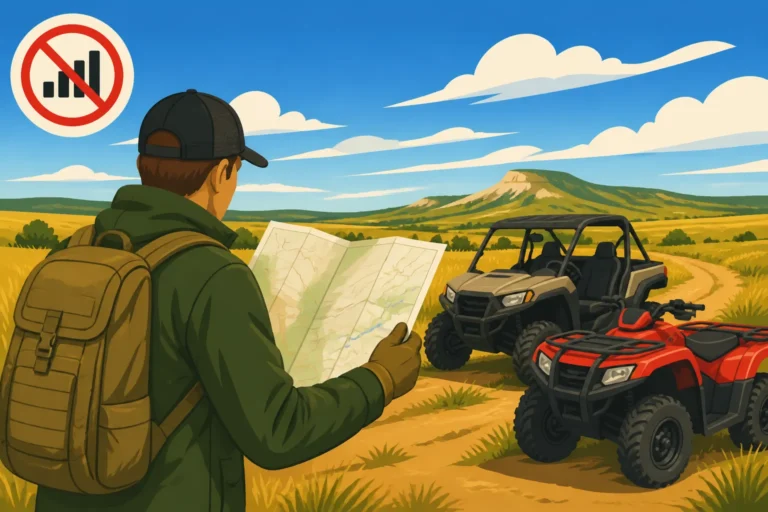
A map can help you understand the roads and nearby landmarks before arrival. Some riders use onX Offroad to review off-road mapping and organize a route, but a map layer should not be treated as permission to ride. Posted boundaries and agency directions take priority. If mobile service is weak near the reservoir, save useful map information before leaving town and carry a backup navigation plan.
Plan a practical trip
Confirm access, conditions, and amenities
Before setting out, check the managing agency’s latest information and any signs or notices that apply to School Creek. Look for access updates, closures, fire restrictions, and reminders about eligible machines. If a detail is unclear, contact the appropriate Milford Reservoir or site office before towing. A quick confirmation can save a long drive with the wrong machine or a closed entrance.
Do not assume that a recreation area has every convenience you might find at a developed campground. Confirm whether the facilities you need are available, and plan for the possibility that they are not. Bring drinking water, food, a way to manage trash, and anything needed for basic first aid. If you are traveling with children or newer riders, make sure the group has a clear plan for restroom stops and breaks.
Use onX Offroad or another mapping tool to check the approach and orient yourself to nearby roads, but download or save what you need ahead of time. Cell coverage can be inconsistent in rural areas, and navigation may become less reliable when you are away from a main road. Keep the physical address or location details available in a separate note, and tell someone where you plan to ride and when you expect to be back.
Bring gear that matches the day
A useful pre-ride check starts with the machine. Inspect tires, brakes, steering, throttle, lights if applicable, fuel or battery charge, and any visible leaks. Pack tools that match the machine, a tire repair option, and basic recovery equipment if appropriate. A small repair kit is more useful when you know how to use it, so check the contents at home rather than opening it for the first time beside the trail.
Rider gear matters just as much. Wear a properly fitted helmet and eye protection, along with gloves, sturdy footwear, and clothing that protects against dust and scrapes. Carry water for each rider, not just one shared bottle in the truck. On a hot day, plan regular breaks and pay attention to signs that someone is becoming overheated or tired.
If you are riding with a group, agree on a pace that works for the least experienced person. Keep enough space between machines to manage dust and sudden stops. Choose a meeting point in advance, and decide what the group will do if someone needs to return early. Tools such as onX Offroad can help riders discuss general orientation before departure, but do not depend on a phone map as your only way to stay together.
Ride responsibly around Milford Reservoir
Follow boundaries and site rules
An off-road designation is not permission to ride anywhere around the lake. Stay within the areas open to riding and respect gates, barriers, and signs. Nearby public land, roads, shoreline, and recreation areas may have different rules. Riding beyond the authorized area can create safety problems, disturb other visitors, and lead to enforcement action.
Do not assume that a trail shown in an app or shared in a group message is currently open. Maps can be incomplete or out of date, and tracks may reflect where someone once rode rather than where riding is allowed today. This is another place where onX Offroad can be useful for orientation, but it cannot replace posted restrictions or confirmation from the managing agency.
Be considerate of other people using the reservoir area. Keep speeds controlled near staging areas, give other riders room, and avoid unnecessary noise. Pack out litter and leave gates as instructed. If conditions are wet enough that riding would leave deep damage or make travel unsafe, reconsider the outing rather than trying to push through.
Decide whether School Creek fits your group
School Creek may be a good fit if your group has eligible dirt bikes or quads, wants a nearby reservoir-area ride, and is comfortable planning around a relatively compact area. It may not be the best destination if your main goal is a long, varied trail network or if your group is bringing a wide side-by-side. Matching the destination to the machine and riding style is the simplest way to avoid a frustrating day.
If School Creek’s size or machine limits do not suit your plans, compare it with other options before committing. [Kansas Trails That Allow Dirt Bikes] may help riders looking for a dirt-bike-friendly destination, while [Kansas Trails for Kids] is useful when the outing needs to work for younger riders. For a broader look at where to ride, [Kansas ATV Trails: Where You Can Actually Ride] explains why access can differ between public areas and private parks.
A little preparation makes the trip much smoother: verify the entrance, confirm that your machine meets the site’s rules, check conditions, and plan for limited services or cell coverage. That way, you arrive with realistic expectations and can spend less time sorting out logistics and more time enjoying the ride.
Disclaimer
This article is for general informational purposes only and does not constitute professional advice. Laws, prices and regulations vary by location and change over time. Consult a qualified professional for guidance on your specific situation.