Kansas Riding With a Group of Ten
A group of ten can turn a Kansas ATV ride into a great day out—or a slow, stressful convoy if machines, trail rules, and meet-up plans are not sorted first. The challenge is not just choosing a place to ride; it is keeping everyone together while respecting the land and other riders. This guide helps you plan a safer, smoother group outing.
Plan the ride around the group
Confirm what the group is bringing
Before you choose a riding area, count machines as well as people. Ten riders might mean ten ATVs, several UTVs carrying passengers, or a mix of both. That difference affects trailer space, parking, trail suitability, and the time it takes to get everyone unloaded and ready.
Ask each rider for the machine’s type and approximate width, whether it has a passenger seat, and whether it is comfortable on the terrain you are considering. This matters in Kansas, where areas can have different access rules. For example, School Creek is associated with a 50-inch machine limit, so a wide side-by-side may not be a fit. Check the riding area’s current rules before inviting the whole group. [Kansas Trails That Allow Side-by-Sides] and [Kansas Trails That Allow Dirt Bikes] can help you narrow down the right kind of destination.
Also find out who is new to off-road riding. A beginner may be perfectly comfortable on an easy loop but uneasy on steep rocks, deep sand, or a fast-moving group ride. A quick, no-pressure conversation before the trip is better than discovering at the trailhead that someone feels pushed beyond their comfort level.
Choose a destination that suits ten riders
Do not choose an area based on acreage alone. A large riding area can still feel crowded if everyone arrives at the same time, uses the same narrow trail, or has to share a small staging area. Look for clear information about trail types, vehicle restrictions, parking, opening hours, and any rules for groups or organized events.
Kansas options vary. Tuttle Creek ORV Area near Randolph is known for riding near a reservoir, while School Creek has a machine-width restriction that may rule out some UTVs. Kansas Rocks Recreation Park near Mapleton offers a different experience for riders looking for rocky terrain. Syracuse Sand Dunes suits groups prepared for sand riding. These places are not interchangeable: the right one depends on your machines, experience levels, and preferred terrain.
A useful first step is to ask the riding area directly whether a group of your size can arrive together and whether it recommends any special check-in or staging arrangements. Do not assume a group of ten is automatically treated like a casual family outing or that every area handles large groups the same way. For more destination planning, see [Kansas Group Ride Planning] and [Kansas Trail Etiquette Locals Expect].
| Riding area type | Best fit for | What to confirm before leaving |
|---|---|---|
| Reservoir-area riding | Riders wanting a mix of open and wooded surroundings | Access points, trail closures, parking, and machine restrictions |
| Narrower machine trails | Quads and other machines within the posted width limit | The limit for every machine, including accessories that add width |
| Rocky terrain | Riders comfortable choosing lines over uneven ground | Difficulty, required equipment, and whether beginners have an easier route |
| Sand riding | Riders with machines and skills suited to loose sand | Flags, tire guidance, access rules, and conditions after weather |
Make a practical group plan
Set a route, pace, and meeting points
A group of ten is easier to manage when everyone knows the plan before the engines start. Pick a route that matches the least experienced rider, then agree on a comfortable pace. The fastest rider should not set the speed for everyone else, and the group should not feel pressured to keep moving when someone needs a break.
Identify a few meeting points before riding: the trailhead, a major junction, and a planned rest stop are useful starting points. If the group gets separated, riders should know where to stop and wait rather than continuing to explore side trails. A map, downloaded route, or printed backup can help everyone understand the same plan. Some riders use onX Offroad to prepare and review routes, but no mapping tool replaces checking posted signs or the riding area’s instructions once you arrive.
Make the route flexible. If rain has made a section muddy, a trail is closed, or a rider is tired, be ready to shorten the outing. Conditions can change quickly, and a good group ride is not measured by how many miles everyone completes. [Kansas Trail Conditions Before You Tow] and [Kansas Trail Closures After Rain] are useful reminders to check local conditions before loading up.
Choose a simple group structure
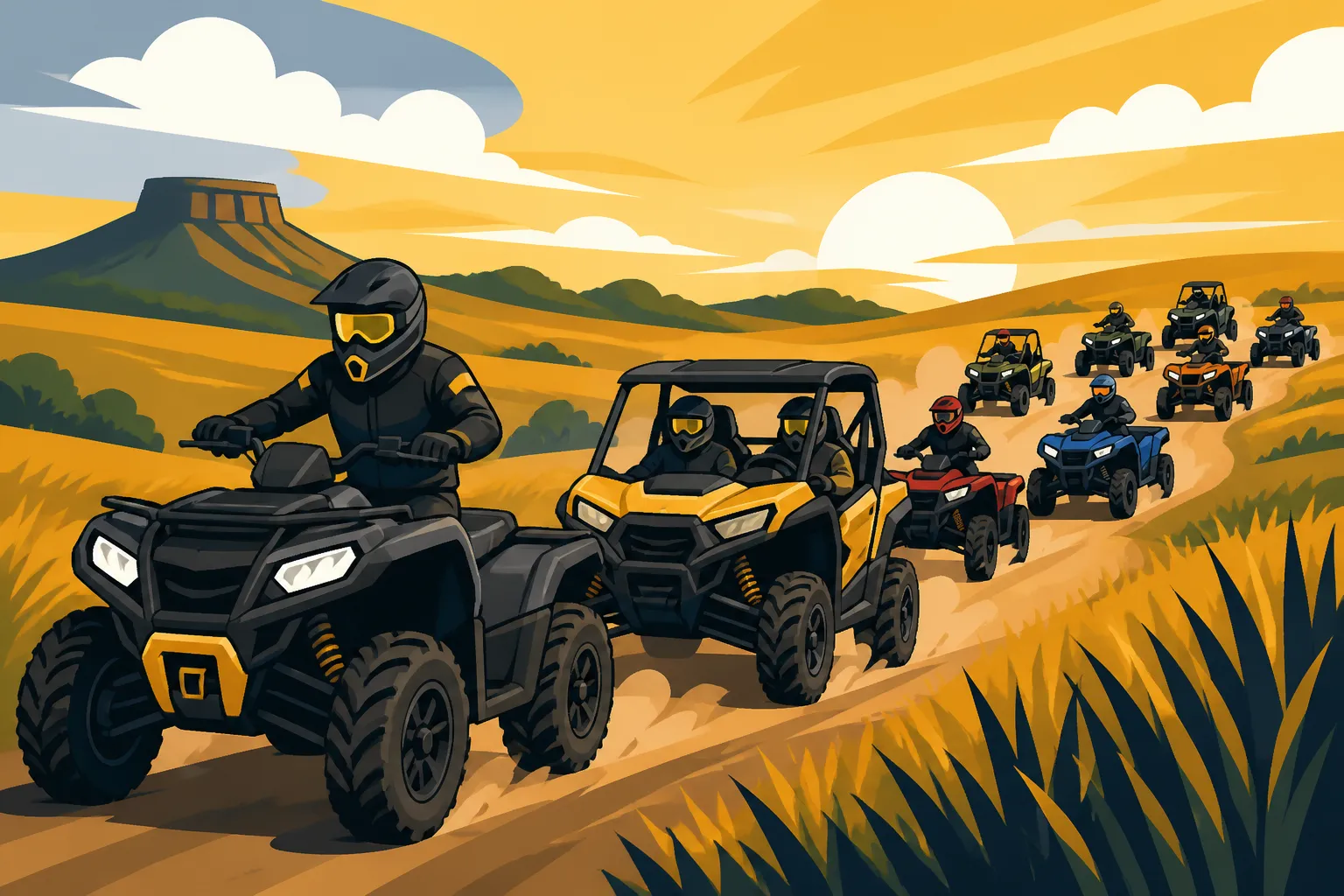
One person should take responsibility for leading, and another should act as the sweep rider at the back. The leader can set the pace and stop at agreed junctions; the sweep rider can make sure nobody is left behind and can help relay a problem. These roles matter even on a familiar trail, especially when the group includes riders who have not travelled together before.
Ask riders to keep a safe following distance and avoid racing to catch up after a stop. Dust, trees, rolling terrain, and bends can hide the machine ahead. A rider who loses sight of the group should slow down and follow the agreed regrouping plan rather than taking a guess at a turn.
For a group with mixed experience, consider splitting into smaller riding groups with separate leaders, provided the area allows it and everyone understands where and when to regroup. Do not split casually if riders are unfamiliar with the route or if nobody has a reliable way to stay in contact. If you use onX Offroad or another map app, make sure each rider knows how to find the intended route and what the plan is if a phone loses service. Remote areas may have weak or no cell coverage, so [Cell Dead Zones in Western Kansas] and [Carrying a Paper Map Where Cell Service Drops] are worth considering when planning farther from town.
Prepare people and machines
Check the equipment before the convoy leaves
A problem that could have been caught in a driveway is much harder to handle beside a trail. Before departure, check tires, brakes, lights, fuel, belts where relevant, and basic controls. Ask riders to bring the tools and recovery equipment appropriate for their machines and the terrain. A winch or tow strap can be useful in the right hands, but everyone should know how it will be used and where it is stored.
For sand, rocky ground, or mud, the group’s preparation should match the destination. Loose sand can demand different riding techniques than Kansas clay or rock. Rocks may expose tires, skid plates, or undercarriage parts to impacts. Avoid assuming one setup works everywhere; read the riding area’s guidance and talk through the basics with less experienced riders. Related guides include [Kansas Trails With Rock Sections], [Kansas Trails With Sand], and [Picking a Winch for a Machine Stuck in Mud].
Plan for ordinary needs too. Bring water, weather-appropriate clothing, food, and a basic first-aid kit. Kansas weather can make an otherwise short ride uncomfortable: wind, heat, dust, and sudden rain all affect how long people can comfortably stay out. A group lead should check that no one is relying on another rider to carry every essential item.
Agree on safety and communication
Have a short safety talk before riding. Cover hand signals or other communication methods, the regrouping points, what to do if a machine breaks down, and who to contact in an emergency. Keep the conversation calm and practical. Nobody needs a lecture, but everyone should understand the plan.
Do not assume phones will work everywhere. Decide how the group will handle separation when cell service drops, and carry a paper map or other backup if appropriate. If the route depends on a navigation app, check that riders can access the route before setting off; a screenshot or downloaded map may help, but it should not replace trail signs and posted closures. onX Offroad can be part of a group’s route-preparation routine, while a paper backup and clear meeting points provide another layer of resilience.
Agree that riders can call for a stop without being teased or rushed. A minor mechanical concern, low fuel, fatigue, or uncertainty at a junction is easier to deal with early. If someone is uncomfortable, adjust the ride rather than expecting them to keep up. The group’s safety depends on the decisions of its least experienced or most tired rider, not just its most capable machine.
Respect the riding area and other visitors
Keep the group together without blocking the trail
Ten machines can take up a lot of space, particularly at narrow trail junctions or busy staging areas. Stop where there is room, keep machines off vegetation, and avoid gathering across the full width of a trail. If the group needs to discuss a route, move to a safe pull-off rather than making other riders wait or pass through a crowded cluster.
When other visitors approach, leave room and follow the area’s passing rules. Keep speed controlled, especially where visibility is limited or trail conditions are rough. Dust can make it difficult for riders behind to see, so leave enough space and pause if visibility becomes poor. These small courtesies matter more when a group is large because one careless stop or pass can affect many other people.
Follow posted boundaries and closures, even if a track appears open or a route app shows a line through it. Maps are planning aids, not permission to ride wherever a line appears. In particular, do not use private land, closed roads, or unmarked routes unless access is clearly allowed. [Kansas Landowner Permission Rules] and [Kansas Trail Etiquette Locals Expect] offer useful context for respecting access and sharing trails.
Check rules, access, and timing before the trip
Call or check the riding area’s own information before setting out. Confirm that it is open, that your machines are allowed, and that there are no special group procedures or temporary restrictions. Ask about parking and staging, too. Ten vehicles and trailers may need more space than a small family visit, and arriving without a plan can create a bottleneck for everyone.
Build in extra time for loading, unloading, safety checks, and delays. If riders are meeting from different parts of Kansas, choose a clear rendezvous point and provide directions that do not depend entirely on cell service. Share the location and the plan with someone who is not riding, especially if the group expects to be out for several hours.
The ride should end with enough time to load machines safely and check that everyone is accounted for. Do a final headcount before leaving the trailhead, and make sure each rider has their keys, gear, and any belongings they brought. A little organization at the end prevents the familiar scramble of searching trailers and parking areas while everyone is tired.
Disclaimer
This article is for general informational purposes only and does not constitute professional advice. Laws, prices and regulations vary by location and change over time. Consult a qualified professional for guidance on your specific situation.