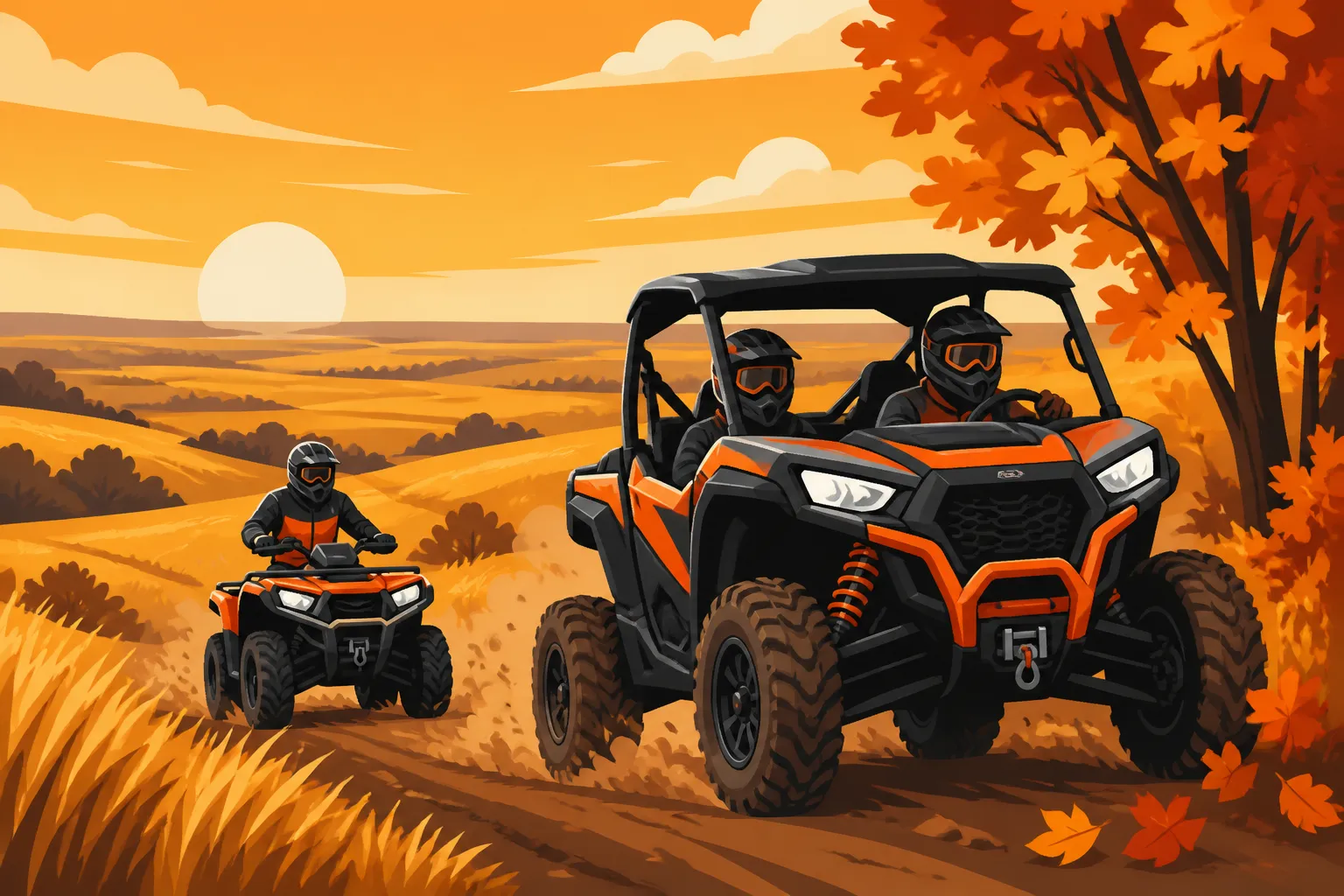
Kansas Riding in Fall
A Kansas fall ride can start under a clear blue sky and end with a cold wind, muddy ruts, or a dark trailer trip home. Shorter daylight and harvest-season traffic also change how you plan. This guide covers choosing a riding area, checking trail conditions, packing for unpredictable weather, and keeping autumn rides safe and enjoyable.
Why fall riding in Kansas takes extra planning
Weather can change faster than the trail looks
Autumn often brings comfortable riding temperatures, but Kansas weather can shift quickly. A sunny morning near Manhattan may give way to a windy afternoon, while a recent rain can leave low-lying trail sections slick even when the main road into a riding area looks dry. Open prairie and exposed ridgelines can feel especially cold once the wind picks up.
Plan for a wider range of conditions than the forecast’s daytime high suggests. Bring a warm layer that fits under your riding gear, gloves that remain comfortable when damp, and rain protection you can reach without unpacking the whole machine. It is also worth checking the forecast for the specific riding area—not just the nearest large city—and looking again before you leave home.
Fall colors can make wooded routes around reservoirs and creek bottoms especially appealing, but fallen leaves hide rocks, roots, holes, and changes in surface. Slow down where leaves cover the trail, particularly in shaded corners. If a route is unfamiliar, treat the first pass as a chance to learn the surface rather than an invitation to ride at your usual pace.
Harvest traffic and hunting activity affect access
Fall is a busy time on rural roads. Combines, grain trucks, tractors, and pickups towing equipment may be moving between fields, elevators, and farmsteads. Give those vehicles room, expect slow-moving equipment around blind rises, and avoid stopping where a trailer or machine blocks a narrow road. Dust can also hang in the air behind farm traffic, so leave more following distance than you might on a quiet summer day.
Hunting seasons can change how comfortable a landowner feels about recreational riding, even where access was previously allowed. A route that crosses private ground, a leased hunting property, or a shared farm lane is not automatically open because it appeared on a map. Confirm permission with the landowner or manager before riding, and respect gates, signs, and temporary closures. The guide to [Kansas Hunting Season and Land Access] offers useful context for thinking through seasonal access.
For route-planning basics, see [Kansas Trail Conditions Before You Tow] and [Kansas Trail Etiquette Locals Expect]. A little checking before you load the trailer can prevent the frustrating experience of arriving at a closed or unsuitable area after a long drive.
Choosing a Kansas riding area for autumn
Match the riding area to the day’s conditions
Kansas has a mix of public riding areas and private off-road parks, and they do not all offer the same terrain, access rules, or riding experience. Before choosing a destination, confirm that the area permits your machine type and check its current operating rules. Do not assume that a state park’s general road access means its trails are open to ATVs or UTVs; riding permissions depend on the specific property and designated areas.
The table below gives you a planning framework rather than a promise about current trail conditions. Fall weather, maintenance, and site rules can affect what is open or suitable on any given day.
| Riding option | What may make it appealing in fall | What to check before you go |
|---|---|---|
| Tuttle Creek ORV Area near Randolph | A reservoir-area destination that can work for a focused day ride | Current access, allowed machine types, hours, and recent rain |
| School Creek ORV Area | A designated riding area that may suit a shorter outing | Width limits, surface conditions, closures, and entry requirements |
| Kansas Rocks Recreation Park near Mapleton | A private off-road option for riders looking for a more technical outing | Operating schedule, admission rules, machine suitability, and weather-related changes |
| Syracuse Sand Dunes | A sand-riding destination with a different feel from clay or rocky terrain | Current access, sand conditions, park rules, and what equipment is appropriate |
Use the area-specific guides for [Tuttle Creek ORV Area in Kansas], [School Creek ORV Area in Kansas], [Kansas Rocks Recreation Park], and [Kansas Riding Near Manhattan] to narrow down your options. Then confirm the details directly with the riding area before you tow. A map can help with orientation, but it cannot tell you whether a gate is open today or whether recent rain has made a trail unsuitable.
Let the forecast decide the terrain, not just the destination
Clay, sand, and rocky ground respond differently to autumn weather. A clay trail can become slippery or deeply rutted after rain, while dry leaves can make a rocky section harder to read. Sandy terrain may remain rideable in conditions that create trouble elsewhere, but loose sand still takes energy and can be tiring for a new rider or a machine carrying a full load.
Build flexibility into the day. If rain is moving through, consider postponing rather than treating muddy conditions as an extra challenge. Riding through a wet, soft trail can deepen ruts, damage the surface, and leave you with a machine that is difficult to recover. Check [Kansas Trail Closures After Rain] and [Kansas Trail Riding After Heavy Rain] before deciding that a wet route is worth attempting.
Navigation apps such as onX Offroad can help you review route options and orient yourself before a ride. Use them as planning aids, not as proof that a road or trail is open to public riding. Confirm access through the property or park itself, keep an offline map available where cell service may be weak, and follow signs on the ground even if a route appears on your screen.
Preparing your machine and gear for a fall ride
Do a practical pre-ride inspection
A short inspection is easier at home than beside a trail with cold fingers and a fading sunset. Check tire condition and pressure, brakes, throttle movement, steering, lights, and fluid levels. Look for loose fasteners or damage from the last ride, and make sure your recovery equipment is accessible rather than buried under camping gear.
Pay attention to anything that could be affected by mud, leaves, or wet conditions. Clear debris from areas where it could interfere with moving parts or airflow, and make sure your machine’s lights work before you leave. If you have a winch, inspect the line and confirm that you know how to use it safely. Carry basic tools suited to your machine, but do not rely on a tool kit as a substitute for maintenance.
For a group ride, agree on a simple communication plan before setting out. Choose a lead rider and a sweep rider, identify regrouping points, and decide what everyone should do if someone has to stop. A familiar route can still become confusing when leaves cover landmarks or low clouds reduce visibility.
Pack for cold, damp weather and an earlier sunset
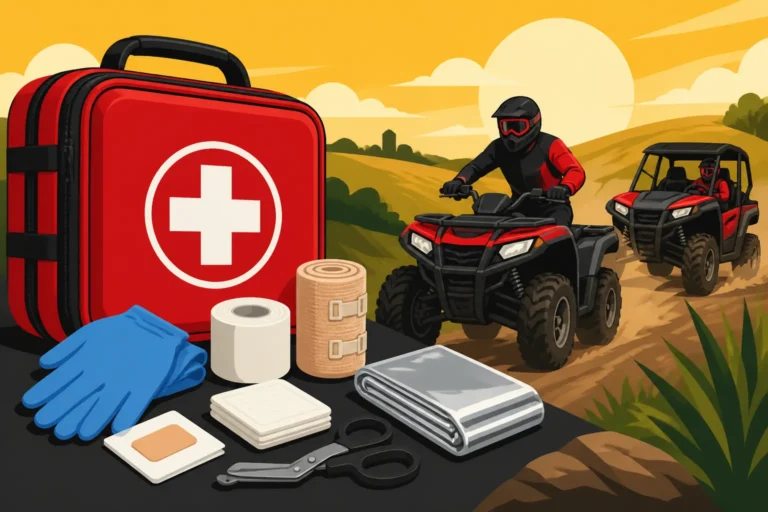
The temperature can fall noticeably after the sun drops, especially if you are riding in wind or your clothes have become damp. Dress in layers that let you adjust without overheating during active riding. Bring water even on cool days, along with snacks and a basic first-aid kit. A spare dry pair of gloves can make a late-afternoon ride much more comfortable.
Plan to finish well before dark unless your route and machine are suitable for after-dark riding and local rules allow it. Shorter days make it easy to underestimate how long a loop will take, especially if the group stops for repairs, navigation, or photos. Set a turnaround time before leaving, and tell someone at home where you plan to ride and when you expect to return.
Navigation deserves extra attention in fall. Download or save maps before entering areas where reception may drop. onX Offroad can be one option for reviewing routes in advance, but keep a backup plan, such as a paper map or a second device, and verify the route’s legal access independently. Keep your phone protected from weather, and do not depend on a single battery for navigation and emergency communication.
Making the ride safer and more enjoyable
Adjust your pace to visibility and surface
Autumn scenery can pull your attention away from the trail. Stop in a safe place if you want to take photos rather than slowing unexpectedly in a blind section. Leaves, dust, and low-angle sunlight can all reduce your ability to spot hazards. If visibility is poor, increase your distance from the rider ahead and use a speed that lets you stop within the clear trail ahead.
Wet leaves and shaded ground deserve extra caution because they can conceal slippery roots or loose rocks. When you reach an unfamiliar obstacle, get off the machine only when it is safe to do so and assess the route before committing. Avoid riding through deep mud just to see whether you can make it across; getting stuck can put both the machine and the trail at risk.
For family outings, choose a route that suits the least experienced rider rather than the most confident one. Shorter loops and frequent breaks are often a better fit for children or newer riders than a long, difficult route. The planning guide [Kansas Trails for Kids] can help you think about matching a ride to the people in your group.
Respect closures, private property, and changing conditions
A trail that was open on your last visit may be closed for weather, maintenance, hunting activity, or another site-specific reason. Follow posted instructions and ask staff or the property manager if you are unsure. Do not ride around a barrier, cut across a field, or use a private farm lane as a shortcut because a navigation app suggests it will reconnect with your route.
At public or shared-use locations, stay on designated routes and give other visitors room. Keep noise under control near homes, campsites, and quiet areas, and leave gates as you found them. If conditions deteriorate during the ride, turn back instead of trying to finish the planned loop at any cost. A shorter ride that ends safely is better than a late recovery in cold weather.
Before you head out, run through this quick checklist:
- Confirm the riding area is open and permits your machine.
- Check the local forecast and recent rain, not just the destination’s general climate.
- Verify land access and respect hunting-related or seasonal restrictions.
- Inspect the machine, lights, tires, brakes, and recovery gear.
- Pack warm layers, water, food, first aid, and navigation backups.
- Set a turnaround time that leaves room to return before dark.
- Tell someone where you are going and when you expect to be back.
Fall can be one of the most rewarding times to ride in Kansas, especially when the route, weather, and group are a good match. A little extra planning helps you enjoy the colors and cooler air without being surprised by a slick trail, a closed gate, or an early sunset.
Disclaimer
This article is for general informational purposes only and does not constitute professional advice. Laws, prices and regulations vary by location and change over time. Consult a qualified professional for guidance on your specific situation.