Kansas Rocks’ Weekend-Only Season
A weekend-only riding season can make a Kansas Rocks trip feel easy to postpone—and then suddenly hard to plan. If you’re hauling a machine to Mapleton, the key is to confirm that the park is open, match your group to the terrain, and prepare for a full day without assuming a weekday backup is available. This guide walks through those decisions before you leave home.
How the weekend-only season affects your plans
Treat the calendar as part of the trip
Kansas Rocks Recreation Park is a private riding destination near Mapleton, so its operating schedule is not the same as public-road access or a state park’s general hours. A weekend-only season means you should plan around the park’s announced days rather than assuming you can arrive on a weekday because the weather looks perfect. Start with the park’s own current notices, then confirm that the date you have in mind is an operating day.
This matters most when your plans involve travel, lodging, or several riders. A family driving across Kansas, a group coming from the Kansas City area, or friends coordinating time off can all lose a day if one person assumes the park will be open on a Friday or holiday Monday. Check the exact date, opening arrangements, and any special event or closure notice before you load the trailer. The post [The Rock Park at Mapleton Opens Only on Weekends] is a useful companion when you’re thinking through the park’s weekend schedule.
Avoid treating the phrase “weekend-only season” as a promise that every weekend will operate exactly alike. Weather, maintenance, events, and park-specific decisions can affect access. If your trip depends on a particular day, verify it close to departure and again before leaving, especially after heavy rain. A quick confirmation can save you the frustration of arriving at a closed gate with a full trailer and a group that has already cleared its calendar.
Build flexibility into a limited riding window
When riding is concentrated on weekends, your first choice of date may not be your best choice of date. A forecast that looks manageable early in the week can turn into thunderstorms, muddy access roads, or poor trail conditions by Saturday. If your group can choose between two weekends, keep both in view until you know which one is more practical. If there is only one possible date, have a realistic alternative activity ready rather than counting on an unconfirmed weekday opening.
Try to settle the major logistics before the last few days. Confirm who is driving, how many machines are coming, whether everyone has the required riding gear, and whether the towing vehicle can handle the route and trailer. Ask the park about arrival procedures and any rules that might affect your group. If you’re organizing several households, give each person one clear deadline for confirming attendance; a weekend trip can become messy when the head count changes after the trailer is packed.
The season itself may have a broader start and end window than the days the park operates each week. The reference [The Mapleton Rock Park Season Runs February to November] can help frame your seasonal planning, but do not read a general season range as confirmation that a particular date is open. Verify the park’s specific calendar, then make lodging or other nonrefundable arrangements only when you’re comfortable with the risk of a schedule change.
Choose the right weekend for your group
Compare weather, ground conditions, and daylight
In southeast Kansas, a pleasant forecast does not tell the whole story. Recent rainfall can affect the ground and riding conditions even when the day itself is sunny. Heat, wind, and sudden storms can also change how long a ride feels comfortable, particularly for children, new riders, and anyone who is not used to spending hours outdoors. Check the forecast for the area and consider the conditions in the days leading up to the ride, not just the predicted high temperature on Saturday.
A dry weekend may be a better fit for riders who want predictable footing, while a group that enjoys challenging conditions may be comfortable with a different set of trade-offs. Neither choice is automatically right for everyone. If the park has posted weather-related updates, closures, or surface guidance, follow those over assumptions based on what the roads look like at home. [Kansas Trail Closures After Rain] offers useful background on why checking after rainfall matters before you tow.
Plan your day around the season and the amount of daylight available. Leave enough time to unload, review rules, inspect machines, and get everyone ready before riding. On the way home, allow time to secure the trailer and check straps without rushing in fading light. Even if the park’s operating hours give you a generous window, a late start can make the day feel hurried—especially when you have children or a group with different riding speeds.
Match the park to the riders and machines
Before choosing a date, consider who is coming and what they want from the day. A group of experienced riders looking for technical terrain has different needs from a family introducing a child to trail riding. Ask about the park’s current trail options and restrictions, and be candid about your group’s experience. A rider who is comfortable on a familiar farm track may still be new to rocky or uneven terrain.
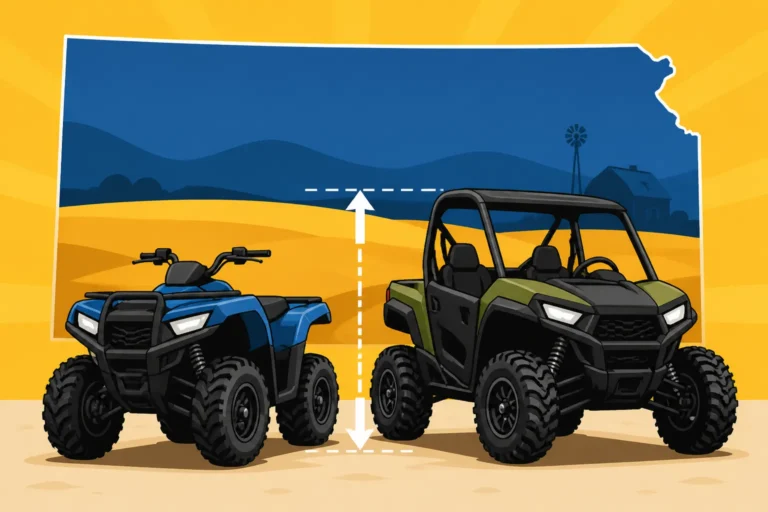
Machine fit is another practical issue. Confirm that each ATV or side-by-side is permitted under the park’s rules, and check width restrictions or other vehicle requirements before loading. Do not rely only on a machine’s marketing name or a neighbor’s experience at a different riding area. The guide [Kansas Trails That Allow Side-by-Sides] can help you think about vehicle compatibility across Kansas destinations, but the park’s own rules decide what is allowed at Kansas Rocks on the day you visit.
If you are bringing young riders, choose a weekend when you can supervise without feeling pressed to keep up with a faster group. Discuss expectations before arrival: stay within the group, stop when asked, and do not follow another rider onto a trail unless you know it is appropriate for your machine and skill level. For a broader planning checklist, see [Kansas Trails for Kids]. A child-friendly day depends on more than a trail’s name; it also depends on the pace, weather, equipment, and adult attention available.
Prepare for the drive and arrival
Check the route and towing setup before departure
Getting to a riding area is only one part of the drive. A truck and trailer can make narrow roads, fuel stops, and parking more complicated than they are in a car. Before leaving, confirm the route you intend to take, identify a practical place to stop if you need fuel or a break, and make sure the trailer is secured for the distance. If your route includes unfamiliar rural roads, avoid making a last-minute detour based only on a phone’s fastest-route suggestion.
A mapping tool can help you review the route and keep key information handy. Some riders use onX Offroad to prepare maps and orient themselves during outdoor trips; however, a navigation app is not a substitute for the park’s posted directions, access instructions, or rules. Check that your route leads to the correct entrance, and do not assume that every mapped line is an authorized riding route. Keep the park’s contact and arrival information accessible in case mobile service is unreliable.
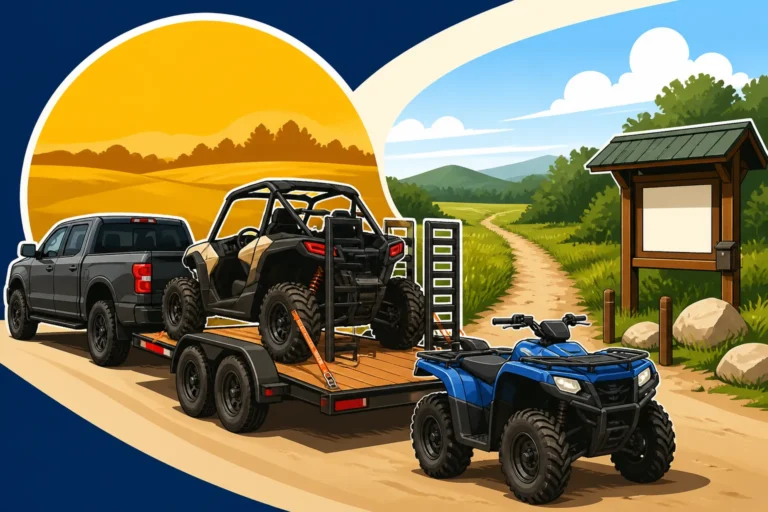
Before pulling out, inspect the hitch, coupler, safety chains, lights, tires, and tie-downs. Make sure each machine is secured against movement in more than one direction, and recheck the straps after the first part of the drive. Pack the gear you will need where it is easy to reach, rather than burying helmets, gloves, eye protection, or paperwork beneath equipment. The practical suggestions in [Kansas Trail Conditions Before You Tow] are also worth considering when the trip depends on ground and access conditions.
Make arrival less stressful
A smooth arrival starts with knowing what the park expects you to do when you reach the property. Confirm check-in, payment, waiver, parking, unloading, and safety procedures with the park before traveling. If your group has several vehicles, agree on where to meet and what to do if someone arrives late. Do not assume you can hold a spot, stage machines, or ride immediately without completing the park’s arrival process.
Once you arrive, take a few minutes to orient everyone before unloading in a hurry. Identify the approved parking and staging areas, review the rules, and make sure riders know where they are expected to stay. If a rider is uncertain about a restriction, ask before heading out. That is far easier than discovering a misunderstanding after the group has spread out across the property.
Use a mapping app as a planning aid, not as permission to explore beyond approved areas. If you use onX Offroad or another mapping tool, review its information before the trip and keep the park’s rules as the authority on where you may ride. Digital maps can be helpful for situational awareness, but private-property boundaries, closures, and local instructions still matter. Save the park’s official information separately so you are not relying on a single app when reception is weak.
Plan a safe and enjoyable day on the trails
Set expectations before the group starts riding
A mixed group often includes riders with different machines, confidence levels, and ideas of what counts as a fun challenge. Talk about those differences before the first trail. Decide whether everyone will ride together, split into smaller groups, or use a simple check-in plan. If you split up, make sure every rider knows the meeting place and what to do if someone needs help. A group that agrees on these basics is less likely to turn a relaxed day into a search party.
Ride at a pace that suits the least experienced person in the group, not the most confident one. Leave enough space between machines to respond to a stop or obstacle, and do not pressure someone into a route that feels beyond their ability. If a rider is uncomfortable, stopping and choosing another option is sensible—not a failure. [Kansas Trail Etiquette Locals Expect] covers trail behavior that helps groups share riding areas respectfully.
Before each ride, check that helmets and other protective gear fit correctly and that machines are in sound working condition. Bring water, basic first-aid supplies, and a way to contact your group if people become separated. Conditions can be tiring even when the weather seems mild, so plan breaks rather than waiting until someone is overheated or exhausted. A simple check-in after each loop or riding section can help you notice problems early.
Respect park rules and the terrain
Kansas Rocks is a private riding park, and the park’s rules apply alongside general safety practices. Follow posted signs and staff directions, stay within authorized riding areas, and avoid treating a trail map as permission to leave the designated routes. Rules may address vehicles, passengers, speed, protective gear, alcohol, pets, or other matters. Read the current requirements rather than relying on what applied during a previous visit.
Terrain can demand more attention than it appears to from the staging area. Uneven ground, rocks, slopes, and changing traction can affect control, especially for riders who are unfamiliar with the machine or the surface. Take an unfamiliar section slowly, leave room to stop, and do not follow another vehicle into an obstacle unless you have assessed it yourself. If your machine has a problem, move to a safe place if possible and let your group know before attempting a repair.
Take care of the property and other visitors. Avoid unnecessary wheelspin, follow any direction about wet or closed sections, and do not leave trash behind. Different riding groups may be moving at different speeds, so be patient when passing or waiting. The guide [Kansas Trail Difficulty Ratings] can help you think about how difficulty should factor into a group’s choice, while [Kansas Rocks Recreation Park] is a useful starting point for park-specific planning. Neither should replace the rules and conditions posted by the park for your visit.
Make a weekend trip work for your budget and schedule
Decide whether to ride for one day or build a longer trip
A weekend-only schedule does not automatically mean you need to stay overnight. If you live within a comfortable driving distance, a day trip may keep planning simple. But a long haul with a trailer can make an overnight stay worthwhile, particularly when the group includes children or when you want to avoid driving home tired after a full day outdoors. Compare the total effort, not just the lodging cost: fuel, meals, travel time, and the stress of an early departure all count.
If you stay nearby, confirm lodging availability and check the details that matter to your group, such as trailer parking, machine storage, and check-in timing. Do not assume a campground or lodging option is connected to the park or that it permits off-road vehicles. For broader trip planning, [Kansas Riding Areas With RV Hookups] may help you think through the kinds of facilities to look for, but verify any specific site’s current rules and availability directly.
A two-day plan can also create pressure to ride longer than is sensible. Decide in advance how much riding your group wants to do, and leave room for meals, rest, and an equipment check. If weather changes or a machine develops a problem, a flexible itinerary is more useful than a packed schedule. A weekend trip should be enjoyable even if you ride fewer hours than expected.
Estimate the full cost before you commit
Park admission is only one part of the cost of a riding weekend. Add fuel for the towing vehicle and machines, food, lodging if needed, protective gear, and any maintenance or trailer expenses that may come up. Check the park’s current fees and accepted payment methods directly rather than relying on an old receipt or an online discussion from a previous season. A group organizer can make a simple shared cost list so each household knows what to expect.
You can use this checklist to organize the planning:
| Planning item | What to confirm | Why it matters |
|---|---|---|
| Operating date | The park is open on your chosen day | Prevents a wasted drive |
| Park rules | Current vehicle, rider, and safety requirements | Avoids arrival surprises |
| Trail and weather conditions | Recent rain, closures, and posted updates | Helps you choose gear and riding plans |
| Machine fit | Vehicle eligibility and any width or equipment limits | Confirms each machine can participate |
| Travel logistics | Route, fuel stops, trailer readiness, and arrival process | Reduces towing and check-in stress |
| Group budget | Admission, fuel, food, lodging, and equipment needs | Makes shared plans clearer |
| Backup plan | Alternate weekend or non-riding activity | Provides options if conditions change |
A mapping app can be one tool in the preparation process, particularly when you want to review a route before towing. Some riders use onX Offroad to organize outdoor navigation, but confirm directions and access details with the park. Keep a paper or saved copy of key information if service could be limited, and tell someone who is not riding where your group plans to be.
Common planning mistakes to avoid
Assuming the season means every weekend is guaranteed
The most avoidable mistake is treating a general season window as a permanent, day-by-day promise. A weekend-only schedule still requires checking the exact opening date, any special closure, and weather-related notices. The same applies to holiday weekends, which may have special arrangements or attract more visitors than an ordinary weekend. Confirm rather than infer.
Another mistake is planning the whole trip around a single screenshot, old social post, or recollection from a previous visit. Park schedules and procedures can change. Check the park’s own current information and contact the park if an important detail is unclear. This is particularly useful when you are arranging a group, booking lodging, or traveling far enough that changing plans would be costly.
Do not make a weekday your backup unless the park has explicitly confirmed that it will be open then. If a Saturday is lost to weather or a closure, a nearby weekday may not be an option under a weekend-only season. Keeping a second potential weekend available is often a more realistic backup.
Packing too late or overlooking the least experienced rider
Rushing to pack can leave basic items behind: helmets, eye protection, gloves, water, first-aid supplies, tie-downs, or the tools needed for a minor adjustment. Make a checklist a few days ahead and have each rider confirm their own protective gear. Inspect the machines before loading, not after you have reached the park and discovered a problem.
A second common oversight is planning around the strongest rider in the group. If one person wants a demanding day and another is new to off-road riding, settle the plan before arrival. Consider smaller groups, agreed meeting points, or a conservative first ride that lets everyone assess the terrain. No one should feel pushed to continue when they need a break or want to turn back.
For route and condition awareness, you may find onX Offroad useful as part of your preparation, but remember that app information cannot establish park permission or replace posted instructions. Pair any digital planning with direct confirmation from the park and a clear group plan. That combination is more dependable than relying on memory or a single navigation screen.
Disclaimer
This article is for general informational purposes only and does not constitute professional advice. Laws, prices and regulations vary by location and change over time. Consult a qualified professional for guidance on your specific situation.