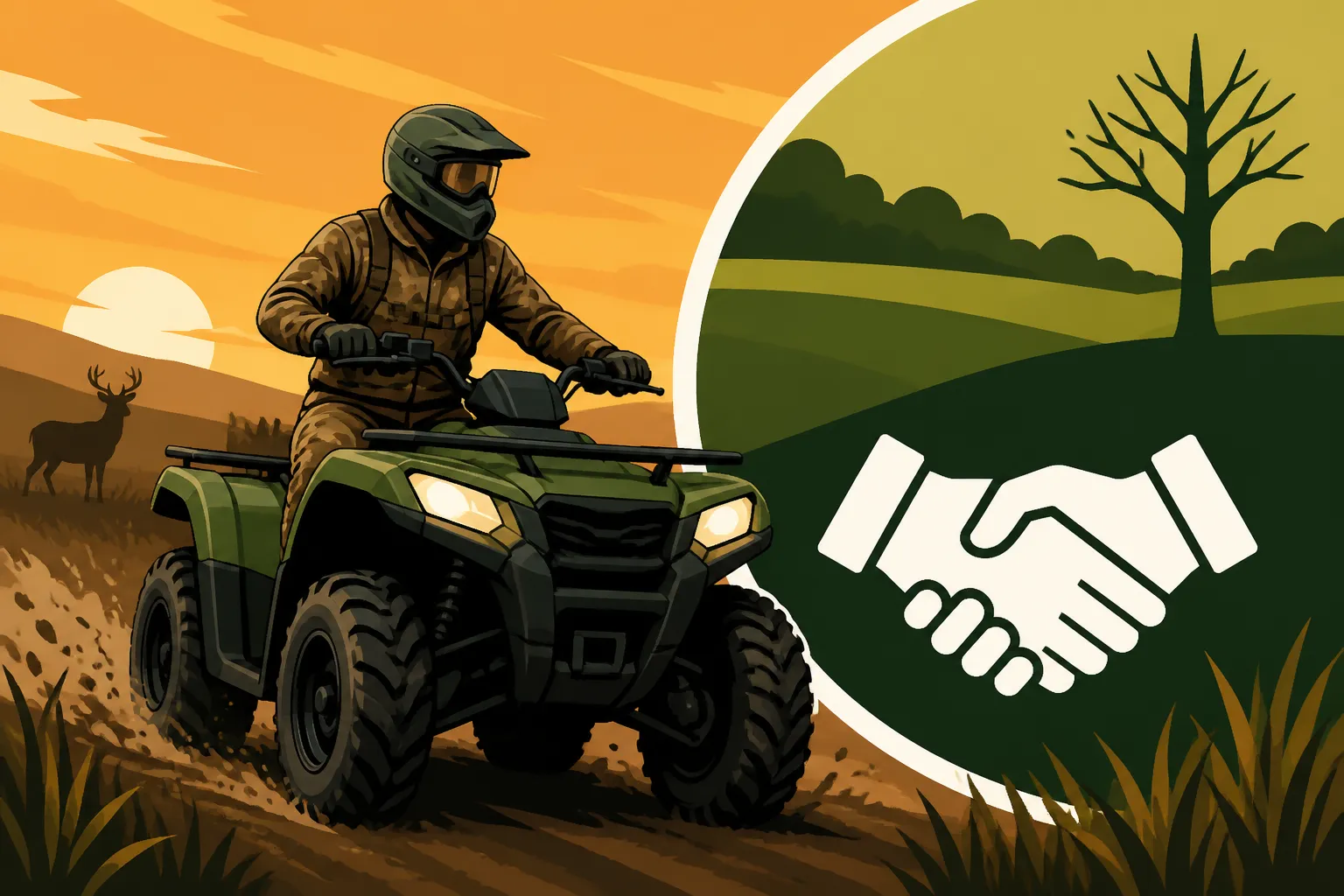
Riding a Quad on Ground You Lease for Hunting
There’s nothing quite like the freedom and promise of hunting on your own leased ground here in Kansas. You've scouted, you've signed the agreement, and now you're dreaming of using your trusty ATV or UTV to haul gear, set up stands, and retrieve that big buck. But before you just load up and head out, it’s absolutely critical to understand the nuances of riding your machine on someone else’s property – even if you have a lease. This guide will walk you through the essential considerations to ensure your hunting season is successful, safe, and free of any unwelcome surprises.
Understanding Your Lease Agreement and Landowner Expectations
When you lease land for hunting, you're not just buying access; you're entering into a relationship. The most important document governing that relationship, and your use of the property, is your lease agreement. Don't underestimate its power to dictate how you can use your ATV or UTV.
Reading the Fine Print of Your Lease
Many hunters, eager to get out into the field, skim their lease agreements, focusing only on the price and the season dates. This is a critical mistake, especially when it comes to vehicle use. Some landowners are very specific about where and how motorized vehicles can be used, while others might be more relaxed, but still have unwritten expectations.
For example, your lease might contain clauses about "non-disruptive access" or specify "designated travel paths only." What does "non-disruptive" mean to the landowner? Does it mean staying off freshly planted winter wheat, or does it mean avoiding driving through creek beds? If the lease states "no motorized vehicles beyond the designated parking area," then your dream of using your side-by-side to haul out a deer might be shattered before you even start. A lease that is silent on ATV use isn't necessarily a green light either. It simply means you must initiate a conversation. Remember, the landowner wants to protect their property and their future relationship with you. Misinterpreting or ignoring these details can lead to friction, or worse, the termination of your lease. It's far better to ask every clarifying question up front than to face an angry call later.
Open Communication with the Landowner
Beyond the written lease, open and honest communication with the landowner is your most valuable tool. Assumptions can quickly sour a good relationship. Before you even set a tire on their ground, discuss your intentions regarding your ATV or UTV.
Ask specific questions: "Is it okay if I use my quad to transport my tree stand to this specific timber edge?" or "Can I use my UTV on the existing two-track trails to scout during the off-season?" Clarify expectations around gates – should they always be closed and latched, even if you’re just running a quick errand? What about driving through wet fields after a rain? A responsible hunter wants to ensure they leave the property in as good, or better, condition than they found it. By proactively discussing these points, you not only get clear answers but also demonstrate your respect for their land and their livelihood. Many landowners appreciate a tenant who asks rather than assumes, especially when it comes to potentially damaging activities. This upfront dialogue is key to building lasting trust and ensuring a harmonious hunting season for everyone involved. Sometimes, a simple phone call can prevent a major misunderstanding, and it's always better to get [Getting Written Permission From a Landowner Before You Ride] than to guess.
Navigating Kansas Laws for Off-Road Vehicles on Private Land
While your lease agreement outlines the landowner's specific rules, you also need to understand the broader legal framework in Kansas regarding off-road vehicles. Private land often operates under different regulations than public roads, but that doesn't mean it's a legal free-for-all.
The Basics: Kansas's Nonhighway Vehicle Status
In Kansas, ATVs and UTVs are generally classified as "nonhighway vehicles." This means they are not designed or legally permitted for general public road use by default. When you’re on private land, these public road restrictions typically don't apply. You don’t need a driver’s license or a license plate to operate your ATV on private property, for instance. You also don't have to worry about state registration since [Kansas Has No OHV Registration].
However, this freedom comes with a significant caveat: the landowner's permission is paramount. While state law doesn't typically regulate how you ride on private land (e.g., speed limits, specific equipment requirements), it does firmly uphold the landowner's right to control their property. Think of it this way: the state isn't telling you how fast to drive in your own backyard, but it will enforce trespassing if you drive in your neighbor's backyard without permission. Understanding that [Kansas Titles ATVs as Nonhighway Vehicles] is crucial for the legal ownership process, but less directly relevant to day-to-day operations on private leased land, provided you have that permission.
Permission and Trespass Laws
Even though you have a hunting lease, your access and use of the land are still governed by the scope of that permission. A lease grants you certain rights, usually for hunting-related activities, but it doesn't necessarily grant you unlimited access or the right to ride your ATV anywhere and everywhere. For example, if your lease specifies hunting in a particular timber block, driving your UTV across the landowner's prime alfalfa field to get there, even if it's technically on the leased property, could still be considered exceeding your permission and lead to a dispute.
Kansas has clear [Kansas Trespass Law for Riders]. If you venture beyond the agreed-upon areas, ride during non-lease periods without specific permission, or engage in activities not covered by your lease, you could be cited for trespassing, even by the very landowner you're leasing from. It's always best to get clarity in writing, or at least a confirmed verbal agreement, for any activity that pushes the boundaries of your initial lease terms. This is particularly important for tasks like scouting during the off-season or accessing different parts of the property than initially discussed. Always err on the side of caution and maintain that open line of communication.
Safe Operation and Common Sense
While Kansas doesn't impose many specific safety regulations for ATVs and UTVs on private property, common sense and a respect for safety should always prevail. You’re often in remote areas, far from immediate help, so responsible riding is paramount. This means making sure your machine is in good working order – tires properly inflated, brakes functioning, fluids checked.
Consider the terrain you’ll be covering. Is it rocky, muddy, or hilly? Equip your machine appropriately. While there's no state-mandated helmet law for adults on private land, wearing a helmet is always a good idea, especially when traversing rough terrain or if you're a less experienced rider. Even though [Does Kansas Have an ATV Helmet Law at All?] typically refers to public roads and younger riders, protecting your head is simply smart. Similarly, be mindful of passenger limits. If your ATV is designed for one rider, don't try to squeeze on a second person, even for a short hop. For younger riders, adhere to general safety guidelines regarding age and supervision, even if not strictly enforced by state law on private land. You can find more information about [Kansas ATV Age Requirements] which, while geared towards public areas, offers good safety guidance. A hunting trip cut short by an avoidable accident is a regrettable experience for everyone.
Practical Considerations for ATV/UTV Use on Leased Hunting Ground
Beyond the legalities and agreements, there are many practical aspects to consider when integrating your ATV or UTV into your hunting routine on leased land. These considerations will help you minimize negative impacts and maximize efficiency.
Minimizing Impact and Maintaining Trails
Your leased hunting ground is a shared resource, and responsible stewardship is crucial. Driving your ATV or UTV irresponsibly can lead to ruts, erosion, and damage to natural habitats, which ultimately harms the hunting experience for everyone and could jeopardize your lease.
Always strive to stay on existing trails, two-tracks, or paths. Avoid creating new trails, especially in wet conditions where ruts can become deep and permanent. If you encounter a particularly muddy section, assess whether you can safely bypass it without causing further damage, or if it's better to park and walk. Consider adding aftermarket accessories that protect both your machine and the ground, like robust skid plates from brands like SuperATV. These can prevent damage from rocks and stumps, meaning less chance of leaking fluids that could contaminate the soil. Also, think about the long-term. If you regularly use a specific path, consider bringing in a rake or shovel to clear branches or fill small washouts, helping to maintain access and showing the landowner you care for their property.
Game Retrieval and Hauling
One of the biggest advantages of having an ATV or UTV on hunting land is the ability to efficiently retrieve game. Dragging a large deer or elk miles back to your truck is an exhausting, and sometimes dangerous, task. Your machine can turn this into a much more manageable chore.
However, even with the convenience of a machine, you still need to be strategic. Plan your retrieval routes to minimize disturbance to active hunting areas or sensitive habitat. If possible, use the same trails you would for general access. Investing in a good cargo box, a small utility trailer, or even a winch (SuperATV offers excellent, reliable options) can make game retrieval significantly easier and safer. A well-equipped UTV with a dump bed, for example, can save your back and prevent unnecessary effort. Always consider if the machine noise or presence might spook game for other hunters, or cause undue stress to the land. Remember, the goal is successful hunting, and that includes respectful, efficient retrieval. For those successful hunts, it's a huge benefit to have a machine to handle [Kansas Game Retrieval by Machine].
Security and Storage of Your Machine
Leaving an expensive ATV or UTV unattended on leased hunting ground, especially in remote areas, comes with inherent risks. Theft and vandalism are always possibilities, and you need a plan to protect your investment.
If the landowner has a secure shed or barn that you can use, that's often the best option. However, if such facilities aren't available, you'll need to consider alternatives. A sturdy, lockable enclosed trailer can serve as both transport and secure storage. If you must leave your machine out in the open, at least invest in heavy-duty chains and locks to secure it to an immovable object, like a strong tree or a deeply set post. GPS trackers are also an excellent deterrent and recovery tool. Beyond physical security, think about insurance. Even if your city doesn't require it, most personal property policies won't cover an ATV left unprotected in a remote location. A dedicated off-road vehicle insurance policy can provide peace of mind. It’s important to understand your options for [Insuring a Machine With No Tag] to protect your investment from theft or damage. Don't let the excitement of the hunt overshadow the need to protect your valuable equipment.
Essential Gear and Machine Setup for Hunting
Having your ATV or UTV ready for the rigors of hunting season involves more than just fueling it up. Proper preparation, both in terms of essential gear and machine setup, can make or break your trip.
What to Bring: Beyond the Basics
Hunting on leased land often means you're operating in somewhat remote conditions, potentially far from help or supplies. Your ATV or UTV should carry more than just your hunting rifle. Think of your machine as a mobile base camp for emergencies and practical needs.
A comprehensive first-aid kit, robust tools for minor repairs, a tire repair kit, and a small air compressor are absolutely crucial. A reliable winch, perhaps one from SuperATV, isn't just for game retrieval; it's also your best friend if you get stuck in mud or need to clear a fallen log. Navigation equipment – whether a handheld GPS unit or a reliable app on your phone with downloaded maps – is vital, especially when tracking game or trying to find your way back in unfamiliar terrain or after dark. Always carry extra fuel, water, non-perishable snacks, and appropriate layers of clothing. Kansas weather can be unpredictable, and a warm, sunny morning can turn into a chilly, wet afternoon quickly. Being prepared for the unexpected is key to a safe and enjoyable hunt.
Machine Maintenance for Rugged Terrain
Your ATV or UTV will be working hard on hunting excursions. It will carry heavy loads, traverse rough terrain, and operate in dusty, muddy, or wet conditions. Regular maintenance is not just a recommendation; it's a necessity.
Before each hunting season, or even before major trips, give your machine a thorough once-over. Check all fluid levels (oil, coolant, brake fluid), inspect tire pressure and tread, test your brakes and lights, and ensure your battery is fully charged. Pay close attention to air filters, as dusty conditions can clog them quickly, impacting performance. Consider modifications that enhance your machine's ruggedness. Upgrading to heavier-duty tires can provide better traction in mud and over rocky terrain. Adding a full set of durable skid plates and A-arm guards (like those offered by SuperATV) can protect critical components from impacts with hidden obstacles. Investing in a snorkel kit can be a lifesaver if you anticipate water crossings, protecting your engine from hydrolocking. While these upgrades are an initial cost, they can prevent costly breakdowns in the field and extend the life of your machine, which is a smart financial move when you consider [Kansas Maintenance Costs Per Year]. A well-maintained and properly equipped machine is less likely to fail when you need it most.
Hunting Lease Considerations Summary
Here's a quick look at key considerations when riding your ATV or UTV on leased hunting land in Kansas:
| Aspect | Key Considerations | Why It Matters |
|---|---|---|
| Lease Agreement | Read all clauses related to vehicle use, access, and specific restrictions. | Avoids breach of contract, disputes, and potential lease termination. |
| Landowner Talk | Discuss ATV/UTV use directly: where, when, what for. Get clarity on specific tasks. | Builds trust, clarifies unwritten rules, prevents misunderstandings. |
| Kansas Law | ATVs are nonhighway vehicles; state road laws don't apply on private land. | Prevents legal issues like trespassing; ensures your ownership is legal. |
| Trespass | Stay within agreed-upon areas; don't exceed permission. | Violating permission, even on leased land, can be legally actionable. |
| Safety | Practice safe riding habits, proper gear, and machine maintenance. | Reduces risk of accidents, injury, or being stranded in remote areas. |
| Environmental Impact | Stay on existing trails, avoid wet areas, minimize disturbance. | Preserves habitat, prevents erosion, shows respect for the land. |
| Game Retrieval | Plan routes, use appropriate hauling gear, be mindful of other hunters. | Efficient, ethical retrieval; minimizes disturbance during critical times. |
| Security | Lock up machines, consider GPS trackers, secure storage. | Protects your investment from theft or vandalism. |
| Preparedness | Carry emergency tools, first aid, navigation, extra supplies. | Ensures self-sufficiency for unforeseen challenges in the field. |
| Machine Setup | Perform pre-ride checks, consider upgrades like skid plates or winches. | Enhances reliability, protects machine, improves capability in rough terrain. |
Disclaimer
This article is for general informational purposes only and does not constitute professional advice. Laws, prices and regulations vary by location and change over time. Consult a qualified professional for guidance on your specific situation.