Sunrise to Sunset Without Lights
It’s a beautiful Kansas day, the sun is shining bright, and you’re ready to hit a county road or a designated trail on your ATV or UTV. You might think, "Hey, it's daytime, I don't need my lights on, right?" But hold on a second, because the reality of Kansas law, and more importantly, your safety, means that "sunrise to sunset" isn't always as simple as it sounds. This guide is here to clear up the confusion about when your off-road machine truly needs its lights on, even when the sun is up, and what you need to know to ride legally and safely.
Navigating Kansas Daylight Riding: It's More Than Just the Sun Being Up
When you think about riding your ATV or UTV during the day, the immediate assumption is often that lights aren't necessary. After all, it's bright out! However, Kansas law, much like common sense, often has a few more layers to it, especially concerning visibility and safety. While there are certainly periods when your machine's lights might not be legally required, understanding the nuances of "sunrise to sunset" is crucial for every rider in the Sunflower State. Ignoring these details can not only lead to an unexpected conversation with a deputy but also put you and others in a dangerous situation.
The goal isn't just to avoid a ticket; it's to ensure you're as visible as possible whenever you're sharing spaces with other vehicles, even if it's just a dusty section road. The rule of thumb that "if you can see, you're good" doesn't quite cover all the bases when it comes to operating a powerful off-road machine. We’re talking about situations where the sun might technically be above the horizon, but conditions might make you virtually invisible to oncoming traffic, especially at higher speeds on rural roads.
Why "Sunrise to Sunset" Isn't Always Black and White
You might look at the sky and see plenty of light, but the legal definition of "daylight" when it comes to vehicle operation in Kansas has a very specific timeline. It's not just about when the sun physically crosses the horizon. The law often accounts for those tricky twilight hours, both in the morning and evening, when ambient light is rapidly changing. This is where many riders get caught off guard. You might be heading home just as the sun dips, thinking you still have plenty of light, but you could already be in the window where lights are legally mandated.
Consider a cloudy, overcast day, even at high noon. While the sun is technically "up," the conditions might be so dim that your machine, especially if it's a drab color, blends into the landscape. This isn't just a matter of preference; it becomes a safety imperative. Other drivers, especially those coming over a hill or around a bend, rely on seeing lights to gauge distance and speed, even during what seems like daylight. Furthermore, the type of machine you're on can also influence these rules; a golf cart might have different requirements than a full-size side-by-side that could be mistaken for a small car.
General Lighting Requirements for Off-Road Machines
For most ATVs and UTVs classified as [Kansas Titles ATVs as Nonhighway Vehicles] or work-site utility vehicles, the primary rule is that if you're riding on public roads or rights-of-way, you need to follow certain lighting standards. Even if the law for your specific machine doesn't mandate lights during clear daylight, it's always a good idea to consider them a safety feature. Most modern machines come equipped with headlights and taillights from the factory, and for good reason.
These factory-installed lights aren't just for looking cool or for those rare night rides. They are fundamental to making your presence known to others. Think about how often you see cars with their daytime running lights on; it's a proven method to increase visibility. For an ATV or UTV, which can be smaller and less conspicuous than a full-sized vehicle, having those lights on even during the day can be a game-changer. It’s not just about being able to see where you’re going; it's about making sure others can see you, which is often the more critical factor for accident prevention.
When Lights Become Non-Negotiable on Kansas Roads
Even if the sun is technically gracing the Kansas sky, there are specific situations where operating your ATV or UTV without proper illumination is a definite no-go. These aren't just suggestions; they are often backed by statutes designed to keep everyone safe on shared roadways. Understanding these non-negotiable times can save you from a fine and, more importantly, from a potentially serious accident. It's about recognizing that "daylight" has legal parameters that extend beyond just whether you can see your hand in front of your face.
This is especially true for any off-road machine that finds itself on a public road, even briefly, such as when [Crossing a State Highway in Kansas] or riding a county road as allowed by local ordinance. The rules shift from general off-road etiquette to strict traffic laws the moment your tires touch asphalt or gravel designated for public travel. Local law enforcement, like a county sheriff, will expect your machine to meet these minimum safety standards, regardless of how bright the sun feels to you.
Transition Times: Dawn, Dusk, and Low Light Conditions
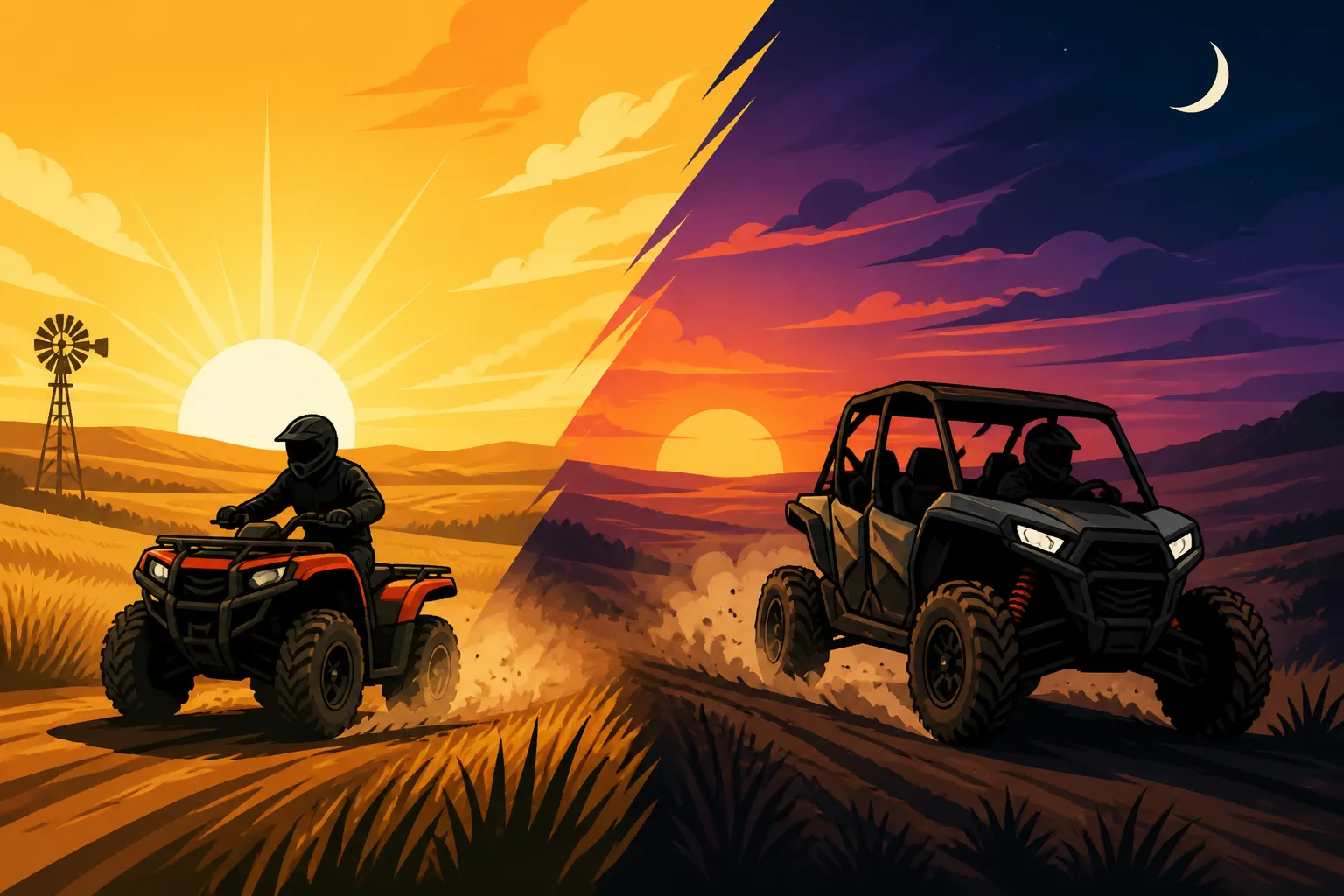
This is the big one where many riders get confused. Kansas statutes, like those in many other states, typically define when vehicle lights must be on not just by "sunset to sunrise" but often by a specific window around those events. Generally, this means your lights are legally required from a half-hour after sunset to a half-hour before sunrise. So, if the sun set at 7:00 PM, your lights should have been on by 7:30 PM. Conversely, if the sun rises at 6:30 AM, your lights can only go off after 6:00 AM.
These 30-minute buffer periods are absolutely critical. During these times, visibility can be incredibly deceptive. The sky might still have a beautiful glow, or the eastern horizon might be lightening, but the overall light levels are often insufficient for other drivers to easily spot smaller vehicles like ATVs and UTVs. The human eye adjusts, making you feel like there's enough light, but the headlights of an approaching truck or the glare off a windshield can make your unlit machine virtually invisible. Don't rely on your perception; rely on the clock and the law to determine when your lights need to be on.
Weather Conditions and Dim Visibility
Beyond the clock, Mother Nature plays a significant role in determining when your lights are necessary. Kansas weather can be famously unpredictable, and conditions can change rapidly, transforming a sunny ride into a low-visibility challenge. If you encounter fog, heavy rain, snow, or even a dust storm whipping across an open field, your lights become a mandatory safety feature, regardless of the time of day.
Imagine cruising down a gravel road when an unexpected thunderstorm rolls in, drenching everything and reducing visibility to just a few hundred feet. Or think about those thick Kansas fogs that can appear seemingly out of nowhere, especially near rivers or lakes. In these scenarios, the law doesn't care if the sun is theoretically above the horizon; it cares about whether your machine is visible. Your headlights cut through the gloom, and your taillights provide crucial warning to anyone behind you. Ignoring these conditions and not activating your lights is not just illegal; it’s reckless, putting you and others at severe risk. When visibility drops, your lights must come on.
Specific Machine Classes and Their Lighting Rules
It's also important to remember that not all off-road machines are treated exactly alike under Kansas law, particularly when it comes to their potential road use. A standard ATV, for instance, might have different lighting requirements than a Work-Site Utility Vehicle (WSUV) or a golf cart that has been granted limited road access by a local ordinance. For example, [Kansas WSUV Road Rules] might include specific lighting provisions if the vehicle is approved for certain public road travel.
| Machine Type | Daylight (Clear) | Dusk/Dawn (30-min window) | Night/Inclement Weather | Notes on Road Use |
|---|---|---|---|---|
| ATV | Generally not required | Required | Required | Limited road use, often agricultural. |
| UTV (Non-WSUV) | Generally not required | Required | Required | Often follows ATV rules for road use. |
| Work-Site Utility Vehicle (WSUV) | Often required for road use | Required | Required | Special class with defined road use. |
| Golf Cart | Often required for road use | Required | Required | City ordinances dictate specific rules. |
| Micro Utility Truck | Often required for road use | Required | Required | City ordinances dictate specific rules. |
This table provides general guidance. Always check local ordinances and specific state statutes for your machine class.
Some cities that allow [Kansas Cities That Authorize ATV Street Use] for certain UTVs might have very specific lighting requirements as part of their ordinance, often aligning with standard motor vehicle codes. This could mean not just headlights and taillights, but also brake lights and even turn signals, which many ATVs don't come equipped with from the factory. So, before you venture onto any public road, even during the day, know the rules for your specific machine and your specific location. What applies to a farm quad on a private field is often very different from a side-by-side with a city tag riding through Louisburg.
Equipping Your Machine for Kansas Low-Light Rides
So, we’ve established that relying solely on the sun to be up isn’t always enough for safe and legal riding in Kansas. The next logical step is to ensure your machine is properly equipped for those transition times, unexpected weather, or any scenario where visibility might be compromised. This isn't just about meeting the minimum legal standards; it's about proactively enhancing your safety and the safety of everyone around you. Investing in the right lighting and visibility aids can make a world of difference.
Many riders, especially those who operate on open land or use their machines for work, might not think much about sophisticated lighting beyond what came from the factory. However, the moment you consider venturing onto a county road or even crossing a public thoroughfare, your lighting setup becomes paramount. It's about being seen, not just seeing. And let's be honest, sometimes factory lights aren't always the brightest or most robust for true off-road conditions, let alone for sharing space with full-size vehicles.
Essential Lighting Upgrades and Accessories
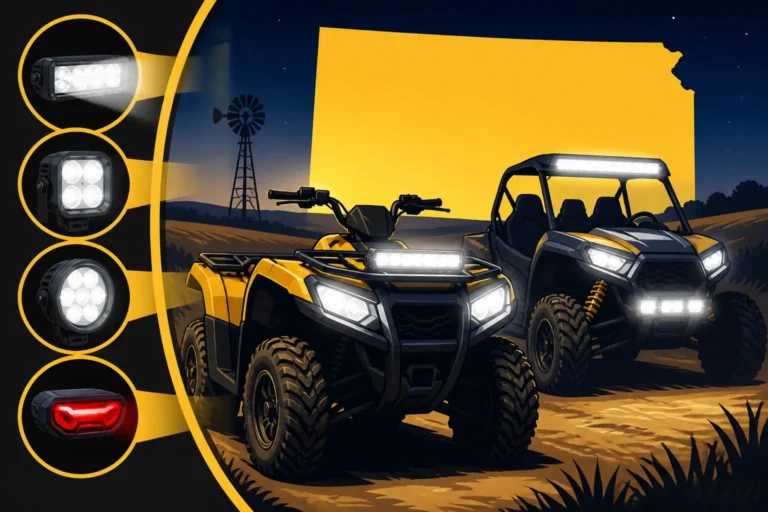
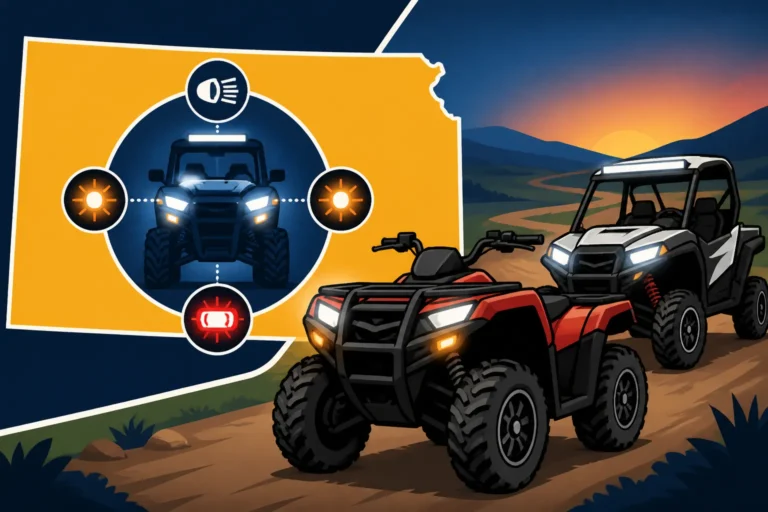
When it comes to making your machine more visible, especially in low-light conditions, there are plenty of options available. Basic headlights and taillights are a must, of course, but consider stepping up your game. LED light bars, for instance, offer incredible brightness and draw less power than traditional halogen bulbs. They can be mounted in various locations, providing excellent forward illumination and making your presence unmistakable from a distance. Companies like SuperATV offer a wide array of aftermarket lighting solutions, from powerful light bars to enhanced headlights and taillights that significantly boost your visibility.
Beyond just raw power, think about directional lighting. If your UTV has any possibility of going on a road, even under specific city ordinances, adding turn signals is a smart move. While not always legally mandated for non-highway vehicles, they drastically improve your ability to communicate your intentions to other drivers. Brake lights are also crucial; ensure yours are bright and always functioning correctly. For those who frequently ride in agricultural settings or on less-traveled roads, a flashing amber beacon on the rear can provide an extra layer of warning to approaching vehicles, especially combines or semi-trucks. Think of these as essential safety features, not just optional add-ons.
Visibility Aids Beyond Just Lights
Lights are primary, but they're not the only tool in your visibility toolbox. There are several other, often overlooked, aids that can dramatically increase your machine's conspicuity, especially during those tricky dawn and dusk hours. These are particularly important for machines that are smaller or less brightly colored.
High-visibility clothing is a simple yet effective measure. Wearing a bright, reflective vest or jacket, especially in neon colors, makes you stand out against almost any background. This is true not just for the rider but for any passengers as well. Additionally, consider [Taping a Quad So Drivers See It at Dusk] with reflective tape. This tape can be applied to the front, rear, and sides of your machine, catching the light from other vehicles' headlights and making your ATV or UTV much more noticeable. Even a simple orange safety flag mounted high on your machine can provide an extra visual cue, especially on rolling terrain or around blind corners where drivers might not immediately see your vehicle itself. These small additions can make a huge difference in how quickly and easily other road users perceive you.
Consequences of Riding Without Proper Lighting
It’s easy to think of lighting rules as minor inconveniences, especially if you’re just zipping down a familiar backroad. However, ignoring the legal requirements for lighting your ATV or UTV during specified times or in certain conditions can lead to a host of problems. These consequences aren't just theoretical; they're very real and can range from financial penalties to severe physical harm. Every rider has a responsibility not only to themselves but to every other person sharing the road or trail.
The enforcement of these rules stems directly from the safety aspect. Law enforcement isn't looking to write tickets just for the fun of it; they're trying to prevent accidents. When an ATV or UTV is operated without adequate lighting in low-light conditions, it becomes a dangerous projectile, incredibly difficult for other drivers to see and react to. This is where the legal system steps in, imposing consequences to deter unsafe behavior and protect the public.
Potential Tickets and Fines
The most immediate consequence of riding without proper lighting when it’s required is a traffic citation. A deputy or state trooper who observes your unlit machine during those crucial half-hour windows around sunrise and sunset, or during inclement weather, is well within their rights to pull you over. The specific fine for such an infraction can vary, but it will certainly involve a monetary penalty. These aren’t just minor nuisance fees either; [Kansas Ticket Costs for Road Riding] can add up quickly, especially once court costs and administrative fees are factored in.
Beyond the initial fine, a citation can also mean lost time if you have to appear in court. It’s an inconvenience that could easily be avoided by simply flipping a switch on your machine. Furthermore, repeated violations could potentially lead to more serious repercussions, such as impoundment of your machine in certain circumstances, particularly if you're also violating other local ordinances or state statutes regarding off-road vehicle use on public roads. It's simply not worth the risk when the solution is so straightforward.
Safety Risks and Accident Liability
Far more serious than a ticket is the inherent safety risk you assume when riding without proper lighting. The primary reason for lighting requirements is visibility – to ensure you can see others, and, crucially, that others can see you. When your machine is poorly lit during dim conditions, it creates a significant hazard for everyone on the road. A driver might not see you until it's too late to react, leading to a collision that could result in severe injuries or even fatalities.
In the event of an accident where your machine was not properly lit, you could also face significant legal liability. If it’s determined that your lack of lighting contributed to the crash, you might be held responsible for damages, medical bills, and other costs incurred by involved parties. This could be a financial disaster, far outweighing the cost of a few light upgrades or the minor effort of turning on a switch. Even if you're riding on private property, being properly lit is a good habit to ensure that farmhands, family members, or other riders can spot you, particularly in dusty conditions or around barns and outbuildings. Your safety and the safety of those around you should always be the top priority.
Disclaimer
This article is for general informational purposes only and does not constitute professional advice. Laws, prices and regulations vary by location and change over time. Consult a qualified professional for guidance on your specific situation.