Kansas Rules for Farm Machines on Highways
Oh, the joys of trying to make sense of vehicle laws in Kansas, especially when your "vehicle" is more at home tilling fields or hauling hay than cruising down I-70! If you're a farmer, rancher, or anyone relying on an ATV or UTV for agricultural work, you've probably faced that moment of hesitation: "Can I take this on the highway to get to the next pasture? What about just crossing the road?" It’s a genuine headache trying to figure out where your work machine fits into the state's road rules, and believe me, you're not alone in feeling confused. This guide is dedicated to cutting through the legal jargon and giving you clear, realistic answers about using your farm machines on Kansas highways so you can operate with confidence.
Navigating the Agricultural Exemption for Kansas Highways
Let's get right to it: Kansas law does, in fact, provide specific exceptions that allow certain agricultural machines, including ATVs and UTVs used for farm work, to operate on public highways. This isn't a free-for-all, mind you, but a recognition of the practical necessity for farmers to move their equipment between parcels of land, access supplies, or conduct essential operations that span public roadways. The alternative, constantly loading and unloading heavy machinery onto trailers for short distances, would be an unbearable burden and completely impractical for the agricultural community.
The Spirit of the Farm Exception
Think about it from a common-sense perspective. A farmer might own land on both sides of a state highway, or need to quickly move an ATV loaded with tools to check on irrigation further down a county road. The law isn't designed to make these basic operational tasks impossible. Instead, it seeks to strike a balance: allowing agricultural vehicles necessary access while still ensuring public safety for all road users. This understanding forms the bedrock of the [Kansas's Agricultural Exception for Road Use], a vital piece of legislation for anyone working the land. It means that your quad isn't necessarily treated the same way as someone's recreational joyride when it's genuinely being used for farm business.
What Qualifies as an Agricultural Purpose?
This is where many questions arise, and rightly so. What exactly counts as an "agricultural purpose"? Generally, this refers to activities directly related to farming, ranching, and other agricultural operations. This can include, but isn't limited to, checking fences, moving livestock, transporting tools or feed between fields, inspecting crops, or accessing repair facilities. It’s not about taking your side-by-side to the local diner for lunch, or using it to run errands that aren't tied to your farm. The key is that the machine's use on the highway must be incidental and necessary to your agricultural work. A good rule of thumb is to ask yourself if the trip is something you must do for the farm, or if it's more for personal convenience. If a county deputy stops you, your explanation for being on the road should directly link back to your farming operation.
Essential Equipment and Driver Requirements for Farm Machine Road Use
Just because there's an agricultural exemption doesn't mean you can just hop on your quad and hit the asphalt without a second thought. Kansas law still imposes requirements to ensure safety, both for you and for other drivers. These aren't just suggestions; they are legal obligations designed to make your farm machine visible and predictable on roads shared with passenger vehicles. Ignoring these can lead to a roadside stop, a citation, and a lot of unnecessary hassle.
Lighting and Visibility Requirements
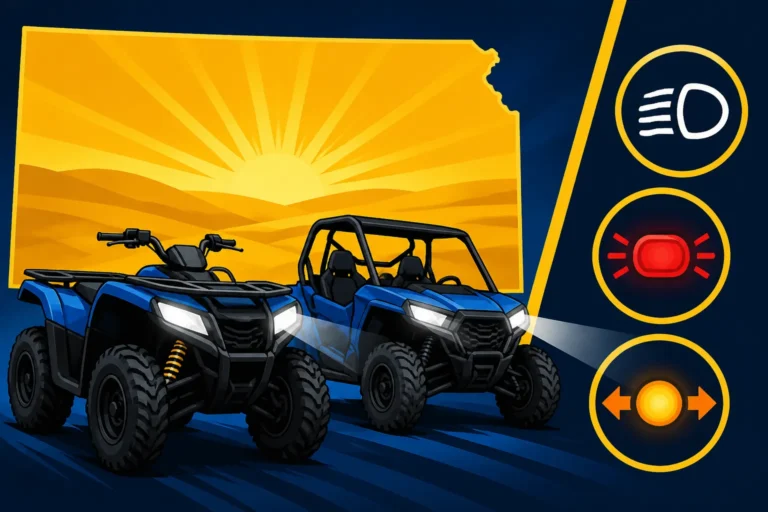
Visibility is paramount, especially if you find yourself on the highway near dusk or dawn. Even for daytime use, being seen by larger, faster vehicles is critical. Kansas law stipulates that if you're operating your farm machine on a highway between sunset and sunrise, or at any other time when visibility is low, you must have appropriate lighting. This often means headlights, taillights, and sometimes even reflective material. Think about the [Kansas Lighting Rules After Sunset] that apply to other vehicles; while not always identical, the spirit is the same: be visible.
For ATVs and UTVs, this typically means a white light visible from the front and a red light visible from the rear. For larger or slower-moving equipment, you might also need amber flashing lights or a slow-moving vehicle (SMV) emblem. If your factory lights aren't cutting it or are damaged, investing in aftermarket options like those from SuperATV, known for their durable LED light bars and accessory kits, can significantly enhance your visibility and ensure you meet safety standards. Having bright, reliable lights is not just about compliance; it's about getting home safely after a long day in the fields.
Driver's License and Other Operator Rules
You might be thinking, "It's just my farm ATV, I don't need a special license for that, do I?" And for the most part, you'd be right off-road. However, when you take your farm machine onto a public highway, the rules change. In Kansas, anyone operating a motor vehicle on a public roadway is generally required to possess a valid driver's license. This applies to your ATV or UTV when it leaves your private property and enters the public domain. It's a common misconception that because it's a "farm machine" or "non-highway vehicle" it bypasses this requirement. Don't fall into that trap.
Beyond the license, basic rules of the road apply. You must obey all traffic laws, including speed limits (even if your machine can't reach them, you must respect them), stop signs, and signals. You should always drive as far to the right as practicable, especially on two-lane roads, to allow faster traffic to pass safely. The expectation is that you operate your farm machine with the same care and attention as any other vehicle on the road. Remember, even if you’re just pulling out of your driveway to cross the road, you are momentarily a part of the public traffic system.
Here's a quick summary of key equipment and operator needs for farm machines on Kansas highways:
| Requirement | Description | Details |
|---|---|---|
| Driver's License | Valid Class C (or higher) required for highway operation. | No special ATV/UTV license, but standard driving privileges apply on public roads. |
| Headlights | White light, visible from at least 500 feet to the front. | Required from sunset to sunrise, or during low visibility. |
| Taillights | Red light, visible from at least 500 feet to the rear. | Required from sunset to sunrise, or during low visibility. |
| Brake Lights | Red light, illuminated when brakes are applied. | Standard safety feature, typically integrated with taillights. |
| Reflectors | Red reflectors on the rear, visible from 100-600 feet. | Enhances visibility, especially for larger or slower machines. |
| Slow-Moving Emblem | Required for vehicles traveling 25 mph or less on public roads. | Triangular, fluorescent orange and red emblem, visible to the rear. |
| Mirrors | At least one rearview mirror, providing a clear view to the rear. | Essential for situational awareness, especially when sharing roads with faster traffic. Aftermarket mirrors from SuperATV can be a great upgrade for better visibility. |
| Turn Signals | Not always explicitly required for all farm machines, but highly recommended. | Use hand signals if turn signals are absent or broken. |
Understanding "Agricultural Purposes" and Permissible Highway Travel
One of the biggest areas of confusion revolves around how far you can travel and what exactly constitutes a legitimate "agricultural purpose" that allows you onto a highway. It's not a green light to treat all public roads as extensions of your private drive, and understanding the nuances can save you from potential legal issues. This distinction is vital, as misuse of the exemption can result in tickets or even more serious consequences if an accident occurs.
Crossing vs. Traveling Longer Distances
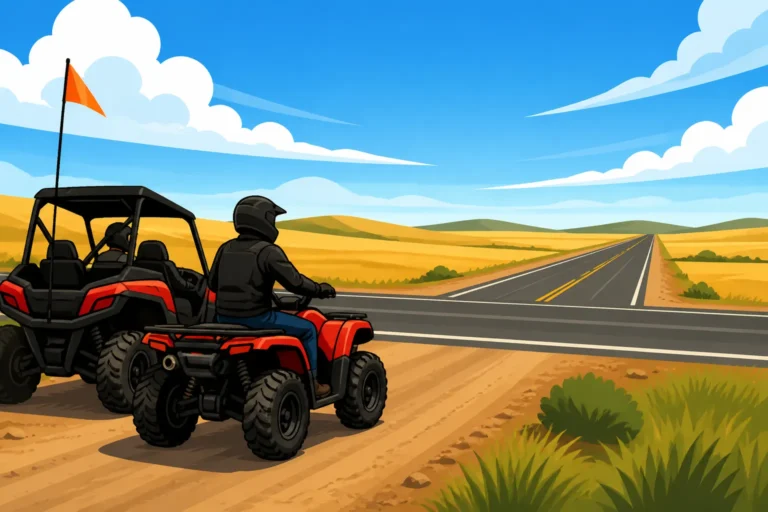
Kansas law makes a distinction, implicitly if not always explicitly, between merely crossing a highway and traveling a significant distance on it. Crossing a state highway to get from one field to another, for example, is generally considered a necessary part of agricultural operations. You might just need to traverse the road quickly and safely to reach a field on the opposite side. This type of brief, necessary traversal is typically well within the spirit of the agricultural exemption. The law specifically allows for [Kansas Rules for Crossing a Highway] as long as it's done safely and for a legitimate farm purpose.
However, using the highway to travel several miles to a distant town for non-farm errands, or to access recreational trails that aren't part of your farm's operations, is likely to fall outside the scope of the exemption. While specific mileage limits aren't always set in stone for agricultural exemptions, the intent of the law is to facilitate farm work, not to grant general road access for all purposes. If your trip feels more like a commute or a leisure ride than a necessary farm task, you're likely on shaky legal ground.
The "Incidental to Agricultural Operations" Clause
Many statutes regarding agricultural vehicle exemptions include language like "incident to agricultural operations." This means the use of the machine on the highway must be a direct and necessary component of your farming or ranching activities. For instance, moving an ATV with a sprayer from one corner of a large property to another, even if it requires a short stint on a county road, is incidental. Hauling tools in your UTV to fix a fence line that borders a public road is also incidental.
Consider the context: Are you hauling tools? Are you checking livestock? Are you surveying fields? These are all strong indicators of agricultural purpose. If you've accessorized your UTV with items like a robust cargo bed or tool racks from SuperATV, it visually reinforces its utility as a farm machine, not just a recreational vehicle. The key is that the trip directly supports your farm's productivity and operations. If a deputy stops you, be prepared to clearly articulate how your travel is essential to your agricultural business.
Beyond the Farm Gate: What to Know for Rural Road Safety
Even with the agricultural exemption on your side, safety remains the top priority. Rural roads in Kansas, especially county and state highways, can be deceiving. While they might seem quiet, they are often used by fast-moving vehicles, including semi-trucks, which means any farm machine on the road needs to be operated with extreme caution and awareness. Your peace of mind, and the safety of others, depends on it.
Sharing the Road with Faster Traffic
When your farm machine, whether it's an ATV or a larger UTV, is on a public highway, you are sharing that space with vehicles capable of much higher speeds. This speed differential is a major hazard. Always assume other drivers might not see you, especially if your machine is smaller or if you're approaching a blind curve or hill. [Kansas Riders Must Keep to the Right] is not just a suggestion, it's a critical safety measure when operating a slow-moving vehicle. Allowing ample room for others to pass is courteous and necessary.
Be particularly mindful when turning. Many rural roads lack dedicated turn lanes, so indicating your turns well in advance and ensuring no oncoming traffic or passing vehicles are in your path is vital. Consider adding extra reflective tape or a bright orange safety flag to your machine, even if not strictly mandated by law, for added visibility. Anything that makes you more noticeable to others is a wise investment.
Avoiding Restricted Roads and Urban Areas
While the agricultural exemption helps on many rural roads, it's not a universal pass. For example, [Kansas Bans ATVs on Interstates] entirely. These high-speed, limited-access highways are never permissible for ATVs or UTVs, regardless of agricultural purpose. Stick to state highways, county roads, and local roads that are explicitly not interstates.
Furthermore, driving farm machines on roads within city limits can be a different beast altogether. Many cities have their own ordinances that restrict or prohibit ATV and UTV use on their streets, even if you're coming from a farm just outside town. If your farm operations take you into or through a municipality, it's crucial to check local city ordinances. Just because you have an agricultural exemption for a state highway doesn't mean it automatically applies to a busy city street. In such cases, having a [Kansas Rules for a Machine With a City Tag] might be required, which involves a whole different set of regulations and fees. Always err on the side of caution and research local rules before entering urbanized areas. It’s better to be informed than to face a ticket or a confrontation with local law enforcement.
Disclaimer
This article is for general informational purposes only and does not constitute professional advice. Laws, prices and regulations vary by location and change over time. Consult a qualified professional for guidance on your specific situation.