Police Inspect a UTV Before a City Tag Issues
Riding your side-by-side or UTV on city streets in Kansas can feel like navigating a maze of conflicting information. You’ve heard whispers that some towns allow it, but then you remember the state's blanket ban, and the whole idea seems impossible. It's frustrating to have a capable machine that could make quick errands or local trips so much easier, only to be told it's largely confined to private land or dedicated off-road parks. This guide is here to untangle the complexities, explaining exactly how certain Kansas cities allow UTVs on their roads, the crucial role a police inspection plays in getting a city tag, and what you need to know to legally cruise your community.
The Reality of Street-Legal UTVs in Kansas
Let's be honest, the desire to take your UTV on paved roads for quick trips to the hardware store, local diner, or even just to visit a neighbor is incredibly strong for many Kansas owners. It just feels practical. But the reality in Kansas is a bit more nuanced than a simple yes or no. State law, for the most part, says "no" to general street use for ATVs and UTVs. However, there's a significant exception that many owners either don't know about or find confusing: the power of local ordinances.
Why the State Says "No" (Mostly)
Kansas state law, specifically under Chapter 8, generally classifies ATVs and UTVs as "nonhighway vehicles." This designation means they are not designed or equipped for operation on public highways. This is where a lot of the initial confusion and frustration comes from. You might have seen these machines in other states driving around town, making you wonder why Kansas seems so different. The core reason is a legislative decision to differentiate between vehicles built for off-road performance and those built for on-road travel. This distinction impacts everything from titling – where a machine might get a [Kansas Nonhighway Title Explained] – to how they can be used day-to-day. For the vast majority of Kansas, if it's an ATV or a standard UTV, the expectation is that it stays off the pavement, unless it qualifies for very specific agricultural exceptions or other limited circumstances like crossing a highway.
This overarching state stance often leads to disappointment for owners who envision their UTV as a versatile utility vehicle for both work and local transportation. It's not that the state dislikes UTVs; it's simply that the legal framework wasn't originally built to accommodate them as street-legal vehicles in the same way cars or motorcycles are. This is why you won't find a state-issued "street legal" tag for your UTV that allows you to drive it anywhere in Kansas. That particular dream, for now, remains tied to local decisions.
The Local Ordinance Loophole
Here's where things get interesting, and a glimmer of hope appears for UTV owners. While the state statute broadly prohibits UTVs on public roads, it also provides a critical opening for cities and counties. Essentially, the state law allows local municipalities to pass their own ordinances to permit the operation of certain "nonhighway vehicles," including UTVs, on their public streets. This isn't a free-for-all; cities must specifically "opt-in" and establish their own rules.
This means that whether you can drive your UTV on the street isn't a state-wide answer; it's a hyper-local one. A UTV that's perfectly legal to drive down Main Street in Louisburg might be considered an illegal off-road vehicle just a few miles away in a neighboring town that hasn't passed such an ordinance. This patchwork of rules can be incredibly frustrating, requiring owners to do their homework for each specific location. Understanding [Kansas UTV Street Legal Rules by City] is paramount before you even consider taking your UTV on the road. These local ordinances typically outline specific requirements for equipment, insurance, licensing, and of course, the need for a city-issued tag – which often hinges on a police inspection.
Understanding City UTV Tag Requirements
So, you've found a city that has decided to allow UTVs on its streets. That's a huge first step! But before you load up your machine and head to city hall, it's crucial to understand that simply having an ordinance in place isn't enough. These cities have developed a specific set of requirements that must be met to get a city-issued tag, which is your golden ticket to legal street riding within their limits. These requirements are put in place to ensure safety for all road users, from pedestrians to other motorists.
What Cities Are Doing This?
While the state of Kansas doesn't maintain a central list of every city with a UTV ordinance, several communities across the state have taken the initiative to create their own programs. Towns like Louisburg, Scott City, De Soto, and Andover are often cited examples. These cities recognize the practical benefits that UTVs offer residents, especially in rural-leaning communities or those with larger properties where a UTV can be a valuable tool for transportation and chores. Each city's ordinance is unique, reflecting local priorities and concerns.
For instance, [Louisburg's UTV Tag Fees in Kansas] might differ from what you'd find in Scott City, and the specific equipment requirements could vary slightly. It's not a "one size fits all" situation. Before you make any plans, your absolute first step should be to contact the specific city clerk or police department of the town where you intend to ride. They are the definitive source for their local rules, application processes, and any fees involved. Don't rely on hearsay or what a friend did in another county; get the information straight from the source. This ensures you're playing by their rules, not someone else's.
The Application Process: More Than Just Paperwork
Once you've confirmed your city allows UTVs, you'll need to navigate their application process. This is rarely just a matter of filling out a form and paying a fee. Most cities require a significant amount of documentation and, critically, an inspection. Common requirements you might encounter include:
- Proof of Ownership: You'll need your UTV's title, typically a [Kansas Nonhighway Title], to prove you are the legal owner.
- Proof of Insurance: Cities almost universally require proof of liability insurance. This is a non-negotiable safety measure to ensure that if an accident occurs, there's coverage for damages and injuries. You'll want to review [Louisburg's Insurance Requirement in Kansas] as an example of what might be expected.
- Driver's License: The operator must hold a valid driver's license. Operating a UTV on public streets is treated like operating any other motor vehicle in this regard.
- Payment of Fees: There will almost certainly be an application fee and an annual renewal fee for the city tag. Be prepared for these costs, and understand [Why a City Tag Is Never Prorated Mid-Year] if you're applying late in the year.
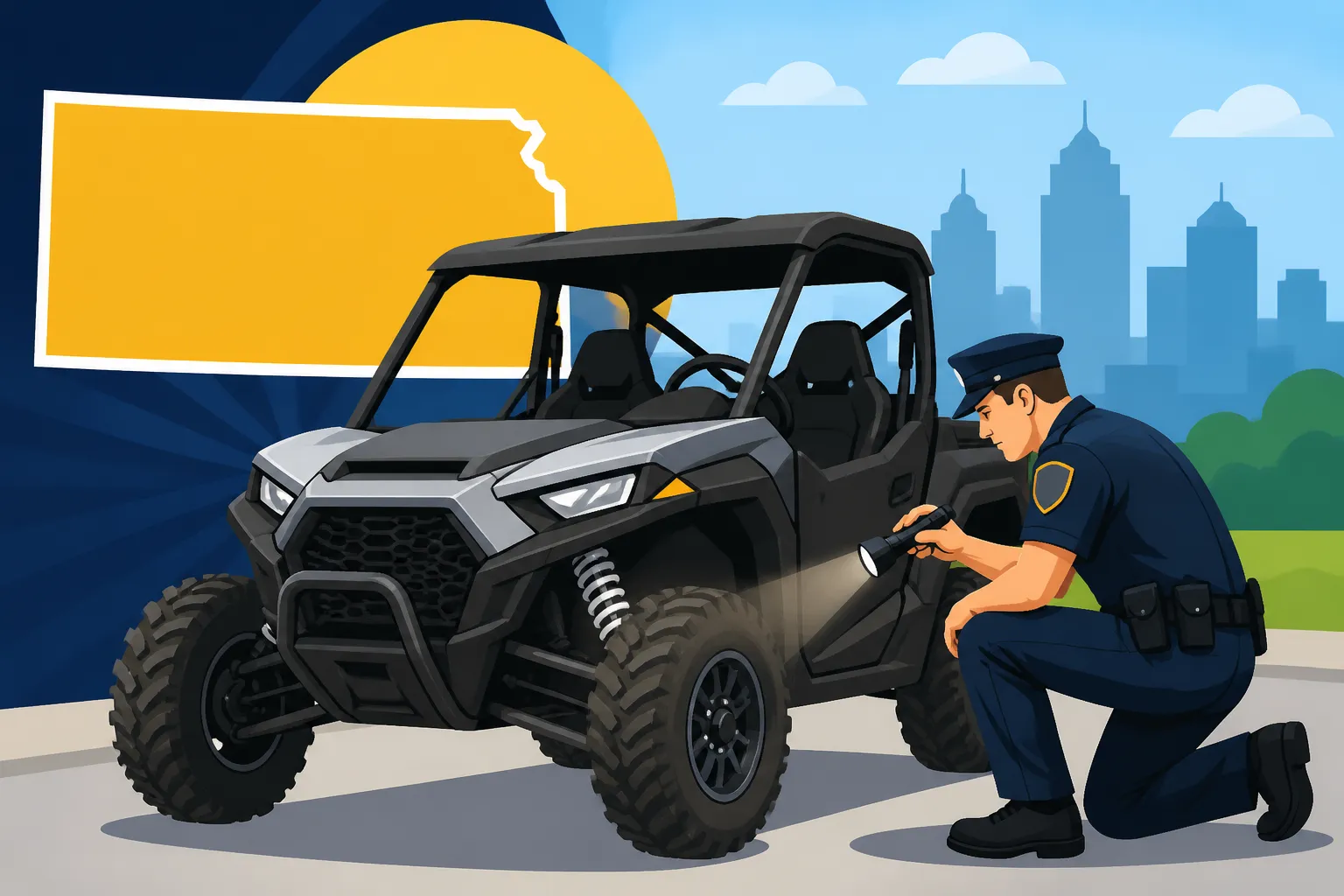
- The Police Inspection: This is the big one, and often the part that causes the most anxiety. The city won't just take your word for it that your UTV is street-ready. They want to see it with their own eyes. The inspection ensures your machine meets all the necessary safety and equipment standards outlined in the local ordinance. This is why [Police Inspect a UTV Before a City Tag Issues] is such a critical step.
The application process is designed to protect both the UTV owner and the wider community. It ensures that only properly equipped, insured, and operated machines are granted the privilege of street use. Don't treat it as a bureaucratic hurdle; view it as a necessary step to safely integrate your UTV into local traffic.
The Police Inspection: What They Look For
This is often the most nerve-wracking part for UTV owners seeking a city tag. The idea of a police officer scrutinizing your beloved machine can be daunting, but it's really about ensuring public safety. The inspection is not meant to trick you or find reasons to deny your application; it's a systematic check to confirm your UTV is equipped to safely share the road with cars, trucks, and pedestrians. They’re looking for specific items that, if missing or non-functional, could pose a hazard.
Essential Safety Equipment
Local ordinances permitting UTVs on city streets always mandate specific safety equipment. This list often mirrors, or at least aligns with, standard vehicle safety features. When a police officer conducts an inspection, they will meticulously check for the presence and functionality of these items. Here's what you can generally expect them to be looking for:
- Headlights and Taillights: These are non-negotiable for visibility, especially during dawn, dusk, or nighttime hours. The officer will check if they are properly mounted, functional, and meet brightness requirements. Remember [Kansas Lighting Rules After Sunset] often apply. Many UTVs come with basic lighting, but ensuring they're up to a road-legal standard might require an upgrade, perhaps using components from a company like SuperATV that specializes in aftermarket lighting solutions for off-road vehicles.
- Brake Lights: Crucial for signaling deceleration to other drivers. They'll test both front and rear brakes to ensure the lights illuminate correctly.
- Turn Signals: Essential for indicating your intentions when changing lanes or turning. While many off-road UTVs don't come standard with turn signals, this is almost always a requirement for street legality. There are many aftermarket kits, including some from SuperATV, that can add fully functional turn signals to your machine.
- Mirrors: Typically, at least one rearview mirror is required, and sometimes two (one on each side) to provide adequate visibility of traffic behind and to the sides.
- Horn: A working horn is necessary to alert others to your presence or potential hazards.
- Windshield: While not always required to be full automotive-grade glass, some ordinances specify a windshield to protect the operator and passengers from debris. If it's a plastic windshield, it should be clean and provide clear visibility.
- Seatbelts: All factory-installed seatbelts must be present and in good working order for every occupant.
- Tires: Tires must be in good condition, with adequate tread, and designed for road use or suitable for mixed-use. Off-road-only knobby tires might raise a flag if they're deemed unsuitable for pavement.
- Brakes: The braking system must be fully functional and able to safely stop the vehicle.
- License Plate Mount and Illumination: Your city-issued tag will need a clear, visible mounting spot, and if you plan to ride after dark, it will likely need illumination, much like a car's license plate.
- Slow-Moving Vehicle Emblem: For UTVs traveling at lower speeds, some ordinances may require a slow-moving vehicle emblem (the orange triangle) to be displayed on the rear of the machine, similar to what you'd see on agricultural equipment. This is important for UTVs that can't maintain posted speed limits.
The goal here is safety. The police officer isn't trying to make your life difficult; they're ensuring that your UTV has the basic equipment to be seen, heard, and controlled safely on public roads.
Documentation Verification
Beyond the physical inspection of the UTV itself, the police officer will also verify your documentation. This is where all that paperwork you submitted during the application process comes into play. They'll likely check:
- Driver's License: Your valid driver's license will be confirmed. Remember, operating a UTV on a city street requires the same licensing as a car.
- Proof of Insurance: They'll want to see current proof of liability insurance for your specific UTV. This typically means an insurance card or declaration page from your provider. This is critical for meeting [Kansas City Insurance Requirements].
- Vehicle Title/Registration: While it's a city tag, they'll want to verify your ownership of the UTV, usually by checking your title. This confirms the VIN on your machine matches the VIN on your paperwork.
- Completed Application Forms: They'll likely have a copy of your submitted application to cross-reference details during the inspection.
Having all your ducks in a row with both your machine's equipment and your personal documentation is crucial for a smooth inspection process. Any discrepancies or missing items can lead to delays or denial of your city tag.
The Inspection Process: What to Expect
The actual inspection itself is typically straightforward. Here’s a general idea of what to expect:
- Scheduling: You'll likely need to schedule an appointment with the local police department or a designated officer. Some cities might have specific days or times for inspections.
- Location: The inspection might take place at the police station, a municipal garage, or even at your home within city limits, depending on the city's policy.
- The Walk-Around: The officer will perform a systematic walk-around of your UTV, checking each required item. They'll activate lights, test the horn, and visually inspect components like tires, mirrors, and seatbelts. They may ask you to operate certain controls to demonstrate functionality.
- VIN Verification: A crucial step is verifying the Vehicle Identification Number (VIN) on your UTV against your title. This ensures the machine is not stolen and that the paperwork matches the physical vehicle.
- Questions: The officer might ask you questions about your UTV, its modifications (especially if you've added street-legal components from a brand like SuperATV), or your understanding of the local ordinance. Be prepared to answer truthfully and clearly.
- Pass or Fail: If your UTV meets all the requirements, the officer will sign off on the inspection, and you'll typically proceed to collect your city tag. If there are deficiencies, you'll be informed of what needs to be fixed. You'll then need to make the necessary repairs or additions and reschedule for a re-inspection.
Remember, the officer is a professional. Be polite, cooperative, and have everything ready. This will make the process as quick and efficient as possible for everyone involved. Think of it as a final safety check, not an interrogation.
Maintaining Your Street Legal UTV
Getting that city tag is a moment of triumph for many UTV owners, signifying the freedom to use their machine on local streets. But the journey doesn't end there. Maintaining your UTV's street-legal status and understanding your ongoing responsibilities is just as important as the initial inspection. Laws can change, and your UTV's condition can deteriorate over time, potentially putting you back in non-compliance territory.
Staying Compliant Year After Year
Just like your car, your city-tagged UTV needs ongoing attention to remain street legal. Most city tags are issued for a specific period, often annually, and require renewal. This renewal process typically involves:
- Annual Fees: Be prepared to pay an annual renewal fee to keep your tag active. These fees contribute to the city's administrative costs and program oversight.
- Insurance Renewal: Your liability insurance must remain active and current. Keep your proof of insurance handy, as you'll need it for renewal and may be asked for it by law enforcement while riding. [Carrying Proof of Insurance on a Tagged UTV] is always a good practice.
- Re-inspection (Sometimes): While not all cities require a full police re-inspection every year, some might, especially if there have been significant changes to your UTV or if the ordinance itself has been updated. Even without a formal re-inspection, you are responsible for ensuring all the safety equipment that passed the initial check remains fully functional. This means regularly checking your [Kansas Lighting Requirements on a Machine], your horn, mirrors, and brakes.
- Staying Informed: City ordinances aren't static. Local governments can amend or update their rules. It's your responsibility as a UTV owner to stay informed about any changes to the local ordinance that governs UTV use. Check the city's website or contact the clerk's office periodically. What was legal last year might have a new requirement this year.
Treating your UTV like any other registered vehicle means giving it regular maintenance and keeping up with administrative requirements. Neglecting these could lead to fines, citations, or even the revocation of your city tag.
Common Pitfalls After Getting Your Tag
Even after successfully getting a city tag, UTV owners can sometimes fall into traps that lead to trouble. Awareness of these common pitfalls can help you avoid them:
- Forgetting Geographic Limits: Your city tag is only valid within the specific city that issued it. You cannot drive from Louisburg to Harrisonville on your tagged UTV, for example, unless Harrisonville also has an ordinance and you have a tag for that city as well. This is a crucial aspect of [Kansas Rules for Riding a City Street] – the rules don't cross city lines unless the destination city has its own, separate allowance.
- Operating Outside Permitted Hours: Some city ordinances might restrict UTV operation to certain hours (e.g., no riding after midnight or before sunrise). Always check the specifics of your local ordinance.
- Ignoring Passenger Limits: Your UTV is designed for a specific number of passengers, and overloading it is unsafe and likely illegal, regardless of the city tag.
- Speeding or Reckless Driving: Having a city tag is a privilege, not a license to drive unsafely. All standard traffic laws apply, including speed limits, stop signs, and right-of-way rules. Reckless operation can quickly lead to citations and jeopardize the entire city UTV program for everyone.
- Modifying Safety Equipment: Once your UTV has passed inspection, don't remove or alter the required safety equipment. Taking off your turn signals or a mirror, for example, makes your UTV non-compliant again. While performance modifications are common in the off-road world, when your UTV is street-legal, any changes must adhere to the ordinance's safety standards.
- Forgetting Your Papers: Always carry your driver's license, proof of insurance, and city tag documentation with you when operating your UTV on public roads. [What a Deputy Asks at a Rural Traffic Stop] will include these items, even if you're only riding within city limits.
Being a responsible UTV owner means adhering to all regulations, both explicit and implicit, that come with the privilege of street use. Don't give anyone a reason to question the validity or safety of UTVs on city streets.
The Benefits and Responsibilities of a City Tag
Obtaining a city tag for your UTV opens up new possibilities for how you use your machine, transforming it from a purely recreational or work-site tool into a practical local conveyance. This expanded utility comes with both exciting freedoms and significant responsibilities that every UTV owner must embrace. It's a balance between enjoying the convenience and upholding the trust placed in UTV operators by the community.
The Freedom and the Fines
The most obvious benefit of a city tag is the newfound freedom it provides. Imagine being able to run to the local grocery store for a forgotten item, pick up the kids from school, or simply enjoy a leisurely cruise through your neighborhood without having to load your UTV onto a trailer. For many, this convenience is a game-changer, especially in communities where the distances are short, and the UTV is already part of daily life on private property. It supports local businesses, makes quick errands more enjoyable, and truly integrates your machine into your lifestyle. This freedom can significantly enhance the utility and enjoyment of your investment in a UTV.
However, this freedom comes with a flip side: the potential for fines and penalties if you don't adhere to the rules. Operating a UTV on public streets in Kansas, even with a city tag, means you are subject to the same traffic laws and enforcement as any other vehicle. This includes:
- Traffic Violations: Speeding, running stop signs, improper turns, or any other moving violation will result in a ticket, just as it would in a car.
- Equipment Violations: If your UTV is found without required safety equipment (e.g., a broken headlight, missing mirror, or non-functional turn signal), you could be cited. This is why regular checks are so important.
- Operating Outside City Limits: As mentioned, your city tag is hyper-local. Riding your tagged UTV outside the boundaries of the issuing city where no ordinance exists is considered illegal operation and can lead to a significant fine and potentially impoundment.
- DUI/DWI: Operating a UTV under the influence of alcohol or drugs on public roads is illegal and carries the same severe penalties as a DUI in a car, including license suspension, hefty fines, and potential jail time. [Kansas DUI Law and Off-Road Machines] applies equally on city streets.
The fines for these violations can quickly outweigh the convenience benefits, making it crucial to always ride responsibly and within the confines of the law. The freedom is great, but it requires diligent adherence to all regulations.
The Bigger Picture: Community Impact
Beyond personal convenience and individual responsibility, having a city UTV tag program also has a broader community impact. When a city council decides to [How a City Council Opens Its Streets to UTVs], they are making a statement about their community's character and needs. It often reflects a desire to support local residents, particularly those in more rural or agricultural areas of the city, and to embrace the unique utility of these machines.
However, the success and continuation of such programs depend heavily on how UTV owners behave. If UTVs become a source of noise complaints, reckless driving incidents, or safety hazards, cities may reconsider their ordinances. Noisy exhaust, excessive speed, or disregard for other road users can quickly erode public support and lead to stricter regulations, or even the repeal of the ordinance entirely. This can impact all UTV owners in that community, not just the one causing the issue.
Therefore, every UTV owner with a city tag carries a shared responsibility to be a good ambassador for the UTV community. This means:
- Respecting Neighbors: Be mindful of noise levels, especially early in the morning or late at night.
- Driving Safely: Always obey traffic laws, drive defensively, and be aware of pedestrians, cyclists, and other vehicles.
- Maintaining Your Machine: Keep your UTV in good working order, ensuring all safety equipment is functional and it doesn't pose an environmental hazard.
- Educating Others: Share your knowledge of the local ordinance and responsible riding practices with other UTV owners.
By taking these responsibilities seriously, UTV owners can help ensure that city tag programs remain viable and continue to offer the freedom and convenience that so many desire. It's about being part of the solution, not contributing to the problem, and ensuring UTVs are seen as a welcome addition to community life.
Disclaimer
This article is for general informational purposes only and does not constitute professional advice. Laws, prices and regulations vary by location and change over time. Consult a qualified professional for guidance on your specific situation.