Kansas Bans ATVs Inside City Limits by Default
It's incredibly frustrating when you're all geared up for a ride on your ATV or UTV, only to realize that navigating city streets can be a legal minefield. Many folks assume that if they own a machine, they can use it to zip around town for quick errands or to get to a local trail. Unfortunately, in Kansas, that's rarely the case. This guide is here to clear up the confusion and explain why Kansas bans ATVs and most UTVs inside city limits by default, helping you understand where you can and can't legally ride.
The Default City Limit Ban and Its Rationale
Let's face it, most of us in Kansas picture our ATVs and UTVs out in the fields, on hunting land, or tearing it up at a dedicated off-road park. That's exactly how Kansas law generally sees them too, especially when it comes to paved city streets. The default position of the state is that these machines are not designed or equipped for regular road use, and therefore, they are prohibited from operating on public roads and highways within city limits unless a specific exception is made. It's a fundamental concept that many new owners, or even long-time riders, don't fully grasp until they get a friendly (or not-so-friendly) reminder from a local law enforcement officer.
This blanket ban isn't just to be difficult; it's rooted in safety and the design characteristics of these vehicles. Think about it: ATVs and UTVs typically lack many of the safety features we take for granted in cars, like crumple zones, advanced braking systems for high speeds, or even basic turn signals and rearview mirrors as standard equipment. Their tires are often designed for maximum traction on dirt, not for smooth, high-speed pavement, which can lead to unstable handling. Plus, their speed capabilities and maneuverability are vastly different from standard vehicles, creating a potential hazard in mixed traffic.
Why ATVs Are Not Road-Legal Machines
When we talk about ATVs, or "all-terrain vehicles," we're generally referring to those straddle-seat, handlebar-steered machines designed for single or dual riders. Kansas law explicitly defines an ATV as a vehicle that's 50 inches or less in width, weighs less than 1,000 pounds, and is designed to travel on four or more low-pressure tires. This definition, found in [An ATV Defined in Chapter 8], clearly points to an off-road purpose.
The key takeaway here is that ATVs are almost universally considered non-highway vehicles. They are not built to meet federal motor vehicle safety standards for highway use, nor are they typically equipped with the necessary components like headlights, taillights, brake lights, turn signals, and mirrors that would make them compliant for street operation. Even if you're tempted to add some aftermarket accessories to make your quad "look" more street-ready, the underlying legal classification in Kansas means it's simply not allowed on city streets. It doesn't matter how careful a rider you are or how short the distance you need to travel; the law focuses on the vehicle's design and classification, not your intent.
How UTVs Are Treated Differently (Sometimes)
Now, UTVs, or "utility terrain vehicles" (often called side-by-sides), introduce a bit more nuance. While many UTVs are also designed purely for off-road use and fall under the same default ban as ATVs, Kansas law makes specific provisions for certain types of utility vehicles that can gain limited street legality. This is where terms like "Work-Site Utility Vehicle" (WSUV), "Golf Cart," and "Micro Utility Truck" come into play.
A standard UTV that doesn't fit into one of these special categories will generally be treated the same as an ATV – banned from city streets. However, if your UTV meets specific criteria to be classified as a WSUV, golf cart, or micro utility truck, a city might have an ordinance allowing its use on certain roads. This distinction is incredibly important for UTV owners, as it can be the difference between a legal commute to the hunting lease and a costly citation. Understanding [Why the Definitions Matter for Roads] is critical here. It's not about what you call your machine, but how the law defines it.
The Power of Local Ordinances: When Cities Opt In
Despite the statewide default ban, there's a glimmer of hope for UTV owners (and very rarely, ATV owners) in Kansas: local city ordinances. Kansas state law grants cities the authority to create their own rules regarding the operation of certain recreational vehicles on public streets. This means that while the state generally says "no," a local city council can vote to say "yes," but with a whole host of caveats and conditions.
This isn't an automatic process, and it certainly isn't universal. Many cities across Kansas have simply chosen to uphold the state's default ban, keeping their streets clear of ATVs and UTVs. However, some communities, particularly smaller towns or those with a strong agricultural or recreational focus, have recognized the utility and popularity of these machines and have gone through the legislative process to allow them under controlled circumstances.
How a City Council Opens Its Streets to UTVs
The process for a city to "opt in" and allow UTVs on its streets typically involves a few key steps. First, there's usually a public discussion, often initiated by residents or local businesses, about the need or desire for UTV access. City council meetings will involve debates, public comment periods, and research into best practices from other municipalities. Once the council agrees to move forward, they draft a specific ordinance.
This ordinance will detail exactly what types of machines are allowed (e.g., WSUVs, golf carts, micro utility trucks, or even specific UTV models), what roads they can operate on (often excluding state highways or roads with higher speed limits), what equipment is required (e.g., turn signals, mirrors, windshields, seatbelts, horns), and what permits or fees are necessary. Many ordinances also specify driver age requirements, insurance mandates, and operating hours. For instance, [How a City Council Opens Its Streets to UTVs] elaborates on this legislative journey. It's a thorough and often lengthy process, not a spur-of-the-moment decision.
Examples of Kansas Cities That Have Opted In
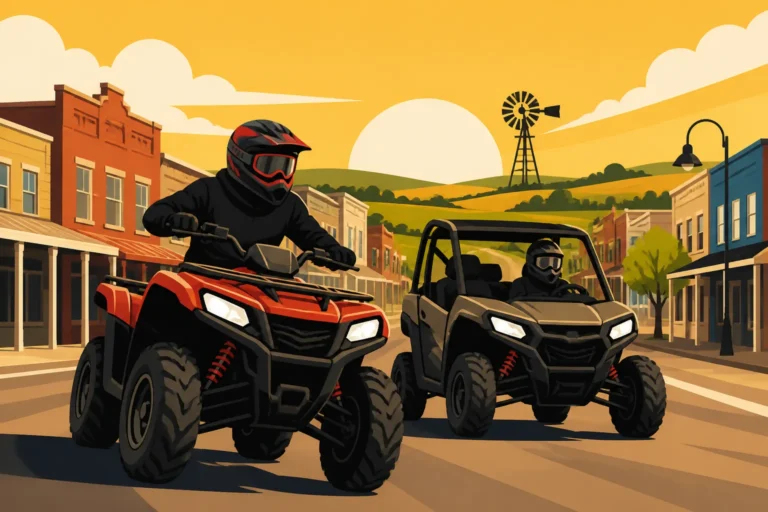
Across Kansas, you'll find a patchwork of regulations. Some cities, like Louisburg, De Soto, and Andover, have enacted ordinances that permit UTVs on their city streets under specific conditions. These conditions are rarely identical from one town to the next, which is why it's absolutely crucial to research the specific ordinance for any city you plan to ride in.
For example, a city's ordinance might:
- Limit UTVs to roads with speed limits of 35 mph or less. This is a common restriction, as UTVs are not designed for higher speeds.
- Require a special city-issued tag or permit. This often comes with an annual fee, like the [Louisburg's UTV Tag Fees in Kansas].
- Mandate proof of liability insurance. [Louisburg's Insurance Requirement in Kansas] is a good example of this, ensuring that if an accident occurs, there's coverage.
- Specify required equipment, such as turn signals, brake lights, a horn, a windshield, and rearview mirrors. You might find yourself upgrading your machine with aftermarket components to meet these rules. Companies like SuperATV offer a range of accessories that can help you meet these kinds of street-legal requirements, from universal turn signal kits to rearview mirrors, if your city allows it.
- Restrict operation hours, often from sunrise to sunset, or specific times for certain activities.
Before you ever consider riding your UTV on a city street, you must check the local city ordinances. Don't assume that because the town next door allows it, yours does too. The rules can vary wildly. Look for resources like [Kansas Cities That Opt In by Ordinance] for more information on finding these local laws.
Special Categories of Vehicles with Limited Road Access
While ATVs are largely out of luck for street use, and many UTVs fall under the general ban, Kansas law carves out specific definitions for certain "unconventional vehicles" that can have limited access to public roads, often contingent on local ordinances. These categories are crucial for UTV owners to understand, as they represent the primary avenues for any kind of street-legal status.
These aren't loopholes; they're deliberate classifications that recognize the distinct design and purpose of these machines compared to a typical ATV or high-performance UTV. Each category comes with its own set of definitions, restrictions, and often, equipment requirements.
Work-Site Utility Vehicles (WSUVs)
The Work-Site Utility Vehicle, or WSUV, is a unique classification in Kansas. It's specifically designed to allow certain larger, more robust utility vehicles to operate on public roads under defined circumstances, primarily for work-related activities. To qualify as a WSUV, a machine must meet several specific criteria:
- Width: It must be 48 inches or more in width. This immediately excludes most traditional ATVs. [Kansas WSUV Width of 48 Inches] further clarifies this measurement.
- Weight: It has to weigh more than 800 pounds unladen (without cargo or passengers). This also distinguishes it from lighter ATVs. [Kansas WSUV Weight Over 800 Pounds] delves into this.
- Tires: It must have four or more low-pressure tires.
- Seating: It must be designed for an operator and at least one passenger, with seating side-by-side. [Kansas WSUV Seating Requirements] details this.
- Steering: It must be steered by a steering wheel, not handlebars. This is a crucial distinction from an ATV.
Even if your UTV meets the definition of a WSUV, it's not automatically street-legal everywhere. The [Kansas Work-Site Utility Vehicle Road Rules] state that WSUVs are primarily intended for use on a work-site, and their use on public roads is subject to local city ordinances. If a city does allow WSUVs on its streets, they will typically impose speed limits, equipment requirements, and specific areas of operation. Owners often use WSUVs to cross public roads to get from one part of a large property to another, or for municipal work, but rarely for casual cruising.
Golf Carts and Micro Utility Trucks
Beyond WSUVs, Kansas law also recognizes golf carts and micro utility trucks as separate categories, each with its own set of rules for limited road use.
Golf Carts: We all know what a golf cart looks like. Kansas defines them by their design – typically a small, electric or gasoline-powered vehicle with seating for two to four people, primarily designed for use on golf courses. [What the Law Counts as a Golf Cart] provides the exact legal parameters. For a golf cart to be used on public roads, two things must typically be in place:
- Local Ordinance: A city must have an ordinance specifically allowing golf cart use on certain streets.
- Equipment: The golf cart must meet specific equipment requirements set by the city, which often include headlights, taillights, brake lights, turn signals, a rearview mirror, and a slow-moving vehicle emblem. [Kansas Golf Cart Road Rules] will likely tell you they are often limited to roads with very low-speed limits (e.g., 25 mph or less) and are prohibited from crossing state highways unless specifically allowed by the ordinance.
Micro Utility Trucks (MUTs): This is another niche category in Kansas, referring to small, specialized utility vehicles often imported, designed for specific low-speed tasks. [What Counts as a Micro Utility Truck] explains that these are usually compact, four-wheeled vehicles with an enclosed cab and a cargo bed, similar to a very small pickup truck, but they're not built to full highway safety standards. Like golf carts and WSUVs, their use on public roads is entirely dependent on local city ordinances, which will dictate permitted speeds, equipment, and areas of operation. [Kansas Micro Utility Truck Equipment Rules] typically include standard automotive lighting, mirrors, and seat belts.
The common thread for all these special categories is that state law doesn't automatically make them street-legal anywhere. Instead, it sets the definitions, and then it's up to local cities to decide if and how they want to allow these machines on their roads.
| Vehicle Type | Default City Limits Status | Can a City Ordinance Permit? | Common Equipment for Road Use (if permitted) | Max Speed (Typically) | Primary Use Case |
|---|---|---|---|---|---|
| ATV | Banned | Very Rarely | (Not applicable for most ATVs) | N/A | Off-road |
| Standard UTV | Banned | Occasionally | Lights, signals, mirrors, horn, windshield | 35 mph | Off-road, Utility |
| WSUV | Banned | Yes | Lights, signals, mirrors, horn, windshield, seatbelts | 35-45 mph | Work-site utility |
| Golf Cart | Banned | Yes | Lights, signals, mirrors, SMV emblem | 25 mph | Golf courses, neighborhood transit |
| Micro Utility Truck | Banned | Yes | Lights, signals, mirrors, horn, seatbelts | 35-45 mph | Specialized utility, campus use |
The Agricultural Exemption: A Rural Lifeline
While city limits are generally a no-go zone, there's a vital exemption that allows many Kansas ATV and UTV owners to legally traverse public roads: the agricultural exception. This isn't a free pass to joyride, but a practical allowance for those who rely on these machines for their livelihood in rural areas. It's a testament to Kansas's strong agricultural roots, recognizing that farmers and ranchers often need to cross roads to move between fields, check livestock, or perform other necessary farm tasks.
This exemption is critical for rural landowners who might own land on both sides of a county road or need to access different parcels of their operation. It acknowledges that an ATV or UTV is a legitimate piece of farm equipment, essential for daily work, and sometimes that work requires briefly using a public roadway.
What Qualifies as an Agricultural Trip on a Highway
The key to utilizing this exemption is understanding what truly constitutes an "agricultural trip." Simply put, it means using your ATV or UTV for purposes directly related to farming, ranching, or other agricultural activities. This is not for a quick trip to the gas station for snacks or a casual ride to a neighbor's house. It must be a bona fide trip in furtherance of an agricultural purpose.
Examples of qualifying agricultural trips include:
- Moving between fields: If your operation involves multiple plots of land separated by a county road, you can ride your ATV or UTV on the road to get from one field to another.
- Checking fences or livestock: Patrolling pastures, checking on cattle, or inspecting fence lines often involves crossing or briefly traveling on a rural road.
- Hauling tools or supplies: Transporting small tools, feed, or other necessary supplies from one part of the farm to another.
- Weed control: Traveling to spray ditches or control noxious weeds along property lines. [Kansas Noxious Weed Department Exception] highlights how even government contractors get this allowance.
It's important to remember that this exception typically applies to rural county roads and state highways outside of incorporated city limits. Once you enter a city's boundaries, the agricultural exemption usually ceases to apply unless the city itself has a specific ordinance that extends it or creates its own agricultural allowance. For more context, see [Kansas Agricultural Trips on a 65 mph Road].
Rules for Agricultural Road Use
Even when engaging in a legitimate agricultural trip, there are still rules to follow to ensure safety and compliance. These aren't as strict as the requirements for a tagged UTV in an opt-in city, but they are essential:
- Driver's License Required: You must possess a valid driver's license to operate an ATV or UTV on public roads, even for agricultural purposes. The farm exception does not waive this requirement. [The Farm Exception Still Requires a Driver's License] is a crucial reminder.
- Stay to the Right: You must operate the machine as far to the right of the roadway as practicable, allowing other traffic to pass safely. [Kansas Riders Must Keep to the Right] is a general rule for all slow-moving vehicles.
- Lighting Requirements: If operating from sunset to sunrise, your machine must be equipped with appropriate lighting, similar to what's required for a motorcycle. This includes a headlight that projects a certain distance and at least one red taillight visible from the rear. [Kansas Sunset to Sunrise Lighting Rules] are not optional. You don't want to be caught in the dark without proper illumination.
- Crossing State Highways: While continuous travel on state highways can be restricted, the agricultural exemption typically allows you to cross a state highway at any point to access adjacent property. [Crossing a State Highway Is Always Legal] for this specific purpose.
Failing to adhere to these rules, even on a legitimate agricultural trip, can result in a citation. Law enforcement officers are generally understanding of farm operations but will enforce safety regulations.
Consequences of Illegal Road Riding
Ignorance of the law is never a valid defense, especially when it comes to operating ATVs and UTVs on public roads. While the temptation might be strong to take a shortcut through town or ride your quad to a nearby friend's house, the consequences of doing so can range from inconvenient to financially painful, and even dangerous. It's not just about getting a ticket; it's about potential legal liabilities and safety risks.
Many riders, especially those new to the off-road lifestyle, might underestimate the seriousness of operating a non-street-legal vehicle on paved roads. They might think it's just a minor infraction, akin to a parking ticket. However, depending on the circumstances and the specific local ordinances, the penalties can be far more significant.
Fines and Court Costs
The most immediate consequence of illegal road riding is a citation. If a law enforcement officer pulls you over for operating an ATV or non-compliant UTV on a prohibited road, you'll likely receive a ticket. The fines associated with these violations can vary significantly depending on the municipality and the specific statute or ordinance violated. They might range from a couple of hundred dollars to much more, especially if other infractions are cited (e.g., no driver's license, reckless operation, etc.).
Beyond the base fine, you'll almost certainly incur court costs. Even if you choose to simply pay the fine without appearing in court, these administrative fees are added to the total amount owed. These can sometimes rival the fine itself, significantly increasing the overall cost of your "shortcut." [Kansas Ticket Costs for Road Riding] can add up quickly, making that short trip much more expensive than you ever imagined.
Impoundment and Recovery Fees
One of the more severe, and often unexpected, consequences is the impoundment of your machine. If an officer determines your ATV or UTV is being operated illegally on a public road, they have the authority to have it towed and impounded. This means your machine will be taken to an impound lot, and you'll be responsible for all towing and storage fees.
Retrieving an impounded machine is rarely a quick or cheap process. You'll have to pay the towing company directly, and daily storage fees can accumulate rapidly. In some cases, you might even have to provide proof of ownership and insurance before the impound lot will release your vehicle. Getting your UTV back after a city impounds it can be a real headache. This whole scenario can turn a simple traffic stop into a multi-hundred-dollar nightmare, not to mention the inconvenience of being without your machine.
Insurance and Liability Issues
Perhaps the most serious financial risk associated with illegal road riding involves insurance and liability. Your standard off-road vehicle insurance policy is specifically designed to cover you when you're riding off-road. Many policies will explicitly exclude coverage for accidents that occur on public roads or when the vehicle is being operated illegally.
Imagine this scenario: You're riding your ATV on a city street where it's prohibited, and you get into an accident with a car. Even if the other driver is partially at fault, your insurance company might deny your claim, arguing that you were operating the vehicle outside the terms of your policy by being on a public road where it's not allowed. This could leave you personally responsible for all damages, including medical bills, vehicle repairs for both your machine and the other party's, and potential legal fees if a lawsuit arises. [Kansas Accident Reporting for an ATV Crash] is crucial, but if you're riding illegally, it complicates everything.
This isn't just about damage to your machine; it's about the potential for severe personal injury or even fatalities, and the immense financial burden that could result if you're deemed liable without insurance coverage. The small convenience of riding on a forbidden street is simply not worth the massive financial and legal risks involved.
Finding Legal Places to Ride Your ATV and UTV in Kansas
So, if city streets are mostly off-limits, where can you legally enjoy your ATV or UTV in Kansas? Don't despair! While Kansas might not boast an extensive network of state-run OHV trails like some other states, there are still plenty of fantastic opportunities to hit the dirt, sand, and mud. The key is knowing where to look and understanding the rules of each specific riding area.
Kansas offers a mix of public and private options, each with its own unique terrain and regulations. Whether you're a casual rider, a hardcore rock crawler, or a dune enthusiast, there's likely a spot that will fit your riding style.
Dedicated Off-Road Parks and Trails
The best and most reliable places to ride your ATV or UTV in Kansas are dedicated off-road parks and trails. These areas are specifically designed and managed for off-highway vehicle use, meaning you can ride with confidence that you're within the bounds of the law.
- Tuttle Creek ORV Area: Located near Randolph, this popular area offers 310 acres of diverse terrain, including woods, hills, and open fields, making it suitable for a variety of skill levels. It's managed by the U.S. Army Corps of Engineers and is often a go-to for riders in the eastern half of the state. [Tuttle Creek ORV Area in Kansas] provides more details.
- School Creek ORV Area: Also a Corps of Engineers property, School Creek near Milford Lake offers about 300 acres. It's known for its tighter trails and a 50-inch width restriction, meaning side-by-sides wider than 50 inches typically won't fit. This makes it a great spot for ATVs and narrower UTVs.
- Syracuse Sand Dunes Park: For those who love the thrill of dune riding, Syracuse Sand Dunes in western Kansas is a must-visit. With over 1,300 acres of open sand, it's a unique riding experience in the state. They often host events like poker runs and ATV rodeos. [Syracuse Sand Dunes Park in Kansas] covers its offerings.
- Kansas Rocks Recreation Park (Mapleton): If you're into more technical riding, rock crawling, and challenging obstacles, Kansas Rocks is your place. Located in Bourbon County, this privately owned park is known for its diverse terrain, including wooded trails, creek beds, and serious rock sections. They typically operate on weekends. [Kansas Rocks Recreation Park] is perfect for those looking to test their machine and skill.
Always check the specific rules, hours of operation, and any required permits or fees before you head out to any of these parks. Many private parks, like Kansas Rocks and Syracuse Sand Dunes, have their own age limits, helmet rules, and waiver requirements.
Private Land and Agricultural Properties
For many Kansas riders, access to private land is the most common and convenient way to ride. This could be your own property, a family farm, or land owned by friends. As long as you have explicit permission from the landowner, you can generally ride your ATV or UTV on private property without issues. This is especially true for agricultural operations, where these machines are integral to daily tasks.
- Your Own Property: If you own land, you're free to ride on it, within the bounds of local noise ordinances and responsible operation.
- Family Farms/Ranches: Many rural families have ATVs and UTVs for work and recreation on their land. Riding on family property with permission is a common scenario.
- Leased Hunting Land: If you lease land for hunting, your lease agreement might permit the use of ATVs or UTVs for scouting, game retrieval, or accessing hunting blinds. Always clarify these terms with the landowner.
- Written Permission: When riding on someone else's private land, it's always a good idea to get written permission. This protects both you and the landowner in case of any questions or incidents. [Getting Written Permission From a Landowner Before You Ride] is a smart practice.
Remember that even on private land, responsible riding is paramount. Respect the property, minimize environmental impact, and always prioritize safety. While the state and city laws may restrict you on public roads, the vastness of Kansas's rural landscape still offers incredible opportunities for off-road adventure.
Disclaimer
This article is for general informational purposes only and does not constitute professional advice. Laws, prices and regulations vary by location and change over time. Consult a qualified professional for guidance on your specific situation.