Kansas Bans ATVs on Federal Highways
It's a familiar ache in the heart of any Kansas ATV or UTV owner: that feeling of wanting to hop on your machine and just go, whether it's to the local diner for a burger or across town to a friend's place. But then reality hits, often in the form of confusing laws and a nagging question: can I even ride this thing on the road? This guide is here to clear up the biggest misconception of all, specifically why your beloved ATV is generally banned from federal highways in Kansas, and to help you understand the tangled web of rules for other public roadways across the state.
Understanding the Core Ban on Kansas Highways
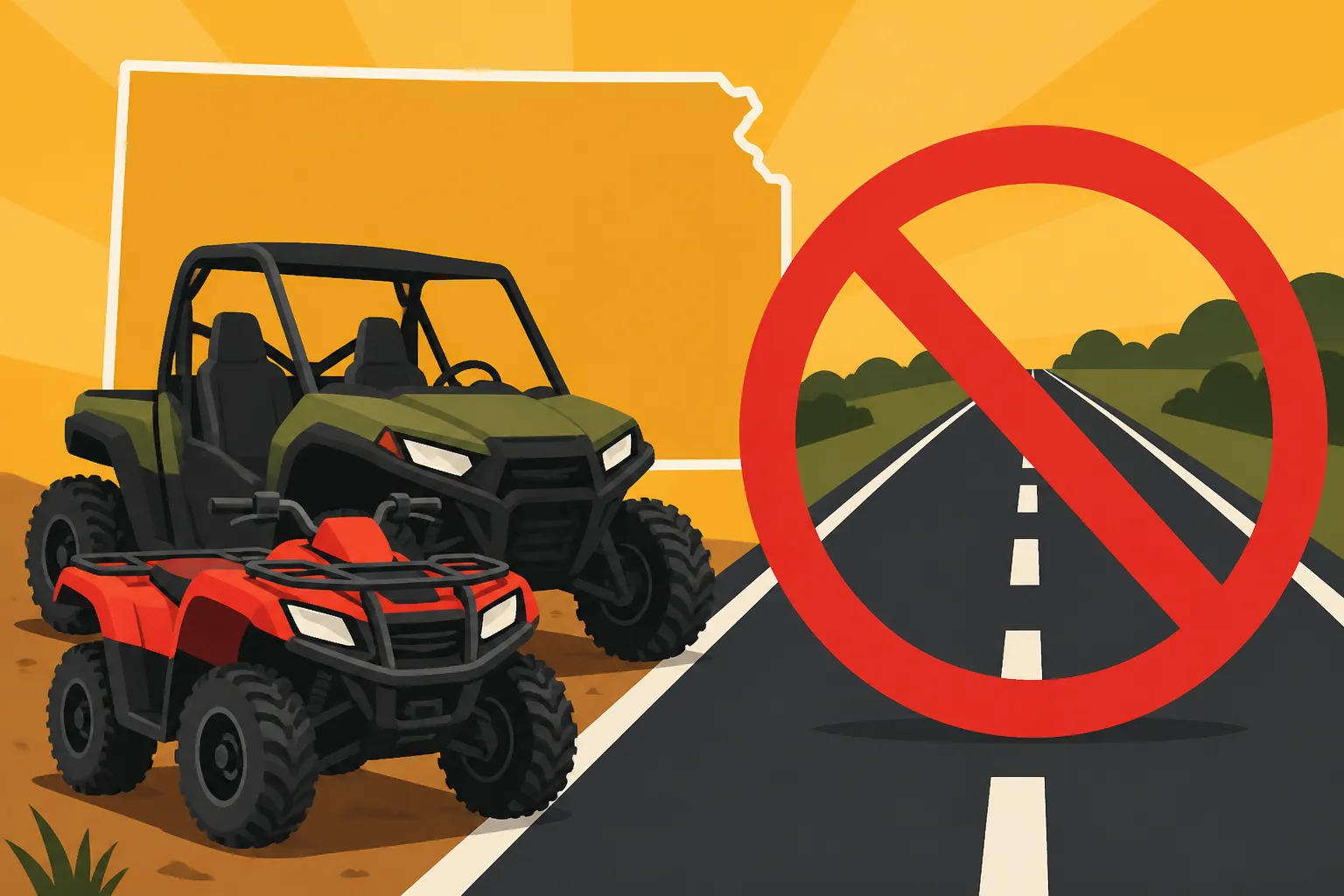
Let's get straight to the point that often surprises new riders or those new to Kansas: your ATV is almost certainly not welcome on federal or state highways. It's not just a suggestion; it's a legal reality that has significant implications for how and where you can enjoy your machine. This isn't about being a party pooper; it's about safety and the fundamental design differences between an ATV and a road-legal vehicle.
Why Federal Highways are Off-Limits
Imagine the scene: a four-lane federal highway, cars and trucks whizzing by at 70 miles per hour, their drivers expecting stable, predictable vehicles. Now picture an ATV trying to keep up. It's a recipe for disaster, and Kansas law, like federal regulations, recognizes this. ATVs, by their very design, are built for off-road terrain. They have knobby tires, high ground clearance, and a suspension system meant to absorb bumps and navigate uneven surfaces, not provide smooth, stable tracking at high speeds on pavement. Their handling characteristics, especially quick steering response and narrow wheelbase, make them highly unstable at highway speeds and difficult to control in a sudden maneuver alongside heavy traffic.
Furthermore, federal highways are governed by strict federal safety standards that ATVs simply don't meet. These standards cover everything from crashworthiness to lighting, braking, and emissions, all designed for public road use. Your ATV lacks the specific lighting, mirrors, turn signals, and often the top speed or braking performance required to safely integrate with highway traffic. Because of these inherent design limitations and safety risks, [Kansas Bans ATVs on Federal Highways]. There are no exceptions for federal highways, full stop. Attempting to ride one on these roads isn't just illegal; it's incredibly dangerous for both the rider and other motorists.
The General Rule for State Highways
The restrictions on federal highways extend to most state highways as well. While state highways might not always have the same multi-lane, high-speed characteristics of an interstate, they are still considered part of the public road network designed for conventional motor vehicles. The same safety concerns regarding speed differential, stability, and visibility apply. Your ATV simply isn't built to safely share asphalt with cars and trucks traveling at typical highway speeds, which often range from 55 to 65 mph on Kansas state routes.
Many riders, especially those in rural areas, might look at a less-trafficked state highway and think, "What's the harm?" The harm is significant. Even on seemingly quiet stretches, the potential for a high-speed collision with a standard vehicle is ever-present. ATVs are small, low to the ground, and often lack the reflective materials or advanced lighting systems that make them visible to other drivers, especially at dawn, dusk, or in inclement weather. The risk of being overlooked or misjudged by a driver in a much larger, faster vehicle is very real. Because of this, [Kansas Bans ATVs on Interstates] and largely restricts them from other state highways, reinforcing that these machines belong off the pavement, where they were engineered to perform.
Navigating Other Roadways: State, County, and City Streets
While federal and state highways are mostly no-go zones, the rules get a little more nuanced when you start looking at other types of roads in Kansas. It's not a free-for-all, but there are specific scenarios and vehicle types that might find limited access.
Crossing a State Highway: A Limited Exception
Sometimes, you just need to get from one side of a state highway to the other to access private land or continue on a legitimate off-road journey. Kansas law understands this practical necessity and provides a very limited exception: you are generally allowed to cross a state highway. However, this is not a license to ride down the highway, even for a short distance. This is strictly a direct crossing, perpendicular to the flow of traffic, at an intersection or designated crossing point.
When executing a crossing, you must yield to all oncoming traffic, ensure clear visibility in both directions, and complete the crossing as quickly and safely as possible. Think of it like a pedestrian crossing a busy street – you don't walk alongside traffic; you get across. This exception is critical for many rural landowners who might have property divided by a highway but is fraught with risk if not executed with extreme caution. Always remember, the intent is to minimize the time your ATV spends on the paved surface, not to grant temporary road-legal status. [Kansas Rules for Crossing a Highway] are very specific and must be adhered to for your safety and to avoid legal trouble.
County Roads and the Local Dilemma
This is where things can get particularly frustrating for riders. Many county roads in Kansas are gravel, dirt, or lightly paved, making them feel like a natural extension of off-road trails. However, by default, Kansas state law generally prohibits ATVs on county roads unless a specific local ordinance permits it. This creates a patchwork of regulations across the state. What's legal in one county might be strictly prohibited in the next.
The "local dilemma" is that county commissions can pass ordinances to allow the use of ATVs or UTVs on their county roads, but many choose not to, or they create very specific restrictions. This means riders often have to do their homework, contacting their county sheriff's office or county clerk to understand the exact rules for the roads they intend to use. Without such an ordinance, riding an ATV on a county road is considered illegal. This default ban is primarily for safety, recognizing that even gravel roads can have significant traffic, blind spots, and present hazards for vehicles not designed for them. For more details on this, check out [Kansas Rules for Riding a County Road].
City Streets and the Power of Local Ordinances
City streets operate under a similar principle to county roads but with more potential for local variation. The general rule is clear: [Kansas Bans ATVs Inside City Limits by Default]. However, cities have the authority to pass specific ordinances that allow certain types of off-road vehicles, most commonly UTVs (Utility Task Vehicles) or golf carts, on designated city streets. It's vital to understand that this is an "opt-in" system. Unless your specific city has passed an ordinance explicitly permitting UTVs or ATVs, assume they are banned.
These city ordinances often come with a host of stipulations. They might require special city-issued tags, proof of insurance, a valid driver's license, specific safety equipment (like turn signals, horns, and mirrors), and restrict vehicles to streets with lower speed limits (e.g., 35 mph or less). Some cities might allow UTVs but explicitly exclude ATVs due to their inherent design differences. It's not uncommon for a city to allow a side-by-side on certain streets but keep quads off them entirely. To legally ride in a city, you must consult that city's specific ordinances. A few Kansas cities have opted in, but they are the exception, not the rule. [Kansas Cities That Authorize ATV Street Use] can be a helpful resource, but always verify directly with the city hall or police department.
Specialized Vehicles and Permitted Uses
While the general rule for ATVs on public roads is restrictive, Kansas law recognizes specific types of machines and specific uses that might have limited, conditional access to certain roadways. It's crucial not to confuse these exceptions with a blanket permission for all off-road vehicles.
Work-Site Utility Vehicles (WSUV) and Their Road Access
Kansas law has a unique classification for "Work-Site Utility Vehicles," or WSUVs. These are distinct from your typical recreational UTV. To qualify as a WSUV, the machine must meet specific criteria: it must be a motor vehicle that is 48 inches or less in width, has a dry weight of more than 800 pounds, is designed to carry at least two persons side-by-side, is equipped with a cargo box or bed, and is used for agricultural, horticultural, construction, or utility services. These are robust, purpose-built machines designed for specific tasks. [Kansas Work-Site Utility Vehicles Explained] in detail.
The key difference for WSUVs is their limited road access. They may be operated on public roads and highways, but only if the operator is engaged in the performance of a work-related task and the road access is incidental to that task. This isn't for recreational cruising. Think of a utility worker driving a WSUV along a highway shoulder to access power lines, or a farmer briefly using a road to get from one field to another with tools in the cargo bed. Even then, they must adhere to all traffic laws, carry a valid driver's license, and often require specific lighting. It's a highly conditional privilege, tied directly to the "work-site" nature of the vehicle and its use. Recreational UTVs, even if they look similar, do not qualify for this exception.
Agricultural Exemptions: Farm to Field
Kansas, with its vast agricultural landscape, provides certain exemptions for machines used for farming purposes. This is perhaps the most common way you'll see ATVs or UTVs legally on a public road, but again, it's very specific and not for joyriding. The law allows ATVs and UTVs used in connection with agricultural operations to be operated on public roads and highways for the purpose of moving between fields, working on agricultural land, or performing other farm-related tasks. This might include transporting tools, checking livestock, or going to and from a harvest site.
However, these trips must be directly related to agricultural work. You can't just run to the hardware store for a personal purchase and claim an agricultural exemption. When operating under this exemption, you are still required to follow all traffic laws, and for safety, it's highly recommended to use a slow-moving vehicle emblem (SMV) and ensure your machine has adequate lighting, especially during low-light conditions. These are considered utility trips, not recreational ones. [Kansas's Agricultural Exception for Road Use] is a critical provision for farmers, but it's not a loophole for general road use. It emphasizes the machine's utility purpose on the farm, not its status as a general road vehicle.
Here’s a quick overview of common road types and ATV/UTV legality in Kansas:
| Road Type | ATV/UTV General Legality | Specific Conditions/Notes |
|---|---|---|
| Federal Highways | Strictly Prohibited | Designed for high-speed motor vehicle traffic; ATVs lack safety features, speed, and stability for safe integration. No exceptions. |
| State Highways | Strictly Prohibited (except for crossing) | Similar to federal highways, general operation is banned. Direct, perpendicular crossings are allowed when safe and necessary to access property. |
| County Roads | Prohibited by default | County commissions may pass ordinances to allow ATVs/UTVs, but this is not guaranteed. Riders must verify local rules. Agricultural use is a common exception. |
| City Streets | Prohibited by default | Cities may pass ordinances to allow UTVs (and sometimes ATVs) on designated streets, often with requirements for tags, insurance, and specific equipment. Check local city hall. |
| Agricultural Use Roads | Permitted for bona fide farm operations | Only when directly engaged in agricultural tasks (e.g., moving between fields, checking livestock). Requires adherence to traffic laws and recommended safety measures like SMV emblems. |
| Designated ORV Areas | Permitted (and encouraged!) | These are the safest, legal places for recreational riding. Examples include Tuttle Creek ORV Area, School Creek ORV Area, Syracuse Sand Dunes, and private parks like Kansas Rocks Recreation Park. Always check specific park rules. |
Risks, Penalties, and Safe Riding Alternatives
Riding an ATV on prohibited public roads carries significant risks, not just to your wallet but to your safety and potentially your life. It's crucial to understand the repercussions of illegal road use and, more importantly, to know where you can ride safely and legally.
Legal Consequences of Illegal Road Riding
Getting caught riding an ATV on a prohibited roadway in Kansas can lead to a host of legal troubles. First and foremost, you're likely to receive a citation, which comes with fines and court costs. These aren't cheap and can quickly add up. Depending on the severity of the offense, reckless driving, or endangering others, you could face more serious charges. In some cases, especially repeat offenses or dangerous behavior, law enforcement has the authority to impound your machine, leading to additional towing and storage fees to get it back, if you can at all.
Beyond the immediate financial penalties, there are other potential headaches. Your insurance policy might not cover incidents that occur while you're operating the machine illegally on a public road, leaving you personally liable for damages or injuries. A traffic violation could also affect your driving record, even though an ATV isn't a traditional motor vehicle, it can still be considered an operation of a motorized vehicle. Ultimately, [Kansas Penalties for Illegal Road Riding] are designed to deter unsafe behavior and protect the public. Law enforcement, whether it's a county sheriff's deputy or a Kansas Highway Patrol trooper, is typically well-aware of these restrictions and will enforce them.
Safety Concerns on Public Roads
Even if you manage to avoid a ticket, the greatest risk of riding an ATV on public roads is the profound danger it poses. ATVs are not designed for pavement. Their high-traction, low-pressure tires grip too much on asphalt, making steering difficult and increasing the risk of rollovers, especially during turns or evasive maneuvers. The suspension, built for absorbing rough terrain, feels spongy and unstable on hard surfaces, reducing handling precision.
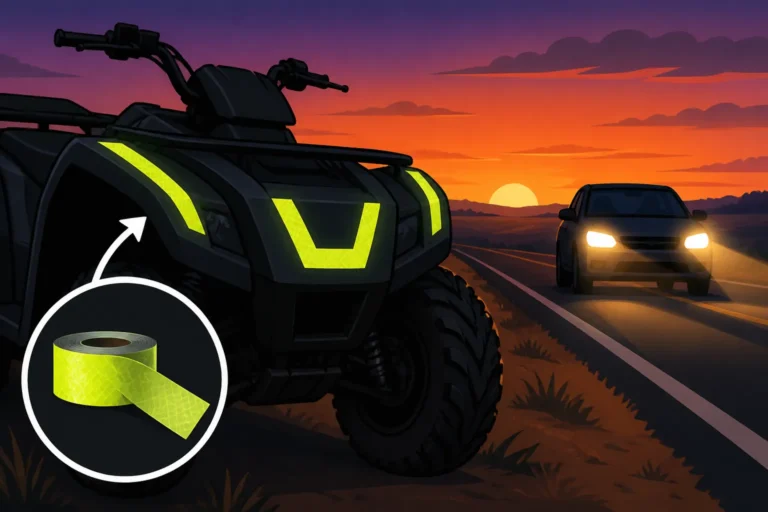
Moreover, visibility is a massive issue. ATVs are smaller and lower than most cars, making them hard for drivers to see, particularly in busy traffic, at intersections, or during dawn and dusk. They often lack proper mirrors, turn signals, and sufficient headlights or taillights for road use. The speed differential between an ATV and other vehicles on a state or federal highway is also a huge hazard; traveling at 30 mph on a road with 60 mph traffic is incredibly risky. The consequences of a collision between a small, unprotected ATV rider and a full-size vehicle are almost always severe, often catastrophic. This isn't just about legality; it's about life and limb. Make sure your off-road machine is equipped with sufficient [Kansas Lighting Rules After Sunset] for any permitted crossing.
Where You Can Ride Legally
The good news is that Kansas offers fantastic opportunities for legal and safe off-road riding. The best places to enjoy your ATV or UTV are on designated trails, in official ORV parks, or on private land with the landowner's explicit permission. These areas are designed with off-road machines in mind, offering varied terrain, safety guidelines, and a community of fellow enthusiasts.
Kansas is home to several excellent public and private riding areas. You have options like the Tuttle Creek ORV Area near Manhattan, the School Creek ORV Area at Milford Lake, and the vast sand dunes at Syracuse Sand Dunes Park. For those who love challenging terrain, Kansas Rocks Recreation Park offers a private, rock-crawling experience. These dedicated areas provide maps, amenities, and often have staff on hand to assist. Always check the specific rules and fees for each park before you load up and go. [Kansas ATV Trails: Where You Can Actually Ride] is a great starting point for discovering these gems. Embracing these legal and safe alternatives ensures you get the most enjoyment out of your machine without the worry of fines or, worse, serious injury.
Equip Your Machine Properly (Even for Off-Road)
Even if your ATV or UTV isn't destined for public roads, ensuring it's properly equipped for safety and visibility is paramount. A well-prepared machine not only enhances your off-road adventures but can also make those rare, legal road crossings or agricultural uses much safer.
Essential Safety Gear for Any Ride
Regardless of where you ride – be it deep in the woods, across a vast pasture, or on a private off-road park – personal safety gear is non-negotiable. The single most important piece of equipment is a helmet. While Kansas law doesn't have a universal helmet law specifically for ATVs, wearing a DOT-approved helmet dramatically reduces the risk of head injury in the event of a crash or rollover. Think of it as cheap insurance for your brain.
Beyond a helmet, eye protection is crucial. Goggles or a full-face helmet shield will protect your eyes from dust, debris, insects, and low-hanging branches. Sturdy over-the-ankle boots protect your feet and ankles, while long pants and a long-sleeved shirt (or specialized riding gear) shield your skin from scrapes, sun, and flying roost. Gloves improve grip and protect your hands. Investing in good quality personal protective equipment isn't just about complying with rules (where they exist); it's about enjoying your ride safely and coming home in one piece.
Aftermarket Accessories for Enhanced Visibility and Safety
While most ATVs and UTVs come with basic lighting from the factory, enhancing your machine with aftermarket accessories can drastically improve your visibility and overall safety, even if you never intend to be street legal. For instance, adding brighter LED headlights or auxiliary light bars can transform your ability to see and be seen during dawn, dusk, or nighttime rides on trails or during agricultural operations. Many riders also install whip flags, especially in open areas like sand dunes, to make their presence known to others.
Mirrors, while not always standard on ATVs, are invaluable for situational awareness. Whether you're navigating a busy trail system, backing up a UTV on a farm, or making a quick, legal crossing of a state highway, having a clear view of what's behind and beside you is a huge asset. Companies like SuperATV offer a wide range of robust mirrors, lighting kits, and other accessories designed specifically for the rugged demands of off-road vehicles. Investing in these types of upgrades can make your machine safer and more functional for all its intended uses. For any permitted riding after dark, remember that [Kansas Lighting Requirements on a Machine] dictate specific visibility standards that your machine must meet to be safe and legal.
Disclaimer
This article is for general informational purposes only and does not constitute professional advice. Laws, prices and regulations vary by location and change over time. Consult a qualified professional for guidance on your specific situation.